SASO Enforces New EV Charger Rules in Saudi Arabia (2026)
Saudi Arabia’s Standards, Metrology and Quality Organization (SASO) has enforced a revised national standard—SASO IEC 61851-23:2026—effective 25 April 2026. This regulation directly impacts manufacturers, exporters, and distributors of EV charging infrastructure targeting the Saudi market, particularly those supplying AC/DC chargers. Its mandatory local-grid compatibility testing introduces new technical and compliance barriers not previously required at this level of specificity.
Event Overview
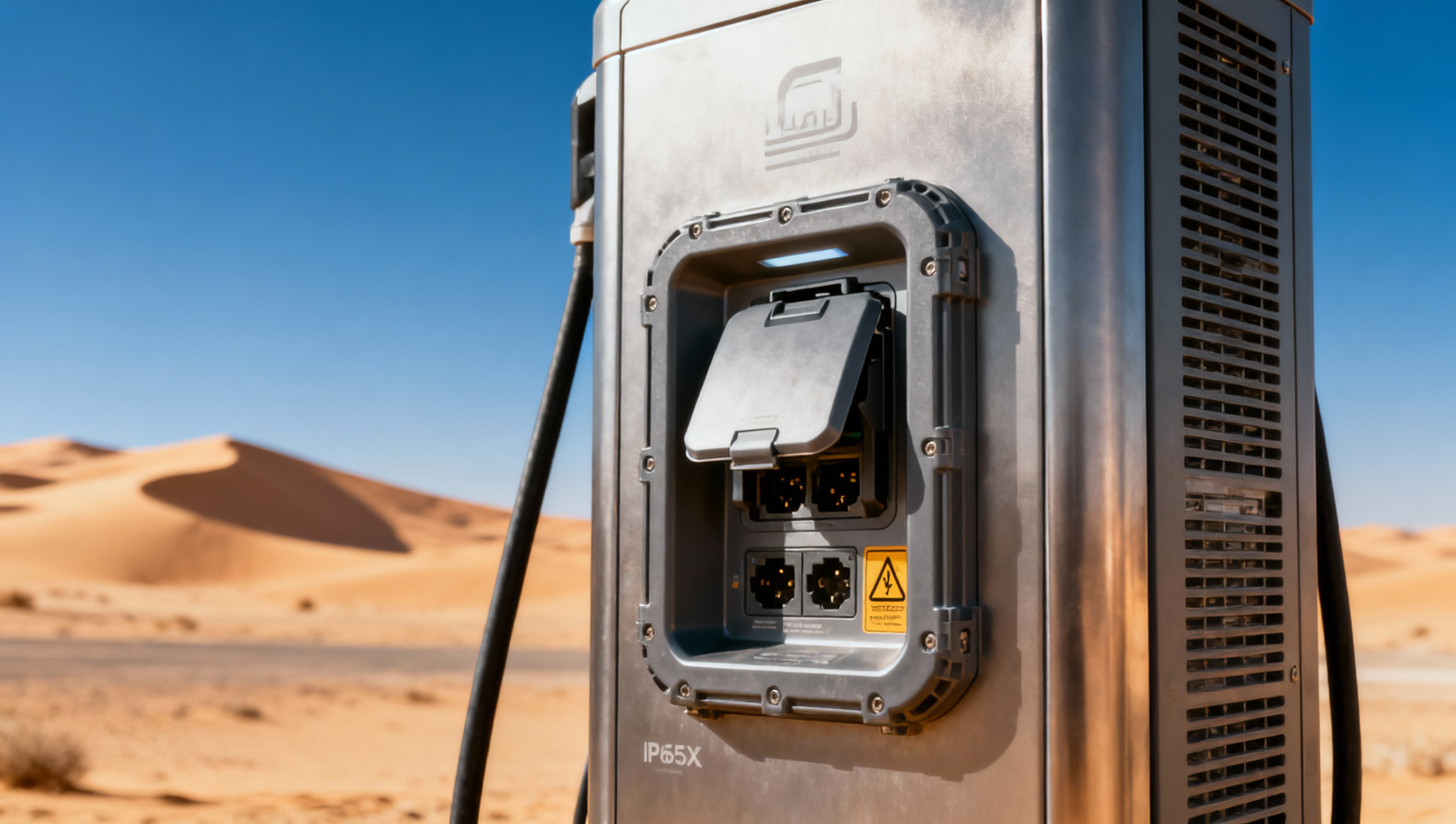
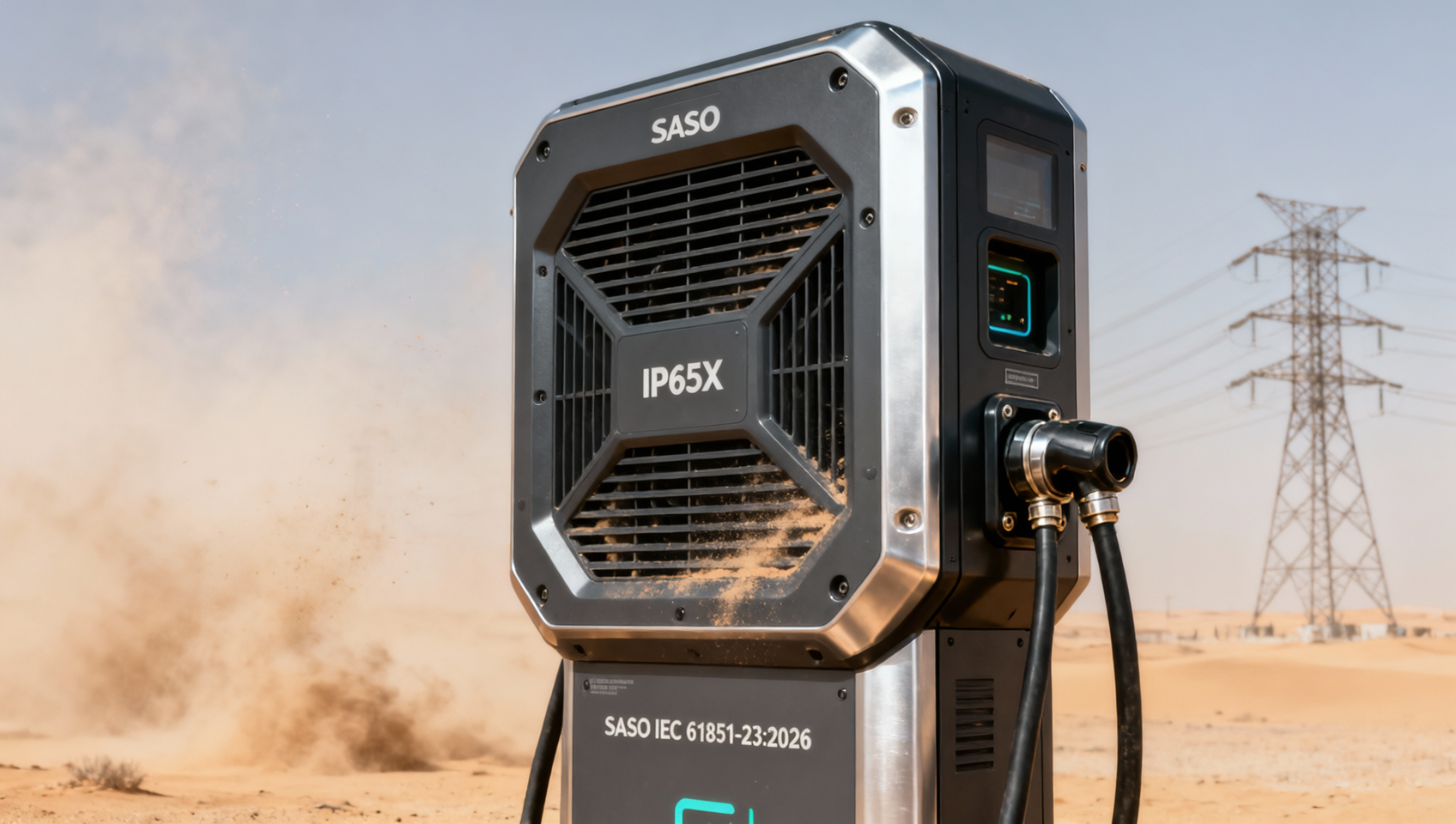
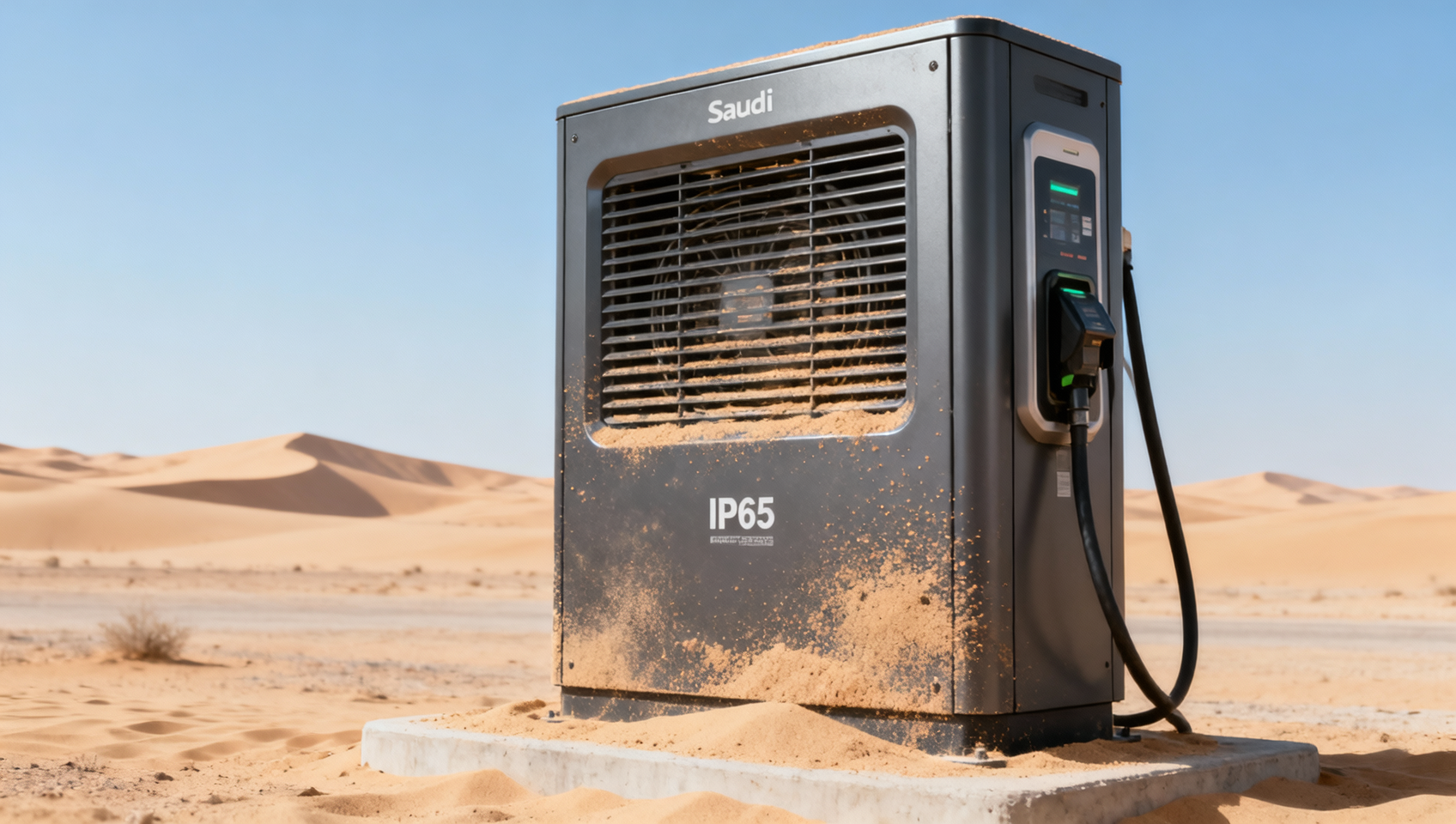
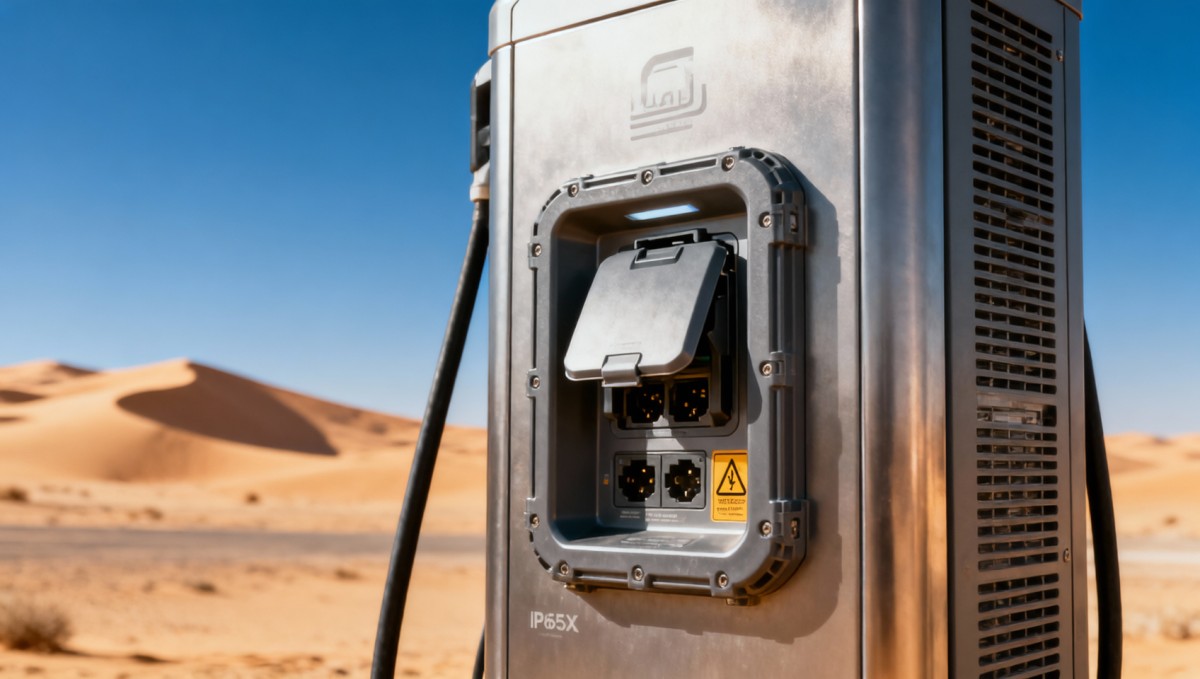
On 25 April 2026, SASO made mandatory the revised standard SASO IEC 61851-23:2026 for all EV charging infrastructure (including AC and DC chargers) entering the Saudi market. Under this requirement, products must undergo physical testing at laboratories designated by the Saudi Electricity Company (SEC). The tests cover three localized conditions: extreme high temperature (60°C), sand load exposure (IP65X plus cyclic sand impact), and voltage dip resilience (220V ±30%). Products failing to obtain the SASO Certificate of Conformity (CoC) will be prohibited from customs clearance.
Industries Affected
Direct Exporters & Trading Companies
These entities face immediate operational impact: shipments without valid SASO CoC will be detained at Saudi ports. The requirement shifts compliance responsibility upstream—exporters can no longer rely solely on international certifications (e.g., IEC 61851-23:2019) or self-declaration. Localized test reports issued exclusively by SEC-designated labs are now mandatory documentation for customs submission.
EV Charger Manufacturers (OEMs & ODMs)
Manufacturers must adapt product designs and validation protocols to meet Saudi-specific environmental stressors. The inclusion of sand-cycle testing—beyond standard IP65—implies potential redesign of enclosure seals, cooling airflow paths, and internal dust mitigation features. Thermal management systems must now be verified at 60°C ambient, not just rated for it.
Supply Chain & Certification Service Providers
Third-party certification bodies and lab coordination services face increased demand for SEC-aligned test scheduling and reporting. However, only SEC-designated labs may issue valid test reports; non-designated labs—even those accredited to IEC standards—cannot fulfill this requirement. This narrows the pool of acceptable service providers and may extend lead times for CoC issuance.
What Stakeholders Should Monitor and Do Now
Track official updates from SASO and SEC on lab designation status
The list of SEC-designated laboratories is not publicly consolidated as of the enforcement date. Exporters and manufacturers should verify current designation status directly with SASO or SEC—and monitor for any additions or suspensions, as lab capacity and accreditation scope may evolve.
Review product specifications against the three mandated test parameters—not just general compliance claims
Claims such as “IP65-rated” or “60°C operational” are insufficient unless validated under the exact test conditions defined in SASO IEC 61851-23:2026 (e.g., sand cycling protocol, voltage dip waveform tolerance, thermal soak duration). Technical datasheets and test reports must explicitly reference these parameters.
Distinguish between regulatory signal and enforceable requirement
This is not a transitional guideline: enforcement began 25 April 2026. There is no published grace period. Customs authorities in Saudi Arabia are instructed to reject non-CoC-compliant consignments. Pre-clearance verification—not post-shipment correction—is the only viable path.
Update procurement and logistics timelines to accommodate mandatory lab testing cycles
Local grid compatibility testing involves physical shipment of units to Saudi-based or SEC-authorized regional labs. Lead times for test execution, report generation, and CoC issuance should be factored into order planning—especially for first-time submissions, where design iterations may be needed.
Editorial Perspective / Industry Observation
From an industry perspective, this revision signals SASO’s shift from harmonizing with global EV standards toward enforcing performance-based, environment-specific conformity. It is less about alignment and more about verifying real-world interoperability with Saudi grid infrastructure and climatic extremes. Analysis来看, this reflects a broader trend among Gulf Cooperation Council (GCC) regulators—prioritizing localized resilience over generic certification. Observation来看, the absence of grandfathering clauses or phased implementation suggests SASO intends this as an immediate operational threshold, not a long-term policy signal. Current more appropriate interpretation is that this is a binding technical gate—not a consultation draft or pilot measure.
It is also worth noting that this requirement applies uniformly across AC and DC charger categories, with no differentiation based on power rating or installation type (public vs. private). That uniformity simplifies scope but increases baseline compliance burden across the board.
Conclusion
This regulation marks a material tightening of market access conditions for EV charging equipment in Saudi Arabia. It elevates technical due diligence from documentation review to physical, context-specific validation. For stakeholders, the implication is clear: compliance is no longer a paperwork exercise—it requires proactive engineering adaptation, lab coordination, and timeline planning aligned with SEC’s designated infrastructure. Currently, this is best understood as an enforceable technical barrier, not a preliminary policy indicator.
Information Sources
Main source: SASO official announcement of SASO IEC 61851-23:2026 enforcement (effective 25 April 2026).
Areas requiring ongoing observation: updated list of SEC-designated testing laboratories; any future amendments to test methodology or exemption criteria (not yet published).
Get weekly intelligence in your inbox.
No noise. No sponsored content. Pure intelligence.
") Apr 26, 2026China Releases Green Design Guidelines for Industrial Products (2026)China Releases Green Design Guidelines for Industrial Products (2026)
Apr 26, 2026China Releases Green Design Guidelines for Industrial Products (2026)China Releases Green Design Guidelines for Industrial Products (2026) Apr 26, 2026ANATEL Mandates Portuguese Offline Voice Assistant for Smart Home Devices in BrazilANATEL Mandates Portuguese Offline Voice Assistant for Smart Home Devices in Brazil
 Apr 26, 2026Vietnam Enforces Bilingual Safety Labels for Electronic Components from Apr 22, 2026Vietnam Enforces Bilingual Safety Labels for Electronic Components from Apr 22, 2026
 Apr 26, 2026Japan Updates JIS for Rehab Devices: IEC 62366-1:2024 RequiredJapan Updates JIS for Rehab Devices: IEC 62366-1:2024 Required
 Apr 26, 2026THE Alliance Cuts Ningbo–Rotterdam Transit to 18 Days, Spot Rates Up 35%THE Alliance Cuts Ningbo–Rotterdam Transit to 18 Days, Spot Rates Up 35%
 Apr 26, 2026India BIS Mandates PLC & HMI Certification under IS 13252:2025 by Oct 2026India BIS Mandates PLC & HMI Certification under IS 13252:2025 by Oct 2026
") Apr 26, 2026SASO Enforces New EV Charger Rules in Saudi Arabia (2026)SASO Enforces New EV Charger Rules in Saudi Arabia (2026)
Apr 26, 2026SASO Enforces New EV Charger Rules in Saudi Arabia (2026)SASO Enforces New EV Charger Rules in Saudi Arabia (2026) Apr 26, 2026TÜV Rheinland Updates IoT EMC Guidelines: AI Edge Modules Now Mandatory for Immunity TestingTÜV Rheinland Updates IoT EMC Guidelines: AI Edge Modules Now Mandatory for Immunity Testing
 Apr 26, 2026USTR Launches First Annual Review of China Solar PV AD/CVD OrdersUSTR Launches First Annual Review of China Solar PV AD/CVD Orders
 Apr 26, 2026EU New Battery Regulation Fully Enforced Apr 24, 2026EU New Battery Regulation Fully Enforced Apr 24, 2026
 Apr 25, 2026Vietnam Enforces CN-EN Bilingual Safety Labels on Electronic Components from Apr 22, 2026Vietnam Enforces CN-EN Bilingual Safety Labels on Electronic Components from Apr 22, 2026
 Apr 25, 2026ANATEL Mandates Portuguese Offline Voice Assistants for Smart Home Devices in BrazilANATEL Mandates Portuguese Offline Voice Assistants for Smart Home Devices in Brazil
 Apr 25, 2026India BIS Mandates IS 13252:2025 for PLCs & HMIs by Oct 2026India BIS Mandates IS 13252:2025 for PLCs & HMIs by Oct 2026
 Apr 25, 2026SASO EV Charger Rules: Grid Compatibility & Sand Resistance RequiredSASO EV Charger Rules: Grid Compatibility & Sand Resistance Required
 Apr 25, 2026JIS T 0011:2026 Enforces IEC 62366-1:2024 for Rehab Devices in JapanJIS T 0011:2026 Enforces IEC 62366-1:2024 for Rehab Devices in Japan
 Apr 25, 2026THE Alliance Cuts Ningbo–Rotterdam Transit to 18 Days, +35% Spot RateTHE Alliance Cuts Ningbo–Rotterdam Transit to 18 Days, +35% Spot Rate
 Apr 25, 2026TÜV Rheinland Updates IoT EMC Standard: AI Edge Module Immunity Now MandatoryTÜV Rheinland Updates IoT EMC Standard: AI Edge Module Immunity Now Mandatory
 Apr 25, 2026USTR Launches Five-Year China Solar PV AD/CVD ReviewUSTR Launches Five-Year China Solar PV AD/CVD Review
 Apr 25, 2026EU New Battery Regulation Enters Force Apr 24, 2026EU New Battery Regulation Enters Force Apr 24, 2026
 Apr 25, 2026China Customs Launches RCEP Origin Smart Pre-Review for ASEAN机电 ExportsChina Customs Launches RCEP Origin Smart Pre-Review for ASEAN机电 Exports
 Apr 24, 2026India BIS Mandates IS 13252:2025 for PLCs & HMIs by Oct 2026India BIS Mandates IS 13252:2025 for PLCs & HMIs by Oct 2026
 Apr 24, 2026SASO EV Charger Regulation: Sand-Resistant Grid Compatibility Testing RequiredSASO EV Charger Regulation: Sand-Resistant Grid Compatibility Testing Required
 Apr 24, 2026Japan Updates JIS for Rehab Devices: IEC 62366-1:2024 Usability Compliance RequiredJapan Updates JIS for Rehab Devices: IEC 62366-1:2024 Usability Compliance Required
 Apr 24, 2026China Customs Launches RCEP Origin Smart Pre-Review SystemChina Customs Launches RCEP Origin Smart Pre-Review System
 Apr 24, 2026ANATEL Mandates Localized Voice Assistants for Smart Home Devices in BrazilANATEL Mandates Localized Voice Assistants for Smart Home Devices in Brazil
 Apr 24, 2026TÜV Rheinland Updates IoT EMC Standard with AI Edge抗扰度 RequirementTÜV Rheinland Updates IoT EMC Standard with AI Edge抗扰度 Requirement
 Apr 24, 20262M Alliance Shortens Ningbo–Rotterdam Route to 18 Days Amid 35% Slot Premium2M Alliance Shortens Ningbo–Rotterdam Route to 18 Days Amid 35% Slot Premium