ADB Raises Vietnam GDP Forecast to 7.2% on Electronics Export Growth
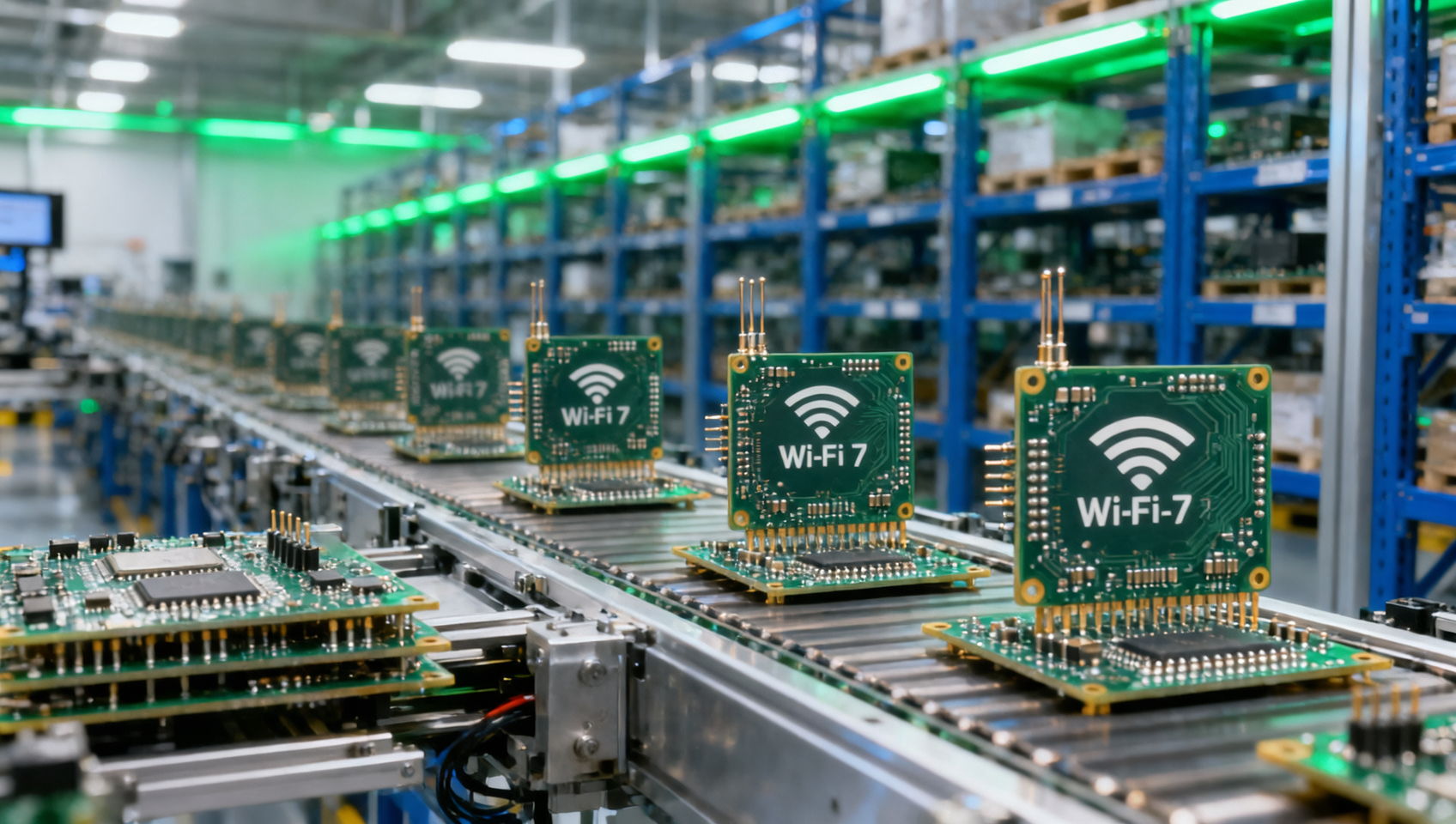
Asian Development Bank (ADB) revised Vietnam’s 2026 GDP growth forecast to 7.2% on April 26, 2026 — the highest in a decade — citing accelerated expansion of electronics assembly capacity and rising localization rates for smart home appliances. This update signals heightened demand for local supply chain support, particularly among PCB, MCU module, and Wi-Fi 7 communication module suppliers. Companies exporting smart home and IoT devices from China to Vietnam should prioritize documentation localization and regulatory compliance adaptation.
Event Overview
On April 26, 2026, the Asian Development Bank released its updated macroeconomic outlook for Vietnam, forecasting 7.2% GDP growth for 2026. Concurrently, Vietnam’s Ministry of Industry and Trade published the 2026–2030 Electronic Industry Support Roadmap, mandating that imported printed circuit boards (PCBs), microcontroller unit (MCU) modules, and Wi-Fi 7 communication modules must be accompanied by bilingual (Chinese–English) technical documentation and a joint RoHS + REACH declaration.
Industries Affected
Direct Exporters (China-based Smart Home & IoT Device Suppliers)
These firms face immediate documentation and compliance requirements when shipping regulated components to Vietnam. The mandate applies specifically to PCBs, MCU modules, and Wi-Fi 7 modules — not entire end products — meaning exporters must verify whether their shipped items fall under the scope.
Component Manufacturers & Module Integrators
Suppliers of sub-assemblies or integrated modules containing PCBs or MCUs are affected if those units are classified as ‘imported components’ under Vietnamese customs and industrial classification. Localization of technical documentation and dual-regulation declarations become prerequisites for customs clearance and market access.
Supply Chain & Compliance Service Providers
Firms offering technical documentation translation, regulatory certification support, or REACH/RoHS testing coordination may see increased demand — but only for services directly aligned with the three specified component categories and the bilingual + joint-declaration requirement.
What Relevant Enterprises Should Monitor and Do Now
Track official implementation guidance from Vietnam’s Ministry of Industry and Trade
The Roadmap is newly issued; detailed enforcement procedures, definitions of ‘module’ versus ‘finished device’, and timelines for compliance deadlines have not yet been publicly released. Monitoring official circulars or notifications from Vietnamese customs and the National Agency for Technology Standardization is essential.
Verify product classification against the mandated scope
Not all electronics imports are covered. Only PCBs, MCU modules, and Wi-Fi 7 communication modules are explicitly named. Companies should assess whether their exported items meet Vietnam’s functional and structural definitions of these categories — e.g., whether a Wi-Fi-enabled gateway qualifies as a ‘Wi-Fi 7 communication module’ or an assembled end device.
Distinguish policy signal from operational requirement
This is a formal roadmap commitment, not yet codified into binding decree or circular. Its current status is strategic direction — not enforceable regulation. However, given ADB’s GDP revision rationale ties directly to electronics localization progress, regulatory enforcement is likely to follow within 12–18 months.
Prepare bilingual documentation and joint compliance packages proactively
Translation and testing processes take time. Firms supplying the three targeted components should begin drafting English–Chinese technical documents and coordinating RoHS + REACH testing with accredited labs now — especially where test reports require manufacturer-specific declarations or material disclosures.
Editorial Observation / Industry Perspective
From industry perspective, this development is best understood as a forward-looking policy signal rather than an immediate operational shift. The ADB’s upward GDP revision reflects confidence in Vietnam’s evolving role as an electronics assembly hub — one increasingly demanding upstream component localization and documentation rigor. Analysis来看, the linkage between macroeconomic optimism and granular import requirements suggests Vietnam is shifting from labor-cost advantage toward regulatory- and standards-based competitiveness. Current more appropriate interpretation is that this marks the beginning of a multi-year alignment process between foreign suppliers and Vietnam’s industrial upgrading agenda — not a sudden compliance cliff.
Conclusion
This update underscores Vietnam’s deliberate move toward deeper integration into global electronics value chains — not just as an assembler, but as a node requiring standardized, transparent, and locally verifiable component inputs. For international suppliers, it signals the need for structured, documentation-first engagement — not just volume-driven export strategies. It is better understood as the opening phase of a regulatory convergence process, rather than a standalone compliance event.
Information Sources
Main source: Asian Development Bank (ADB) 2026 Vietnam Economic Outlook, released April 26, 2026; Vietnam Ministry of Industry and Trade, 2026–2030 Electronic Industry Support Roadmap. Note: Implementation details, enforcement timelines, and precise product definitions remain pending official clarification and are subject to ongoing observation.
Get weekly intelligence in your inbox.
No noise. No sponsored content. Pure intelligence.
 Apr 27, 2026Algeria’s Oil & Steel FDI Push Opens Valve, Corrosion-Resistant Material OrdersAlgeria’s Oil & Steel FDI Push Opens Valve, Corrosion-Resistant Material Orders
 Apr 27, 2026Azerbaijan’s New PV Mounting Standard Opens Path for Chinese SuppliersAzerbaijan’s New PV Mounting Standard Opens Path for Chinese Suppliers
 Apr 27, 2026Fitch Cuts East Africa Growth Forecasts, Raises Cross-Border Trade RisksFitch Cuts East Africa Growth Forecasts, Raises Cross-Border Trade Risks
 Apr 27, 2026ADB Raises Vietnam GDP Forecast to 7.2% on Electronics Export GrowthADB Raises Vietnam GDP Forecast to 7.2% on Electronics Export Growth
 Apr 27, 2026Maine Halts Large Data Centers: AI Server Export ImpactMaine Halts Large Data Centers: AI Server Export Impact
 Apr 27, 2026OFID $500M for Côte d'Ivoire: Boost to Factory Automation & Warehouse RoboticsOFID $500M for Côte d'Ivoire: Boost to Factory Automation & Warehouse Robotics
 Apr 27, 2026Morocco Ranks 4th in EU Energy Aid to AfricaMorocco Ranks 4th in EU Energy Aid to Africa
 Apr 27, 2026UAE Emerges as Global AI Hub, Opening Fast-Track for Chinese Smart DevicesUAE Emerges as Global AI Hub, Opening Fast-Track for Chinese Smart Devices
") Apr 26, 2026China Releases Green Design Guidelines for Industrial Products (2026)China Releases Green Design Guidelines for Industrial Products (2026)
Apr 26, 2026China Releases Green Design Guidelines for Industrial Products (2026)China Releases Green Design Guidelines for Industrial Products (2026) Apr 26, 2026ANATEL Mandates Portuguese Offline Voice Assistant for Smart Home Devices in BrazilANATEL Mandates Portuguese Offline Voice Assistant for Smart Home Devices in Brazil
 Apr 26, 2026Vietnam Enforces Bilingual Safety Labels for Electronic Components from Apr 22, 2026Vietnam Enforces Bilingual Safety Labels for Electronic Components from Apr 22, 2026
 Apr 26, 2026Japan Updates JIS for Rehab Devices: IEC 62366-1:2024 RequiredJapan Updates JIS for Rehab Devices: IEC 62366-1:2024 Required
 Apr 26, 2026THE Alliance Cuts Ningbo–Rotterdam Transit to 18 Days, Spot Rates Up 35%THE Alliance Cuts Ningbo–Rotterdam Transit to 18 Days, Spot Rates Up 35%
 Apr 26, 2026India BIS Mandates PLC & HMI Certification under IS 13252:2025 by Oct 2026India BIS Mandates PLC & HMI Certification under IS 13252:2025 by Oct 2026
") Apr 26, 2026SASO Enforces New EV Charger Rules in Saudi Arabia (2026)SASO Enforces New EV Charger Rules in Saudi Arabia (2026)
Apr 26, 2026SASO Enforces New EV Charger Rules in Saudi Arabia (2026)SASO Enforces New EV Charger Rules in Saudi Arabia (2026) Apr 26, 2026TÜV Rheinland Updates IoT EMC Guidelines: AI Edge Modules Now Mandatory for Immunity TestingTÜV Rheinland Updates IoT EMC Guidelines: AI Edge Modules Now Mandatory for Immunity Testing
 Apr 26, 2026USTR Launches First Annual Review of China Solar PV AD/CVD OrdersUSTR Launches First Annual Review of China Solar PV AD/CVD Orders
 Apr 26, 2026EU New Battery Regulation Fully Enforced Apr 24, 2026EU New Battery Regulation Fully Enforced Apr 24, 2026
 Apr 25, 2026Vietnam Enforces CN-EN Bilingual Safety Labels on Electronic Components from Apr 22, 2026Vietnam Enforces CN-EN Bilingual Safety Labels on Electronic Components from Apr 22, 2026
 Apr 25, 2026ANATEL Mandates Portuguese Offline Voice Assistants for Smart Home Devices in BrazilANATEL Mandates Portuguese Offline Voice Assistants for Smart Home Devices in Brazil
 Apr 25, 2026India BIS Mandates IS 13252:2025 for PLCs & HMIs by Oct 2026India BIS Mandates IS 13252:2025 for PLCs & HMIs by Oct 2026
 Apr 25, 2026SASO EV Charger Rules: Grid Compatibility & Sand Resistance RequiredSASO EV Charger Rules: Grid Compatibility & Sand Resistance Required
 Apr 25, 2026JIS T 0011:2026 Enforces IEC 62366-1:2024 for Rehab Devices in JapanJIS T 0011:2026 Enforces IEC 62366-1:2024 for Rehab Devices in Japan
 Apr 25, 2026THE Alliance Cuts Ningbo–Rotterdam Transit to 18 Days, +35% Spot RateTHE Alliance Cuts Ningbo–Rotterdam Transit to 18 Days, +35% Spot Rate
 Apr 25, 2026TÜV Rheinland Updates IoT EMC Standard: AI Edge Module Immunity Now MandatoryTÜV Rheinland Updates IoT EMC Standard: AI Edge Module Immunity Now Mandatory
 Apr 25, 2026USTR Launches Five-Year China Solar PV AD/CVD ReviewUSTR Launches Five-Year China Solar PV AD/CVD Review
 Apr 25, 2026EU New Battery Regulation Enters Force Apr 24, 2026EU New Battery Regulation Enters Force Apr 24, 2026