Azerbaijan’s New PV Mounting Standard Opens Path for Chinese Suppliers
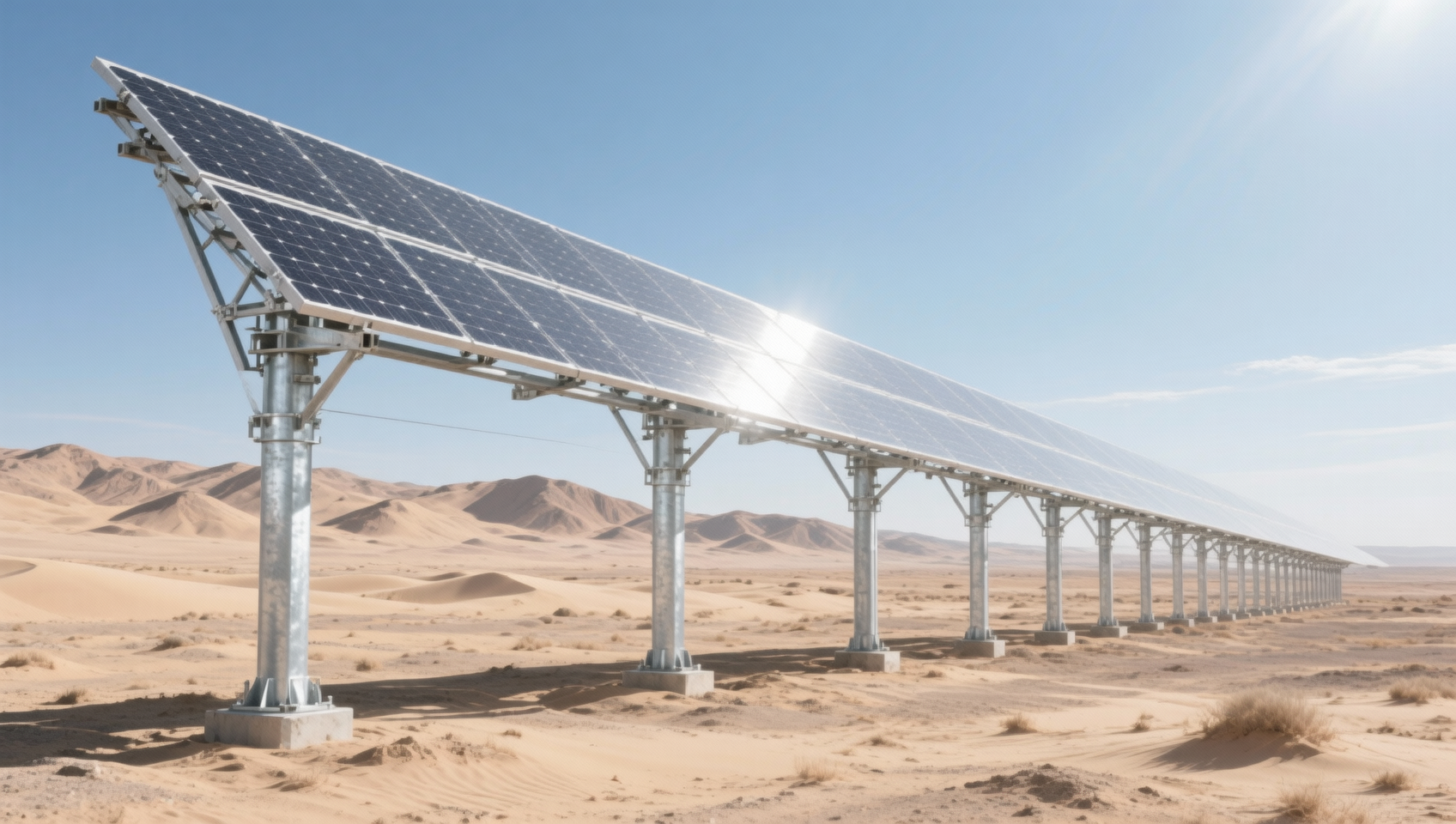
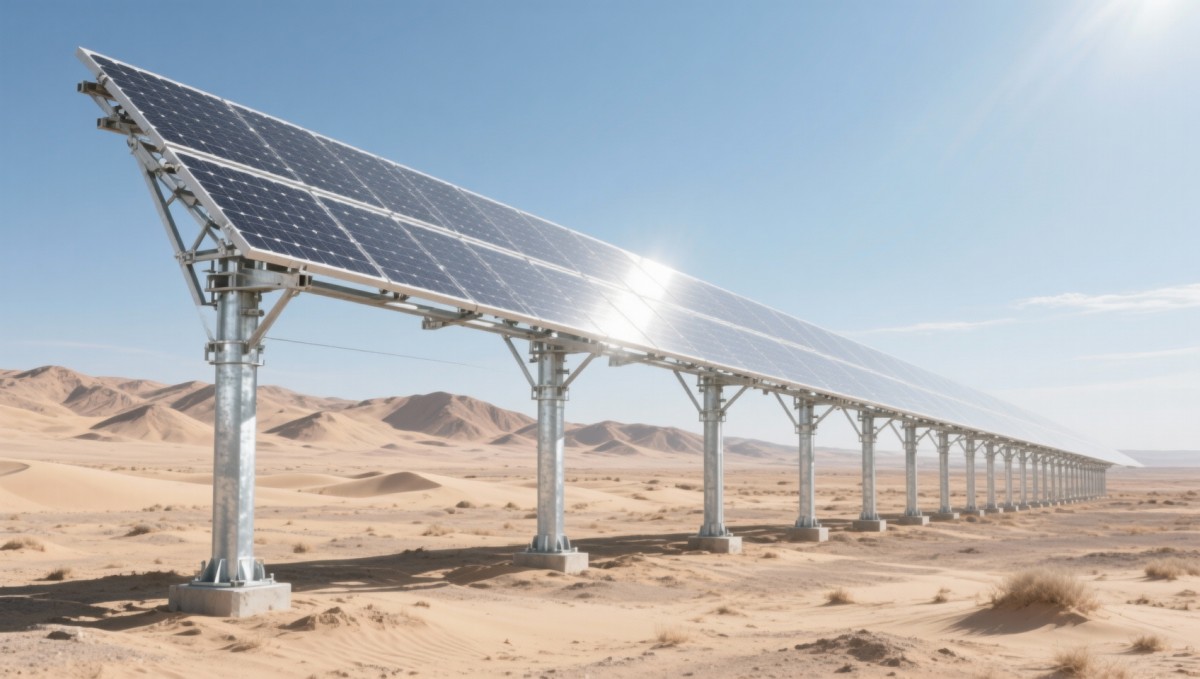
Azerbaijan’s national energy agency Azerenergy issued a revised structural safety standard for ground-mounted solar photovoltaic (PV) power plants—AZS 7.12:2026—on April 22, 2026. The standard introduces mandatory wind-sand corrosion testing per ISO 14725 for PV mounting structures and explicitly accepts CNAS-accredited test reports from China. This development is particularly relevant for manufacturers and exporters of industrial materials, PV structural components, and solar tracking systems serving the Caucasus and broader CIS markets.
Event Overview
On April 22, 2026, Azerenergy published AZS 7.12:2026, titled Structural Safety Requirements for Ground-Mounted Photovoltaic Power Plants. According to International Engineering Watch, the standard mandates compliance with ISO 14725 for wind-sand corrosion resistance of ground-mounted PV support structures and recognizes test reports issued by laboratories accredited under China’s National Accreditation Service for Conformity Assessment (CNAS). The regulation applies to new ground-mounted solar projects in Azerbaijan.
Industries Affected
Direct Exporters of PV Mounting Structures & Tracking Systems
These enterprises supply finished mounting solutions—including fixed-tilt racks, single-axis trackers, and foundation components—to EPC contractors or developers active in Azerbaijan. The new standard directly affects product eligibility: non-compliant structures cannot be certified for use in nationally regulated ground-mount projects. Impact includes potential delays in tender participation, increased pre-shipment testing costs, and need for updated technical documentation referencing CNAS-accredited ISO 14725 reports.
Manufacturers of Industrial Materials for PV Structural Components
This group includes producers of galvanized steel sections, aluminum extrusions, hot-dip galvanized fasteners, and corrosion-resistant coatings used in PV racking. While the standard does not regulate raw materials directly, it establishes an upstream demand signal: material suppliers must ensure their output enables downstream fabricators to meet ISO 14725 performance thresholds. Impact manifests in tighter specification alignment, traceability requirements for surface treatment processes, and possible requests for material-level corrosion test data.
Testing & Certification Service Providers
Domestic and third-party labs offering ISO 14725 testing—especially those with CNAS accreditation—are positioned to support verification efforts. The standard’s recognition of CNAS reports creates a localized validation pathway, reducing reliance on EU- or US-based certification bodies. Impact includes higher demand for sand-laden wind simulation testing capacity and need for clear documentation linking test reports to specific product configurations and installation environments.
Supply Chain & Logistics Operators Supporting Solar Exports to Azerbaijan
Entities managing customs clearance, technical documentation submission, and conformity assessment coordination for PV hardware shipments may face new document review requirements. The standard does not specify transitional provisions; therefore, importers should anticipate stricter scrutiny of structural compliance evidence during project permitting and customs inspection phases. Impact includes heightened need for bilingual (English/Azerbaijani) technical annexes and traceable test report archiving.
What Enterprises and Practitioners Should Focus On Now
Monitor official implementation guidance and transitional timelines
Azerenergy has not yet published enforcement dates, conformity assessment procedures, or grandfathering clauses for projects approved before April 22, 2026. Stakeholders should track updates via Azerenergy’s official portal and the State Standardization Agency of Azerbaijan.
Verify applicability to specific product categories and site conditions
AZS 7.12:2026 applies only to ground-mounted PV systems—not rooftop or floating installations—and references wind-sand corrosion specifically. Analysis来看, the standard’s geographic focus implies relevance primarily for projects in arid, low-altitude zones such as the Absheron Peninsula and western plains—regions where sand abrasion and saline winds are documented environmental stressors.
Distinguish between regulatory signal and immediate procurement impact
The publication of AZS 7.12:2026 signals tightening technical governance—not an immediate ban on non-compliant hardware. From industry perspective, most near-term tenders will likely reference the new standard in RFPs but allow time for compliance demonstration. Actual project-level enforcement may lag formal adoption by 6–12 months.
Prepare technical documentation aligned with CNAS-ISO 14725 linkage
Exporters should audit existing test reports to confirm they meet ISO 14725’s Clause 6 (test methodology), Clause 7 (performance criteria), and include full traceability to CNAS-accredited labs. Where gaps exist, initiate retesting with labs holding current CNAS scope for ISO 14725—particularly those validating both static load retention and post-corrosion mechanical integrity.
Editorial Perspective / Industry Observation
This standard is best understood as a technical anchoring point—not yet a market barrier. Observation来看, AZS 7.12:2026 reflects Azerbaijan’s broader shift toward codifying renewable infrastructure quality control amid rapid capacity growth: national wind and solar installed capacity rose 41% year-on-year in 2025. From industry angle, its significance lies less in novelty and more in specificity—it names both a test protocol (ISO 14725) and an accepted accreditation body (CNAS), thereby reducing ambiguity for Chinese suppliers. Current more appropriate interpretation is that it marks the beginning of a localized, standards-driven procurement environment—not the end of one.
It remains to be observed whether similar requirements will extend to other structural components (e.g., transformer foundations, substation fencing) or be mirrored by neighboring jurisdictions such as Georgia or Kazakhstan. That evolution would indicate deeper regional harmonization around industrial material durability standards for renewables.
Conclusion
AZS 7.12:2026 does not represent an abrupt policy shift but rather a formalized technical expectation aligned with Azerbaijan’s accelerating renewable deployment. Its practical effect is to elevate baseline performance requirements for PV support structures while simultaneously lowering certification friction for CNAS-holding Chinese manufacturers. For stakeholders, this is better interpreted as a calibration of market entry conditions—not a disruption.
Source Attribution
Main source: International Engineering Watch
Note: Implementation timeline, enforcement mechanisms, and applicability to hybrid or off-grid projects remain unconfirmed and require ongoing monitoring.
Get weekly intelligence in your inbox.
No noise. No sponsored content. Pure intelligence.
 Apr 27, 2026Algeria’s Oil & Steel FDI Push Opens Valve, Corrosion-Resistant Material OrdersAlgeria’s Oil & Steel FDI Push Opens Valve, Corrosion-Resistant Material Orders
 Apr 27, 2026Azerbaijan’s New PV Mounting Standard Opens Path for Chinese SuppliersAzerbaijan’s New PV Mounting Standard Opens Path for Chinese Suppliers
 Apr 27, 2026Fitch Cuts East Africa Growth Forecasts, Raises Cross-Border Trade RisksFitch Cuts East Africa Growth Forecasts, Raises Cross-Border Trade Risks
 Apr 27, 2026ADB Raises Vietnam GDP Forecast to 7.2% on Electronics Export GrowthADB Raises Vietnam GDP Forecast to 7.2% on Electronics Export Growth
 Apr 27, 2026Maine Halts Large Data Centers: AI Server Export ImpactMaine Halts Large Data Centers: AI Server Export Impact
 Apr 27, 2026OFID $500M for Côte d'Ivoire: Boost to Factory Automation & Warehouse RoboticsOFID $500M for Côte d'Ivoire: Boost to Factory Automation & Warehouse Robotics
 Apr 27, 2026Morocco Ranks 4th in EU Energy Aid to AfricaMorocco Ranks 4th in EU Energy Aid to Africa
 Apr 27, 2026UAE Emerges as Global AI Hub, Opening Fast-Track for Chinese Smart DevicesUAE Emerges as Global AI Hub, Opening Fast-Track for Chinese Smart Devices
") Apr 26, 2026China Releases Green Design Guidelines for Industrial Products (2026)China Releases Green Design Guidelines for Industrial Products (2026)
Apr 26, 2026China Releases Green Design Guidelines for Industrial Products (2026)China Releases Green Design Guidelines for Industrial Products (2026) Apr 26, 2026ANATEL Mandates Portuguese Offline Voice Assistant for Smart Home Devices in BrazilANATEL Mandates Portuguese Offline Voice Assistant for Smart Home Devices in Brazil
 Apr 26, 2026Vietnam Enforces Bilingual Safety Labels for Electronic Components from Apr 22, 2026Vietnam Enforces Bilingual Safety Labels for Electronic Components from Apr 22, 2026
 Apr 26, 2026Japan Updates JIS for Rehab Devices: IEC 62366-1:2024 RequiredJapan Updates JIS for Rehab Devices: IEC 62366-1:2024 Required
 Apr 26, 2026THE Alliance Cuts Ningbo–Rotterdam Transit to 18 Days, Spot Rates Up 35%THE Alliance Cuts Ningbo–Rotterdam Transit to 18 Days, Spot Rates Up 35%
 Apr 26, 2026India BIS Mandates PLC & HMI Certification under IS 13252:2025 by Oct 2026India BIS Mandates PLC & HMI Certification under IS 13252:2025 by Oct 2026
") Apr 26, 2026SASO Enforces New EV Charger Rules in Saudi Arabia (2026)SASO Enforces New EV Charger Rules in Saudi Arabia (2026)
Apr 26, 2026SASO Enforces New EV Charger Rules in Saudi Arabia (2026)SASO Enforces New EV Charger Rules in Saudi Arabia (2026) Apr 26, 2026TÜV Rheinland Updates IoT EMC Guidelines: AI Edge Modules Now Mandatory for Immunity TestingTÜV Rheinland Updates IoT EMC Guidelines: AI Edge Modules Now Mandatory for Immunity Testing
 Apr 26, 2026USTR Launches First Annual Review of China Solar PV AD/CVD OrdersUSTR Launches First Annual Review of China Solar PV AD/CVD Orders
 Apr 26, 2026EU New Battery Regulation Fully Enforced Apr 24, 2026EU New Battery Regulation Fully Enforced Apr 24, 2026
 Apr 25, 2026Vietnam Enforces CN-EN Bilingual Safety Labels on Electronic Components from Apr 22, 2026Vietnam Enforces CN-EN Bilingual Safety Labels on Electronic Components from Apr 22, 2026
 Apr 25, 2026ANATEL Mandates Portuguese Offline Voice Assistants for Smart Home Devices in BrazilANATEL Mandates Portuguese Offline Voice Assistants for Smart Home Devices in Brazil
 Apr 25, 2026India BIS Mandates IS 13252:2025 for PLCs & HMIs by Oct 2026India BIS Mandates IS 13252:2025 for PLCs & HMIs by Oct 2026
 Apr 25, 2026SASO EV Charger Rules: Grid Compatibility & Sand Resistance RequiredSASO EV Charger Rules: Grid Compatibility & Sand Resistance Required
 Apr 25, 2026JIS T 0011:2026 Enforces IEC 62366-1:2024 for Rehab Devices in JapanJIS T 0011:2026 Enforces IEC 62366-1:2024 for Rehab Devices in Japan
 Apr 25, 2026THE Alliance Cuts Ningbo–Rotterdam Transit to 18 Days, +35% Spot RateTHE Alliance Cuts Ningbo–Rotterdam Transit to 18 Days, +35% Spot Rate
 Apr 25, 2026TÜV Rheinland Updates IoT EMC Standard: AI Edge Module Immunity Now MandatoryTÜV Rheinland Updates IoT EMC Standard: AI Edge Module Immunity Now Mandatory
 Apr 25, 2026USTR Launches Five-Year China Solar PV AD/CVD ReviewUSTR Launches Five-Year China Solar PV AD/CVD Review
 Apr 25, 2026EU New Battery Regulation Enters Force Apr 24, 2026EU New Battery Regulation Enters Force Apr 24, 2026