Algeria’s Oil & Steel FDI Push Opens Valve, Corrosion-Resistant Material Orders
On April 26, 2026, Algeria’s Ministry of Energy and Ministry of Industry jointly announced new foreign investment projects in oil & gas field development and specialty steel production — triggering actionable procurement opportunities for industrial valves and corrosion-resistant materials suppliers globally.
Event Overview
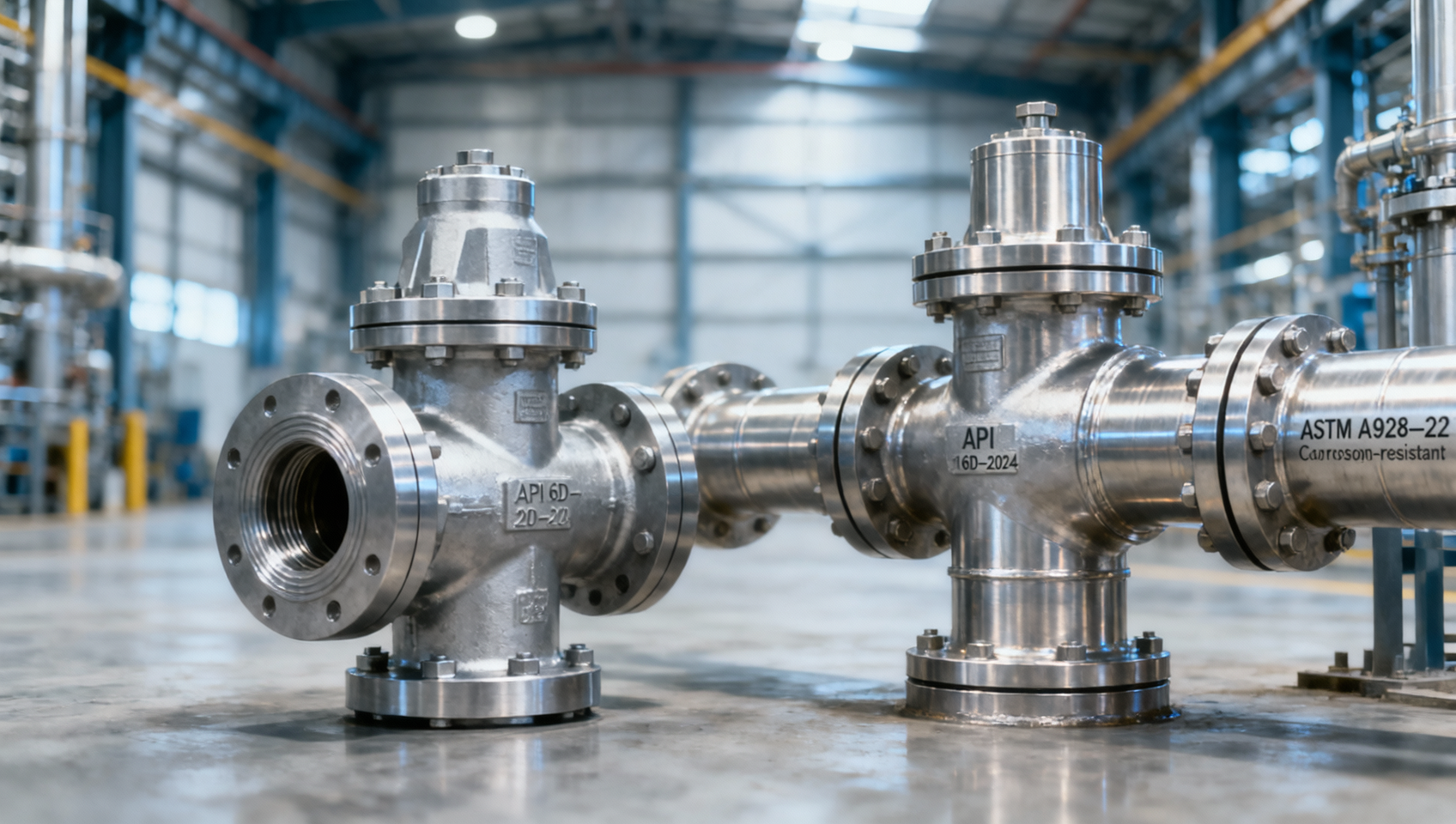
On April 26, 2026, Algeria’s Ministry of Energy and Ministry of Industry confirmed that three new oil & gas field development projects and two specialty steel smelting plants — all foreign-invested — were approved in Q1 2026, with a total committed investment of USD 1.28 billion. The official project procurement lists have been released globally, specifying mandatory compliance: industrial valves must meet API 6D–2024; corrosion-resistant alloy pipe materials must conform to ASTM A928–22; and SGS third-party inspection reports issued by Chinese steel mills are explicitly accepted.
Which Sub-Sectors Are Affected
Direct Exporters (Industrial Valves & Corrosion-Resistant Materials)
These enterprises face immediate eligibility requirements tied to technical standards and certification pathways. The explicit acceptance of SGS reports from Chinese mills lowers documentation barriers for certain exporters but raises the bar for pre-shipment verification and traceability.
Raw Material Suppliers (Nickel-Alloy Ingots, Duplex Stainless Billets)
Suppliers feeding into valve casting or seamless tube manufacturing will experience downstream demand signals — especially for grades compliant with ASTM A928–22. However, no volume commitments or delivery timelines were disclosed in the announcement, meaning demand remains conditional on project execution pace.
Machined Component Manufacturers (CNC Machining Services)
Firms providing precision machining for valve bodies, actuators, or flanged fittings may see indirect order flow if selected as Tier-2 vendors by primary equipment suppliers bidding on Algerian EPC contracts. No direct procurement framework for machining services was outlined in the release.
Supply Chain & Compliance Service Providers
Third-party inspection agencies, certification consultants, and export documentation specialists serving China-based industrial material exporters may see increased inquiry volume — particularly around API 6D–2024 conformity assessments and ASTM A928–22 test report validation. The mention of SGS acceptance signals preference for internationally recognized verification, not local or ad hoc certification.
What Relevant Companies or Practitioners Should Focus On Now
Monitor official tender timelines and bidder qualification notices
The announcement confirms procurement lists are open, but does not specify when formal international tenders will launch, nor whether bids must be submitted via Algerian EPC contractors or directly to state-owned operators like Sonatrach. Tracking upcoming procurement portals (e.g., Sonatrach’s e-tendering platform) is essential.
Prioritize API 6D–2024 and ASTM A928–22 readiness — not just prior editions
The cited standards are current revisions (2024 and 2022 respectively). Entities relying on legacy certifications (e.g., API 6D–2020 or ASTM A928–17) must verify equivalency or initiate recertification — especially for critical service applications such as sour gas environments.
Distinguish between policy signal and contract award reality
This is a project approval and procurement list release — not a contract award. Execution risk remains tied to financing, permitting, and geopolitical factors. Companies should treat this as a qualified pipeline signal, not an immediate revenue trigger.
Prepare SGS-aligned documentation packages for Chinese mill-origin materials
Since SGS reports from Chinese mills are explicitly accepted, exporters should ensure their supply chain documentation (mill test reports, heat logs, NDT records) aligns with SGS sampling and reporting protocols — not just internal QA records.
Editorial Observation / Industry Perspective
From an industry perspective, this announcement is best understood as a coordinated policy signal — not yet a procurement outcome. It reflects Algeria’s dual-track strategy: accelerating energy infrastructure while upgrading domestic metallurgical capacity. Analysis来看, the inclusion of both upstream (oil & gas fields) and midstream (steel smelting) investments suggests intent to localize critical component manufacturing — potentially increasing long-term demand for high-spec materials, but also raising local content expectations in future phases. Current more值得关注的是 the timing and scope of subsequent tender documents, not the headline investment figure alone. This is a procedural milestone — one that opens eligibility pathways, but does not guarantee order conversion.
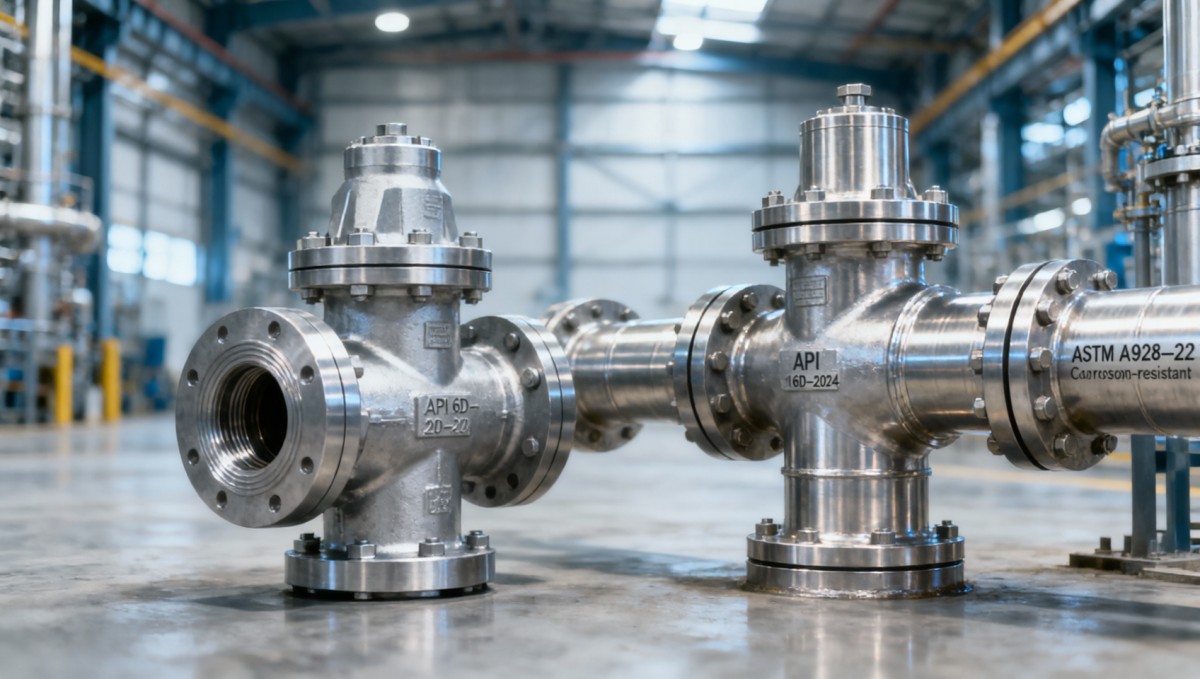
Algeria’s Ministry of Energy and Ministry of Industry official joint statement (April 26, 2026). Note: Tender issuance schedules, bidder registration requirements, and final contract award status remain pending official publication and require ongoing monitoring.
This update reflects only confirmed information released on April 26, 2026. No further project details, vendor selection criteria, or timeline extensions have been verified beyond that date.
Get weekly intelligence in your inbox.
No noise. No sponsored content. Pure intelligence.
 Apr 27, 2026Algeria’s Oil & Steel FDI Push Opens Valve, Corrosion-Resistant Material OrdersAlgeria’s Oil & Steel FDI Push Opens Valve, Corrosion-Resistant Material Orders
 Apr 27, 2026Azerbaijan’s New PV Mounting Standard Opens Path for Chinese SuppliersAzerbaijan’s New PV Mounting Standard Opens Path for Chinese Suppliers
 Apr 27, 2026Fitch Cuts East Africa Growth Forecasts, Raises Cross-Border Trade RisksFitch Cuts East Africa Growth Forecasts, Raises Cross-Border Trade Risks
 Apr 27, 2026ADB Raises Vietnam GDP Forecast to 7.2% on Electronics Export GrowthADB Raises Vietnam GDP Forecast to 7.2% on Electronics Export Growth
 Apr 27, 2026Maine Halts Large Data Centers: AI Server Export ImpactMaine Halts Large Data Centers: AI Server Export Impact
 Apr 27, 2026OFID $500M for Côte d'Ivoire: Boost to Factory Automation & Warehouse RoboticsOFID $500M for Côte d'Ivoire: Boost to Factory Automation & Warehouse Robotics
 Apr 27, 2026Morocco Ranks 4th in EU Energy Aid to AfricaMorocco Ranks 4th in EU Energy Aid to Africa
 Apr 27, 2026UAE Emerges as Global AI Hub, Opening Fast-Track for Chinese Smart DevicesUAE Emerges as Global AI Hub, Opening Fast-Track for Chinese Smart Devices
") Apr 26, 2026China Releases Green Design Guidelines for Industrial Products (2026)China Releases Green Design Guidelines for Industrial Products (2026)
Apr 26, 2026China Releases Green Design Guidelines for Industrial Products (2026)China Releases Green Design Guidelines for Industrial Products (2026) Apr 26, 2026ANATEL Mandates Portuguese Offline Voice Assistant for Smart Home Devices in BrazilANATEL Mandates Portuguese Offline Voice Assistant for Smart Home Devices in Brazil
 Apr 26, 2026Vietnam Enforces Bilingual Safety Labels for Electronic Components from Apr 22, 2026Vietnam Enforces Bilingual Safety Labels for Electronic Components from Apr 22, 2026
 Apr 26, 2026Japan Updates JIS for Rehab Devices: IEC 62366-1:2024 RequiredJapan Updates JIS for Rehab Devices: IEC 62366-1:2024 Required
 Apr 26, 2026THE Alliance Cuts Ningbo–Rotterdam Transit to 18 Days, Spot Rates Up 35%THE Alliance Cuts Ningbo–Rotterdam Transit to 18 Days, Spot Rates Up 35%
 Apr 26, 2026India BIS Mandates PLC & HMI Certification under IS 13252:2025 by Oct 2026India BIS Mandates PLC & HMI Certification under IS 13252:2025 by Oct 2026
") Apr 26, 2026SASO Enforces New EV Charger Rules in Saudi Arabia (2026)SASO Enforces New EV Charger Rules in Saudi Arabia (2026)
Apr 26, 2026SASO Enforces New EV Charger Rules in Saudi Arabia (2026)SASO Enforces New EV Charger Rules in Saudi Arabia (2026) Apr 26, 2026TÜV Rheinland Updates IoT EMC Guidelines: AI Edge Modules Now Mandatory for Immunity TestingTÜV Rheinland Updates IoT EMC Guidelines: AI Edge Modules Now Mandatory for Immunity Testing
 Apr 26, 2026USTR Launches First Annual Review of China Solar PV AD/CVD OrdersUSTR Launches First Annual Review of China Solar PV AD/CVD Orders
 Apr 26, 2026EU New Battery Regulation Fully Enforced Apr 24, 2026EU New Battery Regulation Fully Enforced Apr 24, 2026
 Apr 25, 2026Vietnam Enforces CN-EN Bilingual Safety Labels on Electronic Components from Apr 22, 2026Vietnam Enforces CN-EN Bilingual Safety Labels on Electronic Components from Apr 22, 2026
 Apr 25, 2026ANATEL Mandates Portuguese Offline Voice Assistants for Smart Home Devices in BrazilANATEL Mandates Portuguese Offline Voice Assistants for Smart Home Devices in Brazil
 Apr 25, 2026India BIS Mandates IS 13252:2025 for PLCs & HMIs by Oct 2026India BIS Mandates IS 13252:2025 for PLCs & HMIs by Oct 2026
 Apr 25, 2026SASO EV Charger Rules: Grid Compatibility & Sand Resistance RequiredSASO EV Charger Rules: Grid Compatibility & Sand Resistance Required
 Apr 25, 2026JIS T 0011:2026 Enforces IEC 62366-1:2024 for Rehab Devices in JapanJIS T 0011:2026 Enforces IEC 62366-1:2024 for Rehab Devices in Japan
 Apr 25, 2026THE Alliance Cuts Ningbo–Rotterdam Transit to 18 Days, +35% Spot RateTHE Alliance Cuts Ningbo–Rotterdam Transit to 18 Days, +35% Spot Rate
 Apr 25, 2026TÜV Rheinland Updates IoT EMC Standard: AI Edge Module Immunity Now MandatoryTÜV Rheinland Updates IoT EMC Standard: AI Edge Module Immunity Now Mandatory
 Apr 25, 2026USTR Launches Five-Year China Solar PV AD/CVD ReviewUSTR Launches Five-Year China Solar PV AD/CVD Review
 Apr 25, 2026EU New Battery Regulation Enters Force Apr 24, 2026EU New Battery Regulation Enters Force Apr 24, 2026