How to Choose Wind Generator Kits That Actually Match Your Load
Choosing wind generator kits without matching them to your actual load can lead to wasted budget, poor charging performance, and unreliable power output. For buyers and project teams comparing wind generator kits alongside mppt controllers, solar charge controllers, battery management systems, deep cycle batteries, and portable solar panels, the key is understanding how demand, storage, and control components work together before making a procurement decision.
Why do many wind generator kits fail to match the real load profile?
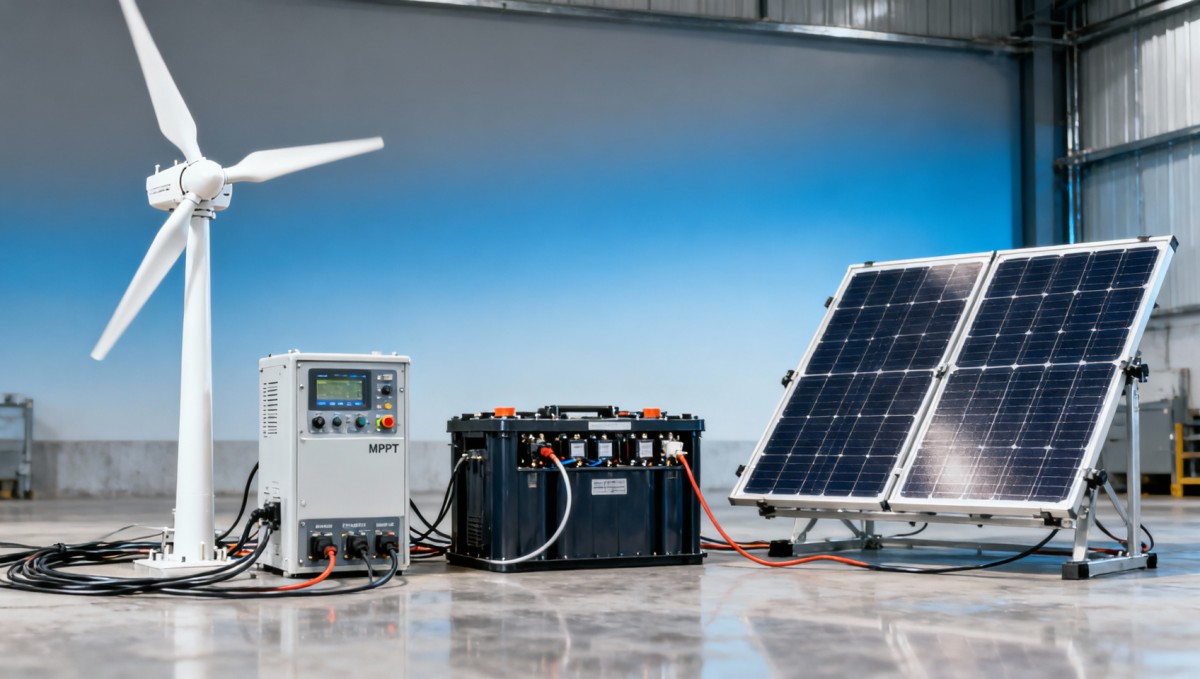
In B2B energy projects, the biggest mistake is sizing a wind generator kit by rated turbine wattage alone. A 400W, 800W, or 2kW nameplate does not tell you whether the system can support communication equipment, lighting, pumps, sensors, or hybrid backup loads across a full 24-hour cycle. Procurement teams often compare catalog outputs, while operators care about usable energy over time, startup behavior, and charging stability.
A proper match starts with load analysis in 3 layers: continuous demand, intermittent peaks, and autonomy requirement. For example, a remote monitoring node may only average 150W, but if it includes routers, cameras, and heater elements, short peaks may reach 250W–400W. If the battery bank and controller are undersized, the turbine cannot compensate for those peaks even when the wind resource looks sufficient on paper.
Another issue is that wind energy is not a flat source. Output varies with wind speed, tower height, turbulence, and system losses. A kit installed in a 5m/s to 6m/s annual average wind regime behaves very differently from the same kit in a 7m/s to 8m/s site. This is why project managers should evaluate expected daily energy production, not only instantaneous power rating.
For cross-functional teams, the right question is not “What is the biggest wind generator kit within budget?” but “What combination of turbine, charge control, battery storage, and load profile delivers stable power within our risk tolerance?” That shift improves technical fit, procurement clarity, and long-term operating cost control.
The 4 basic inputs you need before comparing suppliers
- Average daily energy demand in Wh or kWh over 24 hours, including standby and night operation.
- Peak load range, especially startup current for motors, pumps, telecom heaters, and control cabinets.
- Required backup duration, commonly 12 hours, 24 hours, 48 hours, or longer for off-grid sites.
- Site wind condition, tower installation constraints, and whether the project will run wind-only or hybrid wind-solar.
These 4 inputs help distributors, EPC teams, and enterprise buyers filter out unsuitable wind generator kits early. They also make quote comparisons more meaningful because controller type, battery chemistry, and dump load design can be reviewed against the same operating assumptions.
How to calculate whether a wind generator kit really matches your load
A practical selection process begins with energy balance rather than hardware preference. First, total the load by day. If your devices consume 3.6kWh per day, your generation and storage plan must cover that demand plus conversion losses. In small and medium off-grid systems, a planning allowance of 15%–30% for wiring, controller, battery, and environmental losses is common, depending on temperature, cable length, and charging efficiency.
Second, separate base load from surge load. A control station with a 120W continuous draw and a 500W short-duration surge needs inverter and battery support sized for both conditions. Wind generator kits often charge batteries well under steady wind, but direct support for peaks depends on system voltage, inverter headroom, and storage discharge capability. This is where deep cycle batteries and battery management systems become central to the design.
Third, define autonomy. If the site must keep running for 24–48 hours during low-wind periods, battery capacity becomes a major cost driver. Procurement teams sometimes overbuy turbine size to solve a storage problem. In reality, adding the correct battery bank or integrating portable solar panels for daytime support may be more cost-effective than jumping to a larger turbine class.
The table below provides a simple evaluation framework for matching wind generator kits to load categories. It is not a replacement for engineering design, but it helps buyers and project owners identify whether a proposed kit is broadly aligned with the expected duty cycle.
The key takeaway is that load matching is a system exercise. Wind generator kits should be evaluated together with charging logic, battery reserve, and realistic weather variability. In procurement reviews, this approach reduces overspecification and lowers the risk of underperforming installations after commissioning.
A 5-step load matching method for project teams
- List all loads by wattage, operating hours, and whether each load is continuous or intermittent.
- Convert the list into daily energy demand and note any surge load above nominal rating.
- Set the autonomy target, usually 12–48 hours for remote field applications.
- Review local wind conditions and identify whether hybrid support is required in low-wind months.
- Compare candidate kits by usable generation, battery charging strategy, and protection functions rather than brochure power alone.
This step sequence is especially useful for procurement departments working with engineering, operations, and finance at the same time. It creates a common language for technical fit, cost approval, and supplier communication.
Which components matter most besides the turbine itself?
When enterprise buyers compare wind generator kits, they often focus first on rotor diameter, rated wattage, and voltage. Those are important, but they are only part of the decision. In many field deployments, the real performance gap comes from control electronics, battery behavior, and system integration discipline. A weak controller or poorly matched battery can reduce the value of an otherwise acceptable turbine.
MPPT controllers and solar charge controllers are especially relevant in hybrid systems. If the project combines wind generator kits with portable solar panels or fixed PV modules, the charging architecture must be reviewed carefully. Wind and solar have different power curves, and the controller strategy must handle variable input without overcharging batteries or wasting generation when loads are low.
Battery management systems are critical when lithium storage is used. They monitor cell balance, charge-discharge limits, and temperature protection. For lead-acid deep cycle batteries, the focus shifts toward cycle depth, float behavior, and replacement intervals. In both cases, storage is not just a passive accessory. It determines how well a wind generator kit can convert variable generation into stable power for real equipment.
The comparison below shows how the main supporting components influence load matching, operating reliability, and procurement risk in a practical B2B environment.
For distributors and sourcing teams, this comparison helps identify whether a quote is complete or only partially defined. A low kit price may exclude key parts such as dump load control, weatherproof enclosures, or battery communication features. Those omissions usually appear later as change orders, field delays, or performance complaints.
What buyers should prioritize by project type
For operators and maintenance teams
Look for simple fault indicators, manual shutdown options, and service access. In remote sites, maintenance intervals of 3–6 months are common, so inspection convenience matters almost as much as peak output.
For procurement and commercial evaluators
Ask suppliers to separate turbine cost, controller cost, battery cost, and optional hybrid inputs. That breakdown makes apples-to-apples comparison easier and exposes hidden scope gaps before contract negotiation.
For enterprise decision-makers
Focus on serviceability, spare part continuity, and system scalability over 2–5 years. A kit that works for pilot deployment may not be the right architecture for multi-site rollout across changing environmental conditions.
What should you compare during procurement, compliance, and delivery planning?
Procurement of wind generator kits in a B2B setting rarely ends with technical selection. Buyers also need to assess documentation quality, delivery timing, installation constraints, and compliance fit for the destination market. Typical lead times for standard configurations may fall within 2–6 weeks, while customized towers, enclosures, or battery assemblies can extend planning windows further depending on sourcing complexity.
Documentation should include electrical specifications, charge controller behavior, recommended battery sizing, wiring diagrams, and environmental operating guidance. If the system is intended for export, confirm whether the shipment includes batteries, and whether transport or packaging requirements affect schedule and cost. These practical details often shape project feasibility more than brochure performance claims.
Compliance needs also vary by use case. Depending on the market and installation type, buyers may need to review electrical safety, EMC considerations, battery transport rules, or local installation practices. Even when a project does not require an unusually strict regulatory package, commercial teams should still confirm the documentation trail before placing volume orders.
The following checklist can be used across sourcing, project management, and technical review meetings to evaluate whether a wind generator kit proposal is ready for procurement approval.
- Confirm 5 key electrical points: nominal voltage, charging method, battery compatibility, load output path, and protection logic.
- Confirm 4 delivery points: lead time, packaging scope, spare part availability, and documentation set.
- Confirm 3 field points: tower or mounting requirement, expected maintenance interval, and commissioning support.
- Confirm whether hybrid expansion with portable solar panels or fixed PV is planned within the next 12–24 months.
For project leaders managing multiple stakeholders, this structure reduces approval friction. Technical teams can validate system fit, procurement can control scope, and management can review life-cycle implications without getting lost in isolated component discussions.
Common mistakes that increase total project cost
One common error is selecting a low-cost wind generator kit without checking the minimum practical wind conditions for the site. Another is underestimating battery reserve and then adding emergency backup later at a higher installed cost. Teams also overlook service items such as replacement blades, brake controls, connectors, or monitoring interfaces, which can delay commissioning by 7–15 days when not specified in the purchase order.
A second error is mixing controllers and batteries from unrelated system assumptions. For example, using a generic solar charge controller where a wind-specific charging and dump load solution is required can create charging instability. Hybrid systems need defined logic, not improvised field wiring.
This is where a market intelligence platform like TradeNexus Pro adds value. Instead of browsing fragmented supplier claims, buyers can benchmark component categories, compare solution architectures, and assess procurement readiness using a deeper sector lens across green energy, smart electronics, and supply chain execution.
FAQ and decision guidance for buyers evaluating wind generator kits
Many search queries around wind generator kits come from practical uncertainty: how much power is really needed, what battery size is enough, whether hybrid charging is necessary, and how long procurement will take. The answers below focus on realistic B2B buying scenarios rather than consumer-level assumptions.
How do I know if a wind generator kit is too small for my project?
If the proposed kit is sized only to average load and ignores battery autonomy, low-wind periods, or startup surges, it is probably too small. As a quick screening rule, compare daily load demand with expected production under realistic site conditions, then add system losses and reserve margin. If the storage plan only covers a few hours when your site needs 24-hour continuity, the kit does not truly match the load.
Are wind generator kits better when combined with portable solar panels?
In many remote and distributed applications, yes. Hybrid setups can reduce seasonal risk because wind and solar production often complement each other. Portable solar panels are useful for flexible deployments, temporary sites, and field support, but the system still needs the right MPPT or hybrid controller, battery management logic, and voltage coordination. Hybrid does not mean simpler; it means better balanced when engineered correctly.
What battery type is commonly used with wind generator kits?
Deep cycle batteries remain common where cost sensitivity and straightforward replacement are priorities. Lithium-based systems are increasingly selected where cycle life, usable depth of discharge, and remote monitoring matter more. The best choice depends on maintenance resources, ambient conditions, transport constraints, and whether the project requires 24V or 48V architecture with tighter control over charge-discharge behavior.
What is a realistic procurement lead time?
For standard wind generator kits with common accessories, 2–6 weeks is a typical planning range in many supply conditions. If the project includes custom towers, branded packaging, hybrid controllers, or battery packs with specific communication settings, the timeline can be longer. Buyers should also account for documentation review, shipping method, and site readiness rather than looking only at factory dispatch time.
What should be included in a supplier discussion before requesting quotation?
At minimum, share 6 items: load list, daily energy demand, peak load, backup time target, site wind condition, and whether solar integration is planned. If available, also include ambient temperature range, installation height constraints, and monitoring requirements. The more complete the inputs, the more reliable the recommendation and quotation structure will be.
Why work with TradeNexus Pro when selecting wind generator kits?
Selecting wind generator kits that actually match your load requires more than catalog browsing. It demands a clear understanding of component interaction, procurement risk, delivery sequencing, and application-specific tradeoffs. TradeNexus Pro supports this process by connecting decision-makers with focused market intelligence across green energy, smart electronics, and supply chain execution, where technical selection and sourcing discipline must move together.
For procurement directors, project managers, distributors, and enterprise buyers, TNP offers a practical decision environment: deeper topic analysis, structured comparison logic, and visibility into how related components such as MPPT controllers, solar charge controllers, battery management systems, deep cycle batteries, and portable solar panels influence total solution fit. This is especially valuable when teams must evaluate multiple suppliers across different regions or deployment models.
If you are planning a new off-grid power project or reassessing an underperforming system, you can use TNP as a starting point to clarify parameter confirmation, product selection, delivery cycle expectations, hybrid configuration logic, certification questions, sample support options, and quotation comparison priorities. That shortens the gap between initial interest and procurement-ready specification.
Contact TradeNexus Pro to discuss your load profile, target voltage, battery preference, hybrid expansion plan, expected lead time, or supplier evaluation criteria. Whether your team needs a first-pass selection framework or a more structured B2B sourcing view, the goal is the same: choose wind generator kits based on real operating demand, not just advertised wattage.
Get weekly intelligence in your inbox.
No noise. No sponsored content. Pure intelligence.
 Apr 19, 20262026 Dongguan Whole-House Customization List Released2026 Dongguan Whole-House Customization List Released
 Apr 19, 2026Global Shipping Alliances Launch Green Slot Priority for Asia-Europe RoutesGlobal Shipping Alliances Launch Green Slot Priority for Asia-Europe Routes
 Apr 19, 2026Vietnam Imposes AD Duties on Chinese Electronic ComponentsVietnam Imposes AD Duties on Chinese Electronic Components
 Apr 19, 2026Dongguan Victor Tops Local Full-Home Customization ListDongguan Victor Tops Local Full-Home Customization List
 Apr 19, 2026Guosheng Zhike Launches High-Precision Mold Machine Project in TaizhouGuosheng Zhike Launches High-Precision Mold Machine Project in Taizhou
 Apr 19, 2026CRRC Changchun Wins Jiaxing Urban Rail EMU ProjectCRRC Changchun Wins Jiaxing Urban Rail EMU Project
 Apr 19, 2026China Releases Green Design Guidelines 2026 for Industrial ProductsChina Releases Green Design Guidelines 2026 for Industrial Products
 Apr 19, 2026CATL Establishes $3B Era Resources Group for Global Mineral ControlCATL Establishes $3B Era Resources Group for Global Mineral Control
 Apr 19, 2026Shanghai Electric Gas Turbine Backlog Extends to 2028Shanghai Electric Gas Turbine Backlog Extends to 2028
 Apr 19, 2026Hormuz Strait Reopens, China Fertilizer Export Quota Easing ExpectedHormuz Strait Reopens, China Fertilizer Export Quota Easing Expected
 Apr 18, 2026TradeNexus Pro Launches Global Compliance RadarTradeNexus Pro Launches Global Compliance Radar
 Apr 18, 2026JIS T 2304:2026 Takes Effect June 1, 2026 for IVD SoftwareJIS T 2304:2026 Takes Effect June 1, 2026 for IVD Software
 Pathway for Rehab Devices with AI Modules") Apr 18, 2026FDA Updates 510(k) Pathway for Rehab Devices with AI ModulesFDA Updates 510(k) Pathway for Rehab Devices with AI Modules
Apr 18, 2026FDA Updates 510(k) Pathway for Rehab Devices with AI ModulesFDA Updates 510(k) Pathway for Rehab Devices with AI Modules Apr 18, 2026India BIS Approves 3 Chinese IoT Labs for IS 16444:2026 CertificationIndia BIS Approves 3 Chinese IoT Labs for IS 16444:2026 Certification
 Apr 18, 2026THE Alliance Launches Green Slot Priority for China PortsTHE Alliance Launches Green Slot Priority for China Ports
 Apr 18, 2026TÜV Rheinland Releases Dual-Standard ESS Certification Guide for ChinaTÜV Rheinland Releases Dual-Standard ESS Certification Guide for China
 Apr 18, 2026Vietnam Imposes AD Duties on Chinese Electronic ComponentsVietnam Imposes AD Duties on Chinese Electronic Components
 Apr 18, 2026SASO Launches PV Carbon Footprint Labeling from July 2026SASO Launches PV Carbon Footprint Labeling from July 2026
 Apr 18, 2026U.S. Adds 17 Smart Warehouse Robot Components to Export Control ListU.S. Adds 17 Smart Warehouse Robot Components to Export Control List
 Apr 18, 2026EU Enforces EN IEC 62443-4-2:2026 for Industrial Control Devices from 18 Apr 2026EU Enforces EN IEC 62443-4-2:2026 for Industrial Control Devices from 18 Apr 2026
 Apr 17, 2026Why Industry Veterans question impressive but vague specsWhy Industry Veterans question impressive but vague specs
 Apr 17, 2026What Industry Veterans notice first in weak supplier contentWhat Industry Veterans notice first in weak supplier content
 Apr 17, 2026A practical Editorial Framework for multi-topic industry sitesA practical Editorial Framework for multi-topic industry sites
 Apr 17, 2026Editorial Framework choices that weaken technical content SEOEditorial Framework choices that weaken technical content SEO
 Apr 17, 2026Temperature data loggers drift unpredictably inside lithium-ion battery storage enclosuresTemperature data loggers drift unpredictably inside lithium-ion battery storage enclosures
 Apr 17, 2026Are solar microinverters really worth the extra cost?Are solar microinverters really worth the extra cost?
 Apr 17, 2026Bifacial solar panels: How much more energy can they generate?Bifacial solar panels: How much more energy can they generate?