Commercial Energy Storage Sizing Guide: Power, Capacity, and ROI Factors
Choosing the right commercial energy storage system is rarely a narrow engineering task. It influences resilience, demand charges, renewable integration, backup performance, and the pace at which an energy strategy begins to pay back.
That is why sizing matters. A system that looks attractive on paper can underperform in practice if power is too low, duration is mismatched, or financial assumptions ignore actual load behavior.
For organizations comparing technologies, suppliers, and market options across regions, commercial energy storage is becoming a strategic infrastructure question rather than a standalone equipment purchase.
What commercial energy storage sizing really means

A useful starting point is to separate power from capacity. These terms are related, but they solve different business problems.
Power, usually measured in kW or MW, describes how fast the system can charge or discharge. Capacity, measured in kWh or MWh, shows how much energy the system can store.
Simple examples help. Peak shaving often needs high discharge power for short periods. Backup support may require more duration, which means more stored energy rather than only more power.
In commercial energy storage projects, the best size is not the largest battery. It is the configuration that matches the site’s load profile, tariff structure, outage risk, and operating objectives.
Why sizing now receives more board-level attention
Energy decisions now sit closer to broader business planning. Utility price volatility, decarbonization goals, manufacturing continuity, and grid instability have pushed storage into mainstream capital planning.
In industrial parks, logistics hubs, hospitals, data-intensive facilities, and export-oriented production sites, the consequences of poor sizing are immediate. Oversizing ties up capital. Undersizing weakens project value and operational confidence.
This is also where decision-grade market intelligence matters. Platforms such as TradeNexus Pro increasingly help businesses compare sector developments, technology maturity, supplier credibility, and regional policy signals before entering procurement.
For cross-border projects especially, commercial energy storage sizing is shaped not only by technical design, but also by compliance requirements, grid rules, service capability, and long-term supplier trust.
The load profile comes before the battery
Many projects go wrong because the conversation starts with battery chemistry or container size. In practice, the first document to examine is the load curve.
A fifteen-minute interval profile often reveals more than annual electricity consumption. It shows peak frequency, ramp rates, idle periods, seasonal shifts, and whether demand spikes are predictable or irregular.
That profile helps answer several sizing questions:
- Is the system mainly reducing demand charges or supporting self-consumption?
- How long do peak events actually last?
- Does the site need daily cycling or occasional emergency discharge?
- How much usable capacity is needed after degradation is considered?
- Will future electrification increase load beyond current assumptions?
A commercial energy storage design built around real interval data is usually more bankable than one based on average consumption figures.
Matching system size to the business case
Different commercial sites pursue storage for different reasons. The sizing logic should follow the value stack, not the other way around.
Peak demand management
Where demand charges dominate electricity bills, high power output can matter more than long duration. The system must respond quickly and reliably during recurring peaks.
Solar plus storage optimization
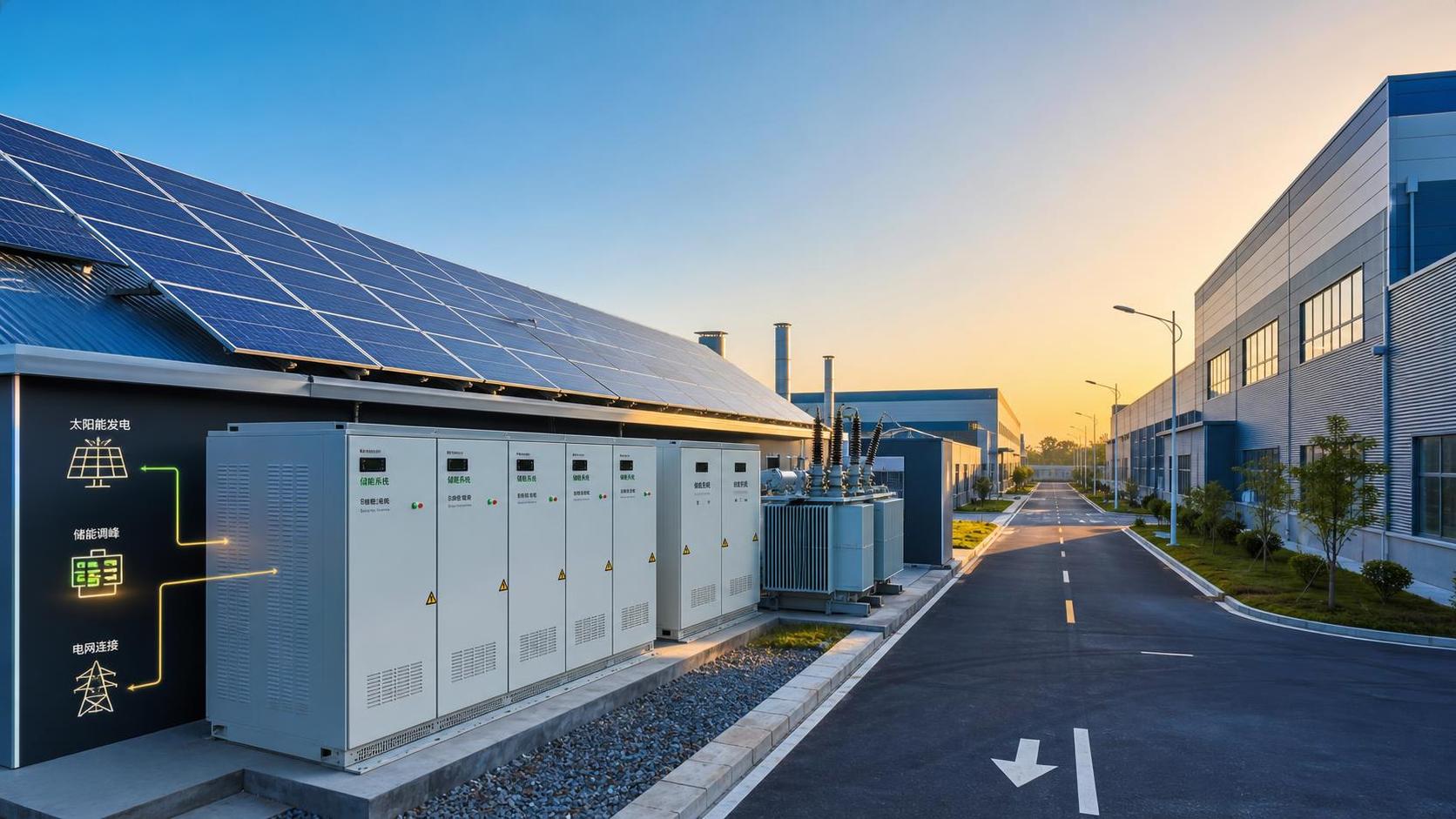
If the goal is to capture midday solar and use it later, capacity and charging windows become central. In this case, duration often drives returns more than pure discharge power.
Backup and resilience
Critical facilities need storage sized around essential loads, not total site load. That distinction can dramatically change capital cost and improve project practicality.
Tariff arbitrage and flexibility
Where tariff spreads are wide, commercial energy storage can buy low and discharge high. The economics depend on cycling frequency, tariff certainty, and round-trip efficiency.
ROI depends on more than battery cost
The financial case for commercial energy storage is often reduced to installed cost per kWh. That shortcut misses the factors that most strongly affect returns.
A more realistic evaluation includes tariff structure, annual cycling, degradation, inverter replacement assumptions, software controls, financing terms, maintenance scope, and interconnection timelines.
There is also a difference between technical payback and operational value. A system that shortens outage impact or stabilizes production quality may justify itself even when pure energy arbitrage looks modest.
That broader view is increasingly relevant in sectors covered by TNP, where energy reliability affects automation uptime, cold-chain integrity, digital infrastructure, and ESG reporting credibility.
Key ROI inputs worth stress-testing
- Demand charge savings under actual seasonal peaks
- Usable capacity after warranty and degradation assumptions
- Control software quality and dispatch accuracy
- Local incentives, tax treatment, and grid service revenue
- Downtime cost if storage fails during a critical event
Technology and supplier questions that affect sizing confidence
Commercial energy storage decisions are rarely technology-neutral. Lithium-ion remains dominant, but the right configuration still depends on temperature conditions, safety design, control architecture, and service coverage.
Supplier evaluation should go beyond headline specifications. Dispatch logic, thermal management, warranty definitions, integration capability, and after-sales response often determine whether the designed size performs as modeled.
This is one reason decision-makers increasingly rely on specialized B2B intelligence environments instead of broad listing platforms. Comparing claims is easier when market analysis, supplier context, and technical narratives are connected.
In cross-border sourcing, it is also wise to test whether the supplier can support certification, commissioning, software updates, and spare parts over the project life.
A practical framework for the next evaluation round
A solid commercial energy storage review usually begins with a narrower question than “What battery should we buy?” The better question is “Which operating problem should storage solve first?”
From there, the path becomes clearer:
- Map interval load data and identify the most expensive or risky events.
- Rank value streams by realism, not by best-case vendor scenarios.
- Model power and duration options against actual site operations.
- Check degradation, controls, and warranty terms against expected cycling.
- Compare suppliers using technical credibility and service depth together.
When those steps are documented well, commercial energy storage moves from a promising concept to an investable decision. The next useful action is often not a larger shortlist, but a sharper one based on load evidence, ROI logic, and supplier reliability.
Get weekly intelligence in your inbox.
No noise. No sponsored content. Pure intelligence.
 Sep 20, 2026Microgrid Controller Pricing: What Drives Cost in Commercial Energy Projects?Microgrid Controller Pricing: What Drives Cost in Commercial Energy Projects?
 Sep 19, 2026How to Choose a GaN Charger for Laptops Without Compromising Power or PortabilityHow to Choose a GaN Charger for Laptops Without Compromising Power or Portability
 Sep 18, 2026Floating Solar Farm Costs: CAPEX, OPEX, and the Site Factors That Shape ROIFloating Solar Farm Costs: CAPEX, OPEX, and the Site Factors That Shape ROI
 Sep 17, 2026Drone Delivery Solutions for Last-Mile Routes: Site, Payload, and Range PlanningDrone Delivery Solutions for Last-Mile Routes: Site, Payload, and Range Planning
 Sep 16, 2026When Low-Volume Electronics Manufacturing Makes More Sense Than Mass ProductionWhen Low-Volume Electronics Manufacturing Makes More Sense Than Mass Production
 Sep 15, 2026Wholesale WiFi Smart Switches: What Buyers Should Verify Before OrderingWholesale WiFi Smart Switches: What Buyers Should Verify Before Ordering
 Sep 14, 2026How to Select IoT Sensors for Reliable Monitoring in Harsh Industrial EnvironmentsHow to Select IoT Sensors for Reliable Monitoring in Harsh Industrial Environments
 Sep 13, 2026How Procurement Teams Can Improve Supplier Reliability With Supply Chain VisibilityHow Procurement Teams Can Improve Supplier Reliability With Supply Chain Visibility
 Sep 12, 2026Smart Manufacturing Trends 2026: What Leaders Should Prioritize for ROISmart Manufacturing Trends 2026: What Leaders Should Prioritize for ROI
 Sep 11, 2026B2B Market Analysis: How Buyers Evaluate Suppliers, Pricing, and Delivery RiskB2B Market Analysis: How Buyers Evaluate Suppliers, Pricing, and Delivery Risk
 Sep 10, 2026Residential Solar Kits in Canada: How to Size a System for Your Home and ClimateResidential Solar Kits in Canada: How to Size a System for Your Home and Climate
 Sep 09, 2026How to Specify a Syringe Assembly Line for High-Volume Sterile ProductionHow to Specify a Syringe Assembly Line for High-Volume Sterile Production
 Sep 08, 2026How to Evaluate Warehouse Robotics System Suppliers for Reliable Multi-Site DeploymentHow to Evaluate Warehouse Robotics System Suppliers for Reliable Multi-Site Deployment
 Sep 07, 2026Renewable Geothermal Energy Explained: How It Works for Heating and PowerRenewable Geothermal Energy Explained: How It Works for Heating and Power
 Sep 07, 2026How to Choose an Industrial Packaging Robot Manufacturer for Your Production LineHow to Choose an Industrial Packaging Robot Manufacturer for Your Production Line
 Sep 05, 2026How to Evaluate a Turnkey Hydro Turbine Generator Supplier for Remote Power ProjectsHow to Evaluate a Turnkey Hydro Turbine Generator Supplier for Remote Power Projects
 Sep 04, 2026Automated Ultrasonic Welding for Thermoplastic Assemblies: Process Controls That MatterAutomated Ultrasonic Welding for Thermoplastic Assemblies: Process Controls That Matter
 Sep 03, 2026Energy Forecasting for Grid Planning: Sizing Solar and Storage CapacityEnergy Forecasting for Grid Planning: Sizing Solar and Storage Capacity
 Sep 02, 2026Which Metrics Should an Energy Analytics Dashboard Track for Factory Energy Management?Which Metrics Should an Energy Analytics Dashboard Track for Factory Energy Management?
 Sep 01, 2026How Warehouse Voice Picking Improves Accuracy and Throughput in Order FulfillmentHow Warehouse Voice Picking Improves Accuracy and Throughput in Order Fulfillment
 Aug 31, 2026How to Automate Dropshipping Order Processing Without Overselling StockHow to Automate Dropshipping Order Processing Without Overselling Stock
 Aug 30, 2026How to Evaluate a Smart Lighting Supplier for Multi-Site Commercial ProjectsHow to Evaluate a Smart Lighting Supplier for Multi-Site Commercial Projects
 Aug 29, 2026Recent Advances in Smart Manufacturing and Materials Reshaping Factory InvestmentRecent Advances in Smart Manufacturing and Materials Reshaping Factory Investment
 Aug 29, 2026Selecting Lightweight Aluminum Extrusions for Strength-Critical Industrial DesignsSelecting Lightweight Aluminum Extrusions for Strength-Critical Industrial Designs
 Aug 29, 2026Vertical Powder Anodizing Explained: Process Controls for Uniform Coating QualityVertical Powder Anodizing Explained: Process Controls for Uniform Coating Quality
 Aug 29, 2026PV Module Product Due Diligence: What Buyers Should Verify Before ContractingPV Module Product Due Diligence: What Buyers Should Verify Before Contracting
 Aug 29, 2026Solar Design for Challenging Terrain: Managing Slope, Soil, and Shading RisksSolar Design for Challenging Terrain: Managing Slope, Soil, and Shading Risks