Industrial Robotics in Assembly Lines: How to Choose the Right Payload, Reach, and Speed
Industrial Robotics in Assembly Lines: How to Choose the Right Payload, Reach, and Speed
Industrial robotics can transform assembly line efficiency, but smart selection starts with production reality, not brochure numbers alone.
Payload, reach, and speed shape throughput, stability, layout flexibility, and integration cost in very different ways.
That is why the best industrial robotics decision usually comes from process mapping first, then model comparison.
This guide breaks down how to evaluate the three core parameters and avoid common selection mistakes.
Why Payload, Reach, and Speed Matter Together
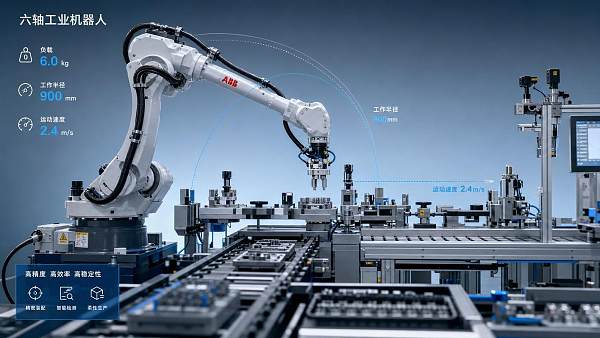
Many teams compare industrial robotics models by maximum payload first. That seems logical, but it can lead to oversizing.
A robot with too much payload may cost more, move slower, and require a larger footprint than the application actually needs.
The same issue appears with reach. Extra reach looks safe on paper, yet it can reduce rigidity and create awkward motion paths.
Speed is also misunderstood. Maximum speed is rarely the true bottleneck in assembly lines.
In real production, acceleration, deceleration, settling time, and path efficiency often matter more than top-axis speed.
So the right industrial robotics choice comes from balancing these factors, not maximizing one specification.
Start With the Task, Not the Robot
Before comparing suppliers, define the assembly task in measurable terms.
- Part weight, including variation between SKUs
- End-of-arm tooling weight and cable load
- Pick and place distance
- Required cycle time per station
- Precision and repeatability targets
- Available floor space and safety zones
Once this baseline is clear, industrial robotics selection becomes more practical and less speculative.
How to Calculate the Right Payload
Payload is not just the part weight. That is the first mistake many teams make.
For industrial robotics in assembly lines, payload should include the gripper, fixture, sensors, brackets, cabling, and any future tooling changes.
A better method is to calculate the total moving mass, then apply a reasonable safety margin.
A Simple Payload Formula
Use this structure during early evaluation:
Total payload = part weight + end-effector weight + accessories + estimated future additions.
Then add a margin, often between 15% and 30%, depending on speed, duty cycle, and process variability.
If the application includes rapid starts, overhead mounting, or offset tooling, be even more conservative.
Why Payload Margin Matters
Running near maximum payload reduces dynamic performance and can shorten component life.
It may also affect repeatability when the arm changes direction quickly.
From a cost perspective, underestimating payload creates retrofit risk. Overestimating it raises capital and operating cost.
The goal is not the biggest robot. It is the most stable fit for the real duty profile.
How to Evaluate Reach Without Overdesigning
Reach determines whether industrial robotics can access every required point without awkward positioning or added transfer equipment.
But maximum reach should never be viewed in isolation.
A robot may technically reach a point, yet approach it at a poor angle or lose efficiency near the edge of its work envelope.
Key Reach Questions to Ask
- Can the robot reach all points with the actual gripper installed?
- Does it maintain clearance from fixtures, guards, and conveyors?
- Will part orientation require wrist rotation near a joint limit?
- Is future station expansion likely?
- Can the same robot serve multiple adjacent tasks?
These questions often reveal that work envelope usability matters more than reach alone.
Reach and Layout Efficiency
In compact assembly cells, a slightly shorter arm can improve path control and reduce interference.
In larger lines, more reach may remove the need for a linear track or extra manual handling.
This is where simulation becomes valuable. A digital layout can expose blind spots before equipment is ordered.
For industrial robotics projects, reach should support efficient motion, safe spacing, and future flexibility.
How to Judge Speed in Real Assembly Conditions
Speed is often presented as a headline number, but assembly performance depends on complete cycle behavior.
For industrial robotics, real output comes from motion planning, load condition, stop accuracy, and coordination with upstream equipment.
Look Beyond Maximum Axis Speed
A fast robot can still underperform if it waits for feeders, vision systems, or fixture clamps.
Likewise, aggressive motion may increase vibration and force longer settling time before insertion or fastening.
That means the useful metric is often achieved cycle time, not catalog speed.
When Speed Really Matters
High-speed industrial robotics usually deliver the strongest value in short, repetitive motions with stable part presentation.
Examples include electronic component handling, packaging transfer, light assembly, and rapid screw feeding support.
In contrast, tasks involving vision alignment, force control, or delicate insertion may benefit more from smoothness than raw speed.
Practical Speed Checkpoints
- Measure full station cycle time, not only robot motion time
- Test performance with actual payload
- Review acceleration limits and settling behavior
- Check repeatability at target throughput
- Confirm controller response in multi-device coordination
A Selection Framework for Industrial Robotics
A structured approach reduces risk and makes supplier comparison more objective.
- Map the exact assembly sequence and takt time.
- Calculate total payload with tooling and margin.
- Model required reach using real fixture positions.
- Estimate actual cycle time under production conditions.
- Compare integration needs, controls, and maintenance support.
- Validate with simulation, sample testing, or proof of concept.
This framework helps separate useful industrial robotics capability from expensive extras.
Comparison Table for Faster Evaluation
Common Mistakes in Industrial Robotics Evaluation
Some selection errors appear again and again across assembly projects.
- Choosing for maximum specs instead of process fit
- Ignoring tool center point changes after gripper redesign
- Assuming one robot can solve poor part presentation
- Skipping maintenance access in cell layout
- Comparing robot price without lifecycle cost analysis
The stronger signal in current manufacturing is clear: integration quality now matters as much as hardware capability.
That also means supplier support, spare parts availability, and application engineering should influence the final decision.
Final Decision: Match Industrial Robotics to Business Reality
The best industrial robotics investment is rarely the fastest or strongest model in the catalog.
It is the system that delivers stable cycle time, reliable accuracy, manageable integration, and room for reasonable expansion.
If payload is calculated correctly, reach is validated against the real cell, and speed is judged by achieved output, selection becomes much more predictable.
For companies reviewing automation options across advanced manufacturing, this kind of disciplined evaluation supports better capital allocation and lower implementation risk.
TradeNexus Pro follows these decision points closely, helping global businesses assess technologies, compare suppliers, and connect automation choices with wider market strategy.
The next practical step is simple: build a real task sheet, test the assumptions, and let production data guide the industrial robotics decision.
Get weekly intelligence in your inbox.
No noise. No sponsored content. Pure intelligence.
 Sep 16, 2026When Low-Volume Electronics Manufacturing Makes More Sense Than Mass ProductionWhen Low-Volume Electronics Manufacturing Makes More Sense Than Mass Production
 Sep 15, 2026Wholesale WiFi Smart Switches: What Buyers Should Verify Before OrderingWholesale WiFi Smart Switches: What Buyers Should Verify Before Ordering
 Sep 14, 2026How to Select IoT Sensors for Reliable Monitoring in Harsh Industrial EnvironmentsHow to Select IoT Sensors for Reliable Monitoring in Harsh Industrial Environments
 Sep 13, 2026How Procurement Teams Can Improve Supplier Reliability With Supply Chain VisibilityHow Procurement Teams Can Improve Supplier Reliability With Supply Chain Visibility
 Sep 12, 2026Smart Manufacturing Trends 2026: What Leaders Should Prioritize for ROISmart Manufacturing Trends 2026: What Leaders Should Prioritize for ROI
 Sep 11, 2026B2B Market Analysis: How Buyers Evaluate Suppliers, Pricing, and Delivery RiskB2B Market Analysis: How Buyers Evaluate Suppliers, Pricing, and Delivery Risk
 Sep 10, 2026Residential Solar Kits in Canada: How to Size a System for Your Home and ClimateResidential Solar Kits in Canada: How to Size a System for Your Home and Climate
 Sep 09, 2026How to Specify a Syringe Assembly Line for High-Volume Sterile ProductionHow to Specify a Syringe Assembly Line for High-Volume Sterile Production
 Sep 08, 2026How to Evaluate Warehouse Robotics System Suppliers for Reliable Multi-Site DeploymentHow to Evaluate Warehouse Robotics System Suppliers for Reliable Multi-Site Deployment
 Sep 07, 2026Renewable Geothermal Energy Explained: How It Works for Heating and PowerRenewable Geothermal Energy Explained: How It Works for Heating and Power
 Sep 07, 2026How to Choose an Industrial Packaging Robot Manufacturer for Your Production LineHow to Choose an Industrial Packaging Robot Manufacturer for Your Production Line
 Sep 05, 2026How to Evaluate a Turnkey Hydro Turbine Generator Supplier for Remote Power ProjectsHow to Evaluate a Turnkey Hydro Turbine Generator Supplier for Remote Power Projects
 Sep 04, 2026Automated Ultrasonic Welding for Thermoplastic Assemblies: Process Controls That MatterAutomated Ultrasonic Welding for Thermoplastic Assemblies: Process Controls That Matter
 Sep 03, 2026Energy Forecasting for Grid Planning: Sizing Solar and Storage CapacityEnergy Forecasting for Grid Planning: Sizing Solar and Storage Capacity
 Sep 02, 2026Which Metrics Should an Energy Analytics Dashboard Track for Factory Energy Management?Which Metrics Should an Energy Analytics Dashboard Track for Factory Energy Management?
 Sep 01, 2026How Warehouse Voice Picking Improves Accuracy and Throughput in Order FulfillmentHow Warehouse Voice Picking Improves Accuracy and Throughput in Order Fulfillment
 Aug 31, 2026How to Automate Dropshipping Order Processing Without Overselling StockHow to Automate Dropshipping Order Processing Without Overselling Stock
 Aug 30, 2026How to Evaluate a Smart Lighting Supplier for Multi-Site Commercial ProjectsHow to Evaluate a Smart Lighting Supplier for Multi-Site Commercial Projects
 Aug 29, 2026Recent Advances in Smart Manufacturing and Materials Reshaping Factory InvestmentRecent Advances in Smart Manufacturing and Materials Reshaping Factory Investment
 Aug 29, 2026Selecting Lightweight Aluminum Extrusions for Strength-Critical Industrial DesignsSelecting Lightweight Aluminum Extrusions for Strength-Critical Industrial Designs
 Aug 29, 2026Vertical Powder Anodizing Explained: Process Controls for Uniform Coating QualityVertical Powder Anodizing Explained: Process Controls for Uniform Coating Quality
 Aug 29, 2026PV Module Product Due Diligence: What Buyers Should Verify Before ContractingPV Module Product Due Diligence: What Buyers Should Verify Before Contracting
 Aug 29, 2026Solar Design for Challenging Terrain: Managing Slope, Soil, and Shading RisksSolar Design for Challenging Terrain: Managing Slope, Soil, and Shading Risks
 Aug 29, 2026IS 16444 Smart Meter Requirements: Key Functions, Tests, and ComplianceIS 16444 Smart Meter Requirements: Key Functions, Tests, and Compliance
 Aug 29, 2026Rehabilitation Equipment Market Outlook: Demand Drivers and Growth SegmentsRehabilitation Equipment Market Outlook: Demand Drivers and Growth Segments
 Aug 29, 2026When Does Container Handling Automation Deliver ROI in Port Yard Operations?When Does Container Handling Automation Deliver ROI in Port Yard Operations?
 Aug 29, 2026Customs API Integration: A Practical Checklist for Automated Trade ComplianceCustoms API Integration: A Practical Checklist for Automated Trade Compliance