Additive Manufacturing Services vs CNC Machining: Which Is Better for Low-Volume Parts?
For project managers sourcing low-volume parts, the choice between additive manufacturing services and CNC machining can directly affect cost, lead time, design flexibility, and supply risk. This article compares both methods from a practical B2B decision-making perspective, helping you evaluate which process better fits prototyping, bridge production, and custom component needs in today’s fast-moving manufacturing environment.
In low-volume manufacturing, the wrong process can add 2 to 6 weeks to delivery, increase unit cost by 20% to 80%, or create avoidable redesign loops. For engineering project leaders managing new product introduction, pilot builds, aftermarket spares, or customized industrial parts, the decision is rarely about technology preference alone. It is about matching geometry, tolerance, quantity, material, and business risk to the right production route.
Both additive manufacturing services and CNC machining have become more accessible across global supply chains. Yet they solve different problems. Additive methods excel in geometry freedom and tool-less production, while CNC remains strong in dimensional control, material breadth, and repeatable finishing. The practical question is not which is universally better, but which is better for your part, your timeline, and your procurement model.
What Project Managers Need to Compare First
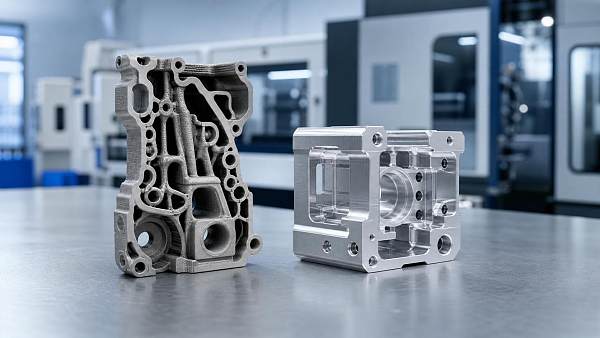
Before requesting quotes, teams should compare five basic factors: part complexity, quantity, tolerance, material requirements, and target lead time. In many industrial sourcing cases, the break point appears between 10 and 200 units, but the exact decision depends on geometry and post-processing rather than quantity alone.
For example, a lightweight housing with internal channels may be expensive or impossible to machine in one setup, while a flat bracket with tight tolerance and threaded holes is usually faster and cheaper through CNC. Project managers should also consider whether the part is for functional testing, customer samples, bridge production, or field replacement, because each stage has different risk tolerance.
Core Decision Variables
Low-volume does not always mean prototype. It can include pilot runs of 20 to 100 parts, custom assemblies for industrial equipment, or spare components needed within 7 to 15 days. In those cases, the process decision should support both technical fit and operational continuity.
- Geometry: internal channels, lattices, undercuts, thin walls, or multi-part consolidation
- Tolerance: whether the part needs ±0.05 mm, ±0.1 mm, or a looser functional range
- Material: plastic, aluminum, stainless steel, titanium, engineering polymers, or specialty alloys
- Quantity: 1 piece, 10 pieces, 50 pieces, or 200 pieces
- Lead time: urgent delivery in 3 to 7 days versus planned supply in 2 to 4 weeks
The table below gives a practical comparison framework for project-based sourcing teams evaluating additive manufacturing services against CNC machining for low-volume parts.
The key takeaway is that additive manufacturing services often win when geometry saves assembly steps or speeds iteration, while CNC machining tends to win when tolerance, material familiarity, and surface finish carry more weight in the approval process.
Where Cost Decisions Usually Go Wrong
Many teams compare only quote price per part. That can be misleading. A printed component with a unit price 25% higher may still reduce total project cost if it combines 3 machined parts into 1, removes fixtures, or cuts engineering revisions from 3 rounds to 1. On the other hand, an additive part that needs support removal, machining of interfaces, and manual finishing may end up costing more than expected.
Project managers should request a total cost view that includes setup, post-processing, inspection, scrap risk, finishing, and packaging. In cross-border sourcing, logistics and customs timing can matter as much as machine time, especially for urgent spare parts and pilot builds.
When Additive Manufacturing Services Make More Sense
Additive manufacturing services are usually the stronger choice when speed of iteration and design freedom matter more than ultra-tight tolerance on every feature. This is common in early-stage prototyping, ergonomic parts, airflow components, housings with internal cavities, and custom fixtures used in advanced manufacturing environments.
Best-Fit Scenarios
For project-based industrial sourcing, additive often works well in four scenarios. First, prototyping where teams need 2 to 5 design revisions within 1 month. Second, bridge production where launch quantities stay below 100 units. Third, customization where each part may have small design changes. Fourth, lightweighting where geometry can replace material volume without losing function.
- Functional prototypes that need fast iteration but not final cosmetic finish
- Complex assemblies that can be consolidated into 1 or 2 printed parts
- Low-volume medical, electronics, or industrial fixtures with frequent engineering changes
- Legacy spare parts where tooling is unavailable or reverse engineering is required
Operational Advantages
The major benefit is tool-less production. That removes fixture development in many cases and shortens the path from CAD file to part. For urgent programs, this can reduce early-stage delays by 5 to 10 working days. It also helps procurement teams avoid committing to larger batch sizes before design freeze.
Another advantage is inventory flexibility. Instead of stocking slow-moving spare parts for 12 months, some buyers use digital part files and produce on demand in smaller lots of 2 to 20 units. This approach can lower storage burden, though it requires stronger version control and supplier communication.
Limits Project Teams Should Watch
Additive manufacturing services are not automatically the better option for end-use parts. Surface roughness, anisotropic strength in some processes, and post-processing variability can affect fit and repeatability. If the part needs multiple bearing surfaces, critical threaded alignment, or strict flatness across a machined interface, secondary operations may still be necessary.
Material selection also needs careful review. While additive metals and engineering polymers have improved significantly, available grades and property consistency may differ from standard wrought or billet materials used in CNC workflows. For regulated sectors, validation steps may add 1 to 3 extra weeks.
When CNC Machining Is the Better Low-Volume Choice
CNC machining remains the preferred route for low-volume parts when dimensional accuracy, known material performance, and finished surface quality are central to approval. It is especially strong for brackets, heat sinks, housings, manifolds with accessible channels, shafts, plates, and high-value metal parts that must match established tolerances.
Where CNC Creates Better Procurement Confidence
For project managers, CNC often reduces technical ambiguity. Teams know how aluminum 6061, stainless steel 304, POM, or brass will behave. Inspection methods are familiar, and suppliers can typically provide dimensional reports for key features. This matters when parts must pass first-article approval, fit into existing assemblies, or support customer audits.
CNC also scales more predictably from 20 parts to 200 parts when geometry is straightforward. Once programming and fixturing are stable, repeatability is usually easier to control than with printed parts requiring extensive manual finishing. That stability can reduce rejection risk and simplify supplier comparison across regions.
The following table outlines typical conditions under which CNC machining is often the more reliable path for low-volume industrial parts.
This does not mean CNC is always slower or more expensive. For simple geometries, especially 3-axis friendly parts, machining can deliver lower total cost than additive manufacturing services once quantities move beyond the first few units.
Where CNC Can Be Less Efficient
CNC loses efficiency when geometry forces multiple setups, deep cavities, specialty tooling, or excessive material waste. A part machined from solid stock may generate a high buy-to-fly ratio, especially in expensive metals. If 60% to 85% of the raw material is removed, the cost structure may become difficult to justify for low-volume work.
It can also be less practical for custom versions that change frequently. Even small design revisions can require new toolpaths, fixture adjustments, and fresh quality documentation. In fast-moving product development cycles, that slows decision-making.
A Practical Selection Model for Low-Volume Parts
For B2B sourcing teams, the most useful method is not to rank one process above the other, but to use a structured decision model. A 4-step screening approach helps shorten supplier discussions and improves quote accuracy from the start.
Step 1: Define the Part Mission
Ask whether the part is for concept validation, functional testing, limited launch, or final service use. A concept prototype may accept looser finish and dimensional range. A field spare part for installed equipment may require exact interchangeability. This single distinction often eliminates 50% of unsuitable process options.
Step 2: Mark Critical Features
Separate critical-to-function features from non-critical surfaces. If only 3 features need high accuracy, hybrid production may work well: use additive manufacturing services for the base geometry, then machine the sealing face, holes, or datum surfaces afterward. This approach can balance speed and precision.
Step 3: Review Supply Risk
Check whether your supplier can support material traceability, inspection records, and repeat builds. For cross-border projects, ask about quote response time, engineering clarification process, and re-order capability. A supplier that answers technical questions within 24 to 48 hours can reduce schedule drift significantly.
Step 4: Evaluate Total Lead Time
Do not look only at machine time. Include DFM review, file repair, post-processing, finishing, inspection, export packing, and transit. A nominal 4-day production promise can become a 12-day total cycle if support removal, machining, and freight are not considered upfront.
Quick Screening Checklist
- If geometry is complex and quantity is below 30, additive manufacturing services deserve early review.
- If tolerance is tight and material performance is critical, CNC should usually be the baseline option.
- If design changes are likely within 2 weeks, avoid overcommitting to a process with long setup dependencies.
- If the part combines precision interfaces and complex internal shapes, consider a hybrid route.
Common Procurement Risks and How to Reduce Them
The biggest sourcing problems usually come from incomplete specifications rather than from the process itself. Buyers often request quotes without clarifying the required surface finish, test purpose, tolerance hierarchy, or acceptable substitute material. That leads to inconsistent quotes and poor supplier comparison.
Three Frequent Mistakes
- Using prototype drawings for production RFQs without identifying revision status
- Assuming printed parts and machined parts have equivalent surface and strength behavior
- Comparing suppliers only on unit price instead of engineering response, quality process, and delivery reliability
To reduce these risks, project managers should prepare a compact RFQ package with 6 key items: 3D file, 2D drawing, quantity range, material requirement, critical dimensions, and intended application. If the part is customer-facing or safety-relevant, add inspection expectations and finishing notes before quotation.
This is where market intelligence platforms such as TradeNexus Pro can add value. In complex industrial sourcing, decision-makers need more than a directory listing. They need context on technology suitability, supplier capability signals, and practical comparison points that support faster and more reliable cross-border decisions.
Final Recommendation for Project-Led Sourcing
If your low-volume part depends on complex geometry, fast iteration, or part consolidation, additive manufacturing services are often the smarter first option. If your project depends on tight tolerance, established materials, surface quality, and repeatable approval, CNC machining usually offers lower execution risk.
For many industrial programs, the best answer is not either-or. It is a staged strategy: print early prototypes, validate function quickly, then move stable designs to CNC for pilot and repeat supply. That model often improves lead time in the first phase and cost control in the second.
TradeNexus Pro supports this kind of decision with focused industry analysis, supplier-facing technical content, and practical sourcing insight for advanced manufacturing teams. If you are evaluating additive manufacturing services, CNC options, or hybrid production for low-volume parts, contact us to discuss your application, compare process routes, and get a more tailored sourcing plan.
Get weekly intelligence in your inbox.
No noise. No sponsored content. Pure intelligence.
 Sep 16, 2026When Low-Volume Electronics Manufacturing Makes More Sense Than Mass ProductionWhen Low-Volume Electronics Manufacturing Makes More Sense Than Mass Production
 Sep 15, 2026Wholesale WiFi Smart Switches: What Buyers Should Verify Before OrderingWholesale WiFi Smart Switches: What Buyers Should Verify Before Ordering
 Sep 14, 2026How to Select IoT Sensors for Reliable Monitoring in Harsh Industrial EnvironmentsHow to Select IoT Sensors for Reliable Monitoring in Harsh Industrial Environments
 Sep 13, 2026How Procurement Teams Can Improve Supplier Reliability With Supply Chain VisibilityHow Procurement Teams Can Improve Supplier Reliability With Supply Chain Visibility
 Sep 12, 2026Smart Manufacturing Trends 2026: What Leaders Should Prioritize for ROISmart Manufacturing Trends 2026: What Leaders Should Prioritize for ROI
 Sep 11, 2026B2B Market Analysis: How Buyers Evaluate Suppliers, Pricing, and Delivery RiskB2B Market Analysis: How Buyers Evaluate Suppliers, Pricing, and Delivery Risk
 Sep 10, 2026Residential Solar Kits in Canada: How to Size a System for Your Home and ClimateResidential Solar Kits in Canada: How to Size a System for Your Home and Climate
 Sep 09, 2026How to Specify a Syringe Assembly Line for High-Volume Sterile ProductionHow to Specify a Syringe Assembly Line for High-Volume Sterile Production
 Sep 08, 2026How to Evaluate Warehouse Robotics System Suppliers for Reliable Multi-Site DeploymentHow to Evaluate Warehouse Robotics System Suppliers for Reliable Multi-Site Deployment
 Sep 07, 2026Renewable Geothermal Energy Explained: How It Works for Heating and PowerRenewable Geothermal Energy Explained: How It Works for Heating and Power
 Sep 07, 2026How to Choose an Industrial Packaging Robot Manufacturer for Your Production LineHow to Choose an Industrial Packaging Robot Manufacturer for Your Production Line
 Sep 05, 2026How to Evaluate a Turnkey Hydro Turbine Generator Supplier for Remote Power ProjectsHow to Evaluate a Turnkey Hydro Turbine Generator Supplier for Remote Power Projects
 Sep 04, 2026Automated Ultrasonic Welding for Thermoplastic Assemblies: Process Controls That MatterAutomated Ultrasonic Welding for Thermoplastic Assemblies: Process Controls That Matter
 Sep 03, 2026Energy Forecasting for Grid Planning: Sizing Solar and Storage CapacityEnergy Forecasting for Grid Planning: Sizing Solar and Storage Capacity
 Sep 02, 2026Which Metrics Should an Energy Analytics Dashboard Track for Factory Energy Management?Which Metrics Should an Energy Analytics Dashboard Track for Factory Energy Management?
 Sep 01, 2026How Warehouse Voice Picking Improves Accuracy and Throughput in Order FulfillmentHow Warehouse Voice Picking Improves Accuracy and Throughput in Order Fulfillment
 Aug 31, 2026How to Automate Dropshipping Order Processing Without Overselling StockHow to Automate Dropshipping Order Processing Without Overselling Stock
 Aug 30, 2026How to Evaluate a Smart Lighting Supplier for Multi-Site Commercial ProjectsHow to Evaluate a Smart Lighting Supplier for Multi-Site Commercial Projects
 Aug 29, 2026Recent Advances in Smart Manufacturing and Materials Reshaping Factory InvestmentRecent Advances in Smart Manufacturing and Materials Reshaping Factory Investment
 Aug 29, 2026Selecting Lightweight Aluminum Extrusions for Strength-Critical Industrial DesignsSelecting Lightweight Aluminum Extrusions for Strength-Critical Industrial Designs
 Aug 29, 2026Vertical Powder Anodizing Explained: Process Controls for Uniform Coating QualityVertical Powder Anodizing Explained: Process Controls for Uniform Coating Quality
 Aug 29, 2026PV Module Product Due Diligence: What Buyers Should Verify Before ContractingPV Module Product Due Diligence: What Buyers Should Verify Before Contracting
 Aug 29, 2026Solar Design for Challenging Terrain: Managing Slope, Soil, and Shading RisksSolar Design for Challenging Terrain: Managing Slope, Soil, and Shading Risks
 Aug 29, 2026IS 16444 Smart Meter Requirements: Key Functions, Tests, and ComplianceIS 16444 Smart Meter Requirements: Key Functions, Tests, and Compliance
 Aug 29, 2026Rehabilitation Equipment Market Outlook: Demand Drivers and Growth SegmentsRehabilitation Equipment Market Outlook: Demand Drivers and Growth Segments
 Aug 29, 2026When Does Container Handling Automation Deliver ROI in Port Yard Operations?When Does Container Handling Automation Deliver ROI in Port Yard Operations?
 Aug 29, 2026Customs API Integration: A Practical Checklist for Automated Trade ComplianceCustoms API Integration: A Practical Checklist for Automated Trade Compliance