Coordinate Measuring Machines: Key Accuracy Specs and How to Compare Models
Coordinate Measuring Machines: Key Accuracy Specs and How to Compare Models
Choosing between coordinate measuring machines is not only about size or speed.
It is really about accuracy, repeatability, and fit for your inspection workflow.
When measurement decisions affect compliance, scrap, and supplier approval, specification details matter.
This guide breaks down the key numbers, test standards, and practical checks that make model comparison easier.
Why accuracy specs matter in coordinate measuring machines
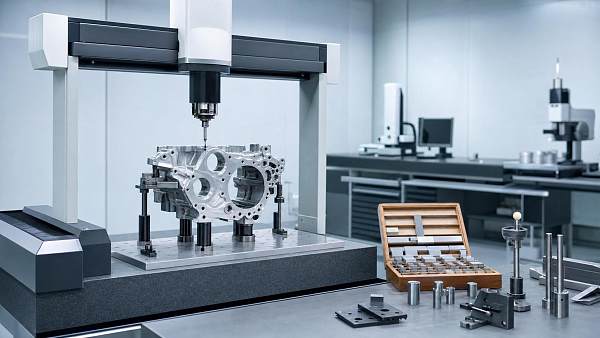
Coordinate measuring machines turn physical dimensions into decision data.
If that data is unstable, every downstream decision becomes less reliable.
A machine may look impressive on paper, yet still perform poorly for your actual parts.
That is why buyers should focus on measurement capability, not only machine footprint or travel range.
In practical terms, better coordinate measuring machines reduce false rejects, avoid hidden defects, and improve audit readiness.
They also support safer release decisions when critical components must meet strict tolerance limits.
The core accuracy specs you should compare first
Not every published spec has equal value.
When comparing coordinate measuring machines, start with the metrics below.
Length measurement error
This is often shown as MPEE or a similar expression under ISO 10360.
It describes the maximum permissible error for measured length.
A typical format is a base value plus a factor per measured distance.
For example, lower base error helps with short features.
Lower distance-related error matters more for larger parts.
Probing error
Probing performance affects how reliably the machine captures actual geometry.
This matters for bores, edges, surfaces, and form measurements.
Even strong length accuracy cannot fully compensate for weak probe behavior.
Repeatability
Repeatability shows whether the same part gives nearly the same result every time.
In production environments, this is often as important as absolute accuracy.
Poor repeatability creates confusion in quality reviews and weakens process control.
Volumetric performance
Coordinate measuring machines do not measure in one line only.
They work across a full 3D space.
A model can perform well near the center, yet drift near axis limits.
Ask how performance changes across the usable measuring volume.
How to read ISO 10360 without getting lost
Most serious coordinate measuring machines reference ISO 10360 testing.
That is helpful, but only if the comparison is truly like-for-like.
The standard defines how performance is tested under controlled conditions.
However, brochures may highlight only the best-looking number.
A more useful approach is to ask five direct questions.
- Which ISO 10360 section supports the claimed specification?
- Was the test done with a touch probe, scanning probe, or optical sensor?
- What stylus length and probe configuration were used?
- What temperature range applied during the test?
- Does the stated value represent acceptance testing or ongoing verification?
These questions quickly separate marketing language from decision-grade technical data.
Machine structure, environment, and why published specs are not enough
Two coordinate measuring machines can share similar catalog specs but behave differently on the shop floor.
From recent industry practice, this is where selection mistakes often happen.
Bridge design, guideway quality, vibration resistance, and thermal compensation all influence real results.
This also means installation conditions deserve early review.
If your inspection room has temperature swings, nearby machining vibration, or unstable air supply, actual uncertainty rises.
For critical applications, ask suppliers to discuss:
- Thermal compensation limits
- Foundation and vibration requirements
- Air bearing and compressed air quality needs
- Recommended calibration intervals
- Operator training and software control measures
A strong model on paper can still be the wrong fit for your environment.
Comparing probe systems and sensor options
The probe system changes what coordinate measuring machines can really do.
A simple touch-trigger setup works well for many dimensional checks.
A scanning probe can capture more points and improve surface analysis.
Optical sensors may increase speed for delicate or complex features.
Still, higher speed does not always equal better measurement certainty.
When comparing models, review the full probe stack, not the base machine alone.
How to compare coordinate measuring machines in real purchasing scenarios
A useful comparison process starts with your parts, not the supplier brochure.
This is especially important when tolerances are tight and traceability requirements are high.
- List your most critical dimensions and their tolerances.
- Match required uncertainty to realistic machine capability.
- Check whether part size uses the full measuring volume.
- Review sensor type against geometry and material surface.
- Compare software functions for reporting, GD&T, and traceability.
- Request acceptance criteria based on your actual use case.
A good supplier should be comfortable running sample parts or a structured measurement study.
That step gives much better insight than comparing only catalog tables.
Common comparison mistakes and how to avoid them
Many teams buy coordinate measuring machines with a narrow focus on price or speed.
That usually creates hidden costs later.
- Comparing base machine specs while ignoring probe configuration
- Assuming all ISO 10360 claims represent the same test conditions
- Skipping room condition assessment before purchase
- Underestimating fixturing, stylus changes, and programming time
- Choosing excess machine size without real process need
- Overlooking service response, calibration support, and spare availability
More clearly than before, buyers now evaluate lifecycle support alongside accuracy.
That is a smart shift, because downtime can cost more than the original machine price difference.
A practical checklist before you select a model
Before final approval, use a short decision checklist.
- Confirm the coordinate measuring machines meet your tightest tolerance needs.
- Verify accuracy specs under the same probe and temperature conditions.
- Review repeatability on representative parts, not only reference artifacts.
- Check software compatibility with reporting and compliance workflows.
- Assess installation risk, training needs, and maintenance commitments.
- Request documented acceptance testing and calibration support.
The best coordinate measuring machines are not simply the most advanced.
They are the ones that deliver stable, traceable, and efficient results in your real workflow.
If you compare specs in context, test against actual parts, and verify support conditions, selection becomes much more confident.
That approach reduces measurement risk today and supports better equipment decisions over the long term.
Get weekly intelligence in your inbox.
No noise. No sponsored content. Pure intelligence.
 Sep 20, 2026Microgrid Controller Pricing: What Drives Cost in Commercial Energy Projects?Microgrid Controller Pricing: What Drives Cost in Commercial Energy Projects?
 Sep 19, 2026How to Choose a GaN Charger for Laptops Without Compromising Power or PortabilityHow to Choose a GaN Charger for Laptops Without Compromising Power or Portability
 Sep 18, 2026Floating Solar Farm Costs: CAPEX, OPEX, and the Site Factors That Shape ROIFloating Solar Farm Costs: CAPEX, OPEX, and the Site Factors That Shape ROI
 Sep 17, 2026Drone Delivery Solutions for Last-Mile Routes: Site, Payload, and Range PlanningDrone Delivery Solutions for Last-Mile Routes: Site, Payload, and Range Planning
 Sep 16, 2026When Low-Volume Electronics Manufacturing Makes More Sense Than Mass ProductionWhen Low-Volume Electronics Manufacturing Makes More Sense Than Mass Production
 Sep 15, 2026Wholesale WiFi Smart Switches: What Buyers Should Verify Before OrderingWholesale WiFi Smart Switches: What Buyers Should Verify Before Ordering
 Sep 14, 2026How to Select IoT Sensors for Reliable Monitoring in Harsh Industrial EnvironmentsHow to Select IoT Sensors for Reliable Monitoring in Harsh Industrial Environments
 Sep 13, 2026How Procurement Teams Can Improve Supplier Reliability With Supply Chain VisibilityHow Procurement Teams Can Improve Supplier Reliability With Supply Chain Visibility
 Sep 12, 2026Smart Manufacturing Trends 2026: What Leaders Should Prioritize for ROISmart Manufacturing Trends 2026: What Leaders Should Prioritize for ROI
 Sep 11, 2026B2B Market Analysis: How Buyers Evaluate Suppliers, Pricing, and Delivery RiskB2B Market Analysis: How Buyers Evaluate Suppliers, Pricing, and Delivery Risk
 Sep 10, 2026Residential Solar Kits in Canada: How to Size a System for Your Home and ClimateResidential Solar Kits in Canada: How to Size a System for Your Home and Climate
 Sep 09, 2026How to Specify a Syringe Assembly Line for High-Volume Sterile ProductionHow to Specify a Syringe Assembly Line for High-Volume Sterile Production
 Sep 08, 2026How to Evaluate Warehouse Robotics System Suppliers for Reliable Multi-Site DeploymentHow to Evaluate Warehouse Robotics System Suppliers for Reliable Multi-Site Deployment
 Sep 07, 2026Renewable Geothermal Energy Explained: How It Works for Heating and PowerRenewable Geothermal Energy Explained: How It Works for Heating and Power
 Sep 07, 2026How to Choose an Industrial Packaging Robot Manufacturer for Your Production LineHow to Choose an Industrial Packaging Robot Manufacturer for Your Production Line
 Sep 05, 2026How to Evaluate a Turnkey Hydro Turbine Generator Supplier for Remote Power ProjectsHow to Evaluate a Turnkey Hydro Turbine Generator Supplier for Remote Power Projects
 Sep 04, 2026Automated Ultrasonic Welding for Thermoplastic Assemblies: Process Controls That MatterAutomated Ultrasonic Welding for Thermoplastic Assemblies: Process Controls That Matter
 Sep 03, 2026Energy Forecasting for Grid Planning: Sizing Solar and Storage CapacityEnergy Forecasting for Grid Planning: Sizing Solar and Storage Capacity
 Sep 02, 2026Which Metrics Should an Energy Analytics Dashboard Track for Factory Energy Management?Which Metrics Should an Energy Analytics Dashboard Track for Factory Energy Management?
 Sep 01, 2026How Warehouse Voice Picking Improves Accuracy and Throughput in Order FulfillmentHow Warehouse Voice Picking Improves Accuracy and Throughput in Order Fulfillment
 Aug 31, 2026How to Automate Dropshipping Order Processing Without Overselling StockHow to Automate Dropshipping Order Processing Without Overselling Stock
 Aug 30, 2026How to Evaluate a Smart Lighting Supplier for Multi-Site Commercial ProjectsHow to Evaluate a Smart Lighting Supplier for Multi-Site Commercial Projects
 Aug 29, 2026Recent Advances in Smart Manufacturing and Materials Reshaping Factory InvestmentRecent Advances in Smart Manufacturing and Materials Reshaping Factory Investment
 Aug 29, 2026Selecting Lightweight Aluminum Extrusions for Strength-Critical Industrial DesignsSelecting Lightweight Aluminum Extrusions for Strength-Critical Industrial Designs
 Aug 29, 2026Vertical Powder Anodizing Explained: Process Controls for Uniform Coating QualityVertical Powder Anodizing Explained: Process Controls for Uniform Coating Quality
 Aug 29, 2026PV Module Product Due Diligence: What Buyers Should Verify Before ContractingPV Module Product Due Diligence: What Buyers Should Verify Before Contracting
 Aug 29, 2026Solar Design for Challenging Terrain: Managing Slope, Soil, and Shading RisksSolar Design for Challenging Terrain: Managing Slope, Soil, and Shading Risks