Do smart rings work better than watches for comfort
As wearable fitness trackers evolve, many buyers are asking whether smart rings deliver better comfort than health monitoring watches in daily use. For researchers, procurement teams, and technology evaluators, the answer goes beyond style—it involves sensor accuracy, battery life, workplace practicality, and long-term usability. This comparison helps decision-makers assess which form factor better fits modern health monitoring needs.
What makes smart rings feel more comfortable in everyday use?
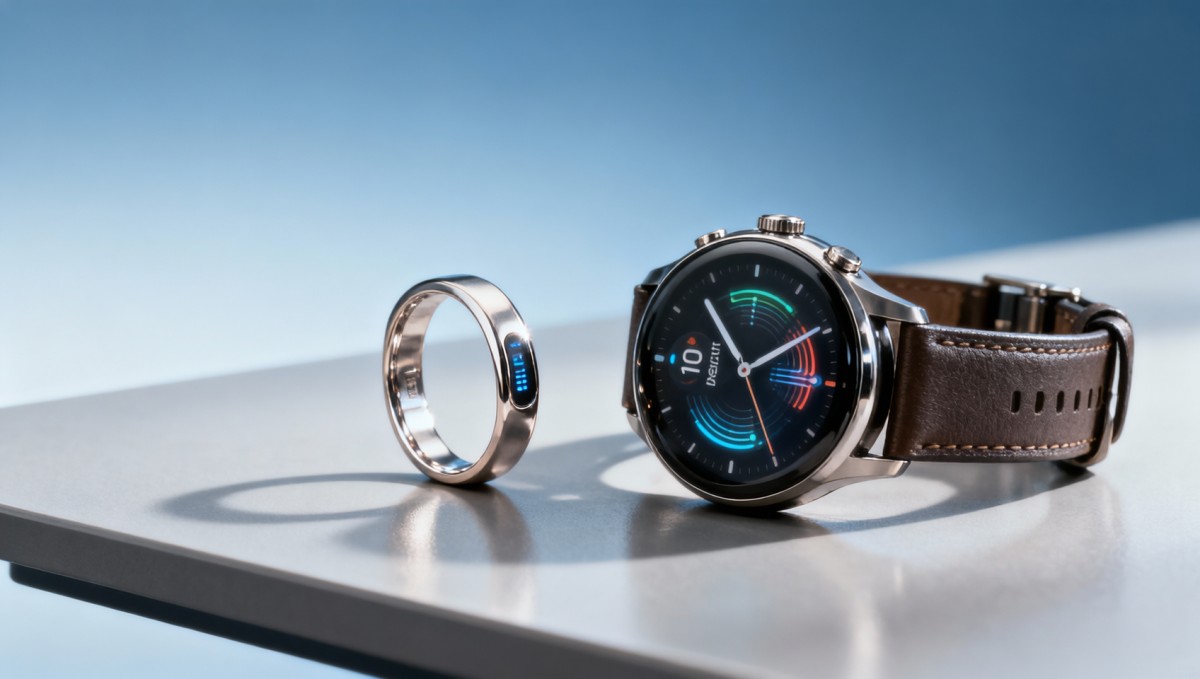
Comfort is the first filter in wearable adoption. A device that users remove after 2–3 hours of desk work, machine operation, or field inspection will not deliver reliable health data over a 24-hour cycle. In that context, many buyers comparing a smart ring vs smartwatch focus on weight, skin contact, sleep wearability, glove compatibility, and whether the device interferes with manual tasks.
Smart rings are often preferred when low-profile wear is the main priority. Their compact form factor avoids wrist bulk, reduces friction under sleeves, and usually causes less disturbance during sleep. For office users, technical evaluators, and executives who want continuous tracking without a visible device, a ring can feel easier to forget. That “wear and ignore” quality matters because comfort is closely linked to long-term compliance.
Watches, however, can be more comfortable in a different way. They spread contact over a larger area, allow strap adjustment across several positions, and are easier to remove and reattach during shift changes. For users with finger swelling, frequent hand washing, or jobs involving hand tools, a smartwatch may remain the safer and more practical option. A ring that fits well at 9 a.m. can feel tight by late afternoon if hand temperature or workload changes.
In procurement terms, the better question is not simply “Are smart rings more comfortable?” but “For which user group, duty cycle, and wear duration do they stay comfortable?” In many organizations, a device must perform across 8–12 hour shifts, overnight sleep tracking, and at least 5–7 consecutive days between charging opportunities. Comfort should therefore be tested by role, not only by first impression.
Key comfort variables that affect wearable acceptance
When teams evaluate wearable comfort, they should not rely on marketing imagery alone. The user experience changes significantly depending on work environment, skin condition, and wear schedule. A practical review should include at least 5 core checks:
- Contact pressure during 8–10 hours of continuous wear, especially during typing, lifting, or repetitive hand motion.
- Comfort during sleep, including whether the device causes pressure points when side sleeping.
- Tolerance to frequent washing, sweat, and temperature shifts between indoor and outdoor settings.
- Ease of use with PPE, gloves, cuffs, and uniforms common in technical or industrial roles.
- Skin reaction risk over 7–14 days, especially for users with metal sensitivity or eczema history.
For multi-role teams, comfort testing should include both desk-based and operational users. A device selected only by corporate staff may underperform in warehouse, healthcare, or light manufacturing settings. This is where structured B2B evaluation becomes more useful than consumer-style reviews.
Smart ring vs smartwatch: which one performs better across comfort and monitoring needs?
A smart ring may win on subtle wearability, but a smartwatch often offers broader functionality. Buyers should therefore compare comfort together with display access, charging frequency, activity visibility, and operational usability. For enterprise assessment, the decision usually comes down to whether the device is meant for passive health tracking, active fitness coaching, or workflow-linked monitoring.
Rings usually focus on sleep, heart rate trends, recovery indicators, and basic daily activity. Watches tend to add workout interfaces, notifications, GPS on some models, and quicker on-device interaction. If users need real-time prompts during exercise or field movement, a watch often has the advantage. If the goal is discreet, continuous, low-interruption monitoring, rings may fit better.
Comfort also interacts with data quality. A ring that rotates on the finger or fits too loosely may weaken optical readings. A watch worn too high, too low, or too loosely can create similar problems. In both cases, the best wearable is the one users can tolerate consistently for 20–24 hours a day under realistic conditions.
The table below helps procurement teams compare smart rings and watches across practical decision criteria rather than only consumer preference.
This comparison shows that comfort should be balanced against interaction needs. In a passive wellness or sleep-monitoring program, smart rings may outperform watches for comfort. In a mixed use case involving messaging, exercise guidance, or quick visual checks, the extra functions of a watch may justify lower sleep comfort for some users.
Where each form factor fits best
Different industries and user roles produce different winners. A ring that feels ideal to a finance approver or business evaluator may not suit an operator handling packaging equipment. A watch that works well for logistics supervisors may be less attractive to users focused on overnight recovery and invisible wear.
Typical role-based fit
- Researchers and analysts: often prefer rings for uninterrupted concentration and sleep trend tracking.
- Procurement and executive users: may value rings for discreet professional wear in meetings and travel.
- Operators and field staff: may lean toward watches if finger-based wear conflicts with gloves, tools, or hygiene routines.
- Technical evaluators: often need both device categories in pilot testing to compare comfort over 14–30 days.
For B2B programs, a blended procurement strategy can be more effective than a single-device mandate. One form factor may serve office, leadership, and travel users, while another is assigned to high-motion or PPE-intensive roles.
Which scenarios favor rings, and when do watches remain the safer procurement choice?
Application context changes everything. Smart rings are frequently favored when users want 24/7 wear with minimal interruption. Watches remain strong when visibility, instant control, and broader function sets matter. For procurement teams, the right decision should reflect user environment, not online trend cycles.
In sleep monitoring and recovery-focused programs, rings often perform well because they are less noticeable in bed and easier to tolerate under long sleeves or business attire during the day. This makes them attractive for wellness initiatives, executive health tracking, and remote work populations. A lower-profile device also tends to generate fewer complaints about appearance in formal settings.
In operational settings, the picture is more mixed. Users who wash hands repeatedly, wear nitrile or cut-resistant gloves, or handle parts with tight tolerances may find rings intrusive. Healthcare staff, line operators, and maintenance teams often need to test ring compatibility with hygiene policy, glove fit, and manual dexterity before deployment. A watch may still interfere with cuffs or wrist mobility, but its removability is usually simpler.
Travel also matters. For business travelers, charging routines and comfort during flights, hotel sleep, and meetings affect device value. A device worn across 3–5 travel days should support continuous use without becoming a maintenance burden. Comfort and battery rhythm should be reviewed together.
Scenario-based decision table for B2B evaluation
The following table translates smart ring comfort and smartwatch practicality into scenario-specific guidance that teams can use during shortlist reviews.
For enterprise programs, the “dual-option pilot” is often the least risky path. A 2–4 week trial across 10–30 users can reveal whether comfort issues are isolated or systemic. That approach reduces procurement errors before broader deployment.
Practical risks buyers often overlook
Wearable comfort is not just about softness or size. Hidden friction points can undermine adoption even when a product tests well in a conference room demo.
- Sizing error: rings require more precise fit than watches, and finger size can shift during the day.
- Task conflict: manual gripping, specimen handling, assembly work, and hygiene routines may reduce ring suitability.
- Charging behavior: a device with a 4–7 day cycle may still fail if users forget charging windows.
- Policy mismatch: some workplaces restrict jewelry-like items, while others limit wrist wear near machinery.
These issues explain why a simple consumer question becomes a procurement strategy question in B2B settings. Comfort should be tested alongside operational policy, not after deployment.
How should buyers evaluate comfort, fit, and total usability before purchase?
For procurement teams, choosing between a smart ring and a smartwatch should involve structured testing, not only a feature checklist. The highest-value purchasing decision comes from aligning user comfort, health data goals, IT compatibility, and replacement planning. In most organizations, three layers matter: individual fit, workflow compatibility, and ownership cost over 12–24 months.
Start with a pilot group that reflects real job categories. Include at least 3–5 user types such as desk staff, mobile managers, operators, and decision-makers. Ask each group to test wearability during sleep, commuting, screen work, meetings, and task execution. A wearable that passes only one context is not yet ready for scaled purchasing.
Next, evaluate usability beyond the device itself. Review app quality, data export options, onboarding time, charging accessories, and hygiene maintenance. In healthcare technology, smart electronics, and supply chain environments, a device may need to fit existing digital reporting practices or wellness dashboards. Hardware comfort loses value if data access is fragmented or if users need excessive support.
Finally, consider replacement and support cycles. Rings may require more careful sizing logistics, while watches may need strap replacement over time. For a program involving 50, 200, or 500 users, these operational details affect total cost and rollout friction just as much as the initial unit price.
A practical 4-step procurement framework
- Step 1: Define the primary objective, such as sleep recovery tracking, daily wellness visibility, or activity coaching.
- Step 2: Test wearability across 14–30 days with representative users and documented comfort feedback.
- Step 3: Review technical workflow issues including app access, battery routine, data sync frequency, and device hygiene.
- Step 4: Approve role-based procurement, either single-device or mixed-device, based on rejection rate and support burden.
This framework helps technical assessors and financial approvers avoid a common error: selecting the wearable with the strongest marketing visibility rather than the lowest long-term friction.
Comfort assessment checklist
Before final approval, buyers should confirm at least 6 practical points: fit stability, overnight comfort, compatibility with workwear, charging compliance, skin tolerance, and data consistency over repeated use. If two or more of these fail during pilot testing, broader deployment should be reconsidered.
Common questions, misconceptions, and what decision-makers should do next
Many buyers assume the smaller device is automatically the more comfortable one. That is not always true. A smart ring can feel excellent for sleep and office work yet perform poorly in glove-heavy environments. A smartwatch can feel more noticeable, but still deliver better day-to-day practicality for users who need visible interaction and easier removal.
Another common misconception is that comfort and accuracy are separate decisions. They are closely linked. If a device is uncomfortable, users remove it more often. That creates data gaps, weaker trend visibility, and lower program value. In other words, comfort is not a cosmetic preference; it is part of measurement reliability and user compliance.
For distributors, sourcing teams, and enterprise decision-makers, the most reliable path is a role-based evaluation supported by structured market intelligence. This is especially relevant in sectors where wearables intersect with healthcare technology, smart electronics sourcing, and workforce wellness planning. The right device is the one that fits the user, the task, and the reporting objective at the same time.
TradeNexus Pro helps buyers move beyond surface-level comparisons by mapping wearable decisions to procurement logic, cross-sector application needs, and supply-side evaluation criteria. That is valuable when teams need to compare comfort, battery expectations, implementation timing, and deployment risks across multiple stakeholder groups.
FAQ
Are smart rings always better than watches for comfort?
No. Smart rings are often more comfortable for sleep, formal wear, and low-visibility daily use. Watches may be better for users with frequent glove use, hand-tool work, or the need for quick on-screen interaction. The answer depends on wear duration, hand activity, and workplace policy.
How long should a real comfort trial last before procurement?
A meaningful pilot usually lasts 2–4 weeks. This allows teams to observe sleep wear, charging behavior, skin response, workday variability, and whether initial comfort holds up over repeated use. Short trials of 1–2 days rarely reveal fit problems or routine compliance issues.
What should procurement teams prioritize first: comfort, battery, or features?
Start with the primary use case. If the program depends on overnight or near-continuous wear, comfort should come first. If active coaching or visible alerts matter, feature access may take priority. Battery should then be reviewed as a compliance factor, especially for users traveling or working in 8–12 hour shifts.
Why do some wearable programs fail even when the device tests well technically?
Programs often fail because selection focuses on specifications rather than user behavior. Poor fit, charging inconvenience, task interference, and unclear app workflows can all reduce adoption. Even strong sensors cannot compensate if users stop wearing the device after the first week.
Why work with TradeNexus Pro
If your team is comparing smart rings and watches for enterprise wellness, healthcare technology evaluation, or smart electronics sourcing, TradeNexus Pro can support the decision with sector-specific market intelligence and procurement-oriented analysis. We help buyers clarify which form factor fits which user segment, what technical questions to raise with suppliers, and how to compare comfort against battery, workflow, and deployment risk.
You can consult TradeNexus Pro for parameter confirmation, wearable category selection, pilot design, estimated delivery windows, supplier shortlist review, application-fit assessment, and sample or quotation planning discussions. For teams balancing technical evaluation with budget approval and cross-functional rollout, that structured guidance reduces uncertainty and shortens decision cycles.
Get weekly intelligence in your inbox.
No noise. No sponsored content. Pure intelligence.
 Apr 27, 2026Algeria’s Oil & Steel FDI Push Opens Valve, Corrosion-Resistant Material OrdersAlgeria’s Oil & Steel FDI Push Opens Valve, Corrosion-Resistant Material Orders
 Apr 27, 2026Azerbaijan’s New PV Mounting Standard Opens Path for Chinese SuppliersAzerbaijan’s New PV Mounting Standard Opens Path for Chinese Suppliers
 Apr 27, 2026Fitch Cuts East Africa Growth Forecasts, Raises Cross-Border Trade RisksFitch Cuts East Africa Growth Forecasts, Raises Cross-Border Trade Risks
 Apr 27, 2026ADB Raises Vietnam GDP Forecast to 7.2% on Electronics Export GrowthADB Raises Vietnam GDP Forecast to 7.2% on Electronics Export Growth
 Apr 27, 2026Maine Halts Large Data Centers: AI Server Export ImpactMaine Halts Large Data Centers: AI Server Export Impact
 Apr 27, 2026OFID $500M for Côte d'Ivoire: Boost to Factory Automation & Warehouse RoboticsOFID $500M for Côte d'Ivoire: Boost to Factory Automation & Warehouse Robotics
 Apr 27, 2026Morocco Ranks 4th in EU Energy Aid to AfricaMorocco Ranks 4th in EU Energy Aid to Africa
 Apr 27, 2026UAE Emerges as Global AI Hub, Opening Fast-Track for Chinese Smart DevicesUAE Emerges as Global AI Hub, Opening Fast-Track for Chinese Smart Devices
") Apr 26, 2026China Releases Green Design Guidelines for Industrial Products (2026)China Releases Green Design Guidelines for Industrial Products (2026)
Apr 26, 2026China Releases Green Design Guidelines for Industrial Products (2026)China Releases Green Design Guidelines for Industrial Products (2026) Apr 26, 2026ANATEL Mandates Portuguese Offline Voice Assistant for Smart Home Devices in BrazilANATEL Mandates Portuguese Offline Voice Assistant for Smart Home Devices in Brazil
 Apr 26, 2026Vietnam Enforces Bilingual Safety Labels for Electronic Components from Apr 22, 2026Vietnam Enforces Bilingual Safety Labels for Electronic Components from Apr 22, 2026
 Apr 26, 2026Japan Updates JIS for Rehab Devices: IEC 62366-1:2024 RequiredJapan Updates JIS for Rehab Devices: IEC 62366-1:2024 Required
 Apr 26, 2026THE Alliance Cuts Ningbo–Rotterdam Transit to 18 Days, Spot Rates Up 35%THE Alliance Cuts Ningbo–Rotterdam Transit to 18 Days, Spot Rates Up 35%
 Apr 26, 2026India BIS Mandates PLC & HMI Certification under IS 13252:2025 by Oct 2026India BIS Mandates PLC & HMI Certification under IS 13252:2025 by Oct 2026
") Apr 26, 2026SASO Enforces New EV Charger Rules in Saudi Arabia (2026)SASO Enforces New EV Charger Rules in Saudi Arabia (2026)
Apr 26, 2026SASO Enforces New EV Charger Rules in Saudi Arabia (2026)SASO Enforces New EV Charger Rules in Saudi Arabia (2026) Apr 26, 2026TÜV Rheinland Updates IoT EMC Guidelines: AI Edge Modules Now Mandatory for Immunity TestingTÜV Rheinland Updates IoT EMC Guidelines: AI Edge Modules Now Mandatory for Immunity Testing
 Apr 26, 2026USTR Launches First Annual Review of China Solar PV AD/CVD OrdersUSTR Launches First Annual Review of China Solar PV AD/CVD Orders
 Apr 26, 2026EU New Battery Regulation Fully Enforced Apr 24, 2026EU New Battery Regulation Fully Enforced Apr 24, 2026
 Apr 25, 2026Vietnam Enforces CN-EN Bilingual Safety Labels on Electronic Components from Apr 22, 2026Vietnam Enforces CN-EN Bilingual Safety Labels on Electronic Components from Apr 22, 2026
 Apr 25, 2026ANATEL Mandates Portuguese Offline Voice Assistants for Smart Home Devices in BrazilANATEL Mandates Portuguese Offline Voice Assistants for Smart Home Devices in Brazil
 Apr 25, 2026India BIS Mandates IS 13252:2025 for PLCs & HMIs by Oct 2026India BIS Mandates IS 13252:2025 for PLCs & HMIs by Oct 2026
 Apr 25, 2026SASO EV Charger Rules: Grid Compatibility & Sand Resistance RequiredSASO EV Charger Rules: Grid Compatibility & Sand Resistance Required
 Apr 25, 2026JIS T 0011:2026 Enforces IEC 62366-1:2024 for Rehab Devices in JapanJIS T 0011:2026 Enforces IEC 62366-1:2024 for Rehab Devices in Japan
 Apr 25, 2026THE Alliance Cuts Ningbo–Rotterdam Transit to 18 Days, +35% Spot RateTHE Alliance Cuts Ningbo–Rotterdam Transit to 18 Days, +35% Spot Rate
 Apr 25, 2026TÜV Rheinland Updates IoT EMC Standard: AI Edge Module Immunity Now MandatoryTÜV Rheinland Updates IoT EMC Standard: AI Edge Module Immunity Now Mandatory
 Apr 25, 2026USTR Launches Five-Year China Solar PV AD/CVD ReviewUSTR Launches Five-Year China Solar PV AD/CVD Review
 Apr 25, 2026EU New Battery Regulation Enters Force Apr 24, 2026EU New Battery Regulation Enters Force Apr 24, 2026