Do zigbee smart plugs help cut energy costs
As energy prices rise, many buyers and technical teams are asking whether zigbee smart plugs can truly reduce electricity costs or simply add another connected device. For organizations already evaluating matter compatible devices, smart kitchen appliances, and smart security cameras, understanding the real savings potential of intelligent power control is becoming a practical business decision rather than just a smart home trend.
In B2B environments, the answer is not a simple yes or no. Zigbee smart plugs do not create energy out of nowhere, and they do not reduce the power draw of a highly efficient motor or heater by themselves. What they can do is cut waste, improve scheduling, expose hidden standby loads, and give facilities teams better visibility into how electricity is consumed across offices, retail locations, labs, demo centers, and light commercial sites.
For procurement teams, finance approvers, project managers, and technical evaluators, the key issue is return on deployment. A plug that costs more upfront than a basic outlet adapter must justify itself through measurable savings, operational control, and manageable integration with broader building or device ecosystems. That is especially relevant when a company is already reviewing smart electronics categories as part of a wider digital efficiency program.
How Zigbee Smart Plugs Reduce Energy Costs in Real Operations
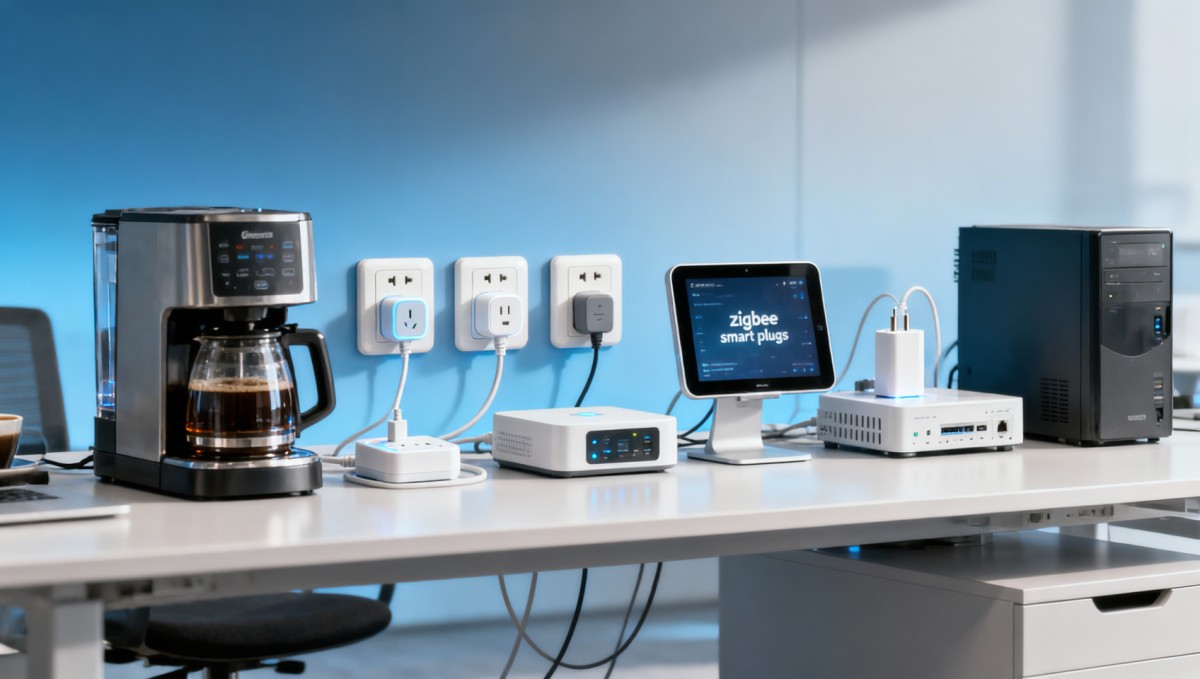
Zigbee smart plugs help reduce energy costs mainly by controlling when equipment is on, off, or in standby. In many workplaces, 5% to 15% of electricity use comes from devices that remain powered when no productive activity is taking place. Printers, coffee machines, displays, test benches, chargers, and network peripherals are common examples of avoidable overnight or weekend consumption.
The Zigbee protocol matters because it is built for low-power, reliable mesh communication. Compared with Wi-Fi-only control devices, Zigbee smart plugs often place less load on the local network and can scale more cleanly across dozens or even 100+ endpoints in a medium facility. That makes them useful not only for homes, but also for distributed business sites where centralized scheduling and basic energy monitoring are required.
Savings typically come from four sources: eliminating idle power, automating shutdown routines, identifying abnormal consumption, and reducing manual intervention. If a break room appliance draws 30W in standby for 16 hours per day, that equals 0.48 kWh daily. Across 20 similar devices, the annual waste can become significant enough to justify intelligent switching within 6 to 18 months, depending on local tariff rates.
Where the savings usually come from
- Scheduled shutdown after working hours, such as 7:00 p.m. to 7:00 a.m., for noncritical equipment.
- Automatic power-off for idle devices after 30, 60, or 120 minutes of inactivity.
- Load tracking to detect devices that consume more power than expected after maintenance or software changes.
- Remote control across branch sites, reducing unnecessary truck rolls or after-hours manual checks.
Not every connected plug produces the same financial outcome. The largest gains usually appear where equipment runs intermittently, where users forget shutdown procedures, or where standby draw is spread across many small loads. In contrast, always-on critical infrastructure such as medical refrigerators, security gateways, or protected network devices may be poor candidates for automatic cutoff and should be treated separately in planning.
Typical savings logic by device category
The table below shows how energy savings potential varies by equipment type. These are typical operational ranges rather than fixed performance guarantees, and buyers should validate them against actual duty cycles and local electricity pricing.
The main takeaway is that Zigbee smart plugs are most effective when applied selectively. The goal is not to automate every socket in a facility. The goal is to target controllable loads where behavior-driven waste exists and where remote visibility can support facility, energy, and operations teams with measurable payback.
When the Business Case Is Strong and When It Is Weak
From a business perspective, the strongest use case appears in organizations with repeated operating schedules, multiple plug-based assets, and moderate energy tariffs. Retail chains, co-working spaces, showroom networks, training centers, and branch offices often fit this profile. Even a 3% to 8% reduction in plug-load electricity can matter when rolled out across 10, 30, or 80 locations.
The case becomes weaker when the controlled load is already efficient, always occupied, or mission critical. A single high-efficiency office monitor that is manually turned off every night may deliver negligible incremental savings. Likewise, if energy management discipline is already strict and measured, adding connected plugs may produce more administrative complexity than financial benefit unless there is also a data or compliance objective.
Finance teams should also look beyond electricity alone. Zigbee smart plugs can reduce labor friction by automating repetitive shutdown procedures. In some sites, that means 10 to 20 minutes of staff time saved per day. Over a quarter or a year, operational convenience may contribute to project justification alongside direct utility savings.
A practical ROI screening framework
- Count how many devices remain energized outside business hours for more than 8 hours per day.
- Estimate standby or idle load in watts for each category, using device labels or metering samples.
- Multiply by hours, days, and local electricity rates to model annual waste.
- Compare expected savings with hardware, gateway, installation, and software management costs.
- Set a target payback period, commonly 12–24 months for light commercial deployments.
This type of screening helps decision-makers avoid deploying smart plugs where the economics are too thin. It also helps procurement teams rank pilot sites before committing to a larger rollout.
Decision matrix for B2B buyers
The following table can be used during technical and commercial review meetings to separate attractive opportunities from low-value ones.
If a project scores strongly on at least 3 of these 4 factors, a pilot is usually justified. If only 1 factor is strong, buyers should either narrow the scope or consider a simpler timer-based approach for very basic use cases.
Technical Selection Criteria for Evaluators and Procurement Teams
Choosing the right Zigbee smart plug is not only about price. Technical teams should assess electrical rating, metering accuracy, gateway compatibility, firmware stability, and local compliance requirements. In commercial settings, a plug rated at 10A may be suitable for lighting or small electronics, while 13A to 16A models may be needed for kitchen appliances, portable heaters, or higher-draw devices. The wrong rating creates both safety and reliability problems.
Another key issue is whether the device only switches power or also measures it. Energy-monitoring models are usually more valuable in B2B projects because they provide baseline data and help quantify savings. However, buyers should verify the measurement interval and practical accuracy range. For many facility applications, a deviation of around ±2% to ±5% may be acceptable for trend analysis, but not for formal billing or audited submetering.
Interoperability matters as well. Many organizations evaluating matter compatible devices assume every device will work seamlessly together. In practice, procurement teams should confirm what the plug supports today versus what may require a future bridge, firmware update, or platform dependency. A Zigbee smart plug can fit well into a broader smart electronics roadmap, but only if the network design is planned in advance.
Core checks before issuing a purchase order
- Electrical load rating: confirm voltage range, maximum current, and whether resistive and inductive loads are treated differently.
- Communication architecture: verify Zigbee version, mesh stability, and how many devices a hub or gateway can reliably manage.
- Power metering capability: check whether the plug reports watts, kWh, and historical usage in intervals such as 1 minute, 15 minutes, or hourly.
- Security and update path: confirm authentication, firmware update method, and administrative access controls.
- Deployment environment: evaluate plug size, outlet clearance, and temperature conditions, especially if installed near kitchens or equipment rooms.
Quality and safety managers should also evaluate failure behavior. Some plugs default to off after power restoration, while others return to the previous state. That setting can be beneficial for energy control, but risky for business continuity if applied to the wrong load. A structured asset classification process is therefore essential before installation begins.
Recommended technical comparison points
Use the comparison table below to align technical evaluation, quality review, and procurement negotiation on the same criteria set.
A disciplined specification process also improves supplier comparisons. Instead of only comparing unit prices, buyers can evaluate total cost of ownership over 12, 24, or 36 months, including gateways, onboarding time, software dependency, and replacement risk.
Implementation, Risk Control, and Operational Governance
A successful rollout usually starts with a pilot rather than a full fleet order. For most organizations, a 2- to 4-week pilot across 10 to 25 plugs is enough to validate three things: actual standby savings, network reliability, and user acceptance. This is particularly important when the project spans mixed loads such as smart kitchen appliances, workstations, display units, and auxiliary electronics.
Risk control should begin with asset segmentation. Teams should identify which devices are safe for scheduled cutoff, which require manual approval, and which must never be auto-switched. A common 3-tier structure is useful: Tier 1 for critical loads, Tier 2 for monitored but restricted loads, and Tier 3 for fully automatable loads. This reduces the chance of service disruption, spoiled inventory, or accidental interruption of security functions.
Project managers should also define governance rules for ownership. Facilities may handle schedules, IT may handle gateway connectivity, and procurement may manage vendor terms and replenishment. Without clear role definition, installations can become fragmented and savings may never be verified after the initial deployment phase.
A practical rollout sequence
- Audit 20–50 candidate outlets and classify them by criticality, load, and operating hours.
- Run a pilot with metering enabled and collect at least 14 days of baseline and controlled data.
- Adjust schedules based on real occupancy patterns, seasonal usage, and override requests.
- Document safe-use rules, maintenance ownership, and incident response procedures.
- Expand in phases, typically site by site, after savings and reliability thresholds are met.
One common mistake is treating Zigbee smart plugs as universal energy tools. They work best at the edge of the electrical system, where small and medium plug loads create repeatable waste. They are not a substitute for broader energy measures such as HVAC optimization, power factor correction, or major equipment replacement. In many cases, they should be part of a layered efficiency strategy rather than the whole strategy.
Common risks and mitigation steps
- Using them on unsuitable loads: prevent with an approval list and load labeling.
- Overestimating savings: measure baseline consumption for at least 7–14 days before rollout.
- Weak network coverage: test mesh performance in dense layouts, corners, and back-of-house areas.
- User overrides becoming permanent: review exception logs monthly and tighten schedules if needed.
- No post-deployment reporting: assign one owner to track kWh trends, uptime, and replacement rates.
For distributors, resellers, and solution integrators, implementation discipline is also a commercial differentiator. Customers increasingly expect not just devices, but a clear deployment model, support workflow, and evidence path for savings verification. That expectation is especially strong in sectors where procurement scrutiny and cost approval cycles are becoming more data-driven.
FAQ for Buyers, Operators, and Decision-Makers
The questions below reflect frequent evaluation points from researchers, technical reviewers, operators, and budget holders considering Zigbee smart plugs as part of a broader smart electronics or energy management initiative.
Do Zigbee smart plugs save enough to justify the purchase price?
They can, but only when installed on the right loads. If a plug controls equipment with 10W to 50W of standby demand for 10–16 hours per day, payback may fall within 12–24 months. If the controlled device already has near-zero idle use, the payback may be much longer or not commercially worthwhile.
Are Zigbee smart plugs better than Wi-Fi smart plugs for business sites?
For multi-device deployments, Zigbee often has an advantage because it is designed for low-power mesh networking and can reduce congestion on the primary Wi-Fi infrastructure. That does not automatically make it better in every case, but it is usually easier to scale when a site plans to manage dozens of connected endpoints.
Which environments benefit most from this technology?
Good candidates include branch offices, showrooms, retail spaces, staff kitchens, training rooms, and demo labs where devices are repeatedly left idle after hours. Facilities with 20 or more controllable plug loads often gain the clearest operational value because small savings accumulate across many outlets.
What should procurement teams ask suppliers before approval?
Ask about current rating, metering function, gateway requirements, firmware update path, power-restore behavior, warranty terms, and support responsiveness. It is also wise to ask how many devices can be managed per site without performance issues and what deployment documentation is provided for installers and operators.
Can they be used with matter compatible devices and other smart systems?
In some cases, yes, but compatibility depends on the ecosystem architecture. Buyers should verify whether integration is native, hub-based, or planned through a later update. For business users, assumed compatibility is a risk; documented compatibility is the standard to request before purchase.
Zigbee smart plugs can help cut energy costs, but only when deployed with a clear commercial and technical logic. Their value comes from eliminating avoidable idle consumption, automating repeatable shutdown routines, and providing usable consumption data for operations teams. For procurement, engineering, and business leadership, the best results come from targeted pilots, correct load selection, and careful integration with broader smart device strategies.
If your organization is evaluating smart electronics, connected energy controls, or multi-site efficiency upgrades, TradeNexus Pro can help you assess sourcing options, implementation priorities, and market-ready solution pathways. Contact us to discuss your use case, request a tailored evaluation framework, or explore more practical B2B technology insights.
Get weekly intelligence in your inbox.
No noise. No sponsored content. Pure intelligence.
 Apr 27, 2026Algeria’s Oil & Steel FDI Push Opens Valve, Corrosion-Resistant Material OrdersAlgeria’s Oil & Steel FDI Push Opens Valve, Corrosion-Resistant Material Orders
 Apr 27, 2026Azerbaijan’s New PV Mounting Standard Opens Path for Chinese SuppliersAzerbaijan’s New PV Mounting Standard Opens Path for Chinese Suppliers
 Apr 27, 2026Fitch Cuts East Africa Growth Forecasts, Raises Cross-Border Trade RisksFitch Cuts East Africa Growth Forecasts, Raises Cross-Border Trade Risks
 Apr 27, 2026ADB Raises Vietnam GDP Forecast to 7.2% on Electronics Export GrowthADB Raises Vietnam GDP Forecast to 7.2% on Electronics Export Growth
 Apr 27, 2026Maine Halts Large Data Centers: AI Server Export ImpactMaine Halts Large Data Centers: AI Server Export Impact
 Apr 27, 2026OFID $500M for Côte d'Ivoire: Boost to Factory Automation & Warehouse RoboticsOFID $500M for Côte d'Ivoire: Boost to Factory Automation & Warehouse Robotics
 Apr 27, 2026Morocco Ranks 4th in EU Energy Aid to AfricaMorocco Ranks 4th in EU Energy Aid to Africa
 Apr 27, 2026UAE Emerges as Global AI Hub, Opening Fast-Track for Chinese Smart DevicesUAE Emerges as Global AI Hub, Opening Fast-Track for Chinese Smart Devices
") Apr 26, 2026China Releases Green Design Guidelines for Industrial Products (2026)China Releases Green Design Guidelines for Industrial Products (2026)
Apr 26, 2026China Releases Green Design Guidelines for Industrial Products (2026)China Releases Green Design Guidelines for Industrial Products (2026) Apr 26, 2026ANATEL Mandates Portuguese Offline Voice Assistant for Smart Home Devices in BrazilANATEL Mandates Portuguese Offline Voice Assistant for Smart Home Devices in Brazil
 Apr 26, 2026Vietnam Enforces Bilingual Safety Labels for Electronic Components from Apr 22, 2026Vietnam Enforces Bilingual Safety Labels for Electronic Components from Apr 22, 2026
 Apr 26, 2026Japan Updates JIS for Rehab Devices: IEC 62366-1:2024 RequiredJapan Updates JIS for Rehab Devices: IEC 62366-1:2024 Required
 Apr 26, 2026THE Alliance Cuts Ningbo–Rotterdam Transit to 18 Days, Spot Rates Up 35%THE Alliance Cuts Ningbo–Rotterdam Transit to 18 Days, Spot Rates Up 35%
 Apr 26, 2026India BIS Mandates PLC & HMI Certification under IS 13252:2025 by Oct 2026India BIS Mandates PLC & HMI Certification under IS 13252:2025 by Oct 2026
") Apr 26, 2026SASO Enforces New EV Charger Rules in Saudi Arabia (2026)SASO Enforces New EV Charger Rules in Saudi Arabia (2026)
Apr 26, 2026SASO Enforces New EV Charger Rules in Saudi Arabia (2026)SASO Enforces New EV Charger Rules in Saudi Arabia (2026) Apr 26, 2026TÜV Rheinland Updates IoT EMC Guidelines: AI Edge Modules Now Mandatory for Immunity TestingTÜV Rheinland Updates IoT EMC Guidelines: AI Edge Modules Now Mandatory for Immunity Testing
 Apr 26, 2026USTR Launches First Annual Review of China Solar PV AD/CVD OrdersUSTR Launches First Annual Review of China Solar PV AD/CVD Orders
 Apr 26, 2026EU New Battery Regulation Fully Enforced Apr 24, 2026EU New Battery Regulation Fully Enforced Apr 24, 2026
 Apr 25, 2026Vietnam Enforces CN-EN Bilingual Safety Labels on Electronic Components from Apr 22, 2026Vietnam Enforces CN-EN Bilingual Safety Labels on Electronic Components from Apr 22, 2026
 Apr 25, 2026ANATEL Mandates Portuguese Offline Voice Assistants for Smart Home Devices in BrazilANATEL Mandates Portuguese Offline Voice Assistants for Smart Home Devices in Brazil
 Apr 25, 2026India BIS Mandates IS 13252:2025 for PLCs & HMIs by Oct 2026India BIS Mandates IS 13252:2025 for PLCs & HMIs by Oct 2026
 Apr 25, 2026SASO EV Charger Rules: Grid Compatibility & Sand Resistance RequiredSASO EV Charger Rules: Grid Compatibility & Sand Resistance Required
 Apr 25, 2026JIS T 0011:2026 Enforces IEC 62366-1:2024 for Rehab Devices in JapanJIS T 0011:2026 Enforces IEC 62366-1:2024 for Rehab Devices in Japan
 Apr 25, 2026THE Alliance Cuts Ningbo–Rotterdam Transit to 18 Days, +35% Spot RateTHE Alliance Cuts Ningbo–Rotterdam Transit to 18 Days, +35% Spot Rate
 Apr 25, 2026TÜV Rheinland Updates IoT EMC Standard: AI Edge Module Immunity Now MandatoryTÜV Rheinland Updates IoT EMC Standard: AI Edge Module Immunity Now Mandatory
 Apr 25, 2026USTR Launches Five-Year China Solar PV AD/CVD ReviewUSTR Launches Five-Year China Solar PV AD/CVD Review
 Apr 25, 2026EU New Battery Regulation Enters Force Apr 24, 2026EU New Battery Regulation Enters Force Apr 24, 2026