How much should you spend on wearable fitness trackers
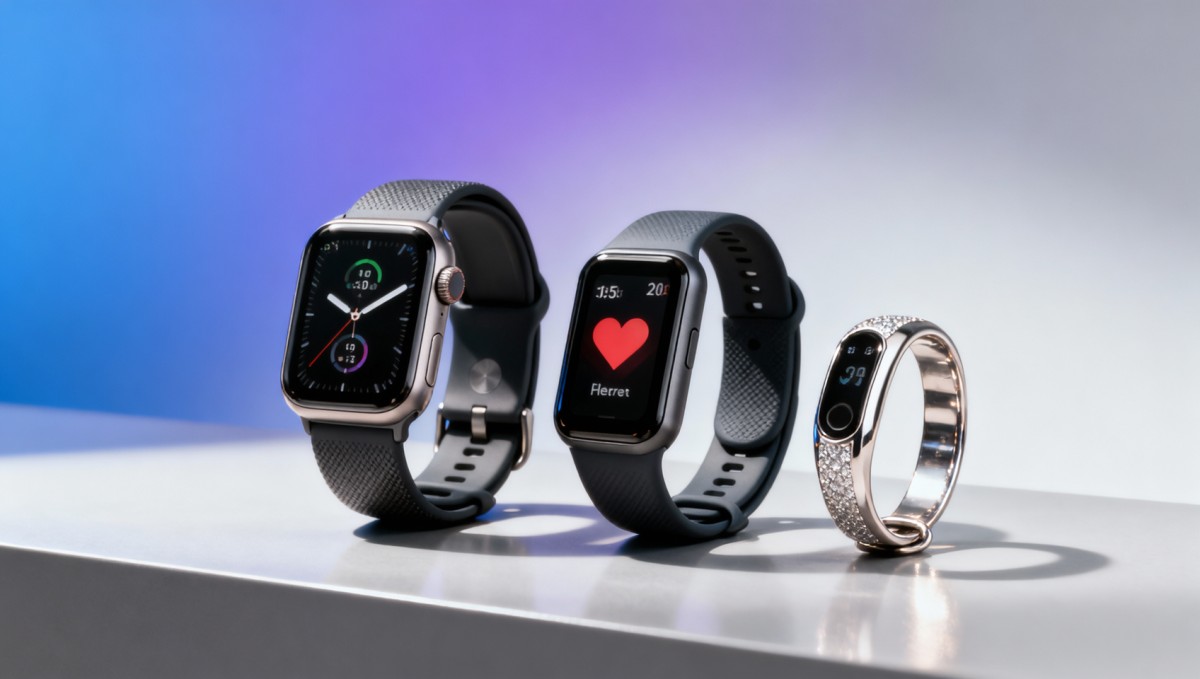
Deciding how much to spend on wearable fitness trackers depends on your goals, required accuracy, and long-term value. From entry-level health monitoring watches and smart rings to premium devices with advanced sensors, price often reflects data depth, durability, and ecosystem integration. For buyers, evaluators, and decision-makers, understanding these differences is essential before comparing features, costs, and performance.
If you want a short answer, most buyers should expect to spend $50 to $150 for basic personal tracking, $150 to $300 for better accuracy and broader health features, and $300+ only when advanced sensors, stronger software ecosystems, or professional-grade use cases justify the cost. The right budget is not just about the device price. It is about whether the tracker delivers reliable data, fits the user workflow, and holds value over time.
How to decide the right budget for a wearable fitness tracker
The core question is not simply, “What is the cheapest acceptable tracker?” It is, “What level of data, comfort, and reliability do you actually need?” For most readers comparing wearable fitness trackers, the purchase decision usually comes down to five factors:
- Purpose: general wellness, exercise tracking, sleep monitoring, recovery tracking, or continuous health observation
- Accuracy expectations: casual estimates versus decision-support data
- User profile: individual consumer, team deployment, employee wellness program, reseller, or corporate procurement
- Software ecosystem: app quality, device compatibility, API access, and reporting tools
- Total cost of ownership: subscription fees, battery replacement, warranty support, and upgrade cycle
If the tracker is mainly for counting steps, heart rate trends, and basic sleep insights, spending at the lower end often makes sense. If the device will influence training programs, wellness initiatives, or procurement recommendations, spending more for data consistency and support is usually the better business decision.
What different price ranges usually get you
Price differences in wearable fitness trackers are not random. They generally reflect improvements in sensor quality, software intelligence, materials, and ecosystem maturity.
Budget range: $50 to $150
This range is suitable for casual users and cost-sensitive buyers. Typical features include:
- Step counting
- Basic heart rate tracking
- Sleep summaries
- Workout mode support
- Basic app connectivity
These trackers can offer good value for entry-level monitoring, but accuracy may vary more during intense activity, and build quality or long-term software support may be limited.
Mid-range: $150 to $300
This is often the best-value segment for serious users and evaluators. Buyers usually get:
- Improved heart rate and motion sensors
- Better sleep and recovery analysis
- GPS or more reliable connected GPS
- Improved battery life
- Stronger mobile apps and data presentation
- Better compatibility with smartphones and health platforms
For many people, this is the ideal spending zone because it balances practical functionality with acceptable long-term value.
Premium: $300 and above
Premium wearable fitness trackers typically include:
- Advanced biometric sensors
- ECG, skin temperature, SpO2, or stress tracking
- More refined design and durable materials
- Deeper training analytics and coaching features
- Broader ecosystem integration
This level makes sense when users need richer health metrics, better user experience, or integration into a broader digital health or productivity environment. However, not every buyer needs this tier. Paying more only makes sense when those advanced functions are actually used.
What matters more than the sticker price
When people ask how much they should spend on wearable fitness trackers, they often focus only on upfront cost. In reality, the smarter question is whether the device will deliver useful outcomes over time.
1. Data quality and consistency
A cheap tracker that produces unreliable readings may create poor decisions, user frustration, and low adoption. This matters even more when the tracker is used for wellness programs, fitness planning, or product evaluation.
2. Comfort and wearability
If a device is uncomfortable, heavy, or poorly designed, users may stop wearing it. A tracker only creates value when it is worn consistently.
3. Battery life and maintenance
Frequent charging reduces compliance. For operations teams or multi-user environments, battery performance can have a direct effect on user retention and support demands.
4. App quality and ecosystem fit
A strong app can make a mid-priced device more useful than a premium device with poor dashboards or weak synchronization. Buyers should assess reporting clarity, integrations, and long-term software support.
5. Subscription costs
Some wearable fitness trackers require monthly or annual subscriptions to unlock advanced insights. A lower hardware price can become a higher long-term spend if software fees are recurring.
How different buyer types should think about spending
Because the target audience includes both users and business decision-makers, budget strategy should reflect role-specific priorities.
For individual users and operators
If the main goal is motivation, activity tracking, and general health awareness, a lower to mid-range tracker is usually enough. Spending more is justified only if you need advanced coaching, stronger sport-specific analytics, or premium health sensors.
For technical evaluators and quality-focused reviewers
The budget should prioritize sensor reliability, data export capability, software stability, and consistency across user conditions. Mid-range to premium products are more likely to meet testing or benchmark expectations.
For procurement and finance approvers
The key issue is not simply unit cost. It is value per user over the lifecycle. Consider:
- Expected service life
- Warranty and replacement terms
- Software licensing
- User adoption rates
- Support and onboarding burden
In many cases, buying the cheapest devices leads to higher replacement rates and lower program effectiveness. A slightly higher upfront budget may reduce total cost over time.
For distributors and channel partners
Product positioning matters. Entry-level devices move on price, but mid-tier and premium wearable fitness trackers often provide stronger margins, better brand credibility, and more differentiated sales conversations.
When spending more is worth it
You should consider a higher budget when one or more of the following apply:
- You need dependable heart rate or recovery trend data
- You want longer battery life and better hardware durability
- You need integration with enterprise wellness, health, or training systems
- You expect regular software updates and better support
- The tracker will be used frequently over a long period
In these scenarios, premium or upper mid-range devices can offer better ROI than low-cost alternatives.
When a lower-cost tracker is the smarter choice
Spending less can be the right decision when:
- The device is for basic activity awareness only
- The user is new to wearables and still testing adoption
- The program has a large number of users with simple requirements
- Advanced sensor outputs will not be used in real decisions
In these cases, overbuying creates unnecessary cost without meaningful added value.
Practical buying checklist before setting your budget
Before choosing a price point, ask these questions:
- What is the main outcome you want? Better fitness habits, health monitoring, recovery data, or reporting?
- How accurate does the data need to be? Casual guidance or higher-confidence insight?
- Will users wear it consistently? Consider comfort and battery life.
- Are there hidden costs? Check subscriptions, accessories, and replacement plans.
- Does the software ecosystem match your workflow? Device compatibility matters as much as hardware quality.
- How long do you expect to use it? A longer horizon can justify a better device.
This checklist helps buyers avoid the common mistake of comparing wearable fitness trackers by feature count alone.
Final answer: how much should you spend on wearable fitness trackers?
For most people and most organizations, $150 to $300 is the most practical spending range because it usually offers the best balance of accuracy, usability, and long-term value. Spend $50 to $150 if your needs are basic and price sensitivity is high. Spend $300+ only when advanced health metrics, stronger integration, premium materials, or more dependable analytics create real value.
The best wearable fitness tracker is not the one with the longest feature list. It is the one that matches your goals, supports consistent use, and delivers useful data at a justifiable total cost. For users, evaluators, and decision-makers alike, smart budgeting starts with purpose first and price second.
Get weekly intelligence in your inbox.
No noise. No sponsored content. Pure intelligence.
 Apr 27, 2026Algeria’s Oil & Steel FDI Push Opens Valve, Corrosion-Resistant Material OrdersAlgeria’s Oil & Steel FDI Push Opens Valve, Corrosion-Resistant Material Orders
 Apr 27, 2026Azerbaijan’s New PV Mounting Standard Opens Path for Chinese SuppliersAzerbaijan’s New PV Mounting Standard Opens Path for Chinese Suppliers
 Apr 27, 2026Fitch Cuts East Africa Growth Forecasts, Raises Cross-Border Trade RisksFitch Cuts East Africa Growth Forecasts, Raises Cross-Border Trade Risks
 Apr 27, 2026ADB Raises Vietnam GDP Forecast to 7.2% on Electronics Export GrowthADB Raises Vietnam GDP Forecast to 7.2% on Electronics Export Growth
 Apr 27, 2026Maine Halts Large Data Centers: AI Server Export ImpactMaine Halts Large Data Centers: AI Server Export Impact
 Apr 27, 2026OFID $500M for Côte d'Ivoire: Boost to Factory Automation & Warehouse RoboticsOFID $500M for Côte d'Ivoire: Boost to Factory Automation & Warehouse Robotics
 Apr 27, 2026Morocco Ranks 4th in EU Energy Aid to AfricaMorocco Ranks 4th in EU Energy Aid to Africa
 Apr 27, 2026UAE Emerges as Global AI Hub, Opening Fast-Track for Chinese Smart DevicesUAE Emerges as Global AI Hub, Opening Fast-Track for Chinese Smart Devices
") Apr 26, 2026China Releases Green Design Guidelines for Industrial Products (2026)China Releases Green Design Guidelines for Industrial Products (2026)
Apr 26, 2026China Releases Green Design Guidelines for Industrial Products (2026)China Releases Green Design Guidelines for Industrial Products (2026) Apr 26, 2026ANATEL Mandates Portuguese Offline Voice Assistant for Smart Home Devices in BrazilANATEL Mandates Portuguese Offline Voice Assistant for Smart Home Devices in Brazil
 Apr 26, 2026Vietnam Enforces Bilingual Safety Labels for Electronic Components from Apr 22, 2026Vietnam Enforces Bilingual Safety Labels for Electronic Components from Apr 22, 2026
 Apr 26, 2026Japan Updates JIS for Rehab Devices: IEC 62366-1:2024 RequiredJapan Updates JIS for Rehab Devices: IEC 62366-1:2024 Required
 Apr 26, 2026THE Alliance Cuts Ningbo–Rotterdam Transit to 18 Days, Spot Rates Up 35%THE Alliance Cuts Ningbo–Rotterdam Transit to 18 Days, Spot Rates Up 35%
 Apr 26, 2026India BIS Mandates PLC & HMI Certification under IS 13252:2025 by Oct 2026India BIS Mandates PLC & HMI Certification under IS 13252:2025 by Oct 2026
") Apr 26, 2026SASO Enforces New EV Charger Rules in Saudi Arabia (2026)SASO Enforces New EV Charger Rules in Saudi Arabia (2026)
Apr 26, 2026SASO Enforces New EV Charger Rules in Saudi Arabia (2026)SASO Enforces New EV Charger Rules in Saudi Arabia (2026) Apr 26, 2026TÜV Rheinland Updates IoT EMC Guidelines: AI Edge Modules Now Mandatory for Immunity TestingTÜV Rheinland Updates IoT EMC Guidelines: AI Edge Modules Now Mandatory for Immunity Testing
 Apr 26, 2026USTR Launches First Annual Review of China Solar PV AD/CVD OrdersUSTR Launches First Annual Review of China Solar PV AD/CVD Orders
 Apr 26, 2026EU New Battery Regulation Fully Enforced Apr 24, 2026EU New Battery Regulation Fully Enforced Apr 24, 2026
 Apr 25, 2026Vietnam Enforces CN-EN Bilingual Safety Labels on Electronic Components from Apr 22, 2026Vietnam Enforces CN-EN Bilingual Safety Labels on Electronic Components from Apr 22, 2026
 Apr 25, 2026ANATEL Mandates Portuguese Offline Voice Assistants for Smart Home Devices in BrazilANATEL Mandates Portuguese Offline Voice Assistants for Smart Home Devices in Brazil
 Apr 25, 2026India BIS Mandates IS 13252:2025 for PLCs & HMIs by Oct 2026India BIS Mandates IS 13252:2025 for PLCs & HMIs by Oct 2026
 Apr 25, 2026SASO EV Charger Rules: Grid Compatibility & Sand Resistance RequiredSASO EV Charger Rules: Grid Compatibility & Sand Resistance Required
 Apr 25, 2026JIS T 0011:2026 Enforces IEC 62366-1:2024 for Rehab Devices in JapanJIS T 0011:2026 Enforces IEC 62366-1:2024 for Rehab Devices in Japan
 Apr 25, 2026THE Alliance Cuts Ningbo–Rotterdam Transit to 18 Days, +35% Spot RateTHE Alliance Cuts Ningbo–Rotterdam Transit to 18 Days, +35% Spot Rate
 Apr 25, 2026TÜV Rheinland Updates IoT EMC Standard: AI Edge Module Immunity Now MandatoryTÜV Rheinland Updates IoT EMC Standard: AI Edge Module Immunity Now Mandatory
 Apr 25, 2026USTR Launches Five-Year China Solar PV AD/CVD ReviewUSTR Launches Five-Year China Solar PV AD/CVD Review
 Apr 25, 2026EU New Battery Regulation Enters Force Apr 24, 2026EU New Battery Regulation Enters Force Apr 24, 2026