Rearview mirror cameras vs dash cams: what matters
When comparing rearview mirror cameras with dash cams, the real question is what matters most: visibility, safety compliance, installation efficiency, or fleet data value. For buyers navigating modern transport ecosystems shaped by freight forwarding services, supply chain software, and rising quality standards, understanding the practical trade-offs is essential before making a cost-effective, future-ready decision.
What is the real difference between rearview mirror cameras and dash cams?
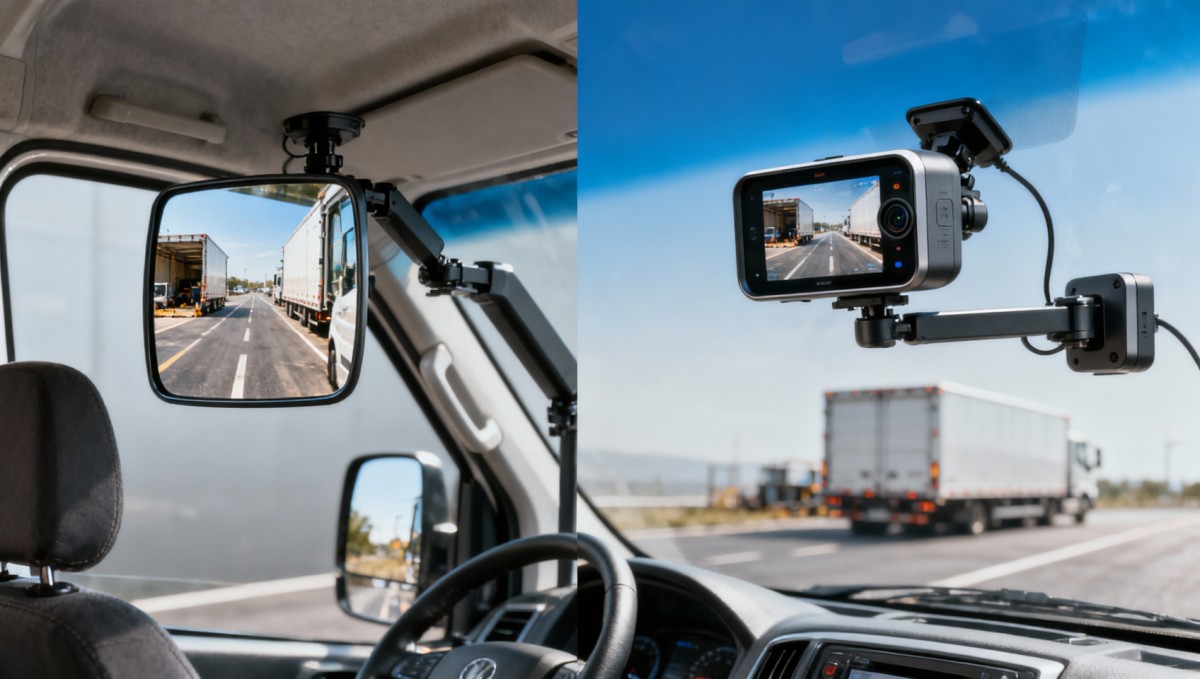
A rearview mirror camera is usually an integrated display-and-recording device that replaces or overlays the standard mirror. It is designed to improve rear visibility, reduce blind spots, and in many cases combine front and rear video capture in one operating interface. A dash cam, by contrast, is primarily an incident-recording tool mounted on the windshield or dashboard, focused on documenting the road ahead, the cabin, or multiple directions depending on the system type.
For operators, the distinction affects daily usability. For technical evaluators, it changes wiring architecture, field of view, storage management, and maintenance routines. For enterprise buyers, it influences whether the device is being purchased as a safety aid, an evidence tool, or part of a wider telematics stack. In mixed fleets, this decision often sits within a 3-layer evaluation: driver visibility, incident accountability, and digital integration.
In practical terms, rearview mirror cameras matter most where reversing, docking, urban delivery, and restricted loading zones are frequent. Dash cams matter most where liability review, insurance documentation, and driver behavior verification are priorities. Many procurement teams discover that the wrong comparison is asking which one is “better.” The better question is whether the operating environment requires real-time visibility, post-event evidence, or both.
This matters across general industry segments, from service fleets and light logistics vehicles to distributor networks and field installation teams. A vehicle operating 6–10 hours per day in dense city traffic has different needs than a regional transport van running long highway routes. The more complex the route mix, the more important it becomes to define the use case before evaluating hardware.
Core functional roles buyers should separate
- Rearview mirror camera: supports rear scene awareness, reversing safety, lane-change confidence, and in some setups reduces mirror obstruction from cargo or vehicle structure.
- Dash cam: records events for dispute resolution, insurance handling, driver coaching, and internal safety review.
- Hybrid requirement: common in fleets needing both visual assistance and evidence capture, especially where accident review and operational safety are managed by different departments.
For financial approvers, the distinction also affects return logic. A visibility tool may reduce low-speed collision risk and maneuvering damage. A recording tool may reduce claims friction and improve accountability. These are related but not identical budget justifications, and procurement documents should reflect that difference clearly.
Which option fits different fleet and operational scenarios?
Use-case fit is where many purchasing mistakes begin. A distributor van making 20–40 stops per day in urban zones may gain more immediate value from a rearview mirror camera because reversing, curbside maneuvering, and blind-angle awareness happen repeatedly during each shift. A long-haul vehicle with fewer stops but higher exposure to incident disputes may benefit more from a high-resolution dash cam with reliable loop recording and event lock functions.
Safety managers should also distinguish between low-speed operational risk and high-speed liability risk. Rearview systems are especially relevant in yards, warehouses, depots, loading docks, and last-mile routes. Dash cams become more valuable on highways, intercity routes, and contractor fleets where event reconstruction, driver monitoring, and insurance support are needed over weeks or months of operation.
In service industries, installation teams and mobile technicians often prefer compact setups with minimal cabin disruption. In these cases, a mirror-based solution can reduce dashboard clutter and keep the front windshield area cleaner. However, if the company plans to use AI video analytics, cloud upload, or dual-facing monitoring, a dedicated dash cam platform may offer better expandability over a 12–24 month deployment horizon.
The table below helps procurement teams match vehicle mission profiles with the most suitable camera approach. It is not a universal rulebook, but it provides a useful starting point for cross-functional evaluation between operations, safety, and finance.
The comparison shows why application scenario should come before brand or price discussion. When buyers align the camera type with route density, maneuver frequency, and reporting needs, specification selection becomes easier. This also shortens internal approval cycles because technical, operational, and commercial teams are reviewing the same decision logic.
A simple 4-step decision flow
- Define whether the main risk is maneuvering damage, accident liability, or both.
- Check vehicle type, cabin space, and whether cargo blocks natural rear visibility.
- Confirm if storage, wireless transfer, or fleet software integration is required within the next 6–12 months.
- Compare installation downtime, serviceability, and lifecycle cost rather than unit cost alone.
For distributors and resellers, this framework is also useful in customer discovery calls. It moves the discussion away from generic “camera quality” claims and toward scenario-based value, which is more persuasive in B2B buying conversations.
What technical specifications actually matter in procurement?
Technical selection often becomes confusing because buyers compare headline features without linking them to operational need. In reality, the most relevant specifications are usually image clarity in mixed light, recording stability during vibration, storage retention, startup reliability, and installation compatibility with the vehicle electrical system. For many fleets, a balanced configuration is more useful than the most feature-heavy one.
Rearview mirror cameras should be evaluated for display visibility in daytime and low-light conditions, rear camera placement flexibility, waterproof rating for external components, and latency between the live feed and driver response. Even a small delay may affect reversing confidence. Dash cams should be reviewed for channel count, event protection, memory management, parking mode behavior, and the practicality of retrieving footage after an incident.
For technical evaluators, one common mistake is overemphasizing nominal resolution while ignoring field-of-view distortion, nighttime exposure balance, and heat tolerance. A camera deployed in delivery vehicles can face long operating periods, vibration, and temperature swings across seasons. Procurement teams should therefore request configuration clarity on power input range, storage card compatibility, and routine maintenance intervals.
The table below summarizes practical specification priorities for rearview mirror cameras and dash cams in B2B transport and service environments. These are common evaluation points rather than fixed standards, but they can reduce back-and-forth during technical review.
The table highlights a recurring procurement lesson: the best technical specification is not the longest feature list, but the most operationally relevant one. For example, a fleet that reviews incidents monthly may care more about reliable file retrieval than about premium display size. A yard vehicle used for close maneuvering may care more about rear feed clarity and response speed than about advanced cloud functions.
Three specification groups to verify before approval
1. Image and recording performance
Check day and night usability, exposure control, and whether the system maintains readable footage during vibration or rain. In many fleet tenders, a review period of 7–14 days across at least 2 route types is a practical way to validate real conditions before bulk rollout.
2. Electrical and installation compatibility
Confirm power requirements, fuse protection, cable routing, and whether the device interferes with mirrors, sensors, or driver line of sight. A 1–2 hour installation saving per vehicle becomes meaningful when deploying across 50 or 100 units.
3. Data access and serviceability
Review how recordings are exported, how event files are protected, and how maintenance teams replace memory cards or rear cameras. If the system cannot be serviced easily in the field, hidden support costs rise quickly over the first 12 months.
How should buyers compare cost, compliance, and implementation risk?
Price comparisons often look simple at the quotation stage but become misleading once installation labor, downtime, accessory requirements, and maintenance are included. A lower-priced dash cam may require extra mounts, wiring, or data handling effort. A rearview mirror camera may cost more initially but reduce operational friction if the vehicle frequently reverses in constrained areas. Total cost should be reviewed over at least a 12-month cycle, and in larger fleets a 24-month lens is even more practical.
Compliance also matters. While exact requirements differ by region and application, buyers should assess visibility obstruction rules, data privacy obligations for recorded footage, retention policies, and internal driver notification procedures. Where vehicles cross borders or operate under contractor frameworks, the legal and policy review should happen before installation, not after a dispute occurs.
Quality and safety managers should build a short acceptance checklist covering 5 key points: image stability, mounting security, cable protection, recording integrity, and retrieval testing. For mixed fleets, a pilot deployment across 3–5 vehicles can uncover compatibility issues that do not appear in supplier demos. This is especially relevant when vehicles differ by cabin design, mirror geometry, or electrical layout.
The implementation comparison below helps buyers move beyond unit price and focus on cost drivers that influence lifecycle value and approval confidence.
A cost-led buying process becomes more reliable when the quote is linked to deployment assumptions. Buyers should ask how many installation steps are involved, whether accessories are included, how footage is retrieved, and what the expected maintenance touchpoints are each quarter. These questions are often more revealing than a price delta on the hardware alone.
Common procurement mistakes
- Treating a rearview mirror camera as a complete replacement for a fleet evidence strategy when incident documentation remains a core requirement.
- Buying a dash cam with advanced functions but no practical workflow for footage retention, review, or driver communication.
- Approving a rollout without testing on at least one urban route and one long-route vehicle if the fleet operates in both environments.
- Ignoring distributor, installer, or after-sales capability, which can delay implementation by 2–4 weeks if replacement parts or support responses are slow.
For cross-border sourcing and multi-market deployment, buyers should also review packaging, installation documentation, and warranty handling. Resellers and agents benefit when the supplier can support not only the product but the operational handover process.
FAQ: what do decision-makers usually ask before choosing?
Is a rearview mirror camera better than a dash cam for safety?
It depends on what type of safety problem you are solving. If the main issue is low-speed maneuvering, blind spots, reversing, and docking, a rearview mirror camera often delivers more immediate operational safety value. If the main issue is accident review, insurance support, and driver accountability, a dash cam is usually more relevant. Many fleets need both functions, but not always in one device.
What should procurement teams verify first?
Start with 3 questions: what risk are you prioritizing, what vehicle types are involved, and how will footage or live video be used after installation? After that, verify 5 checkpoints: power compatibility, mounting method, recording retention, service workflow, and policy compliance. This structure helps align operations, safety, IT, and finance before a purchase order is issued.
How long does implementation usually take?
For a pilot on a small fleet segment, planning and validation often take 1–2 weeks, followed by a limited installation phase. Broader rollout timing depends on installer capacity, vehicle availability, and whether a rear camera needs more complex routing. If the deployment includes internal policy review, training, and data handling setup, allow additional time rather than treating the purchase as a simple hardware swap.
Are these systems suitable for resellers and distributors?
Yes, especially when the reseller can position the offer by application rather than by generic electronics specifications. Distributors gain more traction when they separate customer needs into urban delivery, service fleet, highway use, and yard operation scenarios. That allows clearer bundling of hardware, installation support, and after-sales service across different customer profiles.
Why work with TradeNexus Pro when evaluating camera solutions and fleet technology?
TradeNexus Pro supports buyers and commercial teams that need more than product summaries. In camera category decisions like rearview mirror cameras versus dash cams, the challenge is rarely just hardware comparison. The challenge is linking technical fit, supply chain reliability, implementation timing, and decision confidence across multiple stakeholders. That is where structured B2B intelligence becomes valuable.
Because TNP focuses on advanced manufacturing, smart electronics, and supply chain software, it is well positioned to help enterprises examine how camera hardware decisions interact with sourcing strategy, digital fleet systems, and operational risk control. This is particularly relevant for procurement directors, technical evaluators, safety leads, and finance approvers who need a practical view of both equipment and deployment implications.
If your team is comparing rearview mirror cameras, dash cams, or hybrid vehicle video systems, TNP can help you frame the evaluation around the factors that matter in real purchasing environments: parameter confirmation, use-case matching, delivery planning, supplier screening, compliance review, and solution fit across different fleet types. This approach reduces internal uncertainty and helps turn market research into actionable sourcing decisions.
You can contact TradeNexus Pro to discuss product selection logic, typical configuration ranges, pilot rollout planning, certification-related questions, sample support pathways, and quotation comparisons across supplier options. For distributors, agents, and enterprise buyers, this creates a more informed path from research to negotiation, especially when timelines are tight and approval standards are high.
What you can consult on directly
- How to choose between a rearview mirror camera, a dash cam, or a combined system for your fleet profile.
- Which parameters to confirm before RFQ issuance, including recording needs, camera channels, installation complexity, and service expectations.
- How to assess delivery cycle risk, pilot scheduling, and supplier responsiveness in a multi-stakeholder B2B project.
- What to review for compliance, documentation, sample evaluation, and cross-market distributor readiness.
For organizations balancing safety, visibility, cost, and data value, the right question is not simply rearview mirror cameras vs dash cams. The real question is which system supports your operating model, your risk profile, and your next 12–24 months of fleet decision-making. TradeNexus Pro helps you answer that with sharper market insight and a clearer procurement path.
Get weekly intelligence in your inbox.
No noise. No sponsored content. Pure intelligence.
") Apr 26, 2026China Releases Green Design Guidelines for Industrial Products (2026)China Releases Green Design Guidelines for Industrial Products (2026)
Apr 26, 2026China Releases Green Design Guidelines for Industrial Products (2026)China Releases Green Design Guidelines for Industrial Products (2026) Apr 26, 2026ANATEL Mandates Portuguese Offline Voice Assistant for Smart Home Devices in BrazilANATEL Mandates Portuguese Offline Voice Assistant for Smart Home Devices in Brazil
 Apr 26, 2026Vietnam Enforces Bilingual Safety Labels for Electronic Components from Apr 22, 2026Vietnam Enforces Bilingual Safety Labels for Electronic Components from Apr 22, 2026
 Apr 26, 2026Japan Updates JIS for Rehab Devices: IEC 62366-1:2024 RequiredJapan Updates JIS for Rehab Devices: IEC 62366-1:2024 Required
 Apr 26, 2026THE Alliance Cuts Ningbo–Rotterdam Transit to 18 Days, Spot Rates Up 35%THE Alliance Cuts Ningbo–Rotterdam Transit to 18 Days, Spot Rates Up 35%
 Apr 26, 2026India BIS Mandates PLC & HMI Certification under IS 13252:2025 by Oct 2026India BIS Mandates PLC & HMI Certification under IS 13252:2025 by Oct 2026
") Apr 26, 2026SASO Enforces New EV Charger Rules in Saudi Arabia (2026)SASO Enforces New EV Charger Rules in Saudi Arabia (2026)
Apr 26, 2026SASO Enforces New EV Charger Rules in Saudi Arabia (2026)SASO Enforces New EV Charger Rules in Saudi Arabia (2026) Apr 26, 2026TÜV Rheinland Updates IoT EMC Guidelines: AI Edge Modules Now Mandatory for Immunity TestingTÜV Rheinland Updates IoT EMC Guidelines: AI Edge Modules Now Mandatory for Immunity Testing
 Apr 26, 2026USTR Launches First Annual Review of China Solar PV AD/CVD OrdersUSTR Launches First Annual Review of China Solar PV AD/CVD Orders
 Apr 26, 2026EU New Battery Regulation Fully Enforced Apr 24, 2026EU New Battery Regulation Fully Enforced Apr 24, 2026
 Apr 25, 2026Vietnam Enforces CN-EN Bilingual Safety Labels on Electronic Components from Apr 22, 2026Vietnam Enforces CN-EN Bilingual Safety Labels on Electronic Components from Apr 22, 2026
 Apr 25, 2026ANATEL Mandates Portuguese Offline Voice Assistants for Smart Home Devices in BrazilANATEL Mandates Portuguese Offline Voice Assistants for Smart Home Devices in Brazil
 Apr 25, 2026India BIS Mandates IS 13252:2025 for PLCs & HMIs by Oct 2026India BIS Mandates IS 13252:2025 for PLCs & HMIs by Oct 2026
 Apr 25, 2026SASO EV Charger Rules: Grid Compatibility & Sand Resistance RequiredSASO EV Charger Rules: Grid Compatibility & Sand Resistance Required
 Apr 25, 2026JIS T 0011:2026 Enforces IEC 62366-1:2024 for Rehab Devices in JapanJIS T 0011:2026 Enforces IEC 62366-1:2024 for Rehab Devices in Japan
 Apr 25, 2026THE Alliance Cuts Ningbo–Rotterdam Transit to 18 Days, +35% Spot RateTHE Alliance Cuts Ningbo–Rotterdam Transit to 18 Days, +35% Spot Rate
 Apr 25, 2026TÜV Rheinland Updates IoT EMC Standard: AI Edge Module Immunity Now MandatoryTÜV Rheinland Updates IoT EMC Standard: AI Edge Module Immunity Now Mandatory
 Apr 25, 2026USTR Launches Five-Year China Solar PV AD/CVD ReviewUSTR Launches Five-Year China Solar PV AD/CVD Review
 Apr 25, 2026EU New Battery Regulation Enters Force Apr 24, 2026EU New Battery Regulation Enters Force Apr 24, 2026
 Apr 25, 2026China Customs Launches RCEP Origin Smart Pre-Review for ASEAN机电 ExportsChina Customs Launches RCEP Origin Smart Pre-Review for ASEAN机电 Exports
 Apr 24, 2026India BIS Mandates IS 13252:2025 for PLCs & HMIs by Oct 2026India BIS Mandates IS 13252:2025 for PLCs & HMIs by Oct 2026
 Apr 24, 2026SASO EV Charger Regulation: Sand-Resistant Grid Compatibility Testing RequiredSASO EV Charger Regulation: Sand-Resistant Grid Compatibility Testing Required
 Apr 24, 2026Japan Updates JIS for Rehab Devices: IEC 62366-1:2024 Usability Compliance RequiredJapan Updates JIS for Rehab Devices: IEC 62366-1:2024 Usability Compliance Required
 Apr 24, 2026China Customs Launches RCEP Origin Smart Pre-Review SystemChina Customs Launches RCEP Origin Smart Pre-Review System
 Apr 24, 2026ANATEL Mandates Localized Voice Assistants for Smart Home Devices in BrazilANATEL Mandates Localized Voice Assistants for Smart Home Devices in Brazil
 Apr 24, 2026TÜV Rheinland Updates IoT EMC Standard with AI Edge抗扰度 RequirementTÜV Rheinland Updates IoT EMC Standard with AI Edge抗扰度 Requirement
 Apr 24, 20262M Alliance Shortens Ningbo–Rotterdam Route to 18 Days Amid 35% Slot Premium2M Alliance Shortens Ningbo–Rotterdam Route to 18 Days Amid 35% Slot Premium