Smart rings for sleep tracking: what really matters
As smart rings gain traction among wearable fitness trackers and health monitoring watches, sleep tracking has become a key benchmark for buyers and evaluators alike. But beyond sleek design and app dashboards, what really matters is data accuracy, comfort, battery life, and practical value. This article examines the factors that determine whether smart rings deliver meaningful sleep insights for users, procurement teams, and technology decision-makers.
What should buyers really evaluate in smart rings for sleep tracking?
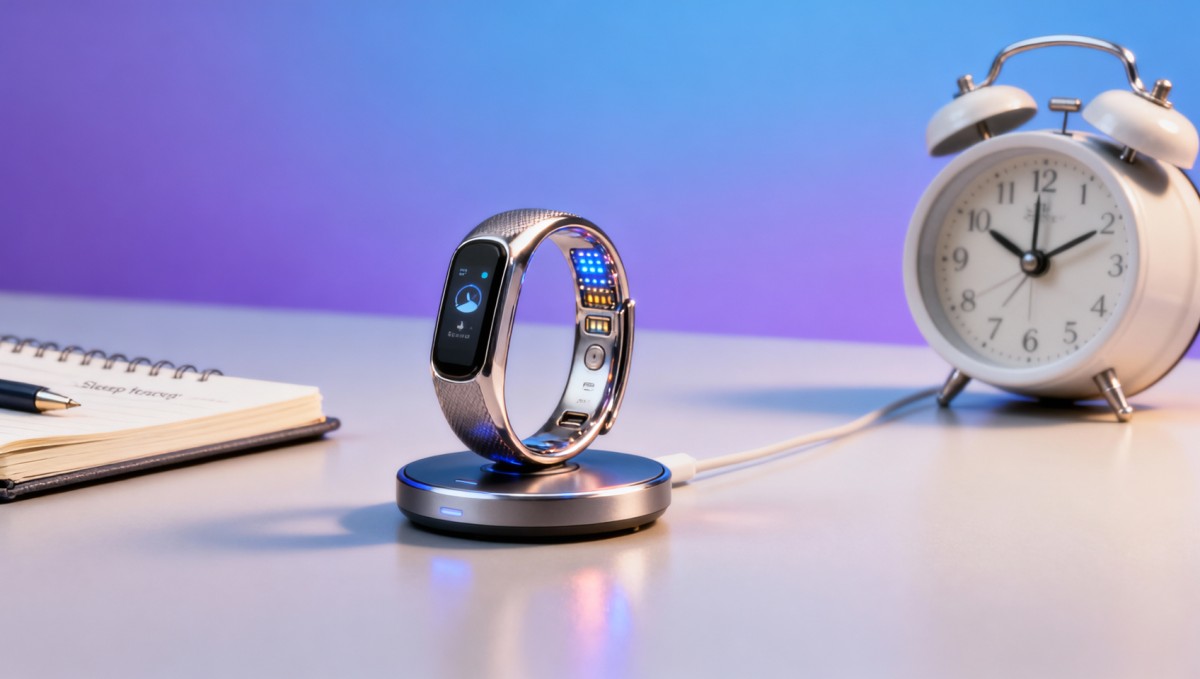
For both individual users and B2B evaluators, sleep tracking is not just a feature checklist item. It is a combination of sensor quality, algorithm maturity, wearing stability, and reporting clarity. A smart ring may look premium, but if overnight data drifts after 2–3 hours of movement or if sleep stages vary widely from one night to the next, the output becomes difficult to trust for health management or product comparison.
In practical assessment, there are 4 core dimensions that matter most: signal capture, comfort during 6–9 hours of continuous wear, battery duration across multiple nights, and actionability of the sleep report. For procurement personnel, these dimensions affect return rates, user adoption, and after-sales burden. For technical reviewers, they determine whether the device is suitable for pilot programs, wellness deployments, or distribution partnerships.
Smart rings for sleep tracking are often compared with watches, patches, or bedside systems. Their main advantage is low-profile overnight wear. Yet this advantage disappears if sizing is poor, if the inner surface causes pressure marks, or if charging is needed every 1–2 days. In sleep products, comfort is not secondary. It directly affects data consistency because the best sensor package still depends on stable overnight wear.
For market researchers and enterprise decision-makers, the key question is simple: does the device produce repeatable sleep insights that support behavior change, wellness reporting, or product portfolio expansion? TradeNexus Pro tracks these criteria closely because in smart electronics and healthcare-adjacent wearables, weak data credibility usually leads to weak commercial retention.
The minimum evaluation checklist
- Sensor stack: confirm whether the device uses common sleep-related signals such as heart rate, heart rate variability, motion, skin temperature trend, or blood oxygen estimation where applicable.
- Wear duration: verify whether 5–7 nights of use are possible before charging, or whether practical battery life drops under real settings.
- Sizing and fit: check ring size options, exchange policy, and whether signal quality declines with loose or rotating wear.
- Reporting logic: assess whether the app explains sleep duration, latency, interruptions, and readiness in a way that both operators and non-technical users can act on.
This checklist is useful across several roles. A distributor wants fewer complaints. A finance approver wants lower replacement costs over a 12-month cycle. A quality or safety manager wants reliable use guidance. A project lead wants a product that can move from sample review to rollout without hidden operational friction.
Which technical factors affect sleep tracking accuracy the most?
When people ask whether smart rings are accurate for sleep tracking, they often focus on one metric. In reality, sleep accuracy depends on a chain of factors. The ring must maintain skin contact, collect stable photoplethysmography signals, interpret motion correctly, and classify rest periods using algorithms trained across different sleep patterns. Accuracy is therefore not a single specification. It is system performance over a full night.
The most dependable consumer-level outputs are usually total sleep time, bedtime consistency, wake events trend, and resting physiological changes over 7–14 nights. More granular stage breakdowns such as light, deep, and REM sleep can be directionally useful, but should be treated cautiously when making clinical or high-stakes decisions. For procurement teams, this distinction matters because overpromised stage precision often becomes a source of customer dissatisfaction.
Another factor is firmware and app update quality. A ring with decent hardware can improve meaningfully over 2–4 software update cycles if the vendor refines signal processing and sleep scoring. On the other hand, hardware with limited sensor placement or unstable battery management cannot easily be corrected in software. Technical evaluators should therefore ask for changelog visibility, support cadence, and bug resolution timelines.
Environmental and user variables also matter. Cold rooms, loose fit, skin hydration changes, tattoos on the wearing area, and frequent overnight hand movement can all alter signal quality. This means the best evaluation period is rarely 1 night. A more useful benchmark is 7 consecutive nights under normal use, followed by comparison against another familiar device or a structured sleep diary.
Technical indicators worth comparing before purchase
The table below summarizes practical parameters that matter when comparing smart rings for sleep tracking in procurement, technical review, and reseller selection. These are not brand-specific claims but operational factors that affect user satisfaction and deployment risk.
This comparison shows why technical performance cannot be reduced to one marketing number. In many buying situations, a ring with slightly simpler reporting but better fit retention over 6–8 hours may outperform a feature-heavy model that users remove at night. That trade-off is especially important in B2B channels where replacement, retraining, and support costs matter as much as hardware appeal.
Why comfort is a technical issue, not just a design issue
Comfort affects compliance. Compliance affects signal continuity. Signal continuity affects sleep tracking quality. That is why operators and project managers should treat comfort testing as part of technical validation. A ring that performs well on paper but causes finger swelling discomfort after 4–5 hours can create biased or incomplete datasets. In sleep tracking, wearability and performance are inseparable.
How do smart rings compare with watches and other sleep tracking options?
Smart rings for sleep tracking sit between high-convenience consumer wearables and more specialized monitoring tools. For buyers, the right choice depends on the intended use case. A general wellness program may value ease of wear and low interruption. A more technical pilot may require broader daytime metrics, while a clinical pathway may require validated medical-grade tools outside the consumer wearable category.
Compared with smartwatches, rings are often better tolerated during sleep because they are lighter and less intrusive on the wrist. Compared with bedside devices, rings capture more individualized physiological signals but require active charging and app engagement. Compared with adhesive patches, they are usually easier for repeated long-term use, though they may provide fewer direct-grade medical outputs depending on the product class.
The business impact of this comparison is important. Procurement teams do not only buy a sensor. They buy a workflow. If the chosen format demands too much charging, syncing, or user education, the program may lose momentum within 30–60 days. That is why operational simplicity should be reviewed alongside tracking depth and dashboard quality.
For distributors and commercial evaluators, product positioning also matters. Smart rings for sleep tracking are easier to position when the value proposition is clear: passive overnight trend monitoring, compact form factor, and wellness-oriented insight. Problems begin when consumer-grade products are marketed as if they replace professional diagnostics in all cases.
Format comparison for sleep tracking decisions
The following table helps compare common sleep tracking formats using decision criteria relevant to research teams, buyers, and channel partners.
For most wellness and consumer-adjacent B2B programs, smart rings offer a strong balance between comfort and trend monitoring. However, they should be selected with a clear purpose. If the aim is overnight wear consistency over 3–6 months, rings are often compelling. If the aim is broader interactive coaching during the day, a watch may still fit better.
What should procurement teams, distributors, and project leads check before selection?
Procurement of smart rings for sleep tracking should not begin with unit price alone. It should begin with use case definition. Are you sourcing for employee wellness, channel distribution, product benchmarking, or bundled digital health offerings? Each scenario changes the acceptable trade-off between cost, app complexity, battery life, and support requirements. A low-cost device may look attractive until sizing exchanges and support tickets erase the saving.
A practical selection process usually involves 3 stages: requirement mapping, sample validation, and commercial review. Requirement mapping identifies who will use the device and what sleep outputs matter. Sample validation should run for at least 7–10 nights across different users. Commercial review should cover accessories, replacement terms, software access, data handling expectations, and onboarding workload.
Technical assessment teams should also review whether the vendor provides clear documentation on charging cycles, firmware updates, compatible operating systems, and size management. These details may seem operational, but they strongly affect scale-up readiness. In many projects, onboarding failure is caused less by sensor limits and more by poor fit management or unclear app setup instructions.
For financial approvers, the best evaluation model is total deployment cost over a 6–12 month horizon. Include sample loss, spare units, shipping for exchanges, support labor, and possible subscription costs. For quality and safety stakeholders, also review material contact considerations, user instruction clarity, and whether claims are presented in a non-misleading wellness context.
A practical procurement checklist
- Define 3 priority outputs, such as total sleep time, sleep consistency, and overnight recovery trend, instead of trying to maximize every possible metric.
- Run a 7–10 night pilot with at least 5 users across different finger sizes and sleeping habits to test comfort and data continuity.
- Confirm battery behavior under normal settings, not only advertised conditions, and record whether users can complete a workweek without missing overnight data.
- Review app usability, export capability, and support responsiveness within the first 2–3 weeks of testing.
- Evaluate exchange logistics for sizing problems, since ring fit issues are among the most common operational barriers in rollout programs.
TradeNexus Pro supports this type of structured decision process by focusing on market intelligence, supplier evaluation logic, and implementation risk. For buyers in smart electronics and healthcare technology adjacent sectors, the gap between a promising sample and a scalable product is often operational discipline. That is where comparative insight becomes more valuable than generic product marketing.
Common red flags during vendor review
- Claims emphasize deep sleep precision or recovery scoring without explaining the input signals or limitations.
- Battery statements are given without specifying whether continuous sleep tracking and background sync are enabled.
- There is no clear process for size sampling, size exchange, or damaged charger replacement.
- The app looks polished but lacks week-by-week trends, export functions, or understandable interpretations for non-expert users.
What mistakes do buyers often make, and what questions should they ask?
A common mistake is treating sleep tracking as if all devices measure the same thing in the same way. They do not. Some prioritize general wellness trends, others emphasize recovery insights, and some rely more heavily on movement than on richer physiological context. Buyers should therefore ask not only what metrics are shown, but how those metrics are intended to be used over time.
Another mistake is underestimating the importance of user onboarding. Even with a small ring, correct finger choice, nightly wear habit, charging routine, and app permissions affect results. A deployment with 20–50 units can fail if users are unclear about how snug the ring should be or when to recharge it. Good onboarding reduces support friction and improves data consistency from week 1.
Buyers also sometimes overfocus on app screenshots and underfocus on long-term support. Sleep tracking value appears over trends, often after 2–4 weeks of use. That means product utility depends on continued app stability, meaningful summaries, and a support model that helps resolve sync or firmware issues quickly. One strong demo does not guarantee durable deployment performance.
For commercial decision-makers, the most useful approach is to ask grounded questions: How is sleep latency estimated? What happens if a user wakes several times? Can data be reviewed over 30 days? Are subscriptions required for full reporting? Is the ring still functional if the user skips daytime wear? Answers to these questions reveal the actual product fit far better than design language.
FAQ for smart rings and sleep tracking evaluation
Are smart rings accurate enough for sleep tracking?
For general wellness tracking, many smart rings can provide useful trend-level insights on sleep duration, bedtime regularity, and overnight physiological change. They are most useful when reviewed over 7–14 nights rather than judged from one isolated reading. Buyers should be more cautious with highly granular stage claims and should avoid assuming consumer wearables replace formal sleep diagnostics in all scenarios.
What battery life is practical for sleep tracking use?
A practical target is at least 4–5 nights per charge under normal sleep tracking settings, with 5–7 nights being more deployment-friendly. If a ring needs charging every 1–2 days, users are more likely to miss overnight sessions. For B2B programs, fewer charging interruptions generally mean lower support demand and more complete datasets.
How important is ring sizing in sleep tracking performance?
Sizing is critical. A ring that rotates or sits too loosely may reduce sensor contact, while a ring that feels too tight may be removed during the night. Both outcomes weaken sleep tracking reliability. That is why sample kits, exchange procedures, and fit guidance should be part of any serious procurement or reseller review.
What should distributors and resellers ask suppliers before committing?
Ask about size management, firmware update schedule, app localization, subscription structure, charger replacement terms, and typical response times for technical support. Also ask how sleep tracking reports are explained to end users. Products that are easy to sell but hard to support usually generate reputational costs later in the channel.
Why work with TradeNexus Pro when evaluating smart ring opportunities?
Smart rings for sleep tracking sit at the intersection of smart electronics, healthcare technology, and data-led product strategy. That makes evaluation more complex than a standard consumer gadget review. TradeNexus Pro helps procurement directors, technical reviewers, distributors, and enterprise teams cut through surface-level claims by focusing on practical fit, product positioning, supply-side signals, and deployment readiness.
Our value is especially relevant when buyers need structured guidance rather than broad, generic content. We analyze supplier-facing developments, technology shifts, and market adoption patterns across pivotal sectors. For teams assessing smart rings, this means faster understanding of what to compare, where implementation risks usually emerge, and how to align device selection with business goals over the next 2–4 quarters.
If you are evaluating smart rings for sleep tracking, you can consult TNP on several concrete topics: parameter comparison frameworks, product selection criteria, likely delivery and pilot-review checkpoints, positioning for distribution channels, app and support implications, and how to distinguish trend-useful wearables from products that create hidden operational burden. These are the details that shape successful sourcing and launch outcomes.
Contact TradeNexus Pro if you need support with supplier shortlisting, sample evaluation logic, sleep tracking feature comparison, pricing and commercial review preparation, or a clearer buying brief for internal stakeholders. For teams that need better decisions rather than more noise, a focused intelligence approach can save weeks of evaluation time and reduce costly misalignment later.
Get weekly intelligence in your inbox.
No noise. No sponsored content. Pure intelligence.
 Apr 27, 2026Algeria’s Oil & Steel FDI Push Opens Valve, Corrosion-Resistant Material OrdersAlgeria’s Oil & Steel FDI Push Opens Valve, Corrosion-Resistant Material Orders
 Apr 27, 2026Azerbaijan’s New PV Mounting Standard Opens Path for Chinese SuppliersAzerbaijan’s New PV Mounting Standard Opens Path for Chinese Suppliers
 Apr 27, 2026Fitch Cuts East Africa Growth Forecasts, Raises Cross-Border Trade RisksFitch Cuts East Africa Growth Forecasts, Raises Cross-Border Trade Risks
 Apr 27, 2026ADB Raises Vietnam GDP Forecast to 7.2% on Electronics Export GrowthADB Raises Vietnam GDP Forecast to 7.2% on Electronics Export Growth
 Apr 27, 2026Maine Halts Large Data Centers: AI Server Export ImpactMaine Halts Large Data Centers: AI Server Export Impact
 Apr 27, 2026OFID $500M for Côte d'Ivoire: Boost to Factory Automation & Warehouse RoboticsOFID $500M for Côte d'Ivoire: Boost to Factory Automation & Warehouse Robotics
 Apr 27, 2026Morocco Ranks 4th in EU Energy Aid to AfricaMorocco Ranks 4th in EU Energy Aid to Africa
 Apr 27, 2026UAE Emerges as Global AI Hub, Opening Fast-Track for Chinese Smart DevicesUAE Emerges as Global AI Hub, Opening Fast-Track for Chinese Smart Devices
") Apr 26, 2026China Releases Green Design Guidelines for Industrial Products (2026)China Releases Green Design Guidelines for Industrial Products (2026)
Apr 26, 2026China Releases Green Design Guidelines for Industrial Products (2026)China Releases Green Design Guidelines for Industrial Products (2026) Apr 26, 2026ANATEL Mandates Portuguese Offline Voice Assistant for Smart Home Devices in BrazilANATEL Mandates Portuguese Offline Voice Assistant for Smart Home Devices in Brazil
 Apr 26, 2026Vietnam Enforces Bilingual Safety Labels for Electronic Components from Apr 22, 2026Vietnam Enforces Bilingual Safety Labels for Electronic Components from Apr 22, 2026
 Apr 26, 2026Japan Updates JIS for Rehab Devices: IEC 62366-1:2024 RequiredJapan Updates JIS for Rehab Devices: IEC 62366-1:2024 Required
 Apr 26, 2026THE Alliance Cuts Ningbo–Rotterdam Transit to 18 Days, Spot Rates Up 35%THE Alliance Cuts Ningbo–Rotterdam Transit to 18 Days, Spot Rates Up 35%
 Apr 26, 2026India BIS Mandates PLC & HMI Certification under IS 13252:2025 by Oct 2026India BIS Mandates PLC & HMI Certification under IS 13252:2025 by Oct 2026
") Apr 26, 2026SASO Enforces New EV Charger Rules in Saudi Arabia (2026)SASO Enforces New EV Charger Rules in Saudi Arabia (2026)
Apr 26, 2026SASO Enforces New EV Charger Rules in Saudi Arabia (2026)SASO Enforces New EV Charger Rules in Saudi Arabia (2026) Apr 26, 2026TÜV Rheinland Updates IoT EMC Guidelines: AI Edge Modules Now Mandatory for Immunity TestingTÜV Rheinland Updates IoT EMC Guidelines: AI Edge Modules Now Mandatory for Immunity Testing
 Apr 26, 2026USTR Launches First Annual Review of China Solar PV AD/CVD OrdersUSTR Launches First Annual Review of China Solar PV AD/CVD Orders
 Apr 26, 2026EU New Battery Regulation Fully Enforced Apr 24, 2026EU New Battery Regulation Fully Enforced Apr 24, 2026
 Apr 25, 2026Vietnam Enforces CN-EN Bilingual Safety Labels on Electronic Components from Apr 22, 2026Vietnam Enforces CN-EN Bilingual Safety Labels on Electronic Components from Apr 22, 2026
 Apr 25, 2026ANATEL Mandates Portuguese Offline Voice Assistants for Smart Home Devices in BrazilANATEL Mandates Portuguese Offline Voice Assistants for Smart Home Devices in Brazil
 Apr 25, 2026India BIS Mandates IS 13252:2025 for PLCs & HMIs by Oct 2026India BIS Mandates IS 13252:2025 for PLCs & HMIs by Oct 2026
 Apr 25, 2026SASO EV Charger Rules: Grid Compatibility & Sand Resistance RequiredSASO EV Charger Rules: Grid Compatibility & Sand Resistance Required
 Apr 25, 2026JIS T 0011:2026 Enforces IEC 62366-1:2024 for Rehab Devices in JapanJIS T 0011:2026 Enforces IEC 62366-1:2024 for Rehab Devices in Japan
 Apr 25, 2026THE Alliance Cuts Ningbo–Rotterdam Transit to 18 Days, +35% Spot RateTHE Alliance Cuts Ningbo–Rotterdam Transit to 18 Days, +35% Spot Rate
 Apr 25, 2026TÜV Rheinland Updates IoT EMC Standard: AI Edge Module Immunity Now MandatoryTÜV Rheinland Updates IoT EMC Standard: AI Edge Module Immunity Now Mandatory
 Apr 25, 2026USTR Launches Five-Year China Solar PV AD/CVD ReviewUSTR Launches Five-Year China Solar PV AD/CVD Review
 Apr 25, 2026EU New Battery Regulation Enters Force Apr 24, 2026EU New Battery Regulation Enters Force Apr 24, 2026