Are biometric safes reliable enough for home valuables
As homes adopt smarter protection tools—from video doorbells and smart security cameras to biometric safes—many buyers still ask the same question: are biometric safes reliable enough for home valuables? For researchers, procurement teams, and safety managers, the answer depends on fingerprint accuracy, backup access, build quality, and real-world use. This guide explores what matters most when evaluating biometric safes in today’s connected home security landscape.
Are biometric safes reliable enough for home use?
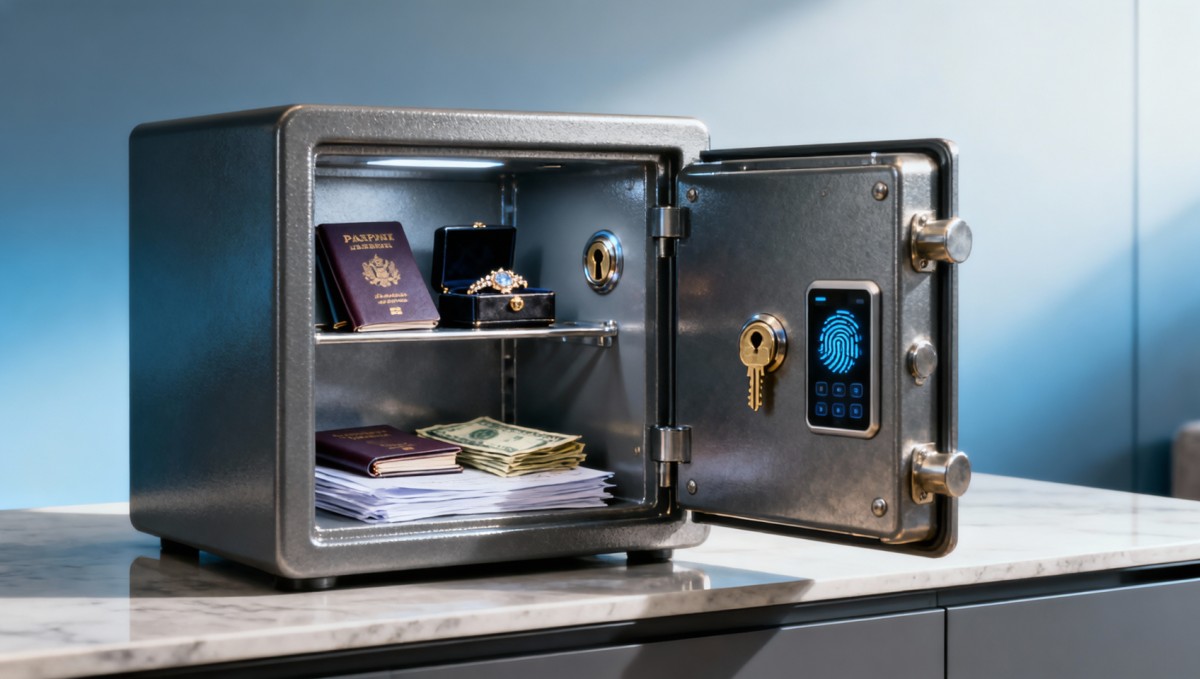
Yes—biometric safes can be reliable enough for home valuables, but only when they are chosen for the right use case and evaluated beyond the fingerprint feature alone. For most households, a well-built biometric safe from a credible manufacturer is reliable for quick-access protection of items such as passports, cash, jewelry, legal documents, and defensive tools. However, not every biometric safe offers the same level of security, speed, or long-term consistency.
The most important point is this: the biometric scanner is only one part of the product. Reliability depends on four factors working together—sensor quality, mechanical lock strength, backup entry options, and day-to-day operating conditions. A safe with fast fingerprint recognition but weak pry resistance is not truly reliable. Likewise, a heavy-duty safe with poor fingerprint performance can become frustrating in real use.
For home users and professional evaluators alike, the practical answer is that biometric safes are best seen as a convenience-driven security layer, not a universal replacement for all traditional safes. They are strongest where fast authorized access matters. They are less suitable when the priority is maximum burglary resistance, long-term archival storage, or high-value asset protection without secondary security measures.
What target readers usually care about before buying or approving one
Different readers approach the same product from different angles, but their questions often overlap. Information researchers want to know whether biometric access is genuinely dependable or mostly marketing. Operators and household users care about speed, ease of setup, and whether the safe works consistently under stress. Technical evaluators focus on false acceptance rates, false rejection rates, power backup, and hardware durability. Procurement and business reviewers want to compare cost against actual protection value. Financial approvers want to avoid paying premium pricing for weak performance. Safety managers and quality personnel care about failure points, emergency access, and use-case limitations.
In practice, most readers are trying to answer a short list of real questions:
- Will the fingerprint scanner open quickly when needed?
- What happens if the fingerprint is not recognized?
- Can the safe still be opened if the battery dies?
- Is the body of the safe strong enough to resist tampering?
- Is this a good fit for jewelry and documents, or only for low-risk storage?
- Are there meaningful differences between budget and premium models?
- Is a keypad or mechanical lock actually more dependable over time?
A useful article must answer these applied questions directly. General claims about “advanced security” or “smart protection” are not enough for decision-making.
How biometric safe reliability should really be judged
The most effective way to evaluate a biometric safe is to separate access reliability from physical security. Buyers often combine these into one idea, but they should be judged independently.
Access reliability refers to whether authorized users can open the safe quickly and consistently. This includes:
- Fingerprint enrollment quality
- Sensor type and responsiveness
- Recognition speed
- Performance with dry, wet, dirty, or aging fingers
- Multi-user capability
- Battery life and low-power warnings
- Backup key or keypad access
Physical security refers to whether the safe can resist attack or removal. This includes:
- Steel thickness and door design
- Bolt construction
- Hinge protection
- Pry resistance
- Anchor points for floor or wall mounting
- Tamper alerts or lockout features
A biometric safe can score high in one area and weak in the other. For example, many compact bedside safes offer fast opening and acceptable user convenience, but they may not provide strong protection against a determined intruder with tools. That distinction is essential for home buyers and procurement teams creating realistic expectations.
Fingerprint scanners: convenient, but not flawless
The fingerprint scanner is the headline feature, but it is also the part most likely to be misunderstood. In consumer marketing, biometric access is often presented as simple and almost effortless. In reality, scanner performance depends on both the hardware and the user.
Higher-quality scanners usually deliver better consistency, especially when fingers are enrolled from multiple angles. Lower-cost models may struggle with partial prints, worn fingerprints, or changing skin conditions. This matters for households with older adults, manual workers, or users whose fingerprints may be less readable due to dryness, cuts, or regular abrasion.
There are two common reliability issues:
- False rejection: the scanner fails to recognize an authorized user.
- False acceptance: the scanner incorrectly grants access to an unauthorized person.
For home use, false rejection is usually the more visible problem because it affects everyday usability. A safe that fails too often during normal access creates frustration and reduces trust in the product. False acceptance is less common in better models, but it remains a key security concern and should not be ignored in technical evaluation.
This is why dependable biometric safes should always include a secondary access method. No responsible buyer should rely on fingerprint-only access for important home valuables.
Why backup access matters more than many buyers expect
If there is one feature that separates a practical biometric safe from a risky one, it is backup entry. Batteries can drain. Sensors can misread. Users can injure fingers. Electronics can fail. The safe should still remain accessible to authorized users under those conditions.
The most common backup options are:
- Mechanical override key
- Digital keypad or PIN entry
- External emergency power connection
For home use, the best setup is usually a biometric safe with at least one independent backup method. This reduces single-point failure and improves resilience. Buyers should also examine how the override key is secured. A backup key that is stored carelessly near the safe weakens the entire security system.
For procurement teams or safety reviewers, backup access should be treated as a non-negotiable requirement, not a bonus feature. Reliability is not just about how the safe works when conditions are ideal. It is about how the safe performs when something goes wrong.
Where biometric safes work well—and where they are the wrong choice
Biometric safes are a strong fit in several home scenarios. They are especially useful when speed and controlled access matter more than heavy-duty burglary resistance. Good examples include:
- Bedroom or closet storage for personal valuables
- Quick-access storage for emergency items
- Controlled household access for one or several authorized users
- Daily-use storage where repeated opening makes key access inconvenient
They are less ideal in other situations. If the goal is to protect very high-value jewelry, large cash reserves, sensitive business materials, or irreplaceable documents against determined theft, a biometric safe alone may be insufficient. In those cases, buyers should consider a higher-security safe with certified burglary resistance, fire protection, or integration into broader home security measures.
In other words, biometric safes are often best for fast access plus moderate security, not maximum resistance under high-threat conditions.
What to look for before making a purchase decision
For readers comparing options, the most useful approach is to evaluate the safe against a practical checklist rather than marketing language. Key decision factors include:
- Build quality: Look for solid steel construction, reinforced locking bolts, and credible anti-pry design.
- Mounting capability: A safe that can be easily carried away offers limited real protection. Anchor points matter.
- Scanner performance: Read testing feedback on recognition consistency, not just speed claims.
- Backup access: Confirm there is a reliable secondary opening method.
- Battery management: Check battery life, warning indicators, and emergency power options.
- User capacity: For households or shared environments, verify how many fingerprints can be stored.
- Interior suitability: Make sure the internal size and padding match the valuables being stored.
- Brand credibility: Prefer manufacturers with established support, product documentation, and real customer feedback.
Buyers should also be careful with very low-cost biometric safes that emphasize “smart” access but provide little information about material strength, testing standards, or lock engineering. In many cases, the scanner looks advanced while the actual safe body is the weakest point.
Budget vs premium models: is the difference worth it?
In this category, price often reflects more than branding. Premium models may offer better sensors, stronger steel, improved lock mechanisms, quieter motors, more reliable electronics, and better overall manufacturing consistency. These factors can materially improve both user experience and real security.
That said, not every household needs a premium model. For moderate-value items in lower-risk environments, a mid-range biometric safe with strong reviews, proper anchoring, and dependable backup access may be entirely sufficient. The key is matching the safe to the value of the contents and the likely threat level.
For finance approvers or enterprise-style evaluators reviewing home security products for staff housing, executive residences, or channel recommendations, the best return on investment usually comes from avoiding the cheapest products rather than automatically buying the most expensive ones.
Final verdict: should you trust a biometric safe for home valuables?
Biometric safes are reliable enough for home valuables when they are selected carefully, used realistically, and backed by secondary access options. They offer a clear advantage in convenience and speed, which can make them highly practical for everyday home protection. But reliability should never be judged by the fingerprint feature alone.
The best buying decision comes from asking three questions: Is the scanner consistently accurate? Is there a dependable backup method? Is the safe body strong enough for the value and risk level involved? If the answer to all three is yes, a biometric safe can be a worthwhile addition to a home security strategy.
For readers making a purchase, approval, or technical recommendation, the smartest conclusion is simple: trust biometric safes for the right purpose—not as a miracle solution, but as a practical, modern tool when convenience, controlled access, and sensible risk management need to work together.
Get weekly intelligence in your inbox.
No noise. No sponsored content. Pure intelligence.
 Apr 27, 2026Algeria’s Oil & Steel FDI Push Opens Valve, Corrosion-Resistant Material OrdersAlgeria’s Oil & Steel FDI Push Opens Valve, Corrosion-Resistant Material Orders
 Apr 27, 2026Azerbaijan’s New PV Mounting Standard Opens Path for Chinese SuppliersAzerbaijan’s New PV Mounting Standard Opens Path for Chinese Suppliers
 Apr 27, 2026Fitch Cuts East Africa Growth Forecasts, Raises Cross-Border Trade RisksFitch Cuts East Africa Growth Forecasts, Raises Cross-Border Trade Risks
 Apr 27, 2026ADB Raises Vietnam GDP Forecast to 7.2% on Electronics Export GrowthADB Raises Vietnam GDP Forecast to 7.2% on Electronics Export Growth
 Apr 27, 2026Maine Halts Large Data Centers: AI Server Export ImpactMaine Halts Large Data Centers: AI Server Export Impact
 Apr 27, 2026OFID $500M for Côte d'Ivoire: Boost to Factory Automation & Warehouse RoboticsOFID $500M for Côte d'Ivoire: Boost to Factory Automation & Warehouse Robotics
 Apr 27, 2026Morocco Ranks 4th in EU Energy Aid to AfricaMorocco Ranks 4th in EU Energy Aid to Africa
 Apr 27, 2026UAE Emerges as Global AI Hub, Opening Fast-Track for Chinese Smart DevicesUAE Emerges as Global AI Hub, Opening Fast-Track for Chinese Smart Devices
") Apr 26, 2026China Releases Green Design Guidelines for Industrial Products (2026)China Releases Green Design Guidelines for Industrial Products (2026)
Apr 26, 2026China Releases Green Design Guidelines for Industrial Products (2026)China Releases Green Design Guidelines for Industrial Products (2026) Apr 26, 2026ANATEL Mandates Portuguese Offline Voice Assistant for Smart Home Devices in BrazilANATEL Mandates Portuguese Offline Voice Assistant for Smart Home Devices in Brazil
 Apr 26, 2026Vietnam Enforces Bilingual Safety Labels for Electronic Components from Apr 22, 2026Vietnam Enforces Bilingual Safety Labels for Electronic Components from Apr 22, 2026
 Apr 26, 2026Japan Updates JIS for Rehab Devices: IEC 62366-1:2024 RequiredJapan Updates JIS for Rehab Devices: IEC 62366-1:2024 Required
 Apr 26, 2026THE Alliance Cuts Ningbo–Rotterdam Transit to 18 Days, Spot Rates Up 35%THE Alliance Cuts Ningbo–Rotterdam Transit to 18 Days, Spot Rates Up 35%
 Apr 26, 2026India BIS Mandates PLC & HMI Certification under IS 13252:2025 by Oct 2026India BIS Mandates PLC & HMI Certification under IS 13252:2025 by Oct 2026
") Apr 26, 2026SASO Enforces New EV Charger Rules in Saudi Arabia (2026)SASO Enforces New EV Charger Rules in Saudi Arabia (2026)
Apr 26, 2026SASO Enforces New EV Charger Rules in Saudi Arabia (2026)SASO Enforces New EV Charger Rules in Saudi Arabia (2026) Apr 26, 2026TÜV Rheinland Updates IoT EMC Guidelines: AI Edge Modules Now Mandatory for Immunity TestingTÜV Rheinland Updates IoT EMC Guidelines: AI Edge Modules Now Mandatory for Immunity Testing
 Apr 26, 2026USTR Launches First Annual Review of China Solar PV AD/CVD OrdersUSTR Launches First Annual Review of China Solar PV AD/CVD Orders
 Apr 26, 2026EU New Battery Regulation Fully Enforced Apr 24, 2026EU New Battery Regulation Fully Enforced Apr 24, 2026
 Apr 25, 2026Vietnam Enforces CN-EN Bilingual Safety Labels on Electronic Components from Apr 22, 2026Vietnam Enforces CN-EN Bilingual Safety Labels on Electronic Components from Apr 22, 2026
 Apr 25, 2026ANATEL Mandates Portuguese Offline Voice Assistants for Smart Home Devices in BrazilANATEL Mandates Portuguese Offline Voice Assistants for Smart Home Devices in Brazil
 Apr 25, 2026India BIS Mandates IS 13252:2025 for PLCs & HMIs by Oct 2026India BIS Mandates IS 13252:2025 for PLCs & HMIs by Oct 2026
 Apr 25, 2026SASO EV Charger Rules: Grid Compatibility & Sand Resistance RequiredSASO EV Charger Rules: Grid Compatibility & Sand Resistance Required
 Apr 25, 2026JIS T 0011:2026 Enforces IEC 62366-1:2024 for Rehab Devices in JapanJIS T 0011:2026 Enforces IEC 62366-1:2024 for Rehab Devices in Japan
 Apr 25, 2026THE Alliance Cuts Ningbo–Rotterdam Transit to 18 Days, +35% Spot RateTHE Alliance Cuts Ningbo–Rotterdam Transit to 18 Days, +35% Spot Rate
 Apr 25, 2026TÜV Rheinland Updates IoT EMC Standard: AI Edge Module Immunity Now MandatoryTÜV Rheinland Updates IoT EMC Standard: AI Edge Module Immunity Now Mandatory
 Apr 25, 2026USTR Launches Five-Year China Solar PV AD/CVD ReviewUSTR Launches Five-Year China Solar PV AD/CVD Review
 Apr 25, 2026EU New Battery Regulation Enters Force Apr 24, 2026EU New Battery Regulation Enters Force Apr 24, 2026