How safe are robot window cleaners for large windows
For facilities teams, buyers, and safety managers, robot window cleaners can be a practical solution for large windows when selected and used correctly. From suction reliability and edge detection to power backup and surface compatibility, understanding the real safety factors helps separate marketing claims from operational value. This guide explains what makes robot window cleaners safe, where the risks remain, and how to evaluate them for commercial or large-scale use.
In commercial buildings, retail facades, hospitals, showrooms, and light industrial sites, large glass surfaces create a recurring cleaning challenge: how to maintain visibility and appearance without exposing workers to avoidable risk. Robot window cleaners are increasingly considered as part of that solution, especially for interior glazing, high atriums, oversized panels, and locations where traditional ladder or scaffold work is inefficient.
Safety, however, should not be judged by marketing videos alone. Procurement teams need to assess device design, surface limits, backup protection, operator procedures, and maintenance requirements before approving deployment. For B2B users, the right question is not whether robot window cleaners are safe in general, but whether a specific unit is safe enough for a defined window type, cleaning frequency, and operating environment.
What Safety Means for Robot Window Cleaners on Large Windows
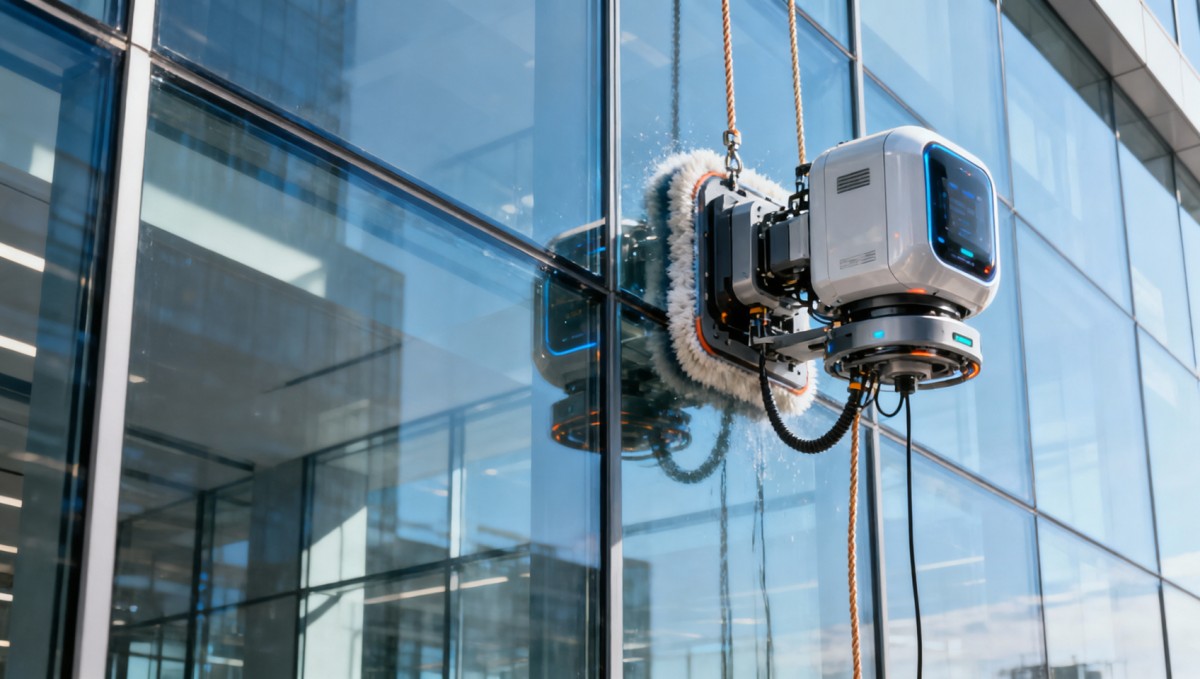
A robot window cleaner is usually considered safe when it can remain attached to the glass, detect edges correctly, continue operating through short power interruptions, and be recovered without putting staff in danger. On large windows, these requirements become more important because cleaning cycles may last 10–30 minutes per pane, and the travel distance can increase the consequence of a failure.
For commercial users, safety has at least 4 layers: device retention on glass, fall prevention, surface protection, and operator control. A machine may clean effectively but still be a poor safety choice if it leaves swirl marks on coated glass, struggles on frameless edges, or requires frequent manual intervention at height.
Large windows also vary more than buyers expect. A 2.5-meter office pane, a 4-meter storefront panel, and a laminated atrium section do not present the same risk profile. Glass thickness, seals, coatings, mullion layout, and even indoor airflow from HVAC systems can affect traction and route stability.
This is why technical evaluation should focus on operating conditions rather than generic claims such as “strong suction” or “smart navigation.” In practice, a safer robot is one that performs predictably across repeated cycles, not one that only works well on ideal demonstration surfaces.
Core safety functions buyers should verify
Most commercial-grade evaluations start with 5 core checks: suction consistency, edge detection, backup battery duration, tether strength, and route recovery after interruption. If one of these functions is weak, the overall safety case becomes harder to justify for facilities managers and risk officers.
- Stable adhesion across dry and lightly damp surfaces, without sudden drops in vacuum pressure.
- Reliable edge sensing for framed, semi-framed, and selected frameless glass configurations.
- Backup power support, often expected to hold the unit in place for 15–30 minutes after mains loss.
- Secondary safety rope or tether rated for the device weight plus an additional safety margin.
- Clear audible or app-based alerts when the unit stalls, slips, or finishes the cleaning path.
In a B2B setting, these checks matter because a safe device reduces not only accident exposure but also operational interruptions. A robot that needs to be repositioned every 3–5 minutes or fails on every second pane may increase labor time rather than reduce it.
The Main Risk Factors That Affect Large-Window Safety
The biggest misconception is that all smooth glass is equally suitable for robotic cleaning. In reality, risk increases when the surface includes untreated edges, damaged seals, heavy curvature, films, stickers, deep joints, or inconsistent moisture. Large windows magnify these issues because the robot may encounter more transitions during a single cycle.
Surface compatibility is especially important for coated glass used in healthcare, smart commercial buildings, and premium retail environments. Low-E coatings, solar control films, and specialty laminates can require gentler pad materials and lower-friction movement. If the robot drags contaminated pads across the surface for 20 minutes, the safety issue becomes asset damage rather than user injury.
Environmental conditions matter as well. Outdoor use in wind above roughly 25–30 km/h can reduce stability for many compact units. Indoor use near strong air outlets, dusty manufacturing zones, or high-humidity areas can also affect grip and navigation. Buyers should not treat indoor and outdoor deployment as interchangeable unless the supplier provides clear operating guidance.
Power continuity is another overlooked factor. Many robots depend on mains power with an emergency backup battery. That battery is not usually meant to complete the entire job; it is meant to prevent immediate detachment and allow controlled retrieval. For safety teams, the question is how long the unit can remain secured after a power loss and how quickly staff can access it.
Common risk points by application type
The table below summarizes where safety concerns usually change across common large-window environments.
The practical lesson is simple: safety depends on the combination of glass type, location, and work process. A robot window cleaner that is acceptable for interior office glazing may not be suitable for a public-facing exterior facade without stronger controls.
Frequent procurement mistakes
- Choosing on suction power claims alone without testing on the actual window material.
- Ignoring backup battery hold time and assuming any battery means full fail-safe operation.
- Skipping rope anchoring procedures for “short” interior cleaning tasks.
- Using the same pads for too many cycles, often beyond 8–12 large panes in dusty environments.
- Allowing untrained staff to operate the unit after only a brief demo.
How to Evaluate Safety Before Purchase or Deployment
A disciplined evaluation process helps procurement, operations, and safety teams avoid buying a robot window cleaner that performs well in sales material but poorly on-site. For large-window applications, a 3-stage review is usually the most practical: technical screening, site testing, and operational approval.
Technical screening should confirm the supplier’s stated use conditions. Buyers should ask for supported glass types, minimum pane dimensions, recommended cleaning solution volume, cable length, noise level, and backup duration. Even a difference of 5–10 minutes in emergency hold time can affect whether the unit fits the building’s access plan.
Site testing should cover at least 3 representative surfaces, such as a clean standard pane, a lightly soiled pane, and a more difficult area near edges or seals. Testing should also include start-up, mid-cycle observation, and post-use inspection for marks, missed zones, or operator difficulties. A single smooth run is not enough; repeated cycles reveal the real reliability level.
Operational approval should involve facilities, EHS or safety personnel, and the end users who will deploy the robot regularly. If a device needs two operators for safe handling, or requires setup steps that take 12–15 minutes per pane, its business value may change significantly compared with the original purchase assumption.
Safety evaluation checklist for B2B buyers
The following table can be used as a practical pre-purchase review framework for robot window cleaners intended for large windows.
For enterprise buyers, this kind of checklist supports better alignment between technical evaluation and financial approval. It translates broad safety claims into measurable operating criteria that can be validated during pilot testing.
A practical 5-step deployment review
- Map glass types, heights, and access constraints across the site.
- Run a supplier demonstration on at least 2–3 real panes, not sample boards only.
- Document setup time, cleaning time, and intervention frequency per pane.
- Check post-clean condition for residue, streaking, and edge misses.
- Approve only with a written SOP covering tethering, alarms, recovery, and pad change intervals.
Best Practices for Safe Operation, Maintenance, and Risk Control
Even a well-designed robot window cleaner can become unsafe if the operating process is weak. In most facilities, the biggest safety gains come from procedure discipline rather than advanced features alone. A short standard operating procedure, repeated consistently, is often more valuable than a long list of unused functions.
Before each cleaning cycle, operators should inspect the power cable, tether anchor point, pads, and glass condition. A 2-minute pre-check can prevent the most common issues: poor adhesion caused by dirty pads, slippage caused by excess spray, or route errors caused by surface obstructions. On large windows, that inspection should be done every time the unit is repositioned.
Maintenance is equally important. Pads should be replaced or cleaned at intervals based on soil load rather than guesswork. In many commercial settings, pads may need attention after every 6–12 large panes. Filters, suction paths, and moving components should be inspected weekly in frequent-use environments and at least monthly in lower-volume use.
Training should be role-based. Operators need hands-on setup and recovery practice. Supervisors need to understand incident response and equipment retirement triggers. Procurement and finance teams should know the true cost drivers, including consumables, labor savings, service support, and downtime risk over a 12-month period.
Operational controls that improve safety outcomes
- Use a fixed pre-use inspection list with 5–7 checks before every shift.
- Do not exceed the supplier’s recommended liquid volume on pads or glass surface.
- Attach the safety rope to a verified anchor point every time, including interior applications.
- Stop use immediately if repeated drift, abnormal noise, or heat buildup appears during 2 consecutive cycles.
- Keep a service log for pad wear, alarm events, power interruptions, and battery health checks.
These controls are especially relevant for larger organizations managing multiple sites. When robot window cleaners are deployed across retail chains, medical campuses, or office portfolios, standardization reduces variation and supports safer operation at scale.
When robot window cleaners are not the safest option
There are conditions where robotic cleaning should be limited or avoided. Examples include heavily curved glass, severely damaged panes, windows with extensive decals or protrusions, and outdoor facades exposed to unstable weather. In such cases, a hybrid maintenance plan may be safer, using robots for routine accessible sections and manual specialists for exceptions.
The goal is not to force automation into every window-cleaning scenario. The goal is to match the cleaning method to the risk environment, labor model, and building design. That is the approach most likely to satisfy operations teams, safety managers, and budget approvers at the same time.
FAQ for Buyers, Safety Managers, and Technical Evaluators
The questions below reflect common search intent from commercial buyers evaluating whether robot window cleaners are safe enough for large-window use.
Are robot window cleaners safe for exterior large windows?
They can be, but the answer depends on wind exposure, access control, tethering, and the unit’s rated operating conditions. Exterior use generally requires stricter review than interior use. If wind conditions are variable, public areas are directly below, or retrieval is difficult, safety planning should be more conservative and may require a restricted-use policy.
Can one operator safely manage a robot window cleaner on big glass panels?
In many interior applications, yes, one trained operator may be sufficient. However, for oversized panes, elevated access, or public-facing areas, a two-person process is often safer during deployment and retrieval. Buyers should evaluate labor assumptions during site trials rather than relying on brochure claims.
What specifications matter most in a commercial purchase decision?
Focus on backup hold time, edge detection behavior, tether design, pad system, noise level, cable reach, and supported glass conditions. Also review service support, spare parts lead time, and operator training requirements. For commercial adoption, safety performance and repeatability matter more than headline speed alone.
How often should safety performance be reviewed after purchase?
A practical approach is to review usage logs monthly for the first 3 months, then quarterly once the process is stable. Any increase in slip alarms, route failures, or surface marks should trigger immediate inspection. Battery health, rope condition, and pad wear should be included in that review schedule.
Robot window cleaners can be a safe and efficient option for large windows when buyers evaluate them as operational tools rather than consumer gadgets. The safest choice is the one that matches the actual glass type, cleaning environment, and workforce process, with clear controls for power loss, edge handling, tethering, and maintenance.
For procurement teams, project managers, distributors, and enterprise decision-makers, a structured review can reduce risk while improving cleaning consistency and labor efficiency. If you are comparing solutions for commercial glazing, facility operations, or large-scale maintenance programs, contact TradeNexus Pro to discuss your use case, request a tailored evaluation framework, or explore more solution-focused insights.
Get weekly intelligence in your inbox.
No noise. No sponsored content. Pure intelligence.
 Apr 27, 2026Algeria’s Oil & Steel FDI Push Opens Valve, Corrosion-Resistant Material OrdersAlgeria’s Oil & Steel FDI Push Opens Valve, Corrosion-Resistant Material Orders
 Apr 27, 2026Azerbaijan’s New PV Mounting Standard Opens Path for Chinese SuppliersAzerbaijan’s New PV Mounting Standard Opens Path for Chinese Suppliers
 Apr 27, 2026Fitch Cuts East Africa Growth Forecasts, Raises Cross-Border Trade RisksFitch Cuts East Africa Growth Forecasts, Raises Cross-Border Trade Risks
 Apr 27, 2026ADB Raises Vietnam GDP Forecast to 7.2% on Electronics Export GrowthADB Raises Vietnam GDP Forecast to 7.2% on Electronics Export Growth
 Apr 27, 2026Maine Halts Large Data Centers: AI Server Export ImpactMaine Halts Large Data Centers: AI Server Export Impact
 Apr 27, 2026OFID $500M for Côte d'Ivoire: Boost to Factory Automation & Warehouse RoboticsOFID $500M for Côte d'Ivoire: Boost to Factory Automation & Warehouse Robotics
 Apr 27, 2026Morocco Ranks 4th in EU Energy Aid to AfricaMorocco Ranks 4th in EU Energy Aid to Africa
 Apr 27, 2026UAE Emerges as Global AI Hub, Opening Fast-Track for Chinese Smart DevicesUAE Emerges as Global AI Hub, Opening Fast-Track for Chinese Smart Devices
") Apr 26, 2026China Releases Green Design Guidelines for Industrial Products (2026)China Releases Green Design Guidelines for Industrial Products (2026)
Apr 26, 2026China Releases Green Design Guidelines for Industrial Products (2026)China Releases Green Design Guidelines for Industrial Products (2026) Apr 26, 2026ANATEL Mandates Portuguese Offline Voice Assistant for Smart Home Devices in BrazilANATEL Mandates Portuguese Offline Voice Assistant for Smart Home Devices in Brazil
 Apr 26, 2026Vietnam Enforces Bilingual Safety Labels for Electronic Components from Apr 22, 2026Vietnam Enforces Bilingual Safety Labels for Electronic Components from Apr 22, 2026
 Apr 26, 2026Japan Updates JIS for Rehab Devices: IEC 62366-1:2024 RequiredJapan Updates JIS for Rehab Devices: IEC 62366-1:2024 Required
 Apr 26, 2026THE Alliance Cuts Ningbo–Rotterdam Transit to 18 Days, Spot Rates Up 35%THE Alliance Cuts Ningbo–Rotterdam Transit to 18 Days, Spot Rates Up 35%
 Apr 26, 2026India BIS Mandates PLC & HMI Certification under IS 13252:2025 by Oct 2026India BIS Mandates PLC & HMI Certification under IS 13252:2025 by Oct 2026
") Apr 26, 2026SASO Enforces New EV Charger Rules in Saudi Arabia (2026)SASO Enforces New EV Charger Rules in Saudi Arabia (2026)
Apr 26, 2026SASO Enforces New EV Charger Rules in Saudi Arabia (2026)SASO Enforces New EV Charger Rules in Saudi Arabia (2026) Apr 26, 2026TÜV Rheinland Updates IoT EMC Guidelines: AI Edge Modules Now Mandatory for Immunity TestingTÜV Rheinland Updates IoT EMC Guidelines: AI Edge Modules Now Mandatory for Immunity Testing
 Apr 26, 2026USTR Launches First Annual Review of China Solar PV AD/CVD OrdersUSTR Launches First Annual Review of China Solar PV AD/CVD Orders
 Apr 26, 2026EU New Battery Regulation Fully Enforced Apr 24, 2026EU New Battery Regulation Fully Enforced Apr 24, 2026
 Apr 25, 2026Vietnam Enforces CN-EN Bilingual Safety Labels on Electronic Components from Apr 22, 2026Vietnam Enforces CN-EN Bilingual Safety Labels on Electronic Components from Apr 22, 2026
 Apr 25, 2026ANATEL Mandates Portuguese Offline Voice Assistants for Smart Home Devices in BrazilANATEL Mandates Portuguese Offline Voice Assistants for Smart Home Devices in Brazil
 Apr 25, 2026India BIS Mandates IS 13252:2025 for PLCs & HMIs by Oct 2026India BIS Mandates IS 13252:2025 for PLCs & HMIs by Oct 2026
 Apr 25, 2026SASO EV Charger Rules: Grid Compatibility & Sand Resistance RequiredSASO EV Charger Rules: Grid Compatibility & Sand Resistance Required
 Apr 25, 2026JIS T 0011:2026 Enforces IEC 62366-1:2024 for Rehab Devices in JapanJIS T 0011:2026 Enforces IEC 62366-1:2024 for Rehab Devices in Japan
 Apr 25, 2026THE Alliance Cuts Ningbo–Rotterdam Transit to 18 Days, +35% Spot RateTHE Alliance Cuts Ningbo–Rotterdam Transit to 18 Days, +35% Spot Rate
 Apr 25, 2026TÜV Rheinland Updates IoT EMC Standard: AI Edge Module Immunity Now MandatoryTÜV Rheinland Updates IoT EMC Standard: AI Edge Module Immunity Now Mandatory
 Apr 25, 2026USTR Launches Five-Year China Solar PV AD/CVD ReviewUSTR Launches Five-Year China Solar PV AD/CVD Review
 Apr 25, 2026EU New Battery Regulation Enters Force Apr 24, 2026EU New Battery Regulation Enters Force Apr 24, 2026