Video doorbells: wired or wireless for easy install
Choosing between wired and wireless video doorbells affects more than installation convenience. It influences uptime, maintenance workload, integration with smart home platforms, and total ownership cost. For most buyers, the fastest answer is this: wireless video doorbells are usually easier to install, while wired video doorbells are typically better for stable power, lower maintenance, and long-term reliability. The right choice depends on the site, power availability, network quality, security policy, and the level of operational control required.
For procurement teams, installers, security managers, and business decision-makers, the practical question is not simply “which is better,” but “which option fits the property, budget, and risk profile with the least friction.” This guide explains the trade-offs clearly so you can make a faster and more defensible decision.
Which is easier to install: wired or wireless video doorbells?
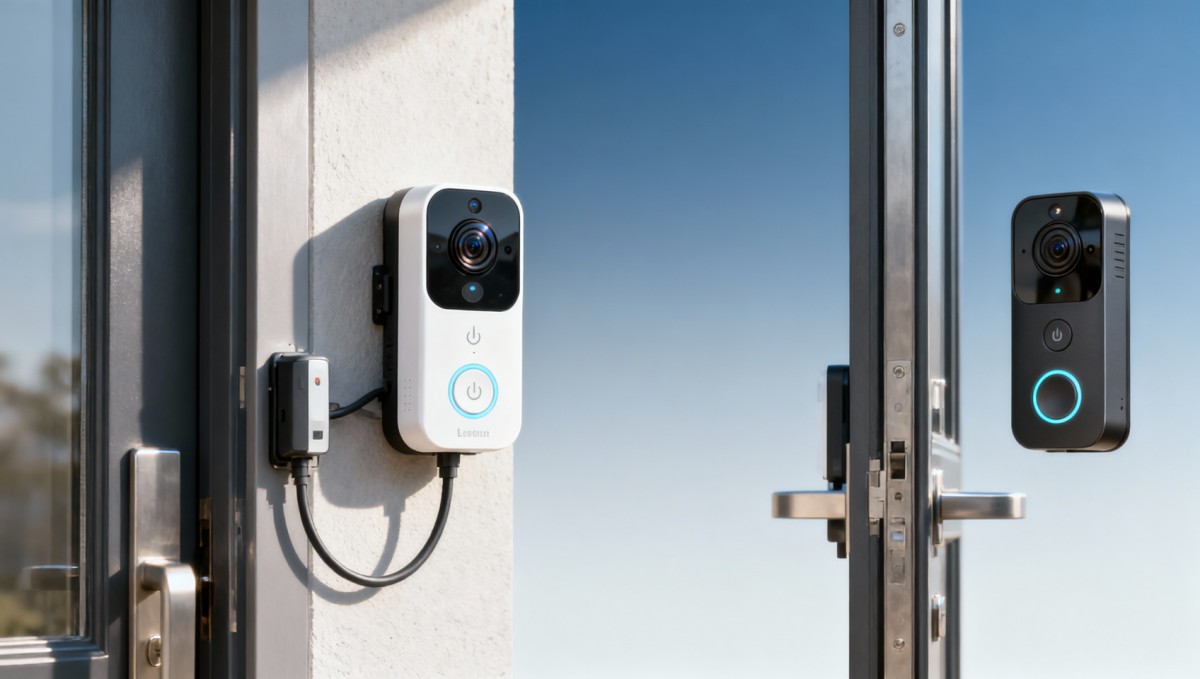
If “easy install” is the top priority, wireless video doorbells usually win. They avoid low-voltage wiring work, reduce dependency on existing doorbell circuits, and are often suitable for retrofit projects where drilling and cable routing would be expensive or disruptive.
That said, “easier” does not always mean “better” in operational terms. Wired models can require more effort at the start, but they often reduce ongoing maintenance because they draw continuous power and do not rely on battery charging or replacement.
In practical terms:
- Wireless video doorbells are easier for apartments, rental properties, small offices, temporary sites, and retrofit installations.
- Wired video doorbells are often better for new builds, planned renovations, managed facilities, and locations where reliability matters more than installation speed.
What decision-makers care about most before choosing
Readers comparing wired and wireless video doorbells are usually not looking for a generic feature list. They want to understand five issues quickly:
- Installation complexity: Will this require an electrician, a contractor, or just basic mounting?
- Power reliability: Will the device stay online without frequent manual intervention?
- Connectivity stability: Can it maintain reliable video streaming and alerts?
- Maintenance burden: How often will batteries need charging, firmware need managing, or units need troubleshooting?
- Total cost: Is the cheaper upfront option actually more expensive over time?
For enterprise buyers and project managers, these questions matter because video doorbells are not just convenience devices. They can become part of a broader access control, smart electronics, safety, or remote monitoring strategy.
When wireless video doorbells make the most sense
Wireless video doorbells are the preferred option when speed, flexibility, and minimal installation disruption matter most. They are especially useful in situations where running new wire is impractical or cost-prohibitive.
Best-fit scenarios for wireless models:
- Existing buildings with no compatible doorbell wiring
- Rental or leased properties where structural changes are limited
- Small businesses needing quick deployment across multiple entrances
- Residential projects where users want easy self-installation
- Locations where device placement may change later
Main advantages:
- Fast installation with fewer tools and less labor
- Lower initial installation cost in many retrofit environments
- Flexible positioning
- Good option for pilot projects or phased rollouts
Main limitations:
- Battery maintenance can become a recurring operational task
- Performance depends heavily on Wi-Fi quality
- Cold weather and high event volumes can shorten battery life
- Some units may experience downtime during charging periods
For users evaluating matter compatible devices and wider smart home ecosystems, wireless options can be attractive, but compatibility should be verified beyond marketing claims. Integration quality, automation stability, and app management vary significantly by brand.
When wired video doorbells are the better investment
Wired video doorbells usually make more sense when long-term consistency matters more than the fastest installation. If the site already has suitable low-voltage wiring, a wired model can be the most efficient choice overall.
Best-fit scenarios for wired models:
- New construction and renovation projects
- Commercial sites with defined security procedures
- Properties requiring dependable 24/7 monitoring
- Multi-unit deployments where battery servicing would be inefficient
- Installations where device uptime is operationally important
Main advantages:
- Continuous power supply
- Less routine maintenance than battery-powered units
- Better suitability for high-traffic entrances
- Often more stable for constant recording and advanced features
Main limitations:
- Higher installation complexity if wiring is missing or outdated
- May require professional installation
- Greater upfront labor and planning
For procurement and facility teams, wired units often provide stronger long-term value in managed environments because they reduce manual intervention and improve predictability.
Installation cost vs total cost of ownership
One of the most common buying mistakes is focusing only on setup cost. Wireless video doorbells often look cheaper at first, but total cost depends on how long the system will be used and how many units are deployed.
Wireless cost factors:
- Lower labor cost at installation
- Battery replacement or charging labor
- Potential downtime during maintenance
- Higher support needs if Wi-Fi conditions are weak
Wired cost factors:
- Higher upfront installation cost
- Possible electrician or contractor involvement
- Lower recurring maintenance cost in many cases
- Longer useful fit for permanent security setups
For a single home entry, the difference may be small. For a portfolio of offices, managed properties, or distributed facilities, maintenance hours and service consistency become much more important than the initial hardware price.
How power, Wi-Fi, and site conditions affect real-world performance
Installation is only one part of the decision. The site itself often determines whether a video doorbell performs well.
Check these conditions before choosing:
- Available power: Is there existing doorbell wiring with suitable voltage?
- Wi-Fi signal strength: Can the device maintain stable video upload from the entry point?
- Weather exposure: Will heat, cold, rain, or dust affect battery life or device durability?
- Traffic volume: Will frequent motion events drain batteries too quickly?
- Mounting surface and position: Is there a secure and practical place to install the device?
A wireless model in a poor Wi-Fi zone may create more support issues than a wired unit in the same location. Similarly, a wired model in a site without compatible infrastructure may create unnecessary installation cost. Good selection starts with site assessment, not just product comparison.
What technical evaluators and safety managers should verify
For technical reviewers, quality teams, and safety managers, the purchase decision should include more than resolution and mobile app design. Important evaluation points include:
- Power requirements and voltage compatibility
- Network security and firmware update policy
- Data storage model: cloud, edge, or hybrid
- Encryption standards and access permissions
- Integration with smart home platforms or building systems
- Motion detection accuracy and false alert management
- Environmental ratings for outdoor use
- Vendor support quality and product lifecycle stability
If the video doorbell is part of a broader smart electronics or security procurement process, buyers should also assess supplier credibility, software support continuity, and replacement availability. For B2B deployment, these factors can matter more than consumer-facing features.
A simple framework for choosing the right option
Use this decision logic to narrow the choice quickly:
- Choose wireless if fast deployment, simple retrofit, and low installation disruption are the top priorities.
- Choose wired if continuous power, lower maintenance, and long-term reliability are more important.
- Favor wired for higher-traffic or business-critical entry points.
- Favor wireless for low-complexity residential or light commercial installations.
- Verify compatibility if the project depends on smart home integrations, matter support, or centralized device management.
In many procurement scenarios, the smartest approach is not choosing one technology universally, but matching each entrance type to the right deployment model.
Final answer: wired or wireless for easy install?
If your primary goal is the easiest possible installation, wireless video doorbells are usually the better choice. If your goal is reliable long-term performance with less ongoing maintenance, wired video doorbells often deliver better operational value.
The most effective buying decision balances installation effort, infrastructure readiness, maintenance capacity, and security expectations. For homeowners and small-site users, wireless may be the practical winner. For managed properties, commercial facilities, and buyers evaluating lifecycle value, wired can be the stronger investment.
In short: wireless is easier to install, but wired is often easier to live with over time. The right answer depends on the site and the level of reliability your operation requires.
Get weekly intelligence in your inbox.
No noise. No sponsored content. Pure intelligence.
 Apr 27, 2026Algeria’s Oil & Steel FDI Push Opens Valve, Corrosion-Resistant Material OrdersAlgeria’s Oil & Steel FDI Push Opens Valve, Corrosion-Resistant Material Orders
 Apr 27, 2026Azerbaijan’s New PV Mounting Standard Opens Path for Chinese SuppliersAzerbaijan’s New PV Mounting Standard Opens Path for Chinese Suppliers
 Apr 27, 2026Fitch Cuts East Africa Growth Forecasts, Raises Cross-Border Trade RisksFitch Cuts East Africa Growth Forecasts, Raises Cross-Border Trade Risks
 Apr 27, 2026ADB Raises Vietnam GDP Forecast to 7.2% on Electronics Export GrowthADB Raises Vietnam GDP Forecast to 7.2% on Electronics Export Growth
 Apr 27, 2026Maine Halts Large Data Centers: AI Server Export ImpactMaine Halts Large Data Centers: AI Server Export Impact
 Apr 27, 2026OFID $500M for Côte d'Ivoire: Boost to Factory Automation & Warehouse RoboticsOFID $500M for Côte d'Ivoire: Boost to Factory Automation & Warehouse Robotics
 Apr 27, 2026Morocco Ranks 4th in EU Energy Aid to AfricaMorocco Ranks 4th in EU Energy Aid to Africa
 Apr 27, 2026UAE Emerges as Global AI Hub, Opening Fast-Track for Chinese Smart DevicesUAE Emerges as Global AI Hub, Opening Fast-Track for Chinese Smart Devices
") Apr 26, 2026China Releases Green Design Guidelines for Industrial Products (2026)China Releases Green Design Guidelines for Industrial Products (2026)
Apr 26, 2026China Releases Green Design Guidelines for Industrial Products (2026)China Releases Green Design Guidelines for Industrial Products (2026) Apr 26, 2026ANATEL Mandates Portuguese Offline Voice Assistant for Smart Home Devices in BrazilANATEL Mandates Portuguese Offline Voice Assistant for Smart Home Devices in Brazil
 Apr 26, 2026Vietnam Enforces Bilingual Safety Labels for Electronic Components from Apr 22, 2026Vietnam Enforces Bilingual Safety Labels for Electronic Components from Apr 22, 2026
 Apr 26, 2026Japan Updates JIS for Rehab Devices: IEC 62366-1:2024 RequiredJapan Updates JIS for Rehab Devices: IEC 62366-1:2024 Required
 Apr 26, 2026THE Alliance Cuts Ningbo–Rotterdam Transit to 18 Days, Spot Rates Up 35%THE Alliance Cuts Ningbo–Rotterdam Transit to 18 Days, Spot Rates Up 35%
 Apr 26, 2026India BIS Mandates PLC & HMI Certification under IS 13252:2025 by Oct 2026India BIS Mandates PLC & HMI Certification under IS 13252:2025 by Oct 2026
") Apr 26, 2026SASO Enforces New EV Charger Rules in Saudi Arabia (2026)SASO Enforces New EV Charger Rules in Saudi Arabia (2026)
Apr 26, 2026SASO Enforces New EV Charger Rules in Saudi Arabia (2026)SASO Enforces New EV Charger Rules in Saudi Arabia (2026) Apr 26, 2026TÜV Rheinland Updates IoT EMC Guidelines: AI Edge Modules Now Mandatory for Immunity TestingTÜV Rheinland Updates IoT EMC Guidelines: AI Edge Modules Now Mandatory for Immunity Testing
 Apr 26, 2026USTR Launches First Annual Review of China Solar PV AD/CVD OrdersUSTR Launches First Annual Review of China Solar PV AD/CVD Orders
 Apr 26, 2026EU New Battery Regulation Fully Enforced Apr 24, 2026EU New Battery Regulation Fully Enforced Apr 24, 2026
 Apr 25, 2026Vietnam Enforces CN-EN Bilingual Safety Labels on Electronic Components from Apr 22, 2026Vietnam Enforces CN-EN Bilingual Safety Labels on Electronic Components from Apr 22, 2026
 Apr 25, 2026ANATEL Mandates Portuguese Offline Voice Assistants for Smart Home Devices in BrazilANATEL Mandates Portuguese Offline Voice Assistants for Smart Home Devices in Brazil
 Apr 25, 2026India BIS Mandates IS 13252:2025 for PLCs & HMIs by Oct 2026India BIS Mandates IS 13252:2025 for PLCs & HMIs by Oct 2026
 Apr 25, 2026SASO EV Charger Rules: Grid Compatibility & Sand Resistance RequiredSASO EV Charger Rules: Grid Compatibility & Sand Resistance Required
 Apr 25, 2026JIS T 0011:2026 Enforces IEC 62366-1:2024 for Rehab Devices in JapanJIS T 0011:2026 Enforces IEC 62366-1:2024 for Rehab Devices in Japan
 Apr 25, 2026THE Alliance Cuts Ningbo–Rotterdam Transit to 18 Days, +35% Spot RateTHE Alliance Cuts Ningbo–Rotterdam Transit to 18 Days, +35% Spot Rate
 Apr 25, 2026TÜV Rheinland Updates IoT EMC Standard: AI Edge Module Immunity Now MandatoryTÜV Rheinland Updates IoT EMC Standard: AI Edge Module Immunity Now Mandatory
 Apr 25, 2026USTR Launches Five-Year China Solar PV AD/CVD ReviewUSTR Launches Five-Year China Solar PV AD/CVD Review
 Apr 25, 2026EU New Battery Regulation Enters Force Apr 24, 2026EU New Battery Regulation Enters Force Apr 24, 2026