What to avoid when choosing biometric safes
Choosing biometric safes requires more than comparing specs or price. For buyers, evaluators, and security managers, the real risks often lie in poor fingerprint accuracy, weak backup access, low build quality, and limited integration with broader smart security cameras or video doorbells ecosystems. This guide explains what to avoid when selecting biometric safes, helping procurement teams and decision-makers reduce security failures, user frustration, and long-term replacement costs.
Why biometric safe selection often goes wrong in real procurement
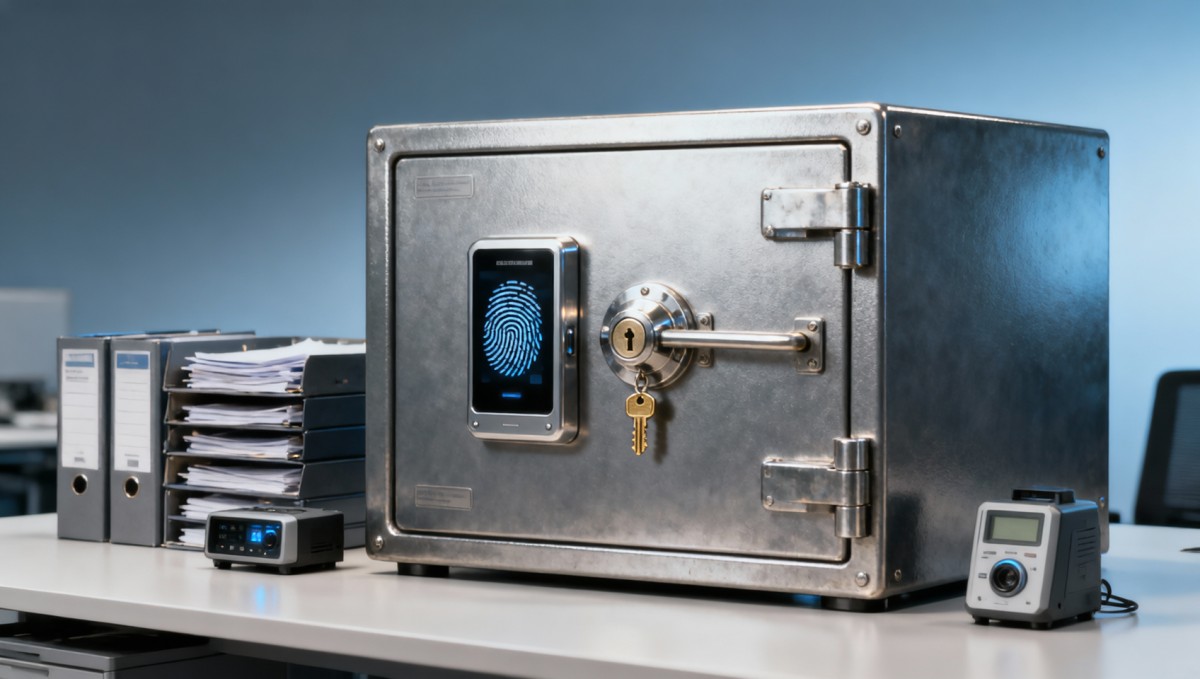
Many biometric safes look similar on a product page, yet procurement failures usually appear after 30–90 days of use. A safe may unlock quickly during a showroom demo but struggle when operators have dry fingers, gloves, dust exposure, or repeated shift-based access. For enterprise buyers, the problem is rarely the sensor alone. It is the mismatch between device capability, site conditions, user frequency, and backup risk control.
In mixed commercial environments such as offices, medical rooms, retail backrooms, and small industrial storage points, biometric safes are often expected to serve 3 roles at once: access control, asset protection, and audit discipline. When selection focuses only on lock type or advertised fingerprint speed, the result is higher override use, more support tickets, and avoidable replacement costs within 12–24 months.
This is especially relevant for technical evaluators, quality supervisors, project managers, and financial approvers who need a practical buying framework. The safest decision is not always the lowest-priced unit or the highest-featured one. It is the model that fits the access pattern, construction level, backup method, and maintenance burden required by the application.
For B2B research teams using TradeNexus Pro, this topic also connects with wider smart electronics and supply chain concerns. Product availability, firmware support, battery dependency, spare parts continuity, and ecosystem compatibility can materially affect long-term ownership risk, especially when deployment spans multiple locations or distributors.
The first screening questions procurement teams should ask
- How many authorized users need access per day: fewer than 10, around 10–50, or more than 50?
- Will the safe be used in controlled indoor conditions, or in dusty, humid, or temperature-variable spaces?
- What happens if fingerprint recognition fails during a power issue, staff turnover event, or emergency access request?
- Does the buyer need standalone storage only, or some level of integration with smart security cameras, alarms, or entry monitoring?
What to avoid when choosing biometric safes for business or multi-user use
The most common mistake is trusting headline fingerprint claims without reviewing real-world read tolerance. Some low-cost biometric safes perform adequately with one or two users enrolled under ideal conditions, but failure rates rise once 10–20 users are added. In shared environments, enrollment quality, finger placement consistency, and sensor contamination become major variables. If the vendor cannot explain how the device behaves under repeated daily use, treat that as a warning sign.
Another risk is weak backup access design. A biometric safe should never be evaluated as if the fingerprint reader will work perfectly every time. Buyers should avoid products with unclear override methods, poorly protected emergency key access, or battery replacement processes that require the safe to be open first. In operational terms, a backup mechanism must remain available even after battery depletion or firmware fault.
Build quality is another area where specification sheets can mislead. Thin steel, weak hinges, poor bolt design, and shallow anchoring options often matter more than cosmetic finishes or app features. For sites that store cash, controlled documents, keys, test devices, regulated materials, or spare electronics, structural weakness can make the biometric element irrelevant. Avoid any safe where the cabinet, door gap, boltwork, or anchor support is not clearly described.
Buyers should also be cautious of feature overload without a clear maintenance plan. Wireless app access, camera linkage, door-open alerts, and remote status reporting may sound attractive, but each added function introduces another support dependency. If a safe is intended for straightforward local access, unnecessary connectivity can increase cyber and service complexity without improving physical protection.
Five warning signs worth rejecting early
- No clear user capacity guidance, especially for installations requiring more than 5 enrolled fingerprints.
- No documented response path for battery failure, sensor lockout, or administrator change.
- No details on mounting holes, anchor points, or wall and floor fixing recommendations.
- No service commitment on replacement parts, firmware support, or access recovery.
- Heavy emphasis on app convenience but little explanation of cabinet construction and forced-entry resistance.
How false priorities distort buying decisions
In many sourcing discussions, teams spend too much time comparing unlock speed differences measured in fractions of a second, while ignoring factors that shape long-term usability. A safe used 15–40 times per day needs consistent read performance, not just fast read performance. A procurement checklist should therefore rank failure recovery, access continuity, and structural integrity above marketing-focused convenience claims.
This is where cross-functional review helps. Operators can flag usability issues, quality teams can inspect materials and fit, procurement can compare lead times of 2–6 weeks, and finance can assess replacement risk over the full ownership period rather than the initial purchase price alone.
Which technical and structural checks matter most before approval
Before approving biometric safes, technical teams should verify a short list of practical criteria. These checks are useful across offices, labs, retail sites, and light industrial environments where the safe is part of a broader asset control process. The table below helps compare evaluation dimensions that often separate dependable products from high-risk purchases.
A strong review process does not require laboratory testing, but it does require disciplined evidence. Ask for installation instructions, battery replacement method, user-capacity guidance, and a realistic explanation of sensor performance under frequent use. If the supplier cannot support these basics, the procurement risk is already visible.
Where biometric safes are tied to smart electronics environments, another useful check is ecosystem boundary. Buyers should confirm whether the safe truly integrates with cameras or doorbells, or whether it only sends a simple app notification. The distinction matters because “connectivity” can mean anything from local Bluetooth setup to cloud-dependent remote logging.
For enterprise projects, TNP’s market intelligence approach is valuable because technology evaluation should not stop at the device itself. Support lead time, distributor strength, after-sales consistency, and component continuity are equally important when planning deployments across several branches or channel partners.
A practical 4-step technical review
- Step 1: Match the safe to user volume, from single-user private storage to 20-plus-user shared access.
- Step 2: Review the physical body, fixing method, and door protection before reviewing software features.
- Step 3: Verify the full failure path, including dead battery, unreadable fingerprint, lost admin access, and emergency entry.
- Step 4: Confirm support terms, spare access components, and expected service responsiveness over 1–3 years.
How to compare biometric safe options by use case, not just price
Price-only comparison is one of the fastest ways to choose the wrong biometric safe. A lower-cost unit may be acceptable for low-frequency personal use, but that does not mean it is suitable for controlled storage, multi-shift access, or sensitive inventory environments. The better approach is to compare deployment fit, failure tolerance, and operating burden side by side.
The table below outlines common buying situations and the typical mistakes associated with each. It is useful for sourcing teams, resellers, and project managers who need to separate true requirements from optional features.
This comparison shows why procurement should define the use scenario first. A safe used 5 times per week can accept a simpler configuration than one used 25 times per day by rotating personnel. Once access frequency, site risk, and backup expectations are clear, price comparison becomes much more meaningful.
Buyers should also estimate replacement and disruption cost. If a low-priced safe causes two lockout incidents in a quarter, the labor and security impact may outweigh any initial savings. Finance teams benefit from reviewing not just unit price but also installation, anchoring, battery maintenance, support time, and probable service life.
Three decision filters that improve ROI
First, separate must-have functions from convenience functions. Second, define a minimum structural threshold for the cabinet itself. Third, require a documented recovery path for every failure event. These 3 filters often eliminate poor-fit products before deeper negotiation even begins.
For distributors and channel partners, this approach also reduces return rates. End users are less likely to reject or complain about a biometric safe when the seller has already aligned the product with actual access volume, installation conditions, and support expectations.
What compliance, implementation, and support questions should not be skipped
Biometric safes do not exist in a compliance vacuum. While the exact requirement depends on application and region, buyers should still review basic safety, electrical, battery, and installation considerations. If the safe stores sensitive items, controlled assets, or business-critical materials, internal access policy may matter as much as any external product claim.
Implementation is another overlooked area. Even a good biometric safe can become a poor deployment if user enrollment is rushed, administrator rights are not documented, or the anchoring method is left to site improvisation. A sensible rollout usually includes 4 stages: site check, installation, enrollment, and handover verification. For multi-site projects, this can take 1–3 weeks depending on quantity and local readiness.
Support questions should be specific. Ask who handles lockout support, how replacement keys or override procedures are managed, what battery interval is recommended, and how user resets are controlled after staff turnover. In sectors such as healthcare technology, advanced manufacturing support rooms, or smart electronics labs, these process details are directly tied to operational continuity.
TradeNexus Pro helps enterprise readers move beyond generic product browsing by connecting procurement intelligence with supplier evaluation logic. That matters when the purchase is not just a standalone safe, but part of a broader asset protection, site control, and vendor risk strategy across several departments.
Implementation checklist for buyers and project leads
- Confirm the mounting location, power access method, and whether wall or floor anchoring is required before delivery.
- Limit administrator control to defined personnel and record the handover process in writing.
- Test normal unlock, failed fingerprint retry, low-battery response, and emergency access during acceptance.
- Set a periodic review cycle, such as every 6 months, for battery status, user list accuracy, and physical fastening condition.
FAQ: common buying questions
Below are common decision-stage questions asked by researchers, buyers, technical reviewers, and site managers when comparing biometric safes.
How many users can a biometric safe realistically support?
That depends on the reader quality and management design, but buyers should treat user count claims carefully. A model that stores 20 or 30 fingerprints on paper may still be inconvenient if real enrollment consistency is poor. For shared use, test with at least 3–5 representative users instead of relying on a single demo enrollment.
Are app-connected biometric safes always a better choice?
Not always. If the use case is local access in a controlled office, app features may add little value. Connectivity becomes more useful when event notifications, multi-site visibility, or smart security ecosystem linkage is genuinely required. Otherwise, it can add service complexity without improving physical security.
What is the biggest mistake in budget approval?
Approving on unit price alone. The better financial question is total ownership cost over 12–36 months, including installation, maintenance, support response, replacement risk, and disruption from failed access. A cheaper safe with poor reliability can become the more expensive option very quickly.
How long does deployment usually take?
For a single site with standard installation, procurement and delivery may range from 7–15 days depending on stock and region. Multi-site projects, custom mounting needs, or distributor coordination can extend the timeline to 2–6 weeks. The key delay factors are often site readiness and approval workflow, not the safe itself.
Why work with TradeNexus Pro when evaluating biometric safe decisions
Biometric safe buying decisions often sit at the intersection of security hardware, smart electronics, procurement risk, and multi-site supply planning. TradeNexus Pro helps decision-makers cut through fragmented market information by focusing on deeper supplier logic, technology context, and operational fit rather than surface-level product listing noise.
For procurement directors, project owners, distributors, and technical evaluators, TNP supports better decision quality by linking product selection with broader questions: Which supplier categories are more stable? What support model fits a multi-branch rollout? Where are the hidden risks in integration, replacement, and sourcing continuity? These are the questions that shape long-term value.
If you are reviewing biometric safes for office security, controlled storage, smart facility upgrades, or channel resale, you can use TNP to accelerate the evaluation process. Typical consultation areas include parameter confirmation, use-case matching, supplier shortlisting, delivery-cycle comparison, backup access requirements, and solution alignment with smart cameras or entry-monitoring workflows.
Contact TradeNexus Pro to discuss your next-step checklist: target user volume, installation environment, structural expectations, backup access design, support coverage, and quotation priorities. That conversation is especially useful when you need to compare several biometric safe options across 2–4 suppliers, assess deployment risk before approval, or build a more defensible sourcing recommendation for internal stakeholders.
Get weekly intelligence in your inbox.
No noise. No sponsored content. Pure intelligence.
 Apr 27, 2026Algeria’s Oil & Steel FDI Push Opens Valve, Corrosion-Resistant Material OrdersAlgeria’s Oil & Steel FDI Push Opens Valve, Corrosion-Resistant Material Orders
 Apr 27, 2026Azerbaijan’s New PV Mounting Standard Opens Path for Chinese SuppliersAzerbaijan’s New PV Mounting Standard Opens Path for Chinese Suppliers
 Apr 27, 2026Fitch Cuts East Africa Growth Forecasts, Raises Cross-Border Trade RisksFitch Cuts East Africa Growth Forecasts, Raises Cross-Border Trade Risks
 Apr 27, 2026ADB Raises Vietnam GDP Forecast to 7.2% on Electronics Export GrowthADB Raises Vietnam GDP Forecast to 7.2% on Electronics Export Growth
 Apr 27, 2026Maine Halts Large Data Centers: AI Server Export ImpactMaine Halts Large Data Centers: AI Server Export Impact
 Apr 27, 2026OFID $500M for Côte d'Ivoire: Boost to Factory Automation & Warehouse RoboticsOFID $500M for Côte d'Ivoire: Boost to Factory Automation & Warehouse Robotics
 Apr 27, 2026Morocco Ranks 4th in EU Energy Aid to AfricaMorocco Ranks 4th in EU Energy Aid to Africa
 Apr 27, 2026UAE Emerges as Global AI Hub, Opening Fast-Track for Chinese Smart DevicesUAE Emerges as Global AI Hub, Opening Fast-Track for Chinese Smart Devices
") Apr 26, 2026China Releases Green Design Guidelines for Industrial Products (2026)China Releases Green Design Guidelines for Industrial Products (2026)
Apr 26, 2026China Releases Green Design Guidelines for Industrial Products (2026)China Releases Green Design Guidelines for Industrial Products (2026) Apr 26, 2026ANATEL Mandates Portuguese Offline Voice Assistant for Smart Home Devices in BrazilANATEL Mandates Portuguese Offline Voice Assistant for Smart Home Devices in Brazil
 Apr 26, 2026Vietnam Enforces Bilingual Safety Labels for Electronic Components from Apr 22, 2026Vietnam Enforces Bilingual Safety Labels for Electronic Components from Apr 22, 2026
 Apr 26, 2026Japan Updates JIS for Rehab Devices: IEC 62366-1:2024 RequiredJapan Updates JIS for Rehab Devices: IEC 62366-1:2024 Required
 Apr 26, 2026THE Alliance Cuts Ningbo–Rotterdam Transit to 18 Days, Spot Rates Up 35%THE Alliance Cuts Ningbo–Rotterdam Transit to 18 Days, Spot Rates Up 35%
 Apr 26, 2026India BIS Mandates PLC & HMI Certification under IS 13252:2025 by Oct 2026India BIS Mandates PLC & HMI Certification under IS 13252:2025 by Oct 2026
") Apr 26, 2026SASO Enforces New EV Charger Rules in Saudi Arabia (2026)SASO Enforces New EV Charger Rules in Saudi Arabia (2026)
Apr 26, 2026SASO Enforces New EV Charger Rules in Saudi Arabia (2026)SASO Enforces New EV Charger Rules in Saudi Arabia (2026) Apr 26, 2026TÜV Rheinland Updates IoT EMC Guidelines: AI Edge Modules Now Mandatory for Immunity TestingTÜV Rheinland Updates IoT EMC Guidelines: AI Edge Modules Now Mandatory for Immunity Testing
 Apr 26, 2026USTR Launches First Annual Review of China Solar PV AD/CVD OrdersUSTR Launches First Annual Review of China Solar PV AD/CVD Orders
 Apr 26, 2026EU New Battery Regulation Fully Enforced Apr 24, 2026EU New Battery Regulation Fully Enforced Apr 24, 2026
 Apr 25, 2026Vietnam Enforces CN-EN Bilingual Safety Labels on Electronic Components from Apr 22, 2026Vietnam Enforces CN-EN Bilingual Safety Labels on Electronic Components from Apr 22, 2026
 Apr 25, 2026ANATEL Mandates Portuguese Offline Voice Assistants for Smart Home Devices in BrazilANATEL Mandates Portuguese Offline Voice Assistants for Smart Home Devices in Brazil
 Apr 25, 2026India BIS Mandates IS 13252:2025 for PLCs & HMIs by Oct 2026India BIS Mandates IS 13252:2025 for PLCs & HMIs by Oct 2026
 Apr 25, 2026SASO EV Charger Rules: Grid Compatibility & Sand Resistance RequiredSASO EV Charger Rules: Grid Compatibility & Sand Resistance Required
 Apr 25, 2026JIS T 0011:2026 Enforces IEC 62366-1:2024 for Rehab Devices in JapanJIS T 0011:2026 Enforces IEC 62366-1:2024 for Rehab Devices in Japan
 Apr 25, 2026THE Alliance Cuts Ningbo–Rotterdam Transit to 18 Days, +35% Spot RateTHE Alliance Cuts Ningbo–Rotterdam Transit to 18 Days, +35% Spot Rate
 Apr 25, 2026TÜV Rheinland Updates IoT EMC Standard: AI Edge Module Immunity Now MandatoryTÜV Rheinland Updates IoT EMC Standard: AI Edge Module Immunity Now Mandatory
 Apr 25, 2026USTR Launches Five-Year China Solar PV AD/CVD ReviewUSTR Launches Five-Year China Solar PV AD/CVD Review
 Apr 25, 2026EU New Battery Regulation Enters Force Apr 24, 2026EU New Battery Regulation Enters Force Apr 24, 2026