Health monitoring watches: which metrics are useful
Health monitoring watches are evolving from simple step counters into decision-support tools for users, buyers, and technical evaluators. This article explains which metrics truly matter, how they compare with smart rings and wearable fitness trackers, and what to assess when accuracy, usability, and procurement value are on the line. For research-led teams and enterprise decision-makers, it offers a practical starting point for choosing data that supports real health, safety, and business outcomes.
For B2B buyers, the main question is not whether a watch can collect data, but whether the data is useful enough to guide wellness programs, workforce safety, remote monitoring, or product portfolio decisions. A device may list 20 or more health functions, yet only 5 to 8 metrics usually deliver consistent operational value in real use.
This matters across healthcare technology, smart electronics distribution, corporate procurement, and channel sales. A procurement manager may focus on lifecycle cost over 24 to 36 months, while a technical evaluator may prioritize sensor stability, API access, and false-alert risk. End users, meanwhile, care about comfort, battery life, and whether the watch actually helps them act on their health data.
Which health metrics are genuinely useful in a monitoring watch
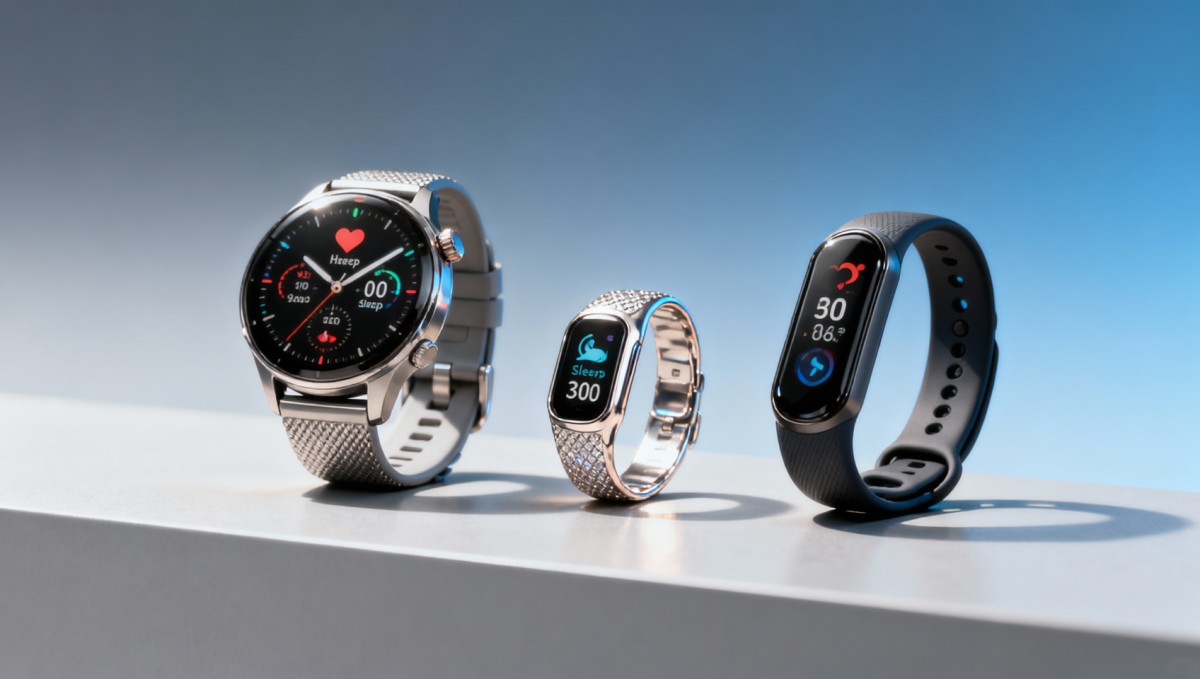
Not every metric shown on a health monitoring watch deserves equal weight. In practice, the most useful metrics are those that are measurable with reasonable consistency, understandable by non-clinical users, and actionable within a daily, weekly, or monthly decision cycle. That is why heart rate, sleep trends, activity load, and blood oxygen trend visibility are often more valuable than novelty scores with unclear definitions.
A useful metric usually meets 4 conditions. First, it can be captured frequently, such as every 1 to 5 minutes for heart rate or nightly for sleep. Second, it has a recognizable baseline. Third, it supports comparison over time. Fourth, it links to an action, such as reducing workload, seeking medical guidance, improving recovery, or adjusting shift planning.
For enterprise buyers, the distinction between trend data and diagnostic data is critical. Watches are primarily trend-monitoring devices, not replacements for hospital-grade equipment. A watch that tracks resting heart rate over 30 days may be very useful for wellness monitoring, even if it is not intended to diagnose a cardiac condition.
Core metrics with the highest day-to-day value
The following metrics tend to have the best balance of usability and business relevance:
- Heart rate: useful for exercise intensity, stress indication, and resting trend monitoring.
- Sleep duration and sleep stages: useful for fatigue management, recovery tracking, and shift-work assessment.
- Step count and activity minutes: basic but still relevant for broad engagement programs.
- Blood oxygen saturation trend: helpful in selected use cases, especially altitude, recovery, or respiratory awareness.
- Heart rate variability trend: useful when presented clearly and interpreted as a trend, not a one-time score.
- ECG spot check: valuable in premium devices, but usually event-based rather than continuous.
Metrics such as skin temperature trend, respiratory rate during sleep, and sedentary time can also add value, particularly in population-level wellness programs. However, they often work best as supporting indicators rather than standalone decision points. In many procurement reviews, a smaller set of 6 reliable metrics beats a feature list of 25 that users do not understand or trust.
The table below separates commonly marketed watch metrics into practical categories for research teams and procurement stakeholders.
The key takeaway is that usefulness depends on context. For a distributor, ECG may be a premium selling point. For a corporate buyer equipping 500 staff members, dependable sleep and activity trends may provide better long-term value than advanced features used by less than 10% of wearers.
Accuracy, consistency, and the difference between actionable data and marketing features
Accuracy in health monitoring watches should be evaluated in layers. The first layer is sensor quality, including optical heart sensors, motion sensors, and temperature sensing components. The second layer is algorithm interpretation. The third layer is user behavior, such as wrist placement, skin tone variation, exercise intensity, and charging habits. A watch can have strong hardware but still produce weak output if the software model is poorly tuned.
For most B2B use cases, consistency matters as much as absolute precision. If a watch reports resting heart rate within a narrow trend range over 14 to 30 days, it may be operationally useful even if it differs slightly from a clinical instrument in isolated readings. Procurement teams should therefore assess repeatability, trend stability, and alert quality, not just headline claims.
Another common issue is false confidence. Some devices convert multiple noisy signals into a single “readiness” or “stress” score from 1 to 100. These scores can help engagement, but they should not be treated as direct medical evidence unless the calculation logic, signal weighting, and intended use are clearly documented. In product reviews, opaque scoring systems are often the first area to challenge.
What technical evaluators should test
Before selection, evaluators should run a structured test for at least 2 weeks and ideally 4 weeks. This window helps capture weekday and weekend behavior, charging patterns, exercise sessions, and sleep variability.
- Compare heart rate readings during rest, walking, interval exercise, and recovery.
- Check whether sleep reports remain stable over 7 to 14 nights.
- Measure battery life under realistic settings, not only low-power mode.
- Assess data export, dashboard clarity, and device management workflow.
- Review alert fatigue risk if the watch pushes frequent notifications.
Practical warning signs
Red flags include battery claims that drop from 10 days to 2 days once health tracking is fully enabled, highly variable overnight oxygen readings, and dashboards that show scores without raw trend context. These issues reduce trust and increase support burden for enterprise rollouts or channel partners.
The following comparison framework is useful when screening candidate devices across technical and commercial criteria.
A watch becomes valuable when its data is understandable, sufficiently stable, and operationally usable. If buyers focus only on feature count, they may miss the factors that actually determine adoption, support cost, and long-term procurement success.
Health monitoring watches vs smart rings vs wearable fitness trackers
The right form factor depends on the target user group and the intended monitoring objective. Health monitoring watches offer the broadest interface, strongest notification capability, and the most balanced feature set for mixed-use populations. Smart rings often win on comfort during sleep and passive wear, while basic fitness trackers may offer lower cost at scale but fewer advanced health functions.
For enterprise wellness or channel distribution, the comparison should be made across at least 6 dimensions: comfort, battery life, display quality, sensor mix, data accessibility, and user adherence. A device with excellent sensors but low wear compliance may perform worse in practice than a simpler device worn 20 hours per day.
Watches are usually the strongest option for users who need on-screen feedback, guided workouts, alerts, and multipurpose use. Rings can be attractive for executives, frequent travelers, and users who dislike wrist devices, especially when nightly recovery is the main priority. Fitness bands can work well for budget-sensitive deployments of 100 to 1,000 users where basic activity and sleep metrics are enough.
Form-factor trade-offs in real procurement scenarios
The table below summarizes where each category tends to perform best.
In procurement terms, the best device is rarely the one with the longest feature sheet. It is the one that fits the monitoring objective, budget band, and user behavior profile. A 3-device shortlist tested over 21 to 30 days typically reveals more than a brochure comparison.
When watches are the better choice
- When users need real-time alerts, visible dashboards, or guided coaching.
- When the program combines health tracking with communication and productivity functions.
- When channel partners need a product with broader market appeal across sports, wellness, and corporate use.
- When technical teams require richer sensor combinations and software interoperability.
This is why watches often remain the default category in healthcare technology distribution and B2B wellness procurement, even as rings and minimalist wearables continue to gain share in specific niches.
How buyers should evaluate procurement value, usability, and deployment risk
A successful purchasing decision should combine clinical relevance, user acceptance, IT practicality, and total cost control. In many organizations, the direct device price represents only part of the cost. Support tickets, replacements, charging accessories, onboarding time, dashboard subscriptions, and privacy review can materially affect the 12-month and 24-month budget.
Usability is often underestimated. If a device requires charging every 24 to 36 hours, adherence drops. If the app setup takes more than 10 minutes per user, helpdesk demand rises. If the interface hides trend history behind multiple menus, managers cannot use the data effectively. Procurement teams should therefore score usability with the same discipline used for hardware specifications.
For safety-sensitive or regulated environments, data handling and notification design deserve added scrutiny. Excessive or unclear alerts can create user fatigue. Insufficient consent controls can delay deployment. If the watch is intended for occupational wellness rather than medical supervision, the communication around the device should clearly define that role.
Five procurement checkpoints
- Define the use case in 1 to 3 measurable objectives, such as improving sleep awareness, reducing fatigue risk, or supporting a remote wellness pilot.
- Select 5 to 8 priority metrics rather than buying on feature volume.
- Run a pilot with 20 to 50 users across different roles and usage patterns.
- Review total cost over 12 to 24 months, including accessories, subscriptions, and replacements.
- Validate support workflow, data export, privacy policy, and channel service responsibilities before scale-up.
Common buying mistakes
Common mistakes include overvaluing ECG when only a small subset of users will activate it, ignoring strap comfort during 8 to 12 hours of wear, and assuming all sleep scores are comparable across brands. Another frequent issue is selecting a device with strong consumer appeal but limited fleet management or poor after-sales support for enterprise volume.
For buyers, the most reliable path is a use-case-first framework. When watches are mapped to a specific operational need, the metric list becomes clearer, the pilot becomes easier to measure, and the procurement conversation moves from gadget features to business outcomes.
Implementation guidance, FAQ, and what to do next
Implementation should be phased. A typical rollout has 3 stages: shortlist evaluation, pilot deployment, and scaled adoption. Stage 1 often lasts 2 to 4 weeks, stage 2 around 30 to 60 days, and stage 3 depends on geography, support structure, and procurement approvals. This phased approach reduces the risk of buying a technically impressive device that fails in everyday use.
In the pilot stage, success criteria should be explicit. For example, target at least 80% weekly wear compliance, less than 5% unresolved sync failures, and a clear user understanding of the top 3 health metrics being monitored. Without these practical measures, even good hardware can produce weak program outcomes.
Below are common questions that arise during technical evaluation, procurement review, and channel planning.
How many health metrics are enough?
For most organizations, 5 to 8 well-performing metrics are enough. A typical high-value package includes heart rate, resting heart rate, sleep duration, activity load, blood oxygen trend, and optional HRV. More metrics can be useful, but only if they improve decisions rather than dashboard clutter.
Are health monitoring watches suitable for enterprise wellness programs?
Yes, especially when the goal is awareness, engagement, and trend monitoring rather than diagnosis. They are often suitable for executive health initiatives, remote team wellness pilots, and fatigue-awareness programs. The best results usually come from clear metric selection, a 30-day pilot, and defined data governance.
What battery life should buyers look for?
In practical B2B use, 5 to 7 days with continuous health tracking is a good baseline. Devices that require near-daily charging can still work in premium consumer scenarios, but they tend to lower compliance in larger workforce or multi-user deployments.
How should buyers compare watches from different suppliers?
Use the same test period, the same user group, and the same reporting template. Compare trend reliability, user comfort, support burden, and dashboard usefulness over at least 14 to 30 days. This produces more decision value than comparing specification sheets alone.
Health monitoring watches deliver the most value when buyers focus on metrics that are understandable, repeatable, and relevant to real use cases. Heart rate, sleep, activity load, and selected recovery indicators typically matter more than inflated feature lists. For research teams, technical evaluators, procurement managers, and enterprise decision-makers, the smartest approach is to match the device to the monitoring objective, verify performance in a structured pilot, and assess total deployment value rather than unit price alone.
If your team is assessing wearable health technology for sourcing, distribution, or strategic product evaluation, TradeNexus Pro can help you turn market noise into clearer decisions. Contact us to discuss tailored selection criteria, compare device categories, or explore broader healthcare technology and smart electronics opportunities across global B2B markets.
Get weekly intelligence in your inbox.
No noise. No sponsored content. Pure intelligence.
 Apr 27, 2026Algeria’s Oil & Steel FDI Push Opens Valve, Corrosion-Resistant Material OrdersAlgeria’s Oil & Steel FDI Push Opens Valve, Corrosion-Resistant Material Orders
 Apr 27, 2026Azerbaijan’s New PV Mounting Standard Opens Path for Chinese SuppliersAzerbaijan’s New PV Mounting Standard Opens Path for Chinese Suppliers
 Apr 27, 2026Fitch Cuts East Africa Growth Forecasts, Raises Cross-Border Trade RisksFitch Cuts East Africa Growth Forecasts, Raises Cross-Border Trade Risks
 Apr 27, 2026ADB Raises Vietnam GDP Forecast to 7.2% on Electronics Export GrowthADB Raises Vietnam GDP Forecast to 7.2% on Electronics Export Growth
 Apr 27, 2026Maine Halts Large Data Centers: AI Server Export ImpactMaine Halts Large Data Centers: AI Server Export Impact
 Apr 27, 2026OFID $500M for Côte d'Ivoire: Boost to Factory Automation & Warehouse RoboticsOFID $500M for Côte d'Ivoire: Boost to Factory Automation & Warehouse Robotics
 Apr 27, 2026Morocco Ranks 4th in EU Energy Aid to AfricaMorocco Ranks 4th in EU Energy Aid to Africa
 Apr 27, 2026UAE Emerges as Global AI Hub, Opening Fast-Track for Chinese Smart DevicesUAE Emerges as Global AI Hub, Opening Fast-Track for Chinese Smart Devices
") Apr 26, 2026China Releases Green Design Guidelines for Industrial Products (2026)China Releases Green Design Guidelines for Industrial Products (2026)
Apr 26, 2026China Releases Green Design Guidelines for Industrial Products (2026)China Releases Green Design Guidelines for Industrial Products (2026) Apr 26, 2026ANATEL Mandates Portuguese Offline Voice Assistant for Smart Home Devices in BrazilANATEL Mandates Portuguese Offline Voice Assistant for Smart Home Devices in Brazil
 Apr 26, 2026Vietnam Enforces Bilingual Safety Labels for Electronic Components from Apr 22, 2026Vietnam Enforces Bilingual Safety Labels for Electronic Components from Apr 22, 2026
 Apr 26, 2026Japan Updates JIS for Rehab Devices: IEC 62366-1:2024 RequiredJapan Updates JIS for Rehab Devices: IEC 62366-1:2024 Required
 Apr 26, 2026THE Alliance Cuts Ningbo–Rotterdam Transit to 18 Days, Spot Rates Up 35%THE Alliance Cuts Ningbo–Rotterdam Transit to 18 Days, Spot Rates Up 35%
 Apr 26, 2026India BIS Mandates PLC & HMI Certification under IS 13252:2025 by Oct 2026India BIS Mandates PLC & HMI Certification under IS 13252:2025 by Oct 2026
") Apr 26, 2026SASO Enforces New EV Charger Rules in Saudi Arabia (2026)SASO Enforces New EV Charger Rules in Saudi Arabia (2026)
Apr 26, 2026SASO Enforces New EV Charger Rules in Saudi Arabia (2026)SASO Enforces New EV Charger Rules in Saudi Arabia (2026) Apr 26, 2026TÜV Rheinland Updates IoT EMC Guidelines: AI Edge Modules Now Mandatory for Immunity TestingTÜV Rheinland Updates IoT EMC Guidelines: AI Edge Modules Now Mandatory for Immunity Testing
 Apr 26, 2026USTR Launches First Annual Review of China Solar PV AD/CVD OrdersUSTR Launches First Annual Review of China Solar PV AD/CVD Orders
 Apr 26, 2026EU New Battery Regulation Fully Enforced Apr 24, 2026EU New Battery Regulation Fully Enforced Apr 24, 2026
 Apr 25, 2026Vietnam Enforces CN-EN Bilingual Safety Labels on Electronic Components from Apr 22, 2026Vietnam Enforces CN-EN Bilingual Safety Labels on Electronic Components from Apr 22, 2026
 Apr 25, 2026ANATEL Mandates Portuguese Offline Voice Assistants for Smart Home Devices in BrazilANATEL Mandates Portuguese Offline Voice Assistants for Smart Home Devices in Brazil
 Apr 25, 2026India BIS Mandates IS 13252:2025 for PLCs & HMIs by Oct 2026India BIS Mandates IS 13252:2025 for PLCs & HMIs by Oct 2026
 Apr 25, 2026SASO EV Charger Rules: Grid Compatibility & Sand Resistance RequiredSASO EV Charger Rules: Grid Compatibility & Sand Resistance Required
 Apr 25, 2026JIS T 0011:2026 Enforces IEC 62366-1:2024 for Rehab Devices in JapanJIS T 0011:2026 Enforces IEC 62366-1:2024 for Rehab Devices in Japan
 Apr 25, 2026THE Alliance Cuts Ningbo–Rotterdam Transit to 18 Days, +35% Spot RateTHE Alliance Cuts Ningbo–Rotterdam Transit to 18 Days, +35% Spot Rate
 Apr 25, 2026TÜV Rheinland Updates IoT EMC Standard: AI Edge Module Immunity Now MandatoryTÜV Rheinland Updates IoT EMC Standard: AI Edge Module Immunity Now Mandatory
 Apr 25, 2026USTR Launches Five-Year China Solar PV AD/CVD ReviewUSTR Launches Five-Year China Solar PV AD/CVD Review
 Apr 25, 2026EU New Battery Regulation Enters Force Apr 24, 2026EU New Battery Regulation Enters Force Apr 24, 2026