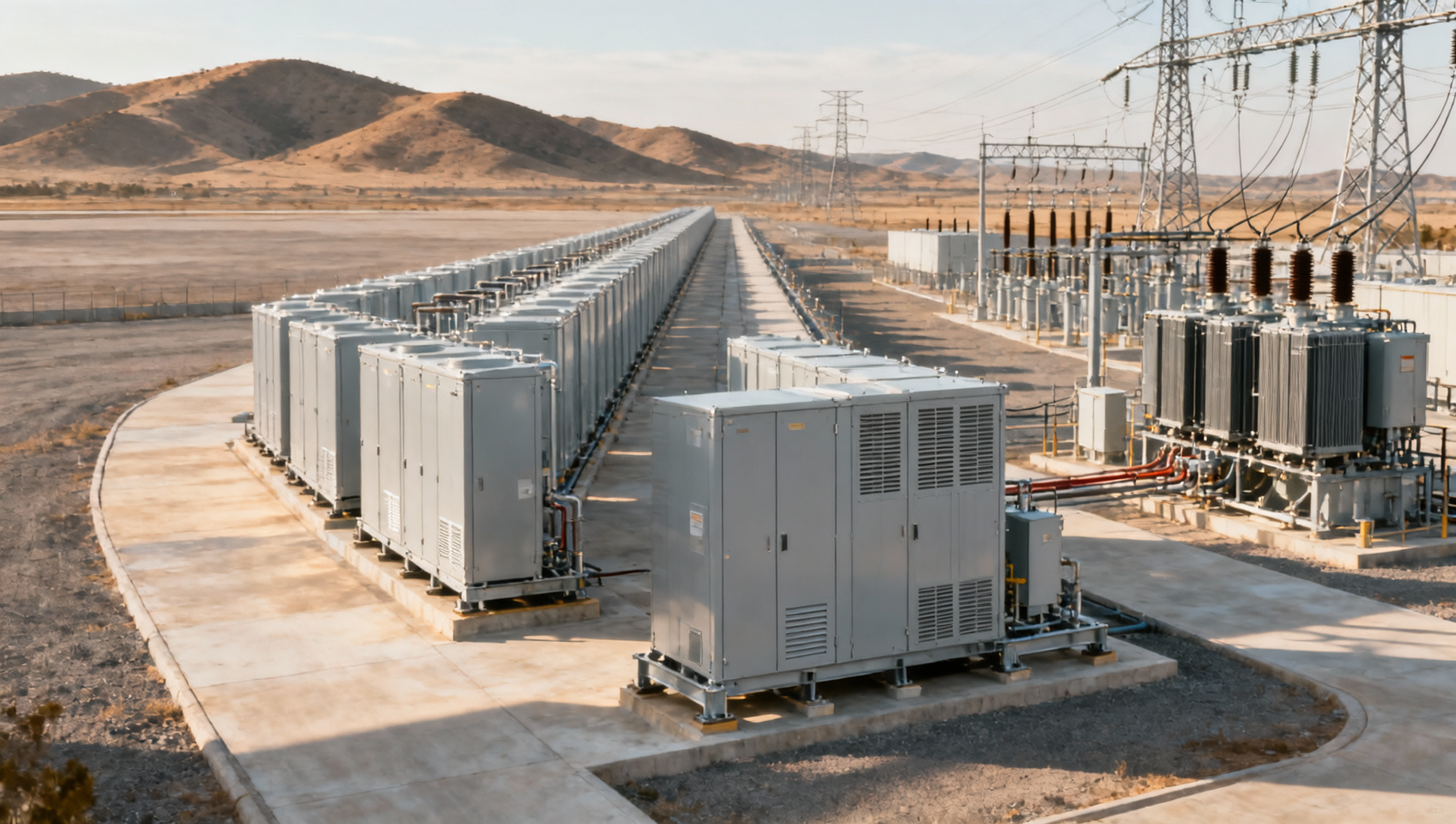
Japan's Battery Storage Market Expands Amid Revenue Uncertainty
Japan's battery energy storage system (BESS) market is expanding as changing market dynamics begin to erode project revenue, according to BloombergNEF analyst Umer Sadiq. The timing of the observation is not specified in the source information. Following an initial surge in demand for ancillary services, the market faces questions about business models and the sustainability of returns. No specific policy or rule change is identified, but the revenue shift warrants attention from project developers, equipment suppliers and other participants whose decisions depend on market access, pricing and delivery commitments.
Early ancillary services demand gives way to revenue questions
Sadiq said that Japan's BESS market continues to expand while changes in market dynamics have begun to erode project revenue. The observation follows an initial surge in demand for ancillary services.
The source information identifies challenges to business models and sustainable returns in Japan's storage market. It also describes these challenges as reflecting a broader issue for storage markets worldwide: pricing and revenue models can adjust after a period of rapid expansion.
The information provided does not specify when the observation was made. It does not identify a policy announcement, a revised regulation, a certification requirement or a particular change to market rules.
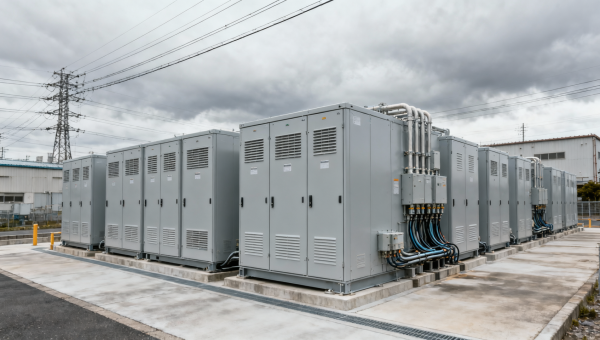
Revenue assumptions reach across the storage supply chain
Project developers face a wider range of possible returns
From an industry perspective, the reported erosion of revenue makes the assumptions behind a project's expected income especially relevant. A developer considering a BESS project may need to examine how much of its projected return depends on ancillary services and how sensitive the result is to changes in the price or availability of that revenue. Expansion of the market alone does not establish what an individual project will earn.
Analysis suggests that this uncertainty could affect decisions about project timing, system specifications and commercial commitments. For example, a project designed around an early revenue opportunity may produce a different financial outcome if the income available when it operates differs from the original assumption. The input does not establish that any particular project has been delayed or redesigned.
Equipment suppliers may see different procurement priorities
For battery suppliers and system integrators, the potential effect is likely to flow through customer investment decisions. If buyers reassess expected revenue, they may also reassess the price, performance and delivery terms they are prepared to accept. A supplier's proposal could therefore be evaluated against a broader range of revenue scenarios, rather than against the strongest early market conditions alone.
In practical terms, buyers and suppliers may find it useful to clarify which performance assumptions support a proposed system and how changes to those assumptions would affect the commercial case. This is an analytical consideration, not a newly confirmed procurement rule. The source information does not identify changes to product certification, testing or technical standards.
Contractors and service providers have exposure beyond delivery
Engineering contractors and providers of ongoing services may also be affected if project owners revisit the balance between initial expenditure and costs incurred during operation. Analysis suggests that uncertainty over income could influence negotiations on delivery schedules, performance commitments and service arrangements. The effect would depend on the commercial structure of each project; the information supplied does not establish that contract terms have already changed across the market.
For procurement teams, the practical question is whether proposed equipment and service commitments remain suitable under less favorable revenue assumptions. For service providers, it is whether the scope and duration of their obligations are clear enough to be assessed alongside the project's expected income. Neither point implies a new mandatory contractual requirement.
What to check before committing to a project
Test the revenue case against changing conditions
A useful starting point is to distinguish the initial surge in ancillary services demand described in the source from the revenue a particular project expects to earn over its planned life. Companies assessing a project could test more than one pricing and demand scenario, identify which assumptions have the greatest effect on returns, and record the basis for those assumptions. Such analysis would help decision makers see where a proposal is most exposed to further change.
These scenarios should be treated as planning tools, not forecasts of a confirmed market outcome. The source does not provide prices, a timetable for further erosion or evidence that every source of storage revenue is changing in the same way.
Verify the market terms behind each revenue stream
Before relying on expected income, project teams could review the applicable participation terms and any documents relevant to the services they intend to provide. The point is to establish which conditions support the business case and which are still uncertain. If subsequent official statements, market documents or procurement terms identify changes, those changes can then be assessed against the project's assumptions.
At this stage, no specific revision to eligibility, dispatch, settlement or pricing rules is confirmed by the supplied information. Any examination of those subjects is therefore due diligence, not a response to a documented new rule. Companies should avoid treating the analyst's observation itself as an official interpretation of market requirements.
Align purchasing and delivery commitments with the financial case
Analysis suggests that buyers could compare equipment offers and delivery commitments with the range of revenue outcomes used in their project assessments. Contract reviews may consider whether performance descriptions, acceptance terms and service scopes are sufficiently clear for the parties to evaluate their respective commitments. Where an assumption is material to the purchase, documenting it can make later review more effective.
Suppliers and contractors, in turn, may benefit from understanding which customer assumptions underpin a proposed order. If a buyer changes its project design or timetable, the parties can assess the implications for procurement and delivery through their normal commercial process. The source does not say that such changes have occurred in any particular transaction.
Keep compliance checks separate from market forecasts
Teams may continue to verify the requirements applicable to their own equipment, project and intended services using relevant documents. They could also monitor whether later information identifies a change in certification, technical documentation or market participation conditions. This is a precaution appropriate to project due diligence; no new certification or compliance obligation is established by the event summary.
Keeping those checks separate from revenue forecasting matters because the two questions require different evidence. An expected change in income does not by itself prove that a technical standard has changed, while a future rule change, if confirmed, would need its own assessment of scope and implementation.
A market signal that still needs verification
Editorial analysis suggests that this development is best understood as a signal about changing commercial conditions, rather than evidence that a new policy or market rule has taken effect. The confirmed observation concerns revenue pressure during market expansion and the sustainability of business models after an initial surge in ancillary services demand. The supplied information does not explain which specific market mechanisms produced the pressure or how long it may last.
Further assessment would benefit from verified information on applicable market terms, pricing and participation conditions, as well as feedback from market participants. Official statements or relevant procurement documents, if subsequently available, could help distinguish changes in commercial outcomes from changes in formal rules. Their relevance would depend on their actual content and scope.
The wider comparison in the source also calls for care. It points to a pricing and revenue-model issue observed in storage markets after rapid expansion; it does not establish that Japan will follow a particular path or that outcomes will be uniform across projects. Project design, contractual commitments and the revenue assumptions used by each participant could all affect the practical result.
Planning for expansion with less certain income
Japan's expanding BESS market presents an increasingly important distinction for commercial decisions: a growing market can coexist with pressure on the revenue available to projects. Based on the information supplied, businesses can treat the observation as a reason to revisit assumptions, review relevant market terms and examine procurement and delivery commitments against a range of outcomes.
The appropriate response remains conditional. No specific policy change, implementation date or new certification requirement is established in the source information, and the eventual effect on individual businesses remains uncertain. Continued verification of market conditions and any relevant formal requirements will be more informative than assuming a single outcome for the sector.
Basis for this report and points to verify
This article is based on the user-provided news title, event timing and event summary, including the observation attributed to BloombergNEF analyst Umer Sadiq. The event timing was not specified. No specific official source link was provided in the input, so the underlying information and any subsequent developments require continued verification.
Relevant material to monitor may include official announcements, regulatory publications, applicable market documents, procurement documents, authoritative media reports and industry feedback. Particular attention could be given to any verified changes in market participation or pricing terms, technical or certification requirements, procurement conditions and companies' experience in applying them. These are subjects for follow-up, not changes confirmed by the supplied summary.
Get weekly intelligence in your inbox.
No noise. No sponsored content. Pure intelligence.
 Nov 26, 2026How Negative Pressure Works in a Biosafety Cabinet to Contain AerosolsHow Negative Pressure Works in a Biosafety Cabinet to Contain Aerosols
 Nov 25, 2026Trump Administration Plans New Tariff Measures Affecting 16 Trading PartnersTrump Administration Plans New Tariff Measures Affecting 16 Trading Partners
 Nov 25, 2026UK Energy Price Cap to Rise 26%, Adding £443 to Typical Annual BillUK Energy Price Cap to Rise 26%, Adding £443 to Typical Annual Bill
 Nov 25, 2026German Solar Developers and Battery Makers Hit by Third-Quarter BankruptciesGerman Solar Developers and Battery Makers Hit by Third-Quarter Bankruptcies
 Nov 25, 2026Remote Site Microgrids: How to Plan Reliable Power for Off-Grid OperationsRemote Site Microgrids: How to Plan Reliable Power for Off-Grid Operations
 Nov 24, 2026China to Suspend Some Critical Materials Export Controls on the US Until JanuaryChina to Suspend Some Critical Materials Export Controls on the US Until January
 Nov 24, 2026Japan's Battery Storage Market Expands Amid Revenue UncertaintyJapan's Battery Storage Market Expands Amid Revenue Uncertainty
 Nov 24, 2026Ukraine Finds Over 16,000 Foreign-Made Components in Russian DronesUkraine Finds Over 16,000 Foreign-Made Components in Russian Drones
 Nov 24, 2026Bulk Pricing for Stretch Wrapping Machines: What Affects Your Quote?Bulk Pricing for Stretch Wrapping Machines: What Affects Your Quote?
 Nov 23, 2026Lidar Q3 Earnings Point to Rising Robotics Demand and Automotive WeaknessLidar Q3 Earnings Point to Rising Robotics Demand and Automotive Weakness
 Nov 23, 2026Australia's AEMO Relies on 5.3 GW of New Battery Storage for SummerAustralia's AEMO Relies on 5.3 GW of New Battery Storage for Summer
 Nov 23, 2026US Energy Storage Capacity Surpasses 200 GWhUS Energy Storage Capacity Surpasses 200 GWh
 Nov 23, 2026Smart Factory Solutions for Discrete Manufacturing: Connecting Machines and MESSmart Factory Solutions for Discrete Manufacturing: Connecting Machines and MES
 Nov 22, 2026Golmud's 60 MW Liquid Air Storage Project Uses Fully Domestic EquipmentGolmud's 60 MW Liquid Air Storage Project Uses Fully Domestic Equipment
 Nov 22, 2026Precision Engineering for Medical Devices: Tolerances and MaterialsPrecision Engineering for Medical Devices: Tolerances and Materials
 Nov 21, 2026EDF Acquires 1GWh Holloway Battery Storage Project in AustraliaEDF Acquires 1GWh Holloway Battery Storage Project in Australia
 Nov 21, 2026Choosing Carbon Steel Grades for OEM Machined Parts: Key FactorsChoosing Carbon Steel Grades for OEM Machined Parts: Key Factors
 Nov 20, 2026China’s First Virtual Power Plant Report Says Capacity Target Met EarlyChina’s First Virtual Power Plant Report Says Capacity Target Met Early
 Nov 20, 2026Choosing an OEM Heavy Equipment Manufacturer: Capabilities and Quality ChecksChoosing an OEM Heavy Equipment Manufacturer: Capabilities and Quality Checks
 Nov 19, 2026India Adds Record 8.4 GW of Open-Access Solar in First Nine Months of 2026India Adds Record 8.4 GW of Open-Access Solar in First Nine Months of 2026
 Nov 19, 2026B2B Intelligence for Green Energy: Finding New Market OpportunitiesB2B Intelligence for Green Energy: Finding New Market Opportunities
 Nov 18, 2026Global Solar Additions Hit Record in 2025, Forecast to Fall in 2026Global Solar Additions Hit Record in 2025, Forecast to Fall in 2026
 Nov 18, 2026Supply Chain Visibility for Supplier Management: How to Spot Delivery RisksSupply Chain Visibility for Supplier Management: How to Spot Delivery Risks
 Nov 17, 2026US Battery Storage Deployment Tops 200 GWh; 74 GWh Forecast for 2026US Battery Storage Deployment Tops 200 GWh; 74 GWh Forecast for 2026
 Nov 17, 2026Choosing a Solar Tracker for Ground-Mount PV: Site and Design FactorsChoosing a Solar Tracker for Ground-Mount PV: Site and Design Factors
 Nov 16, 2026US Polysilicon and Solar Product Tariffs and Import Price Floor Take Effect December 4US Polysilicon and Solar Product Tariffs and Import Price Floor Take Effect December 4
 Nov 16, 2026How Industrial Buyers Can Evaluate B2B Intelligence Reports on SuppliersHow Industrial Buyers Can Evaluate B2B Intelligence Reports on Suppliers