German Solar Developers and Battery Makers Hit by Third-Quarter Bankruptcies
In the third quarter of 2026, German solar developers and battery manufacturers became a focus of bankruptcy activity, according to information attributed to PV-Tech. The development raises questions for investors, buyers and suppliers about project continuity and delivery commitments across Europe’s solar downstream businesses. The supplied report does not identify a new policy, regulation or certification rule; its immediate relevance lies in how financial distress may affect the execution of existing contracts and the verification of business requirements.
Financial pressure reaches German solar businesses
PV-Tech reported that German solar developers and battery manufacturers were a focus of bankruptcy activity in the third quarter of 2026. Several companies encountered difficulties against a backdrop of financial pressure in the industry. The information supplied links this situation to changes in supply chains, prices and market demand affecting downstream solar businesses in Europe, and identifies a warning for investment and supply chain stability.
The supplied information does not identify the companies involved or provide figures for bankruptcies, investment losses or delayed deliveries. It also does not specify a policy change, a regulatory decision or an alteration to a certification or trade requirement.
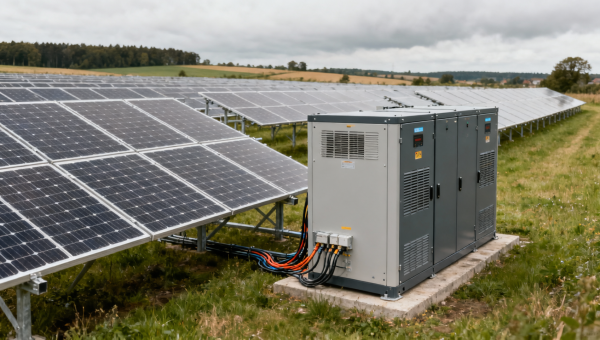
Where financial distress may reach the supply chain
Developers and project counterparties
Analysis suggests that a developer’s financial condition may become a practical concern for businesses relying on it to coordinate a project. A buyer or contractor could face uncertainty about who will authorize remaining work, maintain project records or communicate changes to the delivery schedule. Those effects would depend on the circumstances of the company and the terms of each agreement; the supplied report does not confirm particular project interruptions.
For counterparties, the relevant rules are likely to include the obligations already recorded in project contracts, procurement documents and applicable approval conditions. A review can identify which deliverables depend on the developer and what evidence is available to demonstrate that agreed work has been completed. Any change in responsibility would need to be established for the individual project, rather than assumed from the wider market report.
Battery procurement and product continuity
From a procurement perspective, financial distress at a manufacturer may create uncertainty about future production, delivery dates or access to product information. Buyers considering a battery purchase could therefore examine whether a supplier can support the full order and provide the documents specified in the contract. The report does not establish that any named product is unavailable or that a particular shipment has been delayed.
If an alternative supplier or product is considered, analysis suggests that price and availability alone may not resolve the issue. Buyers may also need to compare technical specifications, contractual acceptance criteria and any certification evidence applicable to the intended purchase. A substitute should be assessed against the actual requirements of the project; no new certification obligation is identified in the supplied information.
Investors, contractors and service providers
Investors may need to consider how the financial position of a developer or manufacturer could affect the timing and cost assumptions used for a transaction. For contractors and service providers, the concern may be more immediate: work could depend on instructions, equipment or payment from a financially stressed counterparty. These are possible exposures, not confirmed outcomes of the cases mentioned in the report.
After-sales responsibilities also warrant attention where an agreement depends on a manufacturer or another counterparty remaining available. Businesses can review who holds warranty commitments, service records and product documentation, and whether those arrangements would still be workable if the counterparty’s circumstances changed. The effect on any warranty or service obligation would depend on its terms and the applicable rules, neither of which is detailed in the input.
What to verify before committing to orders and schedules
Check counterparties against actual exposure
A practical first step is to map which current projects, orders and payments depend on the financial continuity of a particular developer or battery manufacturer. Analysis suggests that the most useful assessment connects the counterparty to specific obligations: scheduled deliveries, project decisions, outstanding payments and documents that are still needed. The report does not provide enough detail to identify which individual businesses require closer review.
Where uncertainty is material, a company may seek updated information from its counterparty and compare it with the milestones in the relevant agreement. It can also consider how quickly a delayed decision or delivery would affect its own commitments. Such checks are commercial precautions, not new mandatory steps announced by the report.
Match delivery plans to contract terms
Buyers and contractors can review the dates, acceptance procedures and communication duties set out in their purchase and project documents. If a schedule depends on several parties, it may be useful to identify which commitments can be verified independently and which depend on a single supplier or developer. This helps distinguish a confirmed change in delivery from a risk that has yet to materialize.
Where an order is still being negotiated, parties may consider whether the proposed terms clearly address documentation, changes to delivery timing and the handling of unresolved issues. Existing agreements should be assessed on their own wording and applicable requirements. The supplied information does not establish that any contract term has changed as a result of the reported bankruptcies.
Preserve technical and certification records
Analysis suggests that access to records could matter if a project must assess a replacement product or transfer responsibilities between counterparties. Relevant materials may include the technical specifications, test reports, certification evidence and acceptance records required by the individual transaction. The exact documents will depend on the product, contract and applicable requirements; the report does not identify a new list of required documents.
Businesses can check whether the records they already hold are complete, current and linked to the products or work they cover. If a document is missing, obtaining clarification while the relevant counterparty is reachable may help later assessment. Possession of a document alone does not establish that a product meets every requirement for a particular project.
Evaluate alternatives before a disruption
For a purchase or project with limited flexibility, an alternative supplier or product may be worth evaluating in advance. That evaluation could cover technical compatibility, available documentation, delivery capacity and the consequences for existing commitments. Analysis suggests that any proposed substitution should be checked against the buyer’s specifications and approval process before it is treated as an available solution.
The same caution applies to price changes. A lower or higher quotation may affect procurement decisions, but the supplied information provides no figures or direction for prices. Businesses should assess current offers and their own contractual exposure rather than infer a specific market movement from the report.
A warning about execution, with no rule change established
At this stage, it is more appropriate to understand the report as a signal of financial and commercial pressure than as evidence that a policy or regulatory change has taken effect. It points to questions about how existing obligations may be carried out when a developer or manufacturer encounters distress. It does not, on the information supplied, establish a new trade restriction, revised certification standard or regulatory enforcement approach.
Further information could materially change how individual businesses assess the situation. Useful details would include the circumstances of the companies involved, the status of affected commitments and any relevant official statements. Industry feedback could also help distinguish isolated counterparty problems from broader difficulties, although no conclusion about their scale can be drawn from the supplied summary.
Changes in procurement documents, certification practice or trade execution would require separate verification. If such changes are later reported, businesses will need to determine their scope, timing and relevance to particular products or contracts. Until then, the commercial risk identified here should not be presented as a confirmed change in legal requirements.
Keeping the assessment proportionate
The reported third-quarter bankruptcy activity places counterparty continuity, product documentation and delivery planning under closer scrutiny for participants in the solar supply chain. Its practical significance will vary with each company’s exposure and the agreements in place. The current information supports a focused review of those dependencies, while leaving the scale and operational consequences of individual cases open to verification.
For now, the report is best treated as a reason to check existing arrangements and monitor further evidence. It does not support a conclusion that all projects face disruption or that new compliance duties have already been introduced.
Basis for this report and items to verify
This article is based on the user-provided news title, event timing and summary, which attribute the underlying report to PV-Tech. The supplied material does not include a specific official source link. Further verification remains necessary, including review of any relevant official announcements and authoritative media reporting as they become available.
Continued observation may also cover any applicable policy details, certification implementation guidance, changes to procurement documents, trade execution, industry feedback and how affected businesses carry out their commitments. None of those developments is confirmed by the information provided for this article.
Get weekly intelligence in your inbox.
No noise. No sponsored content. Pure intelligence.
 Nov 26, 2026How Negative Pressure Works in a Biosafety Cabinet to Contain AerosolsHow Negative Pressure Works in a Biosafety Cabinet to Contain Aerosols
 Nov 25, 2026Trump Administration Plans New Tariff Measures Affecting 16 Trading PartnersTrump Administration Plans New Tariff Measures Affecting 16 Trading Partners
 Nov 25, 2026UK Energy Price Cap to Rise 26%, Adding £443 to Typical Annual BillUK Energy Price Cap to Rise 26%, Adding £443 to Typical Annual Bill
 Nov 25, 2026German Solar Developers and Battery Makers Hit by Third-Quarter BankruptciesGerman Solar Developers and Battery Makers Hit by Third-Quarter Bankruptcies
 Nov 25, 2026Remote Site Microgrids: How to Plan Reliable Power for Off-Grid OperationsRemote Site Microgrids: How to Plan Reliable Power for Off-Grid Operations
 Nov 24, 2026China to Suspend Some Critical Materials Export Controls on the US Until JanuaryChina to Suspend Some Critical Materials Export Controls on the US Until January
 Nov 24, 2026Japan's Battery Storage Market Expands Amid Revenue UncertaintyJapan's Battery Storage Market Expands Amid Revenue Uncertainty
 Nov 24, 2026Ukraine Finds Over 16,000 Foreign-Made Components in Russian DronesUkraine Finds Over 16,000 Foreign-Made Components in Russian Drones
 Nov 24, 2026Bulk Pricing for Stretch Wrapping Machines: What Affects Your Quote?Bulk Pricing for Stretch Wrapping Machines: What Affects Your Quote?
 Nov 23, 2026Lidar Q3 Earnings Point to Rising Robotics Demand and Automotive WeaknessLidar Q3 Earnings Point to Rising Robotics Demand and Automotive Weakness
 Nov 23, 2026Australia's AEMO Relies on 5.3 GW of New Battery Storage for SummerAustralia's AEMO Relies on 5.3 GW of New Battery Storage for Summer
 Nov 23, 2026US Energy Storage Capacity Surpasses 200 GWhUS Energy Storage Capacity Surpasses 200 GWh
 Nov 23, 2026Smart Factory Solutions for Discrete Manufacturing: Connecting Machines and MESSmart Factory Solutions for Discrete Manufacturing: Connecting Machines and MES
 Nov 22, 2026Golmud's 60 MW Liquid Air Storage Project Uses Fully Domestic EquipmentGolmud's 60 MW Liquid Air Storage Project Uses Fully Domestic Equipment
 Nov 22, 2026Precision Engineering for Medical Devices: Tolerances and MaterialsPrecision Engineering for Medical Devices: Tolerances and Materials
 Nov 21, 2026EDF Acquires 1GWh Holloway Battery Storage Project in AustraliaEDF Acquires 1GWh Holloway Battery Storage Project in Australia
 Nov 21, 2026Choosing Carbon Steel Grades for OEM Machined Parts: Key FactorsChoosing Carbon Steel Grades for OEM Machined Parts: Key Factors
 Nov 20, 2026China’s First Virtual Power Plant Report Says Capacity Target Met EarlyChina’s First Virtual Power Plant Report Says Capacity Target Met Early
 Nov 20, 2026Choosing an OEM Heavy Equipment Manufacturer: Capabilities and Quality ChecksChoosing an OEM Heavy Equipment Manufacturer: Capabilities and Quality Checks
 Nov 19, 2026India Adds Record 8.4 GW of Open-Access Solar in First Nine Months of 2026India Adds Record 8.4 GW of Open-Access Solar in First Nine Months of 2026
 Nov 19, 2026B2B Intelligence for Green Energy: Finding New Market OpportunitiesB2B Intelligence for Green Energy: Finding New Market Opportunities
 Nov 18, 2026Global Solar Additions Hit Record in 2025, Forecast to Fall in 2026Global Solar Additions Hit Record in 2025, Forecast to Fall in 2026
 Nov 18, 2026Supply Chain Visibility for Supplier Management: How to Spot Delivery RisksSupply Chain Visibility for Supplier Management: How to Spot Delivery Risks
 Nov 17, 2026US Battery Storage Deployment Tops 200 GWh; 74 GWh Forecast for 2026US Battery Storage Deployment Tops 200 GWh; 74 GWh Forecast for 2026
 Nov 17, 2026Choosing a Solar Tracker for Ground-Mount PV: Site and Design FactorsChoosing a Solar Tracker for Ground-Mount PV: Site and Design Factors
 Nov 16, 2026US Polysilicon and Solar Product Tariffs and Import Price Floor Take Effect December 4US Polysilicon and Solar Product Tariffs and Import Price Floor Take Effect December 4
 Nov 16, 2026How Industrial Buyers Can Evaluate B2B Intelligence Reports on SuppliersHow Industrial Buyers Can Evaluate B2B Intelligence Reports on Suppliers