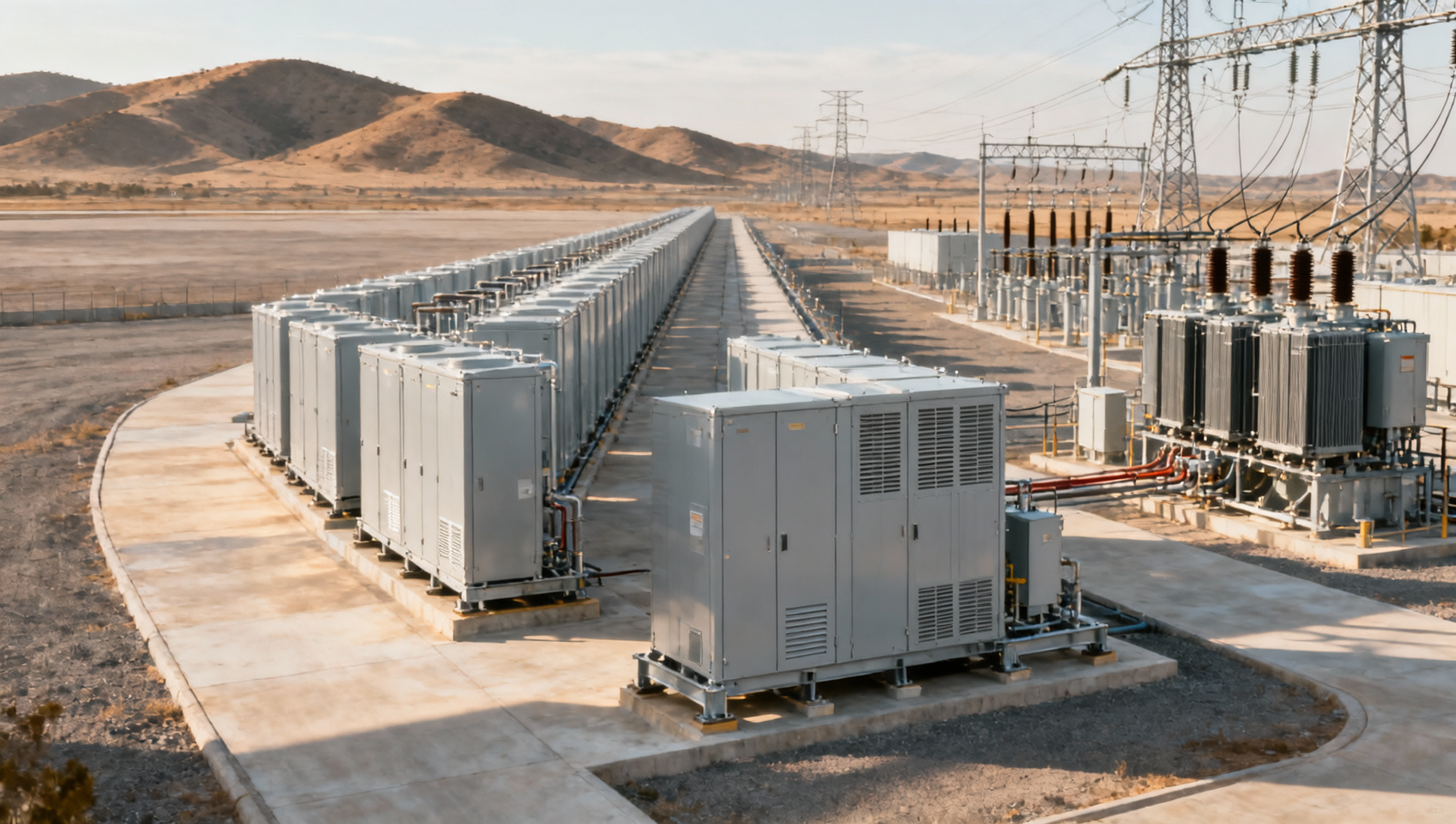
Remote Site Microgrids: How to Plan Reliable Power for Off-Grid Operations
A remote site microgrid succeeds when it keeps essential operations running through the conditions that actually threaten the site: equipment failures, delayed fuel deliveries, changing production schedules, and periods of poor renewable output. The equipment mix matters, but the decisive work comes earlier: defining which loads must stay online, how long the site must operate under adverse conditions, and who will maintain the system.
For project managers and engineering leads, the practical objective is to turn those requirements into a design that suppliers can price and test on the same basis. A system sized around average demand alone may look attractive on paper yet struggle when a large motor starts or a generator is unavailable.
Define the operating case before selecting equipment
Begin with the site’s operating phases. A construction camp may have a short period of high demand followed by a much smaller permanent load. A mine or processing facility may start with a limited installation and add production lines later. Each phase changes the value of modular equipment, temporary generation, and future expansion capacity.
Build a load schedule from equipment ratings, operating hours, and expected simultaneity. Where an existing site has interval meter data, use it to identify daily patterns and unusual peaks. For a new site, supplement the equipment list with start-up sequences and production schedules; nameplate ratings alone rarely describe how the whole facility operates.
Separate loads by the consequence of interruption. Communications, controls, safety systems, water treatment, and selected process equipment may require higher continuity than workshops or nonessential buildings. Some equipment can tolerate a brief transfer interruption; other loads need an uninterruptible power supply or another arrangement that maintains power during transitions. Assigning every load the same priority can make the system unnecessarily large, while treating all loads as flexible can expose the operation to avoidable shutdowns.
Agree on measurable design cases with operations: normal production, peak demand, reduced staffing, planned maintenance, loss of a major power source, and the longest credible disruption to fuel delivery. Define acceptable outage duration and recovery priorities for each critical load. These decisions give the engineering team a basis for comparing reliability rather than relying on a general requirement for “continuous power.”
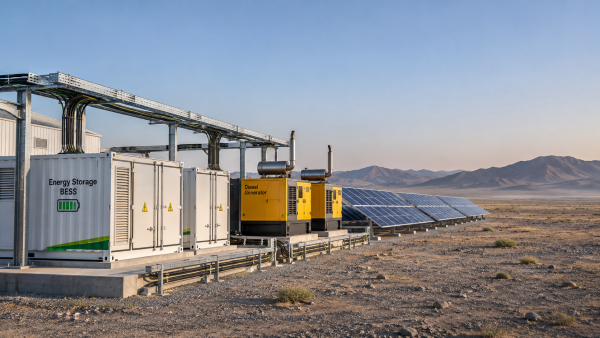
Size the remote site microgrid around power, energy, and failure scenarios
A useful design distinguishes power, the rate at which electricity is needed, from energy, the amount consumed over time. Peak power influences generator, inverter, and distribution capacity. Energy demand influences fuel use, renewable generation, and storage duration. Both must be assessed across the same operating scenarios.
Large pumps, compressors, crushers, and other motor-driven equipment deserve particular attention. Starting them can create a short demand surge and voltage disturbance that an otherwise adequate system cannot accommodate. Sequenced starts, suitable motor-starting equipment, or additional power capacity may solve the problem; the right choice depends on the process and the rest of the electrical system.
Battery sizing also needs two separate checks: whether the battery and its inverter can supply the required power, and whether stored energy lasts long enough for the intended task. A battery intended to bridge generator starts has a different duty from one intended to carry essential loads overnight. Account for usable capacity, expected degradation, operating temperature, charging opportunities, and any reserve needed for contingencies.
Then test the design against the loss of a significant component. If one generator is offline for service, can the remaining sources carry essential loads and start the next critical motor? If renewable output is low for an extended period, is there enough dependable generation and fuel? Redundancy is useful only when the remaining equipment, controls, and distribution path can actually support the required operating state.
Choose the generation and storage mix for the site
Most off-grid designs balance dispatchable generation with some combination of renewable generation and storage. The best mix depends on the load profile, local resource, fuel logistics, land availability, and the operating team’s capabilities—not simply on which component has the lowest purchase price.
For a site with expensive or unreliable fuel transport, adding renewable generation and storage can reduce exposure to deliveries. That case weakens if the site closes before the equipment can deliver enough operating value, if space is constrained, or if seasonal conditions leave long periods with little usable output. Conversely, a generator-led system may suit a short project or a site with highly variable demand, but it still needs a credible fuel and maintenance plan.
Do not size renewable capacity solely to maximize annual energy production. Production at the wrong time may be curtailed if the battery is full and site demand is low. Compare expected generation with hourly or shorter-interval demand, storage operation, and generator constraints. Where resource data is limited, test more than one plausible scenario so that a favorable assumption does not drive the investment decision.
Make the controls and electrical architecture part of the design
The controller must coordinate generators, batteries, renewable inverters, and priority loads as one system. Specify the required operating sequences: how generators start and synchronize, when batteries charge or discharge, how excess renewable generation is limited, and which loads disconnect if available power falls short.
One of the most consequential questions is which equipment establishes and maintains the electrical system’s voltage and frequency when the site is operating independently. The design must also define what happens when that equipment fails or is taken offline. A controller cannot compensate for incompatible equipment or an undefined operating mode.
Protection and distribution need the same attention as generation. Fault behavior can differ between generator-led and inverter-led operation, so protection settings and coordination must be assessed for the intended configurations. Consider cable routes, isolation points, earthing, fault detection, and whether a single switchboard or feeder failure could disable otherwise redundant sources.
Black start—the ability to restore the system without an outside electricity supply—should be an explicit requirement where it matters. Define the sequence and the auxiliary power needed to restart controls, generation, and critical loads. For sensitive processes, also define power-quality and transfer requirements at the load, rather than assuming that a microgrid controller alone prevents every interruption.
Compare suppliers on lifecycle performance and interface risk
A procurement package should give bidders the same load cases, site conditions, reliability targets, expansion assumptions, and fuel logistics. Ask each supplier to state its design assumptions and identify which loads are supported during component outages. This makes it easier to distinguish a lower-cost offer from one that has simply accepted a lower level of service.
Compare lifecycle costs using a consistent project period and operating scenario. Include equipment, installation, civil works, fuel delivery, routine maintenance, replacement components, remote support, and the cost consequences of interruption where these can be assessed. A low initial price can lose its advantage if it depends on frequent specialist visits or equipment replacement that the competing proposal includes.
Interface ownership is especially important when generation, storage, controls, and distribution come from different vendors. Assign responsibility for communications, protection settings, operating sequences, integration testing, and performance during transitions. A single system integrator can simplify coordination, but the contract still needs to define what each party must deliver.
For supplier evaluation, request relevant project references, equipment documentation, spare-parts arrangements, and evidence of local service capability. Check whether monitoring data and configuration access will be available to the owner and whether essential functions depend on a remote connection. TradeNexus Pro’s sector-focused B2B intelligence can provide context for evaluating technologies and suppliers; the project team still needs to assess each proposal against its own site requirements.
Plan commissioning and handover before construction starts
Acceptance should demonstrate the operating scenarios that shaped the design. A system that runs under normal load has not necessarily shown that it can handle a generator trip, a motor start, or a loss of communications. Put the test cases, responsibilities, pass criteria, and required records into the procurement documents.
- Verify individual equipment: Inspect installation, protection, communications, and basic operation before integrated testing.
- Test coordinated operation: Exercise generator dispatch, battery charging and discharging, renewable output control, and load prioritization under representative conditions.
- Simulate credible failures: Test agreed scenarios such as loss of a generator, transfer between operating states, and restoration after a shutdown, without placing site personnel or critical equipment at unnecessary risk.
- Complete the handover: Provide operating procedures, as-built documentation, settings, training, maintenance schedules, and an agreed inventory of critical spares.
Build the ongoing service plan around the site’s actual access constraints. Remote diagnostics can help identify a fault, but it cannot replace a technician or a spare part that takes too long to reach the site. The operating team needs clear escalation paths and enough practical training to manage normal transitions and respond safely to alarms.
Before approving the final design, bring operations, engineering, procurement, and the proposed system integrator together around the same failure scenarios. If each can explain which loads remain powered, what restores them, and who maintains the equipment, the project has a sound basis for moving from a preferred concept to a dependable off-grid power system.
Get weekly intelligence in your inbox.
No noise. No sponsored content. Pure intelligence.
 Nov 26, 2026How Negative Pressure Works in a Biosafety Cabinet to Contain AerosolsHow Negative Pressure Works in a Biosafety Cabinet to Contain Aerosols
 Nov 25, 2026Trump Administration Plans New Tariff Measures Affecting 16 Trading PartnersTrump Administration Plans New Tariff Measures Affecting 16 Trading Partners
 Nov 25, 2026UK Energy Price Cap to Rise 26%, Adding £443 to Typical Annual BillUK Energy Price Cap to Rise 26%, Adding £443 to Typical Annual Bill
 Nov 25, 2026German Solar Developers and Battery Makers Hit by Third-Quarter BankruptciesGerman Solar Developers and Battery Makers Hit by Third-Quarter Bankruptcies
 Nov 25, 2026Remote Site Microgrids: How to Plan Reliable Power for Off-Grid OperationsRemote Site Microgrids: How to Plan Reliable Power for Off-Grid Operations
 Nov 24, 2026China to Suspend Some Critical Materials Export Controls on the US Until JanuaryChina to Suspend Some Critical Materials Export Controls on the US Until January
 Nov 24, 2026Japan's Battery Storage Market Expands Amid Revenue UncertaintyJapan's Battery Storage Market Expands Amid Revenue Uncertainty
 Nov 24, 2026Ukraine Finds Over 16,000 Foreign-Made Components in Russian DronesUkraine Finds Over 16,000 Foreign-Made Components in Russian Drones
 Nov 24, 2026Bulk Pricing for Stretch Wrapping Machines: What Affects Your Quote?Bulk Pricing for Stretch Wrapping Machines: What Affects Your Quote?
 Nov 23, 2026Lidar Q3 Earnings Point to Rising Robotics Demand and Automotive WeaknessLidar Q3 Earnings Point to Rising Robotics Demand and Automotive Weakness
 Nov 23, 2026Australia's AEMO Relies on 5.3 GW of New Battery Storage for SummerAustralia's AEMO Relies on 5.3 GW of New Battery Storage for Summer
 Nov 23, 2026US Energy Storage Capacity Surpasses 200 GWhUS Energy Storage Capacity Surpasses 200 GWh
 Nov 23, 2026Smart Factory Solutions for Discrete Manufacturing: Connecting Machines and MESSmart Factory Solutions for Discrete Manufacturing: Connecting Machines and MES
 Nov 22, 2026Golmud's 60 MW Liquid Air Storage Project Uses Fully Domestic EquipmentGolmud's 60 MW Liquid Air Storage Project Uses Fully Domestic Equipment
 Nov 22, 2026Precision Engineering for Medical Devices: Tolerances and MaterialsPrecision Engineering for Medical Devices: Tolerances and Materials
 Nov 21, 2026EDF Acquires 1GWh Holloway Battery Storage Project in AustraliaEDF Acquires 1GWh Holloway Battery Storage Project in Australia
 Nov 21, 2026Choosing Carbon Steel Grades for OEM Machined Parts: Key FactorsChoosing Carbon Steel Grades for OEM Machined Parts: Key Factors
 Nov 20, 2026China’s First Virtual Power Plant Report Says Capacity Target Met EarlyChina’s First Virtual Power Plant Report Says Capacity Target Met Early
 Nov 20, 2026Choosing an OEM Heavy Equipment Manufacturer: Capabilities and Quality ChecksChoosing an OEM Heavy Equipment Manufacturer: Capabilities and Quality Checks
 Nov 19, 2026India Adds Record 8.4 GW of Open-Access Solar in First Nine Months of 2026India Adds Record 8.4 GW of Open-Access Solar in First Nine Months of 2026
 Nov 19, 2026B2B Intelligence for Green Energy: Finding New Market OpportunitiesB2B Intelligence for Green Energy: Finding New Market Opportunities
 Nov 18, 2026Global Solar Additions Hit Record in 2025, Forecast to Fall in 2026Global Solar Additions Hit Record in 2025, Forecast to Fall in 2026
 Nov 18, 2026Supply Chain Visibility for Supplier Management: How to Spot Delivery RisksSupply Chain Visibility for Supplier Management: How to Spot Delivery Risks
 Nov 17, 2026US Battery Storage Deployment Tops 200 GWh; 74 GWh Forecast for 2026US Battery Storage Deployment Tops 200 GWh; 74 GWh Forecast for 2026
 Nov 17, 2026Choosing a Solar Tracker for Ground-Mount PV: Site and Design FactorsChoosing a Solar Tracker for Ground-Mount PV: Site and Design Factors
 Nov 16, 2026US Polysilicon and Solar Product Tariffs and Import Price Floor Take Effect December 4US Polysilicon and Solar Product Tariffs and Import Price Floor Take Effect December 4
 Nov 16, 2026How Industrial Buyers Can Evaluate B2B Intelligence Reports on SuppliersHow Industrial Buyers Can Evaluate B2B Intelligence Reports on Suppliers