
Peak Shaving and Grid Stability: 2026 ROI Analysis of C&I Energy Storage Systems in Global Manufacturing
The Impending Crisis in Industrial Power Management
As the global manufacturing sector aggressively transitions toward electrification and automation, industrial facilities are encountering a critical bottleneck: energy volatility. In regions spanning Europe, North America, and Southeast Asia, grid instability coupled with volatile time-of-use (TOU) electricity pricing is severely eroding operational margins. For energy-intensive sectors—ranging from semiconductor foundries to heavy machinery assembly—a momentary voltage sag or an unmanaged peak demand charge can result in hundreds of thousands of dollars in excess operational expenditures (OPEX) annually.

Historically, industrial parks relied on diesel generators and continuous grid draw. However, stringent carbon emission regulations and the unreliability of aging localized grids have rendered these traditional models obsolete. The engineering consensus for 2026 and beyond dictates a paradigm shift toward localized micro-grids anchored by high-capacity, heavy-duty battery infrastructures.
Deconstructing the Financial Mechanics of Peak Shaving
The primary financial driver for deploying a Commercial and Industrial Energy Storage System (C&I ESS) is "peak shaving." Utility companies penalize industrial consumers heavily for their maximum power draw during peak hours. By intelligently discharging stored energy during these high-tariff windows, a facility can drastically flatten its demand curve.
Data from recent European manufacturing deployments indicates that an optimized ESS can reduce peak demand charges by up to 40%. Furthermore, when integrated with localized solar photovoltaic (PV) arrays, the system enables "load shifting"—storing excess solar generation during midday for utilization during evening production shifts. The Return on Investment (ROI) for these systems, initially projected at 7 to 9 years, has now compressed to a highly attractive 3.5 to 5 years, driven by advancements in battery chemistry and intelligent Energy Management Systems (EMS).
Evaluating Battery Chemistry: The Ascendancy of LFP in Heavy Industry
Not all battery chemistries are engineered for the harsh realities of industrial environments. While NMC (Nickel Manganese Cobalt) batteries dominate the consumer electric vehicle market due to high energy density, they present unacceptable thermal runaway risks for static industrial deployments.
The industry standard has unequivocally shifted to Lithium Iron Phosphate (LFP) technology. LFP cells offer a superior thermal stability threshold, dramatically reducing fire risks in enclosed factory environments. Moreover, LFP chemistry delivers a lifecycle exceeding 6,000 to 8,000 charge/discharge cycles with minimal degradation, ensuring a functional operational lifespan of over 10 to 15 years.
The Vendor Equation: Seeking Precision and Pedigree
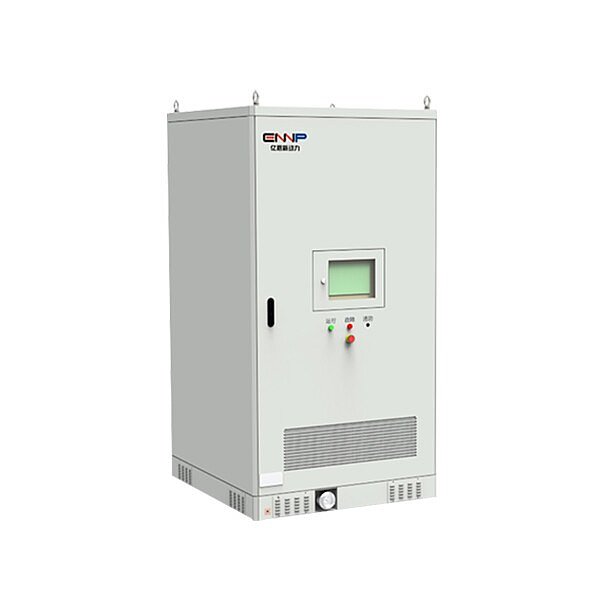
The procurement of a C&I ESS is not merely purchasing a battery; it is an investment in a complex, multi-decade power architecture. Overseas procurement directors are increasingly moving away from generic integrators and are demanding systems backed by deep engineering pedigrees.
A prime example of this structural shift in the supply chain is the emergence of specialized technology-intensive enterprises rooted in heavy machinery and precision manufacturing. For instance, facilities requiring zero-compromise thermal management and robust cabinet architectures are turning to specialized
Conclusion: The Strategic Imperative of Energy Independence
Deploying an industrial-grade energy storage system is no longer merely a sustainability initiative; it is a fundamental pillar of operational resilience. Facilities that delay the integration of high-performance ESS infrastructures will inevitably face compounding competitive disadvantages due to escalating energy costs and grid-related downtimes. By leveraging LFP-based solutions engineered by manufacturers with proven industrial pedigrees, procurement teams can secure long-term profitability and operational continuity.
Get weekly intelligence in your inbox.
No noise. No sponsored content. Pure intelligence.
 Oct 08, 2026How Digital Health Improves Diagnostic Accuracy and Workflow in Clinical LabsHow Digital Health Improves Diagnostic Accuracy and Workflow in Clinical Labs
 Oct 07, 2026Selecting Voice Picking Systems for German Warehouses: Integration, Languages and ROISelecting Voice Picking Systems for German Warehouses: Integration, Languages and ROI
 Oct 06, 2026How to Choose Last Mile Dispatch Software for On-Time Delivery at ScaleHow to Choose Last Mile Dispatch Software for On-Time Delivery at Scale
 Oct 05, 2026Vietnam’s Consumer Electronics Market: Demand Shifts and Sourcing OpportunitiesVietnam’s Consumer Electronics Market: Demand Shifts and Sourcing Opportunities
 Oct 04, 2026Digital Health Investment Priorities for Providers: Improving Access, Outcomes, and EfficiencyDigital Health Investment Priorities for Providers: Improving Access, Outcomes, and Efficiency
 Oct 03, 2026How to Specify an FR4 Custom PCB Board for High-Voltage and High-Heat DesignsHow to Specify an FR4 Custom PCB Board for High-Voltage and High-Heat Designs
 Oct 02, 2026ERP Software Market Intelligence: Adoption, Pricing, and Vendor Signals to WatchERP Software Market Intelligence: Adoption, Pricing, and Vendor Signals to Watch
 Oct 01, 2026How to Select Calibrated Temperature Data Loggers for GMP Cold Storage MonitoringHow to Select Calibrated Temperature Data Loggers for GMP Cold Storage Monitoring
 Sep 30, 2026Custom Molded Rubber Pricing: What Drives Unit Cost and Tooling Fees?Custom Molded Rubber Pricing: What Drives Unit Cost and Tooling Fees?
 Sep 29, 2026How to Evaluate Energy Management Software Vendors for Multi-Site OperationsHow to Evaluate Energy Management Software Vendors for Multi-Site Operations
 Sep 28, 2026How to Select a DIN Rail Smart Meter for Multi-Circuit Energy MonitoringHow to Select a DIN Rail Smart Meter for Multi-Circuit Energy Monitoring
 Sep 27, 2026TWS Earbuds in Vietnam: Demand Drivers, Price Tiers, and Retail Channel OpportunitiesTWS Earbuds in Vietnam: Demand Drivers, Price Tiers, and Retail Channel Opportunities
 Sep 26, 2026How UAE Clinics Can Qualify a Smart Glucometer Supplier for Accuracy and ComplianceHow UAE Clinics Can Qualify a Smart Glucometer Supplier for Accuracy and Compliance
 Sep 25, 2026Buying Aesthetic Lasers in the USA: FDA Status, Wavelengths, and Service SupportBuying Aesthetic Lasers in the USA: FDA Status, Wavelengths, and Service Support
 Sep 24, 2026Laser Cutting Brass Sheet: How to Prevent Burrs and Heat Marks on Thin PartsLaser Cutting Brass Sheet: How to Prevent Burrs and Heat Marks on Thin Parts
 Sep 23, 2026How to Choose Lightweight ANC Headphones for Comfortable All-Day TravelHow to Choose Lightweight ANC Headphones for Comfortable All-Day Travel
 Sep 22, 2026IPX5 TWS Bluetooth Earbuds: What Protection Do They Offer for Workouts?IPX5 TWS Bluetooth Earbuds: What Protection Do They Offer for Workouts?
 Sep 21, 2026What to Look for in a Grid Integration Company for Utility-Scale Solar ProjectsWhat to Look for in a Grid Integration Company for Utility-Scale Solar Projects
 Sep 20, 2026Microgrid Controller Pricing: What Drives Cost in Commercial Energy Projects?Microgrid Controller Pricing: What Drives Cost in Commercial Energy Projects?
 Sep 19, 2026How to Choose a GaN Charger for Laptops Without Compromising Power or PortabilityHow to Choose a GaN Charger for Laptops Without Compromising Power or Portability
 Sep 18, 2026Floating Solar Farm Costs: CAPEX, OPEX, and the Site Factors That Shape ROIFloating Solar Farm Costs: CAPEX, OPEX, and the Site Factors That Shape ROI
 Sep 17, 2026Drone Delivery Solutions for Last-Mile Routes: Site, Payload, and Range PlanningDrone Delivery Solutions for Last-Mile Routes: Site, Payload, and Range Planning
 Sep 16, 2026When Low-Volume Electronics Manufacturing Makes More Sense Than Mass ProductionWhen Low-Volume Electronics Manufacturing Makes More Sense Than Mass Production
 Sep 15, 2026Wholesale WiFi Smart Switches: What Buyers Should Verify Before OrderingWholesale WiFi Smart Switches: What Buyers Should Verify Before Ordering
 Sep 14, 2026How to Select IoT Sensors for Reliable Monitoring in Harsh Industrial EnvironmentsHow to Select IoT Sensors for Reliable Monitoring in Harsh Industrial Environments
 Sep 13, 2026How Procurement Teams Can Improve Supplier Reliability With Supply Chain VisibilityHow Procurement Teams Can Improve Supplier Reliability With Supply Chain Visibility
 Sep 12, 2026Smart Manufacturing Trends 2026: What Leaders Should Prioritize for ROISmart Manufacturing Trends 2026: What Leaders Should Prioritize for ROI



























