Ecuador Cuts Colombia Safeguard Duty to 75% as PV Re-export Window Emerges
On June 1, 2026, Ecuador announced that it would reduce its safeguard duty on goods imported from Colombia from 100% to 75%. The change does not directly target Chinese products, but it matters to the solar PV supply chain because Colombia is becoming an important transit point for Chinese PV modules moving by land and Pacific shipping routes into Andean Community (CAN) markets. For project developers, traders, procurement teams, and supply chain service providers, the key issue is whether this softer tariff setting could translate into more indirect module sourcing opportunities for Ecuador’s solar power projects.
What the June 1 policy change confirms
The confirmed development is limited but commercially relevant. Ecuador stated on June 1, 2026 that the safeguard duty applied to imports from Colombia would be lowered from 100% to 75%.
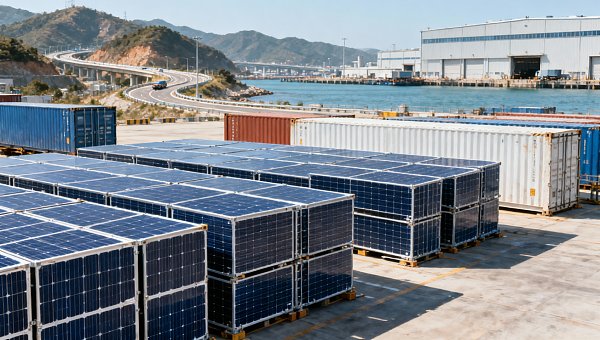
The available information also indicates that the measure does not directly concern Chinese-origin goods. At the same time, Colombia is described as an increasingly important re-export and transit location for Chinese solar PV modules entering CAN markets through combined overland and Pacific routes.
Based on the event summary provided, the immediate point of attention is that the lower duty level could improve the conditions for indirect procurement of Chinese modules by solar power projects in Ecuador.
Why the adjustment matters across the PV chain
For trading and channel companies, route economics may shift
From an industry perspective, companies involved in cross-border trade may be among the first to assess the practical effect of the tariff reduction. Their exposure lies in route selection, landed-cost calculations, and the commercial viability of using Colombia as an intermediate node before goods move toward Ecuador.
What deserves closer attention is not only the duty change itself, but also whether buyers begin to treat Colombian transit routes as more workable for solar PV module supply into Ecuador-linked projects.
For project procurement teams, indirect sourcing options may widen
Procurement teams connected to solar power projects in Ecuador may see this as a possible opening rather than a completed market shift. If Colombia continues to function as a relevant transit point for Chinese modules, a lower safeguard duty on Colombian goods may influence how some projects compare sourcing structures, delivery paths, and supplier discussions.
The business impact would mainly appear in procurement planning, supplier engagement, and timing decisions rather than in any automatic change in project demand.
For logistics and supply chain service providers, compliance becomes central
Supply chain service providers may be affected through documentation handling, routing design, and coordination between exporters, intermediaries, and project buyers. Analysis shows that when a tariff adjustment creates a potential re-export opening, the operational focus often moves quickly to document consistency, origin-related records, and shipment planning.
In this case, service providers should watch for any further clarification that could affect how goods transiting through Colombia are treated in practice.
What companies should watch next
Further official wording and implementation detail
The first practical question is whether subsequent official language adds detail on product scope, implementation conditions, or treatment in customs practice. A headline tariff reduction can matter commercially, but execution details determine whether transactions can actually move forward smoothly.
The gap between policy signal and real orders
Observably, this development should not be read as confirmed demand growth by itself. Companies should distinguish between a softer policy environment and actual purchasing activity from Ecuador solar projects. The former is a signal; the latter depends on project-level procurement behavior.
Document readiness and supplier coordination
For companies seeking to serve Ecuador-related demand through Colombian channels, attention should turn to supplier qualifications, trade documents, delivery schedules, and communication with counterparties. If interest in indirect sourcing rises, execution quality may become as important as price.
Contingency planning for route selection
Businesses involved in PV module movement should also prepare alternative logistics and commercial scenarios. Analysis shows that tariff relief can create opportunity, but market participants still need workable fallback plans if implementation turns out to be narrower or slower than expected.
How this development is best understood at this stage
Analysis shows that this is better understood as a conditional trade signal than as a settled market outcome. The policy adjustment does not directly change the status of Chinese products, yet it may improve the attractiveness of Colombia-linked transit structures for solar PV modules serving Ecuador.
What deserves closer attention is the interaction between tariff policy, regional transit roles, and project procurement behavior. The significance of this update lies less in an immediate volume change and more in the possibility that route-based sourcing strategies could gain new attention in the CAN context.
For that reason, the event remains one that the industry should continue to monitor rather than treat as a definitive shift in regional PV trade flows.
A measured takeaway for the market
The June 1 move by Ecuador introduces a notable change in the trade environment for goods arriving from Colombia and creates a plausible new angle for indirect procurement of Chinese solar PV modules into Ecuador-linked projects. Even so, the current information supports a cautious reading.
It is more appropriate to understand this as an emerging opening with operational relevance for traders, project buyers, and supply chain intermediaries, rather than as proof that procurement patterns have already changed. The next stage of industry attention should center on implementation detail, transaction feasibility, and whether project-side demand begins to respond.
Basis of this article and points for continued verification
This article is based on the user-provided news title, event date, and event summary regarding Ecuador’s June 1, 2026 decision to reduce its safeguard duty on Colombian goods from 100% to 75%, and the possible implications for indirect sourcing of Chinese solar PV modules through Colombia into CAN markets.
No specific official source link was provided in the input, so the exact official publication and any related implementation text still require ongoing verification. For this type of industry update, commonly relevant source categories include government announcements, company disclosures, industry association information, authoritative media reporting, and formal trade or standards documents.
Further monitoring should focus on whether additional official clarification emerges, whether customs or trade practice reflects the announced adjustment, and whether Ecuador solar project procurement shows concrete interest in Colombia-linked module sourcing routes.
Get weekly intelligence in your inbox.
No noise. No sponsored content. Pure intelligence.
 Sep 20, 2026Microgrid Controller Pricing: What Drives Cost in Commercial Energy Projects?Microgrid Controller Pricing: What Drives Cost in Commercial Energy Projects?
 Sep 19, 2026How to Choose a GaN Charger for Laptops Without Compromising Power or PortabilityHow to Choose a GaN Charger for Laptops Without Compromising Power or Portability
 Sep 18, 2026Floating Solar Farm Costs: CAPEX, OPEX, and the Site Factors That Shape ROIFloating Solar Farm Costs: CAPEX, OPEX, and the Site Factors That Shape ROI
 Sep 17, 2026Drone Delivery Solutions for Last-Mile Routes: Site, Payload, and Range PlanningDrone Delivery Solutions for Last-Mile Routes: Site, Payload, and Range Planning
 Sep 16, 2026When Low-Volume Electronics Manufacturing Makes More Sense Than Mass ProductionWhen Low-Volume Electronics Manufacturing Makes More Sense Than Mass Production
 Sep 15, 2026Wholesale WiFi Smart Switches: What Buyers Should Verify Before OrderingWholesale WiFi Smart Switches: What Buyers Should Verify Before Ordering
 Sep 14, 2026How to Select IoT Sensors for Reliable Monitoring in Harsh Industrial EnvironmentsHow to Select IoT Sensors for Reliable Monitoring in Harsh Industrial Environments
 Sep 13, 2026How Procurement Teams Can Improve Supplier Reliability With Supply Chain VisibilityHow Procurement Teams Can Improve Supplier Reliability With Supply Chain Visibility
 Sep 12, 2026Smart Manufacturing Trends 2026: What Leaders Should Prioritize for ROISmart Manufacturing Trends 2026: What Leaders Should Prioritize for ROI
 Sep 11, 2026B2B Market Analysis: How Buyers Evaluate Suppliers, Pricing, and Delivery RiskB2B Market Analysis: How Buyers Evaluate Suppliers, Pricing, and Delivery Risk
 Sep 10, 2026Residential Solar Kits in Canada: How to Size a System for Your Home and ClimateResidential Solar Kits in Canada: How to Size a System for Your Home and Climate
 Sep 09, 2026How to Specify a Syringe Assembly Line for High-Volume Sterile ProductionHow to Specify a Syringe Assembly Line for High-Volume Sterile Production
 Sep 08, 2026How to Evaluate Warehouse Robotics System Suppliers for Reliable Multi-Site DeploymentHow to Evaluate Warehouse Robotics System Suppliers for Reliable Multi-Site Deployment
 Sep 07, 2026Renewable Geothermal Energy Explained: How It Works for Heating and PowerRenewable Geothermal Energy Explained: How It Works for Heating and Power
 Sep 07, 2026How to Choose an Industrial Packaging Robot Manufacturer for Your Production LineHow to Choose an Industrial Packaging Robot Manufacturer for Your Production Line
 Sep 05, 2026How to Evaluate a Turnkey Hydro Turbine Generator Supplier for Remote Power ProjectsHow to Evaluate a Turnkey Hydro Turbine Generator Supplier for Remote Power Projects
 Sep 04, 2026Automated Ultrasonic Welding for Thermoplastic Assemblies: Process Controls That MatterAutomated Ultrasonic Welding for Thermoplastic Assemblies: Process Controls That Matter
 Sep 03, 2026Energy Forecasting for Grid Planning: Sizing Solar and Storage CapacityEnergy Forecasting for Grid Planning: Sizing Solar and Storage Capacity
 Sep 02, 2026Which Metrics Should an Energy Analytics Dashboard Track for Factory Energy Management?Which Metrics Should an Energy Analytics Dashboard Track for Factory Energy Management?
 Sep 01, 2026How Warehouse Voice Picking Improves Accuracy and Throughput in Order FulfillmentHow Warehouse Voice Picking Improves Accuracy and Throughput in Order Fulfillment
 Aug 31, 2026How to Automate Dropshipping Order Processing Without Overselling StockHow to Automate Dropshipping Order Processing Without Overselling Stock
 Aug 30, 2026How to Evaluate a Smart Lighting Supplier for Multi-Site Commercial ProjectsHow to Evaluate a Smart Lighting Supplier for Multi-Site Commercial Projects
 Aug 29, 2026Recent Advances in Smart Manufacturing and Materials Reshaping Factory InvestmentRecent Advances in Smart Manufacturing and Materials Reshaping Factory Investment
 Aug 29, 2026Selecting Lightweight Aluminum Extrusions for Strength-Critical Industrial DesignsSelecting Lightweight Aluminum Extrusions for Strength-Critical Industrial Designs
 Aug 29, 2026Vertical Powder Anodizing Explained: Process Controls for Uniform Coating QualityVertical Powder Anodizing Explained: Process Controls for Uniform Coating Quality
 Aug 29, 2026PV Module Product Due Diligence: What Buyers Should Verify Before ContractingPV Module Product Due Diligence: What Buyers Should Verify Before Contracting
 Aug 29, 2026Solar Design for Challenging Terrain: Managing Slope, Soil, and Shading RisksSolar Design for Challenging Terrain: Managing Slope, Soil, and Shading Risks