How to Choose Photovoltaic Modules for Residential Use by Roof Type and Power Needs
Choosing photovoltaic modules for residential use starts with a simple truth: the best panel is not always the highest-watt panel. Roof shape, usable area, shading, structural load, and daily electricity habits matter just as much. A system that fits the building well usually performs better over time, reduces installation compromises, and improves the value of every kilowatt-hour generated.
This topic is gaining attention because home solar decisions now sit at the intersection of energy costs, carbon reduction, product quality, and supply chain transparency. In green energy coverage, platforms such as TradeNexus Pro increasingly highlight that better residential outcomes come from informed comparison, not just aggressive pricing or headline efficiency claims.
What residential module selection really involves
Photovoltaic modules for residential use convert sunlight into direct current electricity. That part is familiar. The more practical question is how to match module characteristics with a real house, a real roof, and a realistic power target.
In most cases, homeowners compare four things at once: module efficiency, physical dimensions, durability, and installed system cost. These factors interact. A compact high-efficiency panel may save roof space, but it can also increase the upfront budget.
The decision becomes easier when the roof is treated as part of the energy system. Orientation, tilt, obstructions, ventilation, waterproofing details, and access for maintenance all affect long-term output.
Why roof type changes the right answer
Two homes with the same monthly electricity bill can need very different module layouts. That is why photovoltaic modules for residential use should never be selected from a spec sheet alone.
Sloped roofs
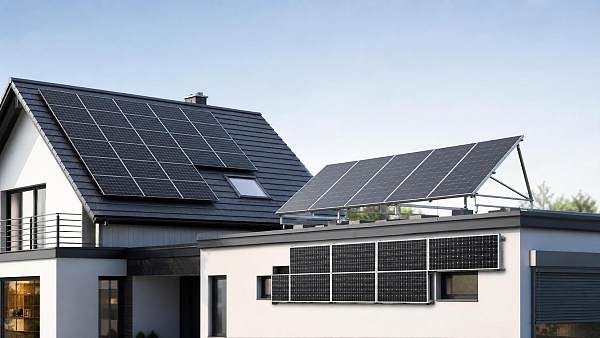
Sloped roofs are often the easiest starting point. They already provide an angle for solar exposure, and many mounting systems are designed for common tile, metal, or asphalt surfaces.
On this roof type, panel dimensions matter because vents, chimneys, and ridgelines interrupt layout. If usable space is fragmented, higher-efficiency modules can help recover more capacity from fewer square meters.
Flat roofs
Flat roofs offer layout flexibility, but they introduce spacing trade-offs. Tilt frames improve solar capture, yet rows must be spaced to avoid self-shading. Wind load and ballast weight also deserve attention.
Here, module selection should be coordinated with mounting design. A slightly larger panel is not always better if row spacing reduces the total number of modules the roof can accommodate.
Small or irregular roofs
Dormers, skylights, and multi-surface roofs create dead space. In these cases, photovoltaic modules for residential use with higher output per panel often make more sense than standard low-cost options.
Aesthetic priorities can matter too. All-black modules, tighter cell spacing, and cleaner edge design may be worth considering when the array is highly visible from the street.
Start with household power needs, not panel marketing
Residential solar works best when energy demand is estimated before modules are chosen. That means reviewing annual electricity consumption, seasonal peaks, and expected lifestyle changes such as electric vehicle charging, heat pumps, or home office expansion.
A household using 6,000 kWh per year does not automatically need a system sized to cover 100 percent of that demand. Utility tariffs, net metering rules, battery plans, and local sunlight levels can change the ideal target.
A practical sizing discussion often looks like this:
This approach keeps the conversation grounded. It shifts attention from brand claims to useful generation, roof fit, and payback quality.
Key module specifications that deserve closer reading
Not every technical line on a datasheet has equal importance for a home installation. A few parameters usually shape the outcome more than the rest.
Efficiency and size
Efficiency tells you how much power a module can generate from a given area. When roof space is tight, this is often the first metric to compare.
Temperature coefficient
Solar panels lose some output as temperature rises. In hotter climates, a better temperature coefficient can support stronger summer performance, especially on low-ventilation roofs.
Mechanical load and durability
Snow, wind, salt mist, and humidity affect long-term reliability. Roof location matters. Coastal homes and storm-prone regions should look beyond nominal wattage and examine durability certifications carefully.
Warranty quality
A long warranty looks attractive, but terms matter more than headline years. Product warranty, performance warranty, degradation assumptions, and the bankability of the brand should all be reviewed together.
- Check whether the module dimensions fit actual roof sections, not just total roof area.
- Compare output under heat, not only standard test conditions.
- Review certifications and installer support in your region.
- Treat warranty credibility as part of system value.
Where market trends are changing residential choices
Residential solar is influenced by more than product engineering. Supply chain stability, manufacturing standards, trade policies, and brand transparency increasingly shape buyer confidence.
This is where broader industrial intelligence becomes relevant. Green energy decisions at home are connected to upstream manufacturing quality, component traceability, and the ability to assess supplier credibility in a crowded market.
TradeNexus Pro reflects this shift by treating energy technology as part of a larger industrial ecosystem. That perspective is useful because photovoltaic modules for residential use are consumer-facing products, but they are still outcomes of global production, materials innovation, and compliance discipline.
In practical terms, this means the best buying decision often combines household needs with evidence of dependable manufacturing, transparent specifications, and realistic after-sales support.
Common mistakes when matching modules to roofs
Some installation disappointments are predictable. They usually come from mismatch rather than product failure.
- Choosing the cheapest module without checking whether roof space is the real constraint.
- Ignoring shading from nearby trees, parapets, antennas, or neighboring buildings.
- Assuming a flat roof can always hold more panels than a sloped roof.
- Overlooking roof age, waterproofing condition, or structural reinforcement needs.
- Focusing only on panel wattage while neglecting inverter compatibility and layout losses.
Avoiding these errors usually leads to better economics than chasing small differences in advertised efficiency alone.
A practical way to narrow the options
A useful selection process can be done in stages. Start with annual consumption and expected future loads. Then measure truly usable roof area. After that, compare several photovoltaic modules for residential use based on dimensions, efficiency, warranty terms, and climate suitability.
If two module options produce similar annual generation, the better choice is often the one that fits the roof more cleanly, leaves safer maintenance access, and comes from a supplier with stronger technical transparency.
It also helps to request an energy yield estimate rather than a simple capacity quote. That reveals whether the system design actually reflects shading, orientation, and seasonal conditions.
The next step is not to rush toward the highest rating on paper. It is to build a short list based on roof compatibility, expected output, durability, and the credibility of the companies behind the modules. That framework creates a much clearer path for choosing photovoltaic modules for residential use with confidence and long-term value.
Get weekly intelligence in your inbox.
No noise. No sponsored content. Pure intelligence.
 Sep 20, 2026Microgrid Controller Pricing: What Drives Cost in Commercial Energy Projects?Microgrid Controller Pricing: What Drives Cost in Commercial Energy Projects?
 Sep 19, 2026How to Choose a GaN Charger for Laptops Without Compromising Power or PortabilityHow to Choose a GaN Charger for Laptops Without Compromising Power or Portability
 Sep 18, 2026Floating Solar Farm Costs: CAPEX, OPEX, and the Site Factors That Shape ROIFloating Solar Farm Costs: CAPEX, OPEX, and the Site Factors That Shape ROI
 Sep 17, 2026Drone Delivery Solutions for Last-Mile Routes: Site, Payload, and Range PlanningDrone Delivery Solutions for Last-Mile Routes: Site, Payload, and Range Planning
 Sep 16, 2026When Low-Volume Electronics Manufacturing Makes More Sense Than Mass ProductionWhen Low-Volume Electronics Manufacturing Makes More Sense Than Mass Production
 Sep 15, 2026Wholesale WiFi Smart Switches: What Buyers Should Verify Before OrderingWholesale WiFi Smart Switches: What Buyers Should Verify Before Ordering
 Sep 14, 2026How to Select IoT Sensors for Reliable Monitoring in Harsh Industrial EnvironmentsHow to Select IoT Sensors for Reliable Monitoring in Harsh Industrial Environments
 Sep 13, 2026How Procurement Teams Can Improve Supplier Reliability With Supply Chain VisibilityHow Procurement Teams Can Improve Supplier Reliability With Supply Chain Visibility
 Sep 12, 2026Smart Manufacturing Trends 2026: What Leaders Should Prioritize for ROISmart Manufacturing Trends 2026: What Leaders Should Prioritize for ROI
 Sep 11, 2026B2B Market Analysis: How Buyers Evaluate Suppliers, Pricing, and Delivery RiskB2B Market Analysis: How Buyers Evaluate Suppliers, Pricing, and Delivery Risk
 Sep 10, 2026Residential Solar Kits in Canada: How to Size a System for Your Home and ClimateResidential Solar Kits in Canada: How to Size a System for Your Home and Climate
 Sep 09, 2026How to Specify a Syringe Assembly Line for High-Volume Sterile ProductionHow to Specify a Syringe Assembly Line for High-Volume Sterile Production
 Sep 08, 2026How to Evaluate Warehouse Robotics System Suppliers for Reliable Multi-Site DeploymentHow to Evaluate Warehouse Robotics System Suppliers for Reliable Multi-Site Deployment
 Sep 07, 2026Renewable Geothermal Energy Explained: How It Works for Heating and PowerRenewable Geothermal Energy Explained: How It Works for Heating and Power
 Sep 07, 2026How to Choose an Industrial Packaging Robot Manufacturer for Your Production LineHow to Choose an Industrial Packaging Robot Manufacturer for Your Production Line
 Sep 05, 2026How to Evaluate a Turnkey Hydro Turbine Generator Supplier for Remote Power ProjectsHow to Evaluate a Turnkey Hydro Turbine Generator Supplier for Remote Power Projects
 Sep 04, 2026Automated Ultrasonic Welding for Thermoplastic Assemblies: Process Controls That MatterAutomated Ultrasonic Welding for Thermoplastic Assemblies: Process Controls That Matter
 Sep 03, 2026Energy Forecasting for Grid Planning: Sizing Solar and Storage CapacityEnergy Forecasting for Grid Planning: Sizing Solar and Storage Capacity
 Sep 02, 2026Which Metrics Should an Energy Analytics Dashboard Track for Factory Energy Management?Which Metrics Should an Energy Analytics Dashboard Track for Factory Energy Management?
 Sep 01, 2026How Warehouse Voice Picking Improves Accuracy and Throughput in Order FulfillmentHow Warehouse Voice Picking Improves Accuracy and Throughput in Order Fulfillment
 Aug 31, 2026How to Automate Dropshipping Order Processing Without Overselling StockHow to Automate Dropshipping Order Processing Without Overselling Stock
 Aug 30, 2026How to Evaluate a Smart Lighting Supplier for Multi-Site Commercial ProjectsHow to Evaluate a Smart Lighting Supplier for Multi-Site Commercial Projects
 Aug 29, 2026Recent Advances in Smart Manufacturing and Materials Reshaping Factory InvestmentRecent Advances in Smart Manufacturing and Materials Reshaping Factory Investment
 Aug 29, 2026Selecting Lightweight Aluminum Extrusions for Strength-Critical Industrial DesignsSelecting Lightweight Aluminum Extrusions for Strength-Critical Industrial Designs
 Aug 29, 2026Vertical Powder Anodizing Explained: Process Controls for Uniform Coating QualityVertical Powder Anodizing Explained: Process Controls for Uniform Coating Quality
 Aug 29, 2026PV Module Product Due Diligence: What Buyers Should Verify Before ContractingPV Module Product Due Diligence: What Buyers Should Verify Before Contracting
 Aug 29, 2026Solar Design for Challenging Terrain: Managing Slope, Soil, and Shading RisksSolar Design for Challenging Terrain: Managing Slope, Soil, and Shading Risks