Remote Patient Monitoring vs In-Clinic Follow-Up: Which Conditions Fit Best?
Remote Patient Monitoring vs In-Clinic Follow-Up: Which Conditions Fit Best?
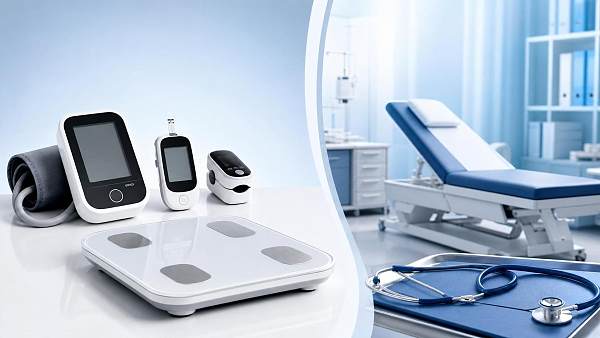
As healthcare systems balance efficiency, cost, and outcomes, care models are shifting fast.
Remote patient monitoring is now moving from pilot programs to operational strategy.
At the same time, in-clinic follow-up still matters for many conditions and decision points.
The real question is not which model wins overall.
It is which conditions fit remote patient monitoring best, and where in-clinic follow-up remains essential.
That distinction matters when evaluating healthcare technology, service design, and long-term rollout economics.
A practical assessment starts with clinical predictability, data usefulness, escalation risk, and patient behavior.
When those factors align, remote patient monitoring can improve continuity while reducing unnecessary visits.
When they do not, in-clinic follow-up provides the context and intervention depth that remote tools cannot replace.
What Makes a Condition Suitable for Remote Patient Monitoring?
Not every diagnosis benefits equally from remote patient monitoring.
The best-fit conditions usually share a few characteristics.
- They rely on measurable indicators such as blood pressure, glucose, oxygen saturation, or weight.
- Their progression can be tracked through repeated data, not just one-time physical examination.
- Early changes create useful warning signals before the situation becomes urgent.
- Patients can usually engage with devices at home without heavy clinical supervision.
- Clear escalation rules can direct cases back to in-clinic follow-up when needed.
This is why remote patient monitoring works best as a structured care layer, not a blanket replacement model.
In practical business terms, success depends on whether the data stream supports action.
If collected data cannot change triage, therapy, or timing, the program may create noise instead of value.
Conditions That Fit Remote Patient Monitoring Best
Several condition groups repeatedly show strong alignment with remote patient monitoring.
These are often chronic, data-rich, and highly influenced by daily management behavior.
Hypertension and cardiovascular risk
Hypertension is one of the clearest use cases for remote patient monitoring.
Home blood pressure readings often reflect real-life patterns better than isolated clinic measurements.
That helps care teams spot poor control, medication response, and adherence problems earlier.
In-clinic follow-up remains important for diagnosis, medication changes, and high-risk symptom review.
Diabetes management
Remote patient monitoring also fits diabetes, especially when glucose data is collected consistently.
The value comes from trend visibility, not just isolated readings.
Care teams can respond faster to unstable patterns, diet issues, or therapy gaps.
Still, retinal exams, foot exams, and complex treatment decisions require in-clinic follow-up.
Heart failure and post-discharge monitoring
Heart failure is another high-potential area for remote patient monitoring.
Weight shifts, blood pressure changes, and symptom reporting can signal deterioration early.
That makes remote patient monitoring especially valuable after hospital discharge.
However, the model only works well with defined escalation pathways and responsive clinical teams.
COPD and respiratory conditions
For COPD and selected respiratory patients, remote patient monitoring can support stability tracking.
Pulse oximetry, symptom logs, and activity data can reveal worsening conditions sooner.
Yet patients with acute distress, unclear diagnosis, or frequent exacerbations may still need close in-clinic follow-up.
When In-Clinic Follow-Up Still Delivers Better Clinical Value
There are many situations where in-clinic follow-up should remain the lead pathway.
This becomes more obvious when diagnosis is uncertain or physical assessment drives decision quality.
- New or undifferentiated symptoms that need examination, imaging, or laboratory confirmation.
- Complex post-surgical recovery requiring wound inspection, mobility review, or procedural adjustment.
- Conditions with high risk of sudden deterioration and limited warning value from home data.
- Cases involving cognitive barriers, poor device adherence, or weak digital access.
- Specialties where touch, observation, and nuanced interaction strongly affect diagnosis.
In these settings, remote patient monitoring may still support care, but not replace direct follow-up.
A hybrid model often performs better than an either-or choice.
A Simple Evaluation Framework for Technology Adoption
When reviewing a remote patient monitoring solution, condition fit should come before feature lists.
A useful evaluation framework can stay simple.
This kind of framework helps separate promising use cases from technology that looks good only in demos.
It also aligns purchasing logic with care delivery reality.
Operational Risks That Can Undermine Remote Patient Monitoring
Even strong clinical use cases can fail if operations are weak.
From a solution assessment view, several risks deserve close attention.
- Alert overload can overwhelm staff if thresholds are too broad.
- Poor device adherence can distort clinical confidence and reporting value.
- Disconnected systems can trap data outside normal care workflows.
- Unclear ownership can slow response when readings cross risk thresholds.
- Overpromising replacement value can create unsafe expectations around in-clinic follow-up.
This is where many remote patient monitoring deployments lose momentum.
The technology may work, but the operating model does not.
A realistic adoption plan should test clinical pathways, staffing response, and data governance before scale.
Where the Best Business Case Usually Appears
The strongest business case for remote patient monitoring usually appears in repeatable, high-volume care pathways.
Chronic disease management is the most obvious example.
So is post-discharge surveillance for patients with predictable risk markers.
In these areas, remote patient monitoring can support capacity planning, better intervention timing, and stronger patient retention.
More importantly, the value story becomes measurable.
That includes visit reduction, readmission control, clinician productivity, and patient engagement continuity.
By contrast, conditions with low monitoring relevance or highly variable care pathways produce weaker return signals.
Conclusion: Match the Model to the Condition
Remote patient monitoring is not a universal substitute for in-clinic follow-up.
Its best use appears where continuous home data can support earlier, better, and more efficient clinical decisions.
Hypertension, diabetes, heart failure, and selected respiratory conditions remain the strongest candidates.
Meanwhile, uncertain diagnoses, complex examinations, and high-acuity cases still depend on in-clinic follow-up.
The smartest strategy is usually a condition-based hybrid model.
Start by identifying where remote patient monitoring produces actionable data, clear escalation logic, and scalable operational impact.
That approach creates a far stronger foundation for healthcare technology adoption than chasing remote care as a trend alone.
Get weekly intelligence in your inbox.
No noise. No sponsored content. Pure intelligence.
 Sep 20, 2026Microgrid Controller Pricing: What Drives Cost in Commercial Energy Projects?Microgrid Controller Pricing: What Drives Cost in Commercial Energy Projects?
 Sep 19, 2026How to Choose a GaN Charger for Laptops Without Compromising Power or PortabilityHow to Choose a GaN Charger for Laptops Without Compromising Power or Portability
 Sep 18, 2026Floating Solar Farm Costs: CAPEX, OPEX, and the Site Factors That Shape ROIFloating Solar Farm Costs: CAPEX, OPEX, and the Site Factors That Shape ROI
 Sep 17, 2026Drone Delivery Solutions for Last-Mile Routes: Site, Payload, and Range PlanningDrone Delivery Solutions for Last-Mile Routes: Site, Payload, and Range Planning
 Sep 16, 2026When Low-Volume Electronics Manufacturing Makes More Sense Than Mass ProductionWhen Low-Volume Electronics Manufacturing Makes More Sense Than Mass Production
 Sep 15, 2026Wholesale WiFi Smart Switches: What Buyers Should Verify Before OrderingWholesale WiFi Smart Switches: What Buyers Should Verify Before Ordering
 Sep 14, 2026How to Select IoT Sensors for Reliable Monitoring in Harsh Industrial EnvironmentsHow to Select IoT Sensors for Reliable Monitoring in Harsh Industrial Environments
 Sep 13, 2026How Procurement Teams Can Improve Supplier Reliability With Supply Chain VisibilityHow Procurement Teams Can Improve Supplier Reliability With Supply Chain Visibility
 Sep 12, 2026Smart Manufacturing Trends 2026: What Leaders Should Prioritize for ROISmart Manufacturing Trends 2026: What Leaders Should Prioritize for ROI
 Sep 11, 2026B2B Market Analysis: How Buyers Evaluate Suppliers, Pricing, and Delivery RiskB2B Market Analysis: How Buyers Evaluate Suppliers, Pricing, and Delivery Risk
 Sep 10, 2026Residential Solar Kits in Canada: How to Size a System for Your Home and ClimateResidential Solar Kits in Canada: How to Size a System for Your Home and Climate
 Sep 09, 2026How to Specify a Syringe Assembly Line for High-Volume Sterile ProductionHow to Specify a Syringe Assembly Line for High-Volume Sterile Production
 Sep 08, 2026How to Evaluate Warehouse Robotics System Suppliers for Reliable Multi-Site DeploymentHow to Evaluate Warehouse Robotics System Suppliers for Reliable Multi-Site Deployment
 Sep 07, 2026Renewable Geothermal Energy Explained: How It Works for Heating and PowerRenewable Geothermal Energy Explained: How It Works for Heating and Power
 Sep 07, 2026How to Choose an Industrial Packaging Robot Manufacturer for Your Production LineHow to Choose an Industrial Packaging Robot Manufacturer for Your Production Line
 Sep 05, 2026How to Evaluate a Turnkey Hydro Turbine Generator Supplier for Remote Power ProjectsHow to Evaluate a Turnkey Hydro Turbine Generator Supplier for Remote Power Projects
 Sep 04, 2026Automated Ultrasonic Welding for Thermoplastic Assemblies: Process Controls That MatterAutomated Ultrasonic Welding for Thermoplastic Assemblies: Process Controls That Matter
 Sep 03, 2026Energy Forecasting for Grid Planning: Sizing Solar and Storage CapacityEnergy Forecasting for Grid Planning: Sizing Solar and Storage Capacity
 Sep 02, 2026Which Metrics Should an Energy Analytics Dashboard Track for Factory Energy Management?Which Metrics Should an Energy Analytics Dashboard Track for Factory Energy Management?
 Sep 01, 2026How Warehouse Voice Picking Improves Accuracy and Throughput in Order FulfillmentHow Warehouse Voice Picking Improves Accuracy and Throughput in Order Fulfillment
 Aug 31, 2026How to Automate Dropshipping Order Processing Without Overselling StockHow to Automate Dropshipping Order Processing Without Overselling Stock
 Aug 30, 2026How to Evaluate a Smart Lighting Supplier for Multi-Site Commercial ProjectsHow to Evaluate a Smart Lighting Supplier for Multi-Site Commercial Projects
 Aug 29, 2026Recent Advances in Smart Manufacturing and Materials Reshaping Factory InvestmentRecent Advances in Smart Manufacturing and Materials Reshaping Factory Investment
 Aug 29, 2026Selecting Lightweight Aluminum Extrusions for Strength-Critical Industrial DesignsSelecting Lightweight Aluminum Extrusions for Strength-Critical Industrial Designs
 Aug 29, 2026Vertical Powder Anodizing Explained: Process Controls for Uniform Coating QualityVertical Powder Anodizing Explained: Process Controls for Uniform Coating Quality
 Aug 29, 2026PV Module Product Due Diligence: What Buyers Should Verify Before ContractingPV Module Product Due Diligence: What Buyers Should Verify Before Contracting
 Aug 29, 2026Solar Design for Challenging Terrain: Managing Slope, Soil, and Shading RisksSolar Design for Challenging Terrain: Managing Slope, Soil, and Shading Risks