
India's BIS to Enforce IS 17832:2026 Standard by Q3 2026: Imported CNC Engraving Machines Must Pass Local EMC and Protection Tests, Raising Export Barriers for Chinese SMEs
Introduction
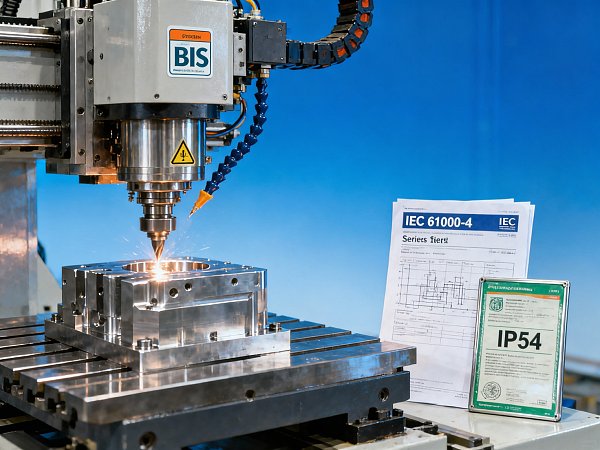
On March 27, 2026, the Bureau of Indian Standards (BIS) announced the draft IS 17832:2026, titled 'Safety and Electromagnetic Compatibility Requirements for CNC Engraving and Lettering Equipment,' which is set to become mandatory in the third quarter of 2026. The new regulation mandates that all imported CNC engraving machines must undergo EMC immunity testing (IEC 61000-4 series) and IP54 protection level verification at BIS-recognized laboratories, with the BIS certification mark affixed. Non-compliant products will be barred from customs clearance. This move is expected to impact approximately 35% of the export share of small and medium-sized Chinese engraving machine manufacturers to India. Industries involved in CNC machinery trade, manufacturing, and supply chain logistics should pay close attention to these developments, as they signal heightened regulatory scrutiny and potential shifts in market dynamics.
Event Overview
The BIS has proposed the IS 17832:2026 standard, which will require all imported CNC engraving machines to meet specific EMC and protection level criteria. The draft was published on March 27, 2026, with enforcement slated for Q3 2026. Key requirements include passing EMC immunity tests (IEC 61000-4 series) and achieving an IP54 protection level, verified by BIS-approved labs. Products failing to meet these standards will not be allowed to clear Indian customs. This regulation is part of India's broader effort to standardize imported machinery and ensure compliance with local safety and performance benchmarks.
Impact on Sub-Sectors
Direct Trade Enterprises
Chinese SMEs exporting CNC engraving machines to India will face immediate challenges. The new certification process could delay shipments and increase costs, potentially reducing their competitiveness in the Indian market. With an estimated 35% drop in export share, these businesses may need to explore alternative markets or invest in compliance measures.
Supply Chain Service Providers
Logistics and customs clearance services will need to adapt to the new certification requirements. Delays in testing and certification could disrupt supply chains, leading to longer lead times and higher operational costs. Providers should prepare for increased documentation and verification processes.
Manufacturing and Assembly Units
Manufacturers relying on imported CNC components may experience disruptions if their suppliers fail to meet the new standards. This could necessitate sourcing from BIS-certified vendors, potentially increasing production costs and affecting timelines.
Key Focus Areas and Recommended Actions
Monitor Regulatory Updates
Businesses should stay informed about any clarifications or amendments to the IS 17832:2026 standard. Subscribing to BIS notifications or engaging with local trade associations can provide timely updates.
Assess Certification Timelines
Companies should evaluate the time required for EMC and IP54 testing and factor this into their production and shipping schedules. Early engagement with BIS-recognized labs can help mitigate delays.
Explore Alternative Markets
Given the potential reduction in Indian market share, exporters might consider diversifying into other regions with less stringent certification requirements. Southeast Asia and Africa could present viable alternatives.
Strengthen Supplier Relationships
Manufacturers should collaborate closely with suppliers to ensure compliance with the new standards. This may involve joint testing initiatives or sourcing components from certified vendors.
Editorial Perspective / Industry Observation
From an industry standpoint, the IS 17832:2026 standard reflects India's growing emphasis on product safety and quality control. While the regulation is still in the draft stage, its potential impact on trade flows and market dynamics cannot be overlooked. The move may signal a broader trend of increasing technical barriers to trade, particularly for machinery imports. Businesses should view this as a call to enhance their compliance capabilities and adapt to evolving regulatory landscapes. Continuous monitoring of BIS announcements and proactive engagement with certification bodies will be crucial in navigating these changes.
Conclusion
The introduction of the IS 17832:2026 standard by India's BIS represents a significant development for the CNC engraving machine industry, particularly for Chinese SMEs. While the regulation aims to standardize product safety and performance, it also raises export barriers and operational challenges. Businesses should approach this as an opportunity to strengthen their compliance frameworks and explore new market opportunities. For now, the focus should be on understanding the certification process and preparing for its implementation in Q3 2026.
Source Information
Primary source: Bureau of Indian Standards (BIS) draft notification dated March 27, 2026. The estimated impact on Chinese SME exports is based on preliminary industry assessments and may be subject to change as more data becomes available. Ongoing monitoring of BIS updates is recommended for the latest developments.
Get weekly intelligence in your inbox.
No noise. No sponsored content. Pure intelligence.
 Oct 08, 2026How Digital Health Improves Diagnostic Accuracy and Workflow in Clinical LabsHow Digital Health Improves Diagnostic Accuracy and Workflow in Clinical Labs
 Oct 07, 2026Selecting Voice Picking Systems for German Warehouses: Integration, Languages and ROISelecting Voice Picking Systems for German Warehouses: Integration, Languages and ROI
 Oct 06, 2026How to Choose Last Mile Dispatch Software for On-Time Delivery at ScaleHow to Choose Last Mile Dispatch Software for On-Time Delivery at Scale
 Oct 05, 2026Vietnam’s Consumer Electronics Market: Demand Shifts and Sourcing OpportunitiesVietnam’s Consumer Electronics Market: Demand Shifts and Sourcing Opportunities
 Oct 04, 2026Digital Health Investment Priorities for Providers: Improving Access, Outcomes, and EfficiencyDigital Health Investment Priorities for Providers: Improving Access, Outcomes, and Efficiency
 Oct 03, 2026How to Specify an FR4 Custom PCB Board for High-Voltage and High-Heat DesignsHow to Specify an FR4 Custom PCB Board for High-Voltage and High-Heat Designs
 Oct 02, 2026ERP Software Market Intelligence: Adoption, Pricing, and Vendor Signals to WatchERP Software Market Intelligence: Adoption, Pricing, and Vendor Signals to Watch
 Oct 01, 2026How to Select Calibrated Temperature Data Loggers for GMP Cold Storage MonitoringHow to Select Calibrated Temperature Data Loggers for GMP Cold Storage Monitoring
 Sep 30, 2026Custom Molded Rubber Pricing: What Drives Unit Cost and Tooling Fees?Custom Molded Rubber Pricing: What Drives Unit Cost and Tooling Fees?
 Sep 29, 2026How to Evaluate Energy Management Software Vendors for Multi-Site OperationsHow to Evaluate Energy Management Software Vendors for Multi-Site Operations
 Sep 28, 2026How to Select a DIN Rail Smart Meter for Multi-Circuit Energy MonitoringHow to Select a DIN Rail Smart Meter for Multi-Circuit Energy Monitoring
 Sep 27, 2026TWS Earbuds in Vietnam: Demand Drivers, Price Tiers, and Retail Channel OpportunitiesTWS Earbuds in Vietnam: Demand Drivers, Price Tiers, and Retail Channel Opportunities
 Sep 26, 2026How UAE Clinics Can Qualify a Smart Glucometer Supplier for Accuracy and ComplianceHow UAE Clinics Can Qualify a Smart Glucometer Supplier for Accuracy and Compliance
 Sep 25, 2026Buying Aesthetic Lasers in the USA: FDA Status, Wavelengths, and Service SupportBuying Aesthetic Lasers in the USA: FDA Status, Wavelengths, and Service Support
 Sep 24, 2026Laser Cutting Brass Sheet: How to Prevent Burrs and Heat Marks on Thin PartsLaser Cutting Brass Sheet: How to Prevent Burrs and Heat Marks on Thin Parts
 Sep 23, 2026How to Choose Lightweight ANC Headphones for Comfortable All-Day TravelHow to Choose Lightweight ANC Headphones for Comfortable All-Day Travel
 Sep 22, 2026IPX5 TWS Bluetooth Earbuds: What Protection Do They Offer for Workouts?IPX5 TWS Bluetooth Earbuds: What Protection Do They Offer for Workouts?
 Sep 21, 2026What to Look for in a Grid Integration Company for Utility-Scale Solar ProjectsWhat to Look for in a Grid Integration Company for Utility-Scale Solar Projects
 Sep 20, 2026Microgrid Controller Pricing: What Drives Cost in Commercial Energy Projects?Microgrid Controller Pricing: What Drives Cost in Commercial Energy Projects?
 Sep 19, 2026How to Choose a GaN Charger for Laptops Without Compromising Power or PortabilityHow to Choose a GaN Charger for Laptops Without Compromising Power or Portability
 Sep 18, 2026Floating Solar Farm Costs: CAPEX, OPEX, and the Site Factors That Shape ROIFloating Solar Farm Costs: CAPEX, OPEX, and the Site Factors That Shape ROI
 Sep 17, 2026Drone Delivery Solutions for Last-Mile Routes: Site, Payload, and Range PlanningDrone Delivery Solutions for Last-Mile Routes: Site, Payload, and Range Planning
 Sep 16, 2026When Low-Volume Electronics Manufacturing Makes More Sense Than Mass ProductionWhen Low-Volume Electronics Manufacturing Makes More Sense Than Mass Production
 Sep 15, 2026Wholesale WiFi Smart Switches: What Buyers Should Verify Before OrderingWholesale WiFi Smart Switches: What Buyers Should Verify Before Ordering
 Sep 14, 2026How to Select IoT Sensors for Reliable Monitoring in Harsh Industrial EnvironmentsHow to Select IoT Sensors for Reliable Monitoring in Harsh Industrial Environments
 Sep 13, 2026How Procurement Teams Can Improve Supplier Reliability With Supply Chain VisibilityHow Procurement Teams Can Improve Supplier Reliability With Supply Chain Visibility
 Sep 12, 2026Smart Manufacturing Trends 2026: What Leaders Should Prioritize for ROISmart Manufacturing Trends 2026: What Leaders Should Prioritize for ROI



























