Rapid Prototyping vs CNC Machining: Which Is Better for Low-Volume Parts?
When teams need low-volume parts fast, the choice between rapid prototyping and CNC machining can directly affect cost, lead time, design validation, and final performance. For project managers and engineering leaders, understanding where each method delivers the most value is essential for reducing risk and making smarter production decisions in fast-moving manufacturing environments.
How should project managers compare rapid prototyping and CNC machining for low-volume parts?
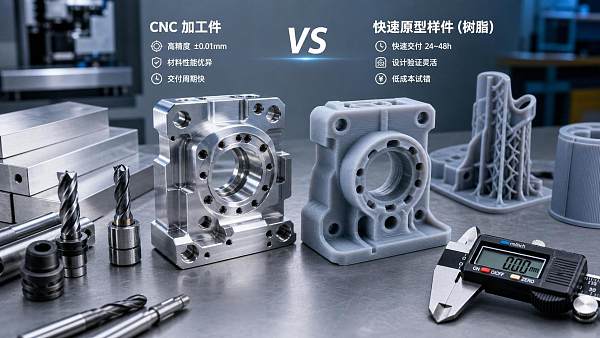
For low-volume manufacturing, the real question is not which process is universally better. It is which process fits the current project stage, part function, budget, tolerance target, and delivery deadline.
Rapid prototyping usually refers to fast-turn methods such as 3D printing, vacuum casting, or other accelerated prototype processes used to validate shape, fit, and early functionality. CNC machining removes material from solid stock to create precise parts with production-like properties.
For project leaders in advanced manufacturing, smart electronics, green energy, and healthcare technology, the decision often sits between speed and realism. Rapid prototyping shortens learning cycles. CNC machining improves dimensional confidence and end-use performance.
In practice, many successful teams do not treat these methods as rivals. They use rapid prototyping first to reduce design uncertainty, then switch to CNC machining when mechanical accuracy, material equivalence, or customer approval requires a more production-representative part.
What each method is best at
- Rapid prototyping is strong for concept models, enclosure checks, assembly verification, ergonomic review, and early investor or customer demonstrations.
- CNC machining is strong for tight-tolerance components, metal parts, threaded features, sealing surfaces, tooling inserts, and bridge production in small batches.
- A combined strategy works well when teams need fast design iteration first, then low-volume parts that closely reflect final manufacturing conditions.
Which process wins on speed, cost, tolerance, and material performance?
The table below helps compare rapid prototyping and CNC machining across the factors that most often drive low-volume part decisions in cross-functional project reviews.
This comparison shows why rapid prototyping often wins in discovery phases, while CNC machining becomes more attractive when the part must behave like a final component. For project managers, this distinction helps avoid the costly mistake of using a visual prototype to answer a production question.
A practical rule of thumb
- Use rapid prototyping when the design is still changing and the main goal is fast learning.
- Use CNC machining when the geometry is more stable and the part must support testing, certification, or customer sign-off.
- Use both when schedule pressure is high and different departments need different evidence at the same time.
Which low-volume applications are better suited to rapid prototyping?
Rapid prototyping is especially useful when time-to-feedback matters more than final-process fidelity. This is common in industrial product development, pilot electronics integration, medical device enclosure evaluation, and new energy subsystem packaging.
Typical fit-for-purpose scenarios
- Concept approval: stakeholders need to see size, interface layout, and basic assembly logic before freezing the design.
- Housing and bracket review: engineers want to confirm cable routing, connector access, or mounting clearance.
- Trade-show or customer samples: appearance and fast availability matter more than long-term wear resistance.
- Short design sprints: the team expects several design revisions and wants to avoid paying repeatedly for precision machining.
The advantage here is not only lower entry cost. It is the ability to identify design errors before they become procurement problems. A low-cost prototype can reveal hidden issues in wall thickness, assembly access, or unsupported features that would delay a later CNC batch.
When does CNC machining make more sense for low-volume parts?
CNC machining becomes the stronger option when the low-volume part is not just a model but a working component. This includes functional test parts, pre-production units, replacement components, and small-batch parts shipped to demanding end users.
High-value CNC use cases
- Precision fixtures, jigs, and automation components used in advanced manufacturing lines.
- Heat sinks, housings, and conductive parts in smart electronics that require stable geometry and known material behavior.
- Battery system brackets, valve bodies, and structural interfaces in green energy projects where safety margins matter.
- Medical device parts or test fixtures where tolerance control, documentation, and repeatability are more important than speed alone.
For project managers, CNC machining often reduces downstream uncertainty. If the part must survive load, vibration, heat, fluid contact, or repeated assembly, a machined sample provides stronger decision support than a fast prototype made from substitute material.
What should buyers evaluate before selecting a supplier or process?
Supplier selection is often where low-volume part projects succeed or fail. The process choice matters, but supplier capability, communication speed, and engineering review quality matter just as much.
The table below gives project managers a practical procurement checklist when comparing rapid prototyping and CNC machining offers across regions and suppliers.
This checklist is highly relevant when sourcing across borders. A low quote can lose its value if revision control is weak, actual tolerances are unclear, or a supplier cannot explain how they will achieve the requested geometry.
Procurement risks many teams overlook
- Comparing price without comparing finishing scope, inspection scope, and packaging requirements.
- Requesting tight tolerances on all dimensions instead of identifying only critical features.
- Assuming rapid prototyping materials will behave like machined aluminum, POM, ABS, or stainless steel.
- Skipping supplier communication reviews during compressed timelines.
How do cost and total project value really compare?
Cost should not be limited to piece price. For low-volume parts, the more useful metric is decision cost: how much time, redesign effort, procurement risk, and testing uncertainty each method creates or removes.
Direct cost versus hidden cost
Rapid prototyping can reduce front-end spending when multiple iterations are expected. However, if a prototype gives misleading confidence about fit or performance, the hidden cost appears later in redesign, failed testing, or delayed customer approval.
CNC machining may cost more per part, but it can lower validation risk. When a machined low-volume part passes testing and aligns with production intent, the program may save weeks of back-and-forth between engineering, sourcing, and quality teams.
A useful decision framework
- If design uncertainty is high, prioritize rapid prototyping.
- If functional risk is high, prioritize CNC machining.
- If both are high, split the budget and run a staged validation plan.
What standards, documentation, and quality controls should be considered?
Not every low-volume part needs formal certification, but many projects still require disciplined documentation. This is especially true in healthcare technology, industrial equipment export, and sectors where customer audits or internal stage-gate reviews are strict.
Common quality and compliance considerations
- Material traceability when specific alloys, engineering plastics, or biocompatibility-adjacent materials are requested.
- Inspection records for critical dimensions, especially when the part is used in assemblies with little tolerance stack margin.
- Revision control to ensure the supplier is manufacturing the latest drawing, CAD file, and note set.
- Surface treatment declarations when anodizing, passivation, blasting, or polishing affects function.
Project managers do not need to ask for unnecessary paperwork. They do need to align documentation depth with part risk. A visual mock-up does not need the same level of control as a low-volume part intended for functional testing or field trial deployment.
FAQ: common low-volume part questions about rapid prototyping
Is rapid prototyping cheaper than CNC machining for every low-volume project?
No. Rapid prototyping is often cheaper for early concept parts, especially when geometry changes frequently. But if the part needs real material properties, tight tolerances, or post-machined features, CNC machining may deliver better value despite a higher initial unit price.
Can rapid prototyping be used for functional testing?
Yes, but only when the selected process and material can represent the intended function closely enough. It is suitable for some fit checks, airflow reviews, or light-duty tests. It is less reliable for load-bearing, heat-critical, or precision-sealing applications unless specifically engineered for that purpose.
When should a team move from rapid prototyping to CNC machining?
A good trigger is when the design stabilizes and the next decision depends on actual tolerance, mechanical strength, thermal behavior, or customer-ready finish. At that point, a machined sample gives stronger evidence than another prototype iteration.
What is the biggest sourcing mistake in low-volume manufacturing?
The biggest mistake is buying on price alone without confirming what problem the part must solve. A cheaper prototype can become expensive if it answers the wrong question. The right method is the one that reduces uncertainty at the current stage of the project.
Why informed sourcing matters more in today’s global manufacturing environment
Low-volume part decisions now happen in a more complex environment than before. Supplier capacity shifts, regional production policies, logistics volatility, and technology cycles all influence what is realistic in terms of cost and lead time.
That is why project managers increasingly need more than a quote. They need context: which suppliers can support technical discussion, which processes fit the application, and which market signals may affect delivery reliability. This is where structured industry intelligence becomes commercially useful.
TradeNexus Pro supports enterprise buyers and engineering decision-makers with focused insight across advanced manufacturing, green energy, smart electronics, healthcare technology, and supply chain digitalization. Instead of relying on shallow listings, teams can use deeper market-oriented content to compare technologies, assess sourcing risk, and shortlist more credible partners.
Why choose us for low-volume part sourcing insight and supplier evaluation?
If your team is weighing rapid prototyping against CNC machining, TradeNexus Pro can help you move faster with better information. Our platform is built for decision-makers who need practical guidance before committing to suppliers, processes, or cross-border production plans.
You can consult us on specific issues such as material and process selection, low-volume part application fit, supplier comparison logic, lead time planning, documentation expectations, and communication points to clarify before placing an order.
- Parameter confirmation for tolerance, material grade, finish, and critical features
- Process selection between rapid prototyping, CNC machining, or a staged hybrid path
- Lead time review for sampling, revision cycles, finishing, inspection, and shipment
- Custom solution discussion for low-volume industrial, electronics, energy, or healthcare-related parts
- Quotation communication support to compare offers on scope, risk, and technical completeness
If your next project depends on getting low-volume parts right the first time, reach out through TradeNexus Pro on chinaspecialmetal.com to discuss your drawings, quantity range, delivery target, and supplier evaluation priorities. A stronger decision starts with clearer technical and sourcing visibility.
Get weekly intelligence in your inbox.
No noise. No sponsored content. Pure intelligence.
 Sep 20, 2026Microgrid Controller Pricing: What Drives Cost in Commercial Energy Projects?Microgrid Controller Pricing: What Drives Cost in Commercial Energy Projects?
 Sep 19, 2026How to Choose a GaN Charger for Laptops Without Compromising Power or PortabilityHow to Choose a GaN Charger for Laptops Without Compromising Power or Portability
 Sep 18, 2026Floating Solar Farm Costs: CAPEX, OPEX, and the Site Factors That Shape ROIFloating Solar Farm Costs: CAPEX, OPEX, and the Site Factors That Shape ROI
 Sep 17, 2026Drone Delivery Solutions for Last-Mile Routes: Site, Payload, and Range PlanningDrone Delivery Solutions for Last-Mile Routes: Site, Payload, and Range Planning
 Sep 16, 2026When Low-Volume Electronics Manufacturing Makes More Sense Than Mass ProductionWhen Low-Volume Electronics Manufacturing Makes More Sense Than Mass Production
 Sep 15, 2026Wholesale WiFi Smart Switches: What Buyers Should Verify Before OrderingWholesale WiFi Smart Switches: What Buyers Should Verify Before Ordering
 Sep 14, 2026How to Select IoT Sensors for Reliable Monitoring in Harsh Industrial EnvironmentsHow to Select IoT Sensors for Reliable Monitoring in Harsh Industrial Environments
 Sep 13, 2026How Procurement Teams Can Improve Supplier Reliability With Supply Chain VisibilityHow Procurement Teams Can Improve Supplier Reliability With Supply Chain Visibility
 Sep 12, 2026Smart Manufacturing Trends 2026: What Leaders Should Prioritize for ROISmart Manufacturing Trends 2026: What Leaders Should Prioritize for ROI
 Sep 11, 2026B2B Market Analysis: How Buyers Evaluate Suppliers, Pricing, and Delivery RiskB2B Market Analysis: How Buyers Evaluate Suppliers, Pricing, and Delivery Risk
 Sep 10, 2026Residential Solar Kits in Canada: How to Size a System for Your Home and ClimateResidential Solar Kits in Canada: How to Size a System for Your Home and Climate
 Sep 09, 2026How to Specify a Syringe Assembly Line for High-Volume Sterile ProductionHow to Specify a Syringe Assembly Line for High-Volume Sterile Production
 Sep 08, 2026How to Evaluate Warehouse Robotics System Suppliers for Reliable Multi-Site DeploymentHow to Evaluate Warehouse Robotics System Suppliers for Reliable Multi-Site Deployment
 Sep 07, 2026Renewable Geothermal Energy Explained: How It Works for Heating and PowerRenewable Geothermal Energy Explained: How It Works for Heating and Power
 Sep 07, 2026How to Choose an Industrial Packaging Robot Manufacturer for Your Production LineHow to Choose an Industrial Packaging Robot Manufacturer for Your Production Line
 Sep 05, 2026How to Evaluate a Turnkey Hydro Turbine Generator Supplier for Remote Power ProjectsHow to Evaluate a Turnkey Hydro Turbine Generator Supplier for Remote Power Projects
 Sep 04, 2026Automated Ultrasonic Welding for Thermoplastic Assemblies: Process Controls That MatterAutomated Ultrasonic Welding for Thermoplastic Assemblies: Process Controls That Matter
 Sep 03, 2026Energy Forecasting for Grid Planning: Sizing Solar and Storage CapacityEnergy Forecasting for Grid Planning: Sizing Solar and Storage Capacity
 Sep 02, 2026Which Metrics Should an Energy Analytics Dashboard Track for Factory Energy Management?Which Metrics Should an Energy Analytics Dashboard Track for Factory Energy Management?
 Sep 01, 2026How Warehouse Voice Picking Improves Accuracy and Throughput in Order FulfillmentHow Warehouse Voice Picking Improves Accuracy and Throughput in Order Fulfillment
 Aug 31, 2026How to Automate Dropshipping Order Processing Without Overselling StockHow to Automate Dropshipping Order Processing Without Overselling Stock
 Aug 30, 2026How to Evaluate a Smart Lighting Supplier for Multi-Site Commercial ProjectsHow to Evaluate a Smart Lighting Supplier for Multi-Site Commercial Projects
 Aug 29, 2026Recent Advances in Smart Manufacturing and Materials Reshaping Factory InvestmentRecent Advances in Smart Manufacturing and Materials Reshaping Factory Investment
 Aug 29, 2026Selecting Lightweight Aluminum Extrusions for Strength-Critical Industrial DesignsSelecting Lightweight Aluminum Extrusions for Strength-Critical Industrial Designs
 Aug 29, 2026Vertical Powder Anodizing Explained: Process Controls for Uniform Coating QualityVertical Powder Anodizing Explained: Process Controls for Uniform Coating Quality
 Aug 29, 2026PV Module Product Due Diligence: What Buyers Should Verify Before ContractingPV Module Product Due Diligence: What Buyers Should Verify Before Contracting
 Aug 29, 2026Solar Design for Challenging Terrain: Managing Slope, Soil, and Shading RisksSolar Design for Challenging Terrain: Managing Slope, Soil, and Shading Risks