
Vietnam's New Regulation: CNC Machine Imports Require Vietnamese Labels and VIEC Certification from July 2026, Chinese Exporters Need Early Localization Adaptation
Vietnam's New Regulation: CNC Machine Imports Require Vietnamese Labels and VIEC Certification from July 2026, Chinese Exporters Need Early Localization Adaptation
Introduction
On March 26, 2026, Vietnam's Ministry of Industry and Trade issued Circular No. 12/2026/TT-BCT, mandating that all imported CNC machining centers and turning-milling composite machines must display Vietnamese-language labels (including safety warnings, technical parameters, and manufacturer information) and provide EMC and mechanical safety test reports issued by Vietnam-recognized laboratories (VIEC) starting from July 1, 2026. This regulation directly impacts Chinese exporters of CNC equipment, who may face customs clearance delays or return risks if compliance is not met. The machinery manufacturing, industrial automation, and international trade sectors should closely monitor this development, as it introduces new technical barriers and localization requirements for cross-border equipment trade.
Event Overview
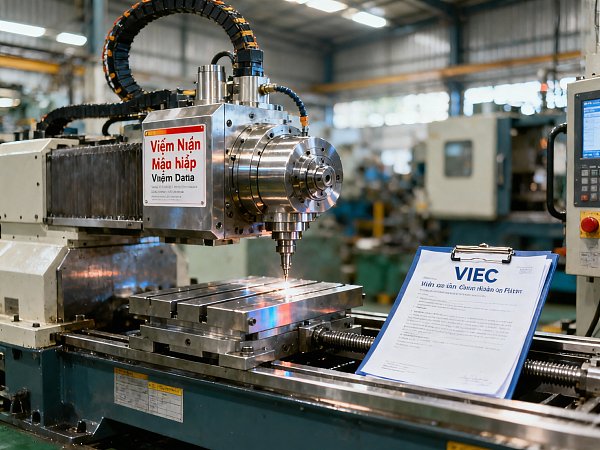
The Vietnamese government's new regulation specifies two key requirements for imported CNC equipment: 1) Physical Vietnamese-language labeling on devices, covering safety warnings, technical specifications, and manufacturer details; 2) Mandatory VIEC laboratory certification for electromagnetic compatibility (EMC) and mechanical safety. The policy takes effect on July 1, 2026, with no transitional grace period announced. Non-compliant shipments risk being held at Vietnamese ports or returned to origin.
Industries Affected
CNC Equipment Manufacturers and Exporters
Chinese CNC machine tool producers exporting to Vietnam must immediately initiate label redesigns and certification processes. Analysis shows the VIEC testing cycle typically takes 8-12 weeks, requiring manufacturers to adjust production schedules for Q1 2026 shipments.
Industrial Machinery Distributors
Vietnamese importers and distributors face inventory risks for non-compliant stock arriving after July 2026. Current contracts should incorporate compliance clauses and delivery timeline adjustments.
Aftermarket Service Providers
Maintenance firms must update technical documentation systems to align with Vietnamese-language requirements, potentially increasing training costs for multilingual technicians.
Key Focus Areas and Recommended Actions
Certification Timeline Management
Prioritize VIEC testing for high-volume models, noting that certification validity periods may require strategic planning for product iterations.
Labeling System Overhaul
Implement dual-language labeling during manufacturing rather than post-production modifications to avoid cost escalations. Current industry practice suggests embedding Vietnamese labels during final assembly reduces per-unit costs by 40-60% compared to port-side retrofitting.
Supply Chain Coordination
Coordinate with Vietnamese partners to pre-position certified spare parts, as the regulation may extend to replacement components based on interpretation trends.
Legal Risk Assessment
Review existing contracts for force majeure provisions related to regulatory changes, particularly for long-lead-time projects with 2026 deliveries.
Industry Perspective
From an industry standpoint, this regulation signals Vietnam's growing emphasis on technical sovereignty in industrial equipment. While presented as a safety measure, it effectively creates a non-tariff barrier that favors locally adapted products. Manufacturers should view this as part of a broader Southeast Asian trend, with similar requirements likely emerging in Indonesia and Thailand within 2-3 years. The immediate operational impact outweighs strategic implications, making prompt compliance the rational business response.
Conclusion
Vietnam's new CNC equipment regulations represent a measurable compliance hurdle rather than a market access barrier. For Chinese exporters, the 15-month window before implementation allows for systematic adaptation, provided action begins immediately. The policy underscores the importance of localization strategies in ASEAN markets, where technical standardization is increasingly tied to language and certification requirements. Industry players should treat this as a case study for emerging market entry protocols rather than an isolated regulatory change.
Source Information
Vietnam Ministry of Industry and Trade Circular No. 12/2026/TT-BCT (March 26, 2026)
Note: VIEC certification procedures and laboratory capacities remain subject to ongoing clarification from Vietnamese authorities.
Get weekly intelligence in your inbox.
No noise. No sponsored content. Pure intelligence.
 Oct 08, 2026How Digital Health Improves Diagnostic Accuracy and Workflow in Clinical LabsHow Digital Health Improves Diagnostic Accuracy and Workflow in Clinical Labs
 Oct 07, 2026Selecting Voice Picking Systems for German Warehouses: Integration, Languages and ROISelecting Voice Picking Systems for German Warehouses: Integration, Languages and ROI
 Oct 06, 2026How to Choose Last Mile Dispatch Software for On-Time Delivery at ScaleHow to Choose Last Mile Dispatch Software for On-Time Delivery at Scale
 Oct 05, 2026Vietnam’s Consumer Electronics Market: Demand Shifts and Sourcing OpportunitiesVietnam’s Consumer Electronics Market: Demand Shifts and Sourcing Opportunities
 Oct 04, 2026Digital Health Investment Priorities for Providers: Improving Access, Outcomes, and EfficiencyDigital Health Investment Priorities for Providers: Improving Access, Outcomes, and Efficiency
 Oct 03, 2026How to Specify an FR4 Custom PCB Board for High-Voltage and High-Heat DesignsHow to Specify an FR4 Custom PCB Board for High-Voltage and High-Heat Designs
 Oct 02, 2026ERP Software Market Intelligence: Adoption, Pricing, and Vendor Signals to WatchERP Software Market Intelligence: Adoption, Pricing, and Vendor Signals to Watch
 Oct 01, 2026How to Select Calibrated Temperature Data Loggers for GMP Cold Storage MonitoringHow to Select Calibrated Temperature Data Loggers for GMP Cold Storage Monitoring
 Sep 30, 2026Custom Molded Rubber Pricing: What Drives Unit Cost and Tooling Fees?Custom Molded Rubber Pricing: What Drives Unit Cost and Tooling Fees?
 Sep 29, 2026How to Evaluate Energy Management Software Vendors for Multi-Site OperationsHow to Evaluate Energy Management Software Vendors for Multi-Site Operations
 Sep 28, 2026How to Select a DIN Rail Smart Meter for Multi-Circuit Energy MonitoringHow to Select a DIN Rail Smart Meter for Multi-Circuit Energy Monitoring
 Sep 27, 2026TWS Earbuds in Vietnam: Demand Drivers, Price Tiers, and Retail Channel OpportunitiesTWS Earbuds in Vietnam: Demand Drivers, Price Tiers, and Retail Channel Opportunities
 Sep 26, 2026How UAE Clinics Can Qualify a Smart Glucometer Supplier for Accuracy and ComplianceHow UAE Clinics Can Qualify a Smart Glucometer Supplier for Accuracy and Compliance
 Sep 25, 2026Buying Aesthetic Lasers in the USA: FDA Status, Wavelengths, and Service SupportBuying Aesthetic Lasers in the USA: FDA Status, Wavelengths, and Service Support
 Sep 24, 2026Laser Cutting Brass Sheet: How to Prevent Burrs and Heat Marks on Thin PartsLaser Cutting Brass Sheet: How to Prevent Burrs and Heat Marks on Thin Parts
 Sep 23, 2026How to Choose Lightweight ANC Headphones for Comfortable All-Day TravelHow to Choose Lightweight ANC Headphones for Comfortable All-Day Travel
 Sep 22, 2026IPX5 TWS Bluetooth Earbuds: What Protection Do They Offer for Workouts?IPX5 TWS Bluetooth Earbuds: What Protection Do They Offer for Workouts?
 Sep 21, 2026What to Look for in a Grid Integration Company for Utility-Scale Solar ProjectsWhat to Look for in a Grid Integration Company for Utility-Scale Solar Projects
 Sep 20, 2026Microgrid Controller Pricing: What Drives Cost in Commercial Energy Projects?Microgrid Controller Pricing: What Drives Cost in Commercial Energy Projects?
 Sep 19, 2026How to Choose a GaN Charger for Laptops Without Compromising Power or PortabilityHow to Choose a GaN Charger for Laptops Without Compromising Power or Portability
 Sep 18, 2026Floating Solar Farm Costs: CAPEX, OPEX, and the Site Factors That Shape ROIFloating Solar Farm Costs: CAPEX, OPEX, and the Site Factors That Shape ROI
 Sep 17, 2026Drone Delivery Solutions for Last-Mile Routes: Site, Payload, and Range PlanningDrone Delivery Solutions for Last-Mile Routes: Site, Payload, and Range Planning
 Sep 16, 2026When Low-Volume Electronics Manufacturing Makes More Sense Than Mass ProductionWhen Low-Volume Electronics Manufacturing Makes More Sense Than Mass Production
 Sep 15, 2026Wholesale WiFi Smart Switches: What Buyers Should Verify Before OrderingWholesale WiFi Smart Switches: What Buyers Should Verify Before Ordering
 Sep 14, 2026How to Select IoT Sensors for Reliable Monitoring in Harsh Industrial EnvironmentsHow to Select IoT Sensors for Reliable Monitoring in Harsh Industrial Environments
 Sep 13, 2026How Procurement Teams Can Improve Supplier Reliability With Supply Chain VisibilityHow Procurement Teams Can Improve Supplier Reliability With Supply Chain Visibility
 Sep 12, 2026Smart Manufacturing Trends 2026: What Leaders Should Prioritize for ROISmart Manufacturing Trends 2026: What Leaders Should Prioritize for ROI



























