Brazil Ends 20% Federal Import Tax on Sub-$50 Parcels
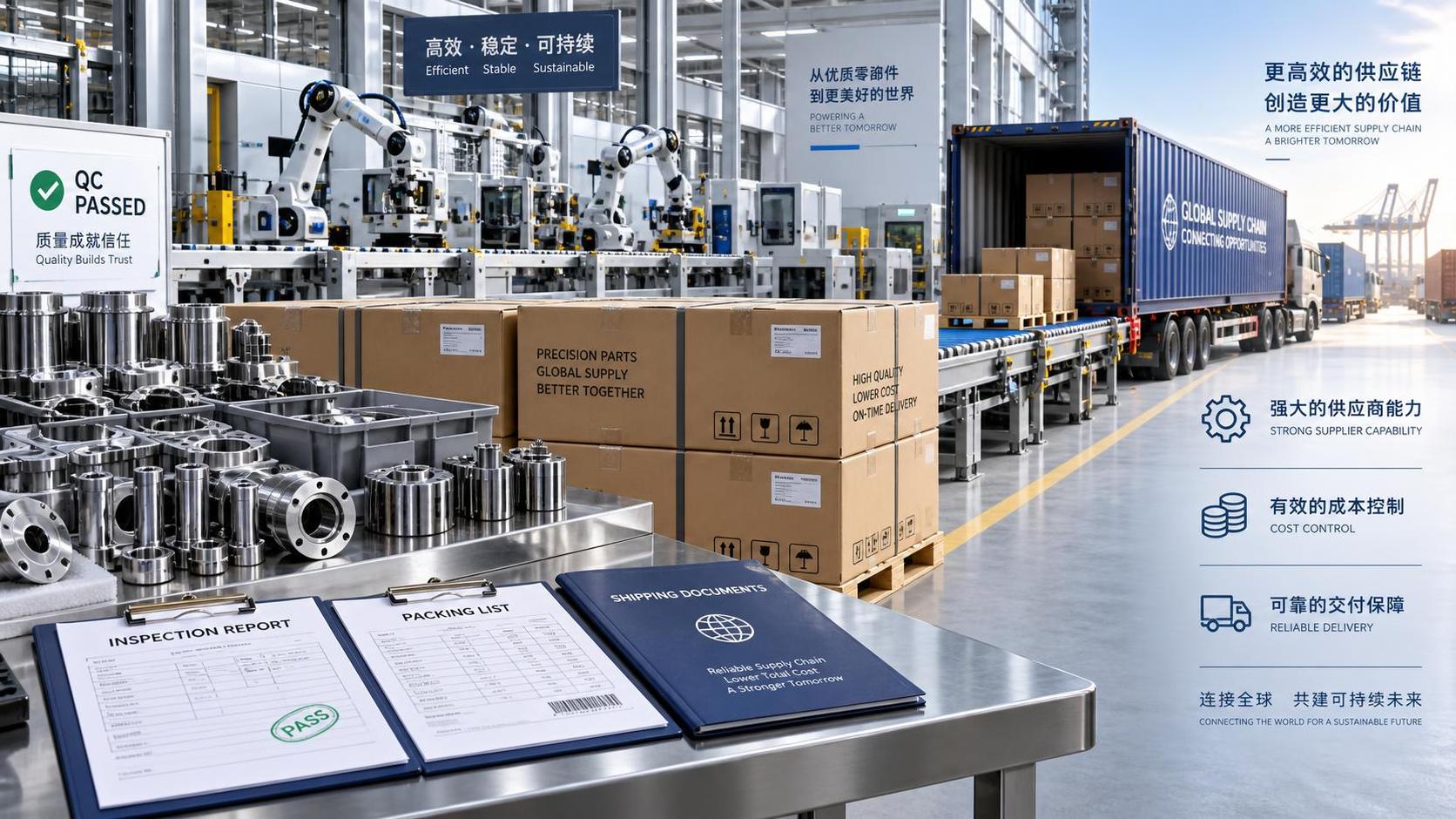
On May 13, 2026, Brazil removed the 20% federal import tax (IPI) on international e-commerce parcels valued below $50, while state-level ICMS remains in place. For suppliers and buyers involved in Industrial Materials such as consumables, testing samples, and precision fasteners, the change matters because it lowers the cost threshold for small trial orders and may improve the practicality of sample-based B2B outreach into the Latin American market.
What Changed in Brazil’s Low-Value Import Rules
The confirmed change is limited but commercially relevant. From May 13, 2026, Brazil no longer applies the 20% federal import tax (IPI) to international online purchases under $50. The state-level ICMS tax has not been removed. Based on the information provided, this adjustment reduces the landed cost of small cross-border shipments and is especially relevant to low-value exports of Industrial Materials used for sampling, testing, and early-stage customer evaluation.
The event summary also indicates that the measure is widely viewed as a pre-election step intended to stimulate import consumption. At the same time, the practical benefit identified in the provided information is clearer in small-batch sample delivery and fast-response B2B service than in broad structural changes to industrial trade.
Why the Impact Extends Beyond Consumer Parcels
Sample-driven exporters may see a lower trial-order barrier
From an industry perspective, exporters that rely on sending low-value samples to initiate business discussions may be among the first to feel the effect. For industrial consumables, inspection pieces, and precision fastening products, the early sales process often depends on whether a customer can test a product quickly and at manageable cost. The tax removal changes that first-step economics, even though ICMS still needs to be considered.
Procurement teams gain more room for low-risk evaluation
Buyers and sourcing teams may also be affected because lower federal tax exposure on sub-$50 parcels can make it easier to request initial samples before moving into larger procurement decisions. The impact is most visible in evaluation, qualification, and comparison stages rather than in full-volume purchasing.
Logistics and response-based service providers may need to adjust execution
Supply chain service providers, especially those supporting quick sample dispatch and small-parcel handling, may need to monitor whether customer demand shifts toward more frequent low-value shipments. What deserves closer attention is not only the tax change itself, but also how shipment structuring, documentation, and customer communication align with the remaining ICMS burden and the intended speed of delivery.
What Companies Should Watch Next
Distinguish tax relief from full cost removal
Analysis shows that the policy change lowers one cost component, but it does not eliminate all import-related charges. Companies should avoid treating the measure as a complete removal of small-shipment tax friction, since ICMS remains part of the landed-cost calculation.
Review which product categories fit sample-first expansion
Industrial Materials suppliers should assess which items are most suitable for low-value, high-response sample programs. The provided information points specifically to consumables, testing specimens, and precision fasteners, making these categories more directly relevant to immediate commercial adjustment.
Keep customer communication tied to actual deliverability
For commercial teams, the practical issue is whether lower federal tax costs can be translated into clearer sample offers, faster quotation follow-up, and more credible trial-order expectations. Observably, the business value depends on operational follow-through, not on the announcement alone.
Track whether official wording or implementation detail evolves
Because the summary frames the move as a politically significant measure ahead of an election, companies should continue watching for further clarification, continuity, or adjustment in applicable rules. That is especially important for firms building repeatable sample programs into Brazil rather than treating this as a one-off sales opportunity.
How This Change Should Be Read Right Now
Analysis shows that this development is best understood as a targeted improvement in small-ticket cross-border access, not as proof of a broader reset in Brazil’s industrial import environment. The clearest immediate implication is for B2B sample marketing and rapid-response service models aimed at Latin America. It is more appropriate to understand this as a near-term commercial signal with practical value, while still keeping expectations measured until businesses see how consistently the benefit translates into day-to-day transactions.
A Narrow Rule Change With Practical Commercial Weight
The removal of Brazil’s 20% federal import tax on sub-$50 international parcels creates a more workable entry point for certain Industrial Materials shipments, especially where the goal is customer testing rather than full-scale procurement. The industry significance lies less in headline policy language and more in its effect on sample economics, response speed, and trial-order conversion. At this stage, it is more appropriate to read the development as a meaningful but bounded trade facilitation signal that still requires close observation.
Basis of This Article and Ongoing Verification
This article is generated from the user-provided news title, event date, and event summary. For developments of this kind, relevant source categories typically include official announcements, company notices, industry association updates, authoritative media reporting, and related regulatory documentation. A specific official source link was not provided in the input, so further verification remains necessary. Continued monitoring should focus on any additional official clarification, implementation details, and whether the current adjustment leads to broader changes affecting cross-border sample shipments into Brazil.
Get weekly intelligence in your inbox.
No noise. No sponsored content. Pure intelligence.
 Sep 20, 2026Microgrid Controller Pricing: What Drives Cost in Commercial Energy Projects?Microgrid Controller Pricing: What Drives Cost in Commercial Energy Projects?
 Sep 19, 2026How to Choose a GaN Charger for Laptops Without Compromising Power or PortabilityHow to Choose a GaN Charger for Laptops Without Compromising Power or Portability
 Sep 18, 2026Floating Solar Farm Costs: CAPEX, OPEX, and the Site Factors That Shape ROIFloating Solar Farm Costs: CAPEX, OPEX, and the Site Factors That Shape ROI
 Sep 17, 2026Drone Delivery Solutions for Last-Mile Routes: Site, Payload, and Range PlanningDrone Delivery Solutions for Last-Mile Routes: Site, Payload, and Range Planning
 Sep 16, 2026When Low-Volume Electronics Manufacturing Makes More Sense Than Mass ProductionWhen Low-Volume Electronics Manufacturing Makes More Sense Than Mass Production
 Sep 15, 2026Wholesale WiFi Smart Switches: What Buyers Should Verify Before OrderingWholesale WiFi Smart Switches: What Buyers Should Verify Before Ordering
 Sep 14, 2026How to Select IoT Sensors for Reliable Monitoring in Harsh Industrial EnvironmentsHow to Select IoT Sensors for Reliable Monitoring in Harsh Industrial Environments
 Sep 13, 2026How Procurement Teams Can Improve Supplier Reliability With Supply Chain VisibilityHow Procurement Teams Can Improve Supplier Reliability With Supply Chain Visibility
 Sep 12, 2026Smart Manufacturing Trends 2026: What Leaders Should Prioritize for ROISmart Manufacturing Trends 2026: What Leaders Should Prioritize for ROI
 Sep 11, 2026B2B Market Analysis: How Buyers Evaluate Suppliers, Pricing, and Delivery RiskB2B Market Analysis: How Buyers Evaluate Suppliers, Pricing, and Delivery Risk
 Sep 10, 2026Residential Solar Kits in Canada: How to Size a System for Your Home and ClimateResidential Solar Kits in Canada: How to Size a System for Your Home and Climate
 Sep 09, 2026How to Specify a Syringe Assembly Line for High-Volume Sterile ProductionHow to Specify a Syringe Assembly Line for High-Volume Sterile Production
 Sep 08, 2026How to Evaluate Warehouse Robotics System Suppliers for Reliable Multi-Site DeploymentHow to Evaluate Warehouse Robotics System Suppliers for Reliable Multi-Site Deployment
 Sep 07, 2026Renewable Geothermal Energy Explained: How It Works for Heating and PowerRenewable Geothermal Energy Explained: How It Works for Heating and Power
 Sep 07, 2026How to Choose an Industrial Packaging Robot Manufacturer for Your Production LineHow to Choose an Industrial Packaging Robot Manufacturer for Your Production Line
 Sep 05, 2026How to Evaluate a Turnkey Hydro Turbine Generator Supplier for Remote Power ProjectsHow to Evaluate a Turnkey Hydro Turbine Generator Supplier for Remote Power Projects
 Sep 04, 2026Automated Ultrasonic Welding for Thermoplastic Assemblies: Process Controls That MatterAutomated Ultrasonic Welding for Thermoplastic Assemblies: Process Controls That Matter
 Sep 03, 2026Energy Forecasting for Grid Planning: Sizing Solar and Storage CapacityEnergy Forecasting for Grid Planning: Sizing Solar and Storage Capacity
 Sep 02, 2026Which Metrics Should an Energy Analytics Dashboard Track for Factory Energy Management?Which Metrics Should an Energy Analytics Dashboard Track for Factory Energy Management?
 Sep 01, 2026How Warehouse Voice Picking Improves Accuracy and Throughput in Order FulfillmentHow Warehouse Voice Picking Improves Accuracy and Throughput in Order Fulfillment
 Aug 31, 2026How to Automate Dropshipping Order Processing Without Overselling StockHow to Automate Dropshipping Order Processing Without Overselling Stock
 Aug 30, 2026How to Evaluate a Smart Lighting Supplier for Multi-Site Commercial ProjectsHow to Evaluate a Smart Lighting Supplier for Multi-Site Commercial Projects
 Aug 29, 2026Recent Advances in Smart Manufacturing and Materials Reshaping Factory InvestmentRecent Advances in Smart Manufacturing and Materials Reshaping Factory Investment
 Aug 29, 2026Selecting Lightweight Aluminum Extrusions for Strength-Critical Industrial DesignsSelecting Lightweight Aluminum Extrusions for Strength-Critical Industrial Designs
 Aug 29, 2026Vertical Powder Anodizing Explained: Process Controls for Uniform Coating QualityVertical Powder Anodizing Explained: Process Controls for Uniform Coating Quality
 Aug 29, 2026PV Module Product Due Diligence: What Buyers Should Verify Before ContractingPV Module Product Due Diligence: What Buyers Should Verify Before Contracting
 Aug 29, 2026Solar Design for Challenging Terrain: Managing Slope, Soil, and Shading RisksSolar Design for Challenging Terrain: Managing Slope, Soil, and Shading Risks