Intermediate Bulk Containers with Removable Lids: Best Uses, Sizes, and Buying Checks
Why are intermediate bulk containers with removable lids getting more attention?
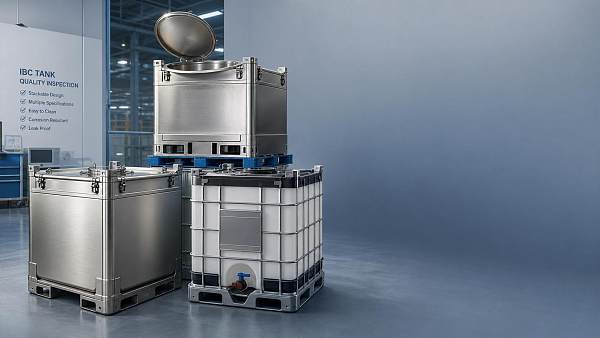
Intermediate bulk containers with removable lids sit between small packaging and large silos.
That middle position matters when handling powders, flakes, granules, pastes, and high-value dry blends.
In practical terms, buyers choose them for access, visibility, and easier turnover.
A removable top makes filling, manual inspection, residue checks, and washdown far simpler.
This is especially useful when production switches materials often or follows strict hygiene routines.
The design also reduces a common trade-off.
You keep bulk efficiency without losing access for cleaning crews, quality teams, or receiving inspections.
Across advanced manufacturing, healthcare technology, smart electronics materials, green energy inputs, and logistics operations, that flexibility has real value.
For organizations comparing global suppliers, the discussion is no longer only about capacity.
It is also about contamination control, handling speed, stackability, and total life-cycle cost.
That broader view matches the kind of decision-grade research often seen on TradeNexus Pro, where container choices are linked to supplier reliability and operating risk.
Where do removable-lid IBCs make the most sense?
They are not automatically the best option for every flowable product.
The strongest fit appears when contents need direct access during filling, sampling, discharge support, or cleaning.
Typical high-fit applications
- Powders and granules that bridge easily and may need manual flow correction.
- Food-adjacent or healthcare materials requiring visual cleaning confirmation.
- Battery, ceramics, additive, or specialty chemical inputs with residue sensitivity.
- High-mix production where container reuse and fast changeovers matter.
- Export shipments needing easier destination-side inspection before release.
A removable lid is also helpful when liners are used.
Workers can install, secure, and remove liners with less friction than through a narrow top opening.
On the other hand, if the product is fully liquid, pressure-sensitive, or best kept in a sealed closed-head system, another IBC style may be more efficient.
The more useful question is not “Are intermediate bulk containers with removable lids good?”
It is “Do they solve the access and cleaning problems in this material flow?”
What sizes are common, and how should capacity really be judged?
Size selection often goes wrong because teams compare only nominal volume.
That number matters, but footprint, density, filling ratio, and forklift compatibility matter just as much.
Common capacities for intermediate bulk containers with removable lids usually range from about 200 liters to 1,250 liters.
The most widely sourced formats tend to cluster around 500 liters, 800 liters, and 1,000 liters.
Yet the “right” size depends on how material behaves in transit and discharge.
A dense powder can reach weight limits well before volume is fully used.
A light granule may cube out first and waste transport space.
That is why good sourcing documents should request tare weight, safe working load, dynamic load, static load, and external dimensions together.
If cross-border shipping is involved, pallet base dimensions and container loading plans should also be reviewed early.
What buying checks separate a reliable option from a risky one?
This is where many sourcing exercises become expensive.
A low price can hide cleaning difficulty, weak seals, poor welds, or inconsistent dimensions.
For intermediate bulk containers with removable lids, several checks deserve attention before any volume order.
Buying checks worth documenting
- Material grade: stainless steel, plastic, or composite should match product chemistry and cleaning method.
- Lid seal performance: gasket material, closure method, and dust-tight performance need proof.
- Interior finish: smooth surfaces reduce hold-up and shorten sanitation time.
- Outlet design: butterfly valve, slide valve, or cone bottom should match discharge behavior.
- Handling safety: fork entry, base strength, and corner protection affect damage rates.
- Compliance: ask for test records, food-contact or sector-specific documents where required.
A supplier that answers these points with precise documentation is usually easier to qualify.
That documentation trail is increasingly important in global trade.
Platforms such as TradeNexus Pro highlight this shift well.
The real advantage is not just finding a container vendor.
It is understanding which suppliers communicate technical capability, consistency, and risk controls with enough clarity to support a decision.
How do cost and total value compare over time?
The purchase price of intermediate bulk containers with removable lids is only one part of the equation.
In many operations, the bigger savings come from labor, lower contamination risk, and faster turnaround.
A cheaper fixed-top unit may look attractive until cleaning time doubles or product residue rises.
That added cost shows up in downtime, rejected batches, and extra handling.
A more complete value review usually includes:
- Expected reuse cycles and repairability.
- Cleaning time per turn.
- Loss from retained material.
- Transport efficiency and stackability.
- Failure rate in export or warehouse handling.
Lead time should be reviewed in the same way.
Custom dimensions, special valves, polished interiors, or certified gasket materials can lengthen supply cycles.
When sourcing globally, freight volatility and customs documentation may matter as much as factory production time.
This is one reason intelligence-led sourcing has become more valuable than simple directory browsing.
Which mistakes appear most often during supplier comparison?
The most common mistake is assuming all removable-lid designs perform the same.
In reality, lid clamping, wall thickness, outlet geometry, and finishing quality can vary significantly.
Another frequent issue is testing only empty handling.
Performance changes once material weight, vibration, and stacking pressure are involved.
A short comparison checklist can prevent weak decisions.
It also helps to request a sample or pilot batch whenever the material is sensitive.
That step often reveals handling problems that product sheets never mention.
What is the smartest next step before placing an order?
Start with the material, not the catalog.
List particle behavior, density, cleaning method, discharge expectations, and storage conditions.
Then match those needs against container access, seal design, base structure, and compliance documents.
For intermediate bulk containers with removable lids, the best decision usually comes from a short comparison framework rather than a price-first shortlist.
Where global sourcing is involved, it is worth using industry platforms that connect technical details with supplier credibility and market context.
That kind of structured research, similar to the approach encouraged by TradeNexus Pro, helps reduce guesswork before commitment.
A good order decision should answer four things clearly: fit, compliance, total cost, and supply reliability.
If those answers are documented, comparing intermediate bulk containers with removable lids becomes much more straightforward and much less risky.
Get weekly intelligence in your inbox.
No noise. No sponsored content. Pure intelligence.
 Sep 21, 2026What to Look for in a Grid Integration Company for Utility-Scale Solar ProjectsWhat to Look for in a Grid Integration Company for Utility-Scale Solar Projects
 Sep 20, 2026Microgrid Controller Pricing: What Drives Cost in Commercial Energy Projects?Microgrid Controller Pricing: What Drives Cost in Commercial Energy Projects?
 Sep 19, 2026How to Choose a GaN Charger for Laptops Without Compromising Power or PortabilityHow to Choose a GaN Charger for Laptops Without Compromising Power or Portability
 Sep 18, 2026Floating Solar Farm Costs: CAPEX, OPEX, and the Site Factors That Shape ROIFloating Solar Farm Costs: CAPEX, OPEX, and the Site Factors That Shape ROI
 Sep 17, 2026Drone Delivery Solutions for Last-Mile Routes: Site, Payload, and Range PlanningDrone Delivery Solutions for Last-Mile Routes: Site, Payload, and Range Planning
 Sep 16, 2026When Low-Volume Electronics Manufacturing Makes More Sense Than Mass ProductionWhen Low-Volume Electronics Manufacturing Makes More Sense Than Mass Production
 Sep 15, 2026Wholesale WiFi Smart Switches: What Buyers Should Verify Before OrderingWholesale WiFi Smart Switches: What Buyers Should Verify Before Ordering
 Sep 14, 2026How to Select IoT Sensors for Reliable Monitoring in Harsh Industrial EnvironmentsHow to Select IoT Sensors for Reliable Monitoring in Harsh Industrial Environments
 Sep 13, 2026How Procurement Teams Can Improve Supplier Reliability With Supply Chain VisibilityHow Procurement Teams Can Improve Supplier Reliability With Supply Chain Visibility
 Sep 12, 2026Smart Manufacturing Trends 2026: What Leaders Should Prioritize for ROISmart Manufacturing Trends 2026: What Leaders Should Prioritize for ROI
 Sep 11, 2026B2B Market Analysis: How Buyers Evaluate Suppliers, Pricing, and Delivery RiskB2B Market Analysis: How Buyers Evaluate Suppliers, Pricing, and Delivery Risk
 Sep 10, 2026Residential Solar Kits in Canada: How to Size a System for Your Home and ClimateResidential Solar Kits in Canada: How to Size a System for Your Home and Climate
 Sep 09, 2026How to Specify a Syringe Assembly Line for High-Volume Sterile ProductionHow to Specify a Syringe Assembly Line for High-Volume Sterile Production
 Sep 08, 2026How to Evaluate Warehouse Robotics System Suppliers for Reliable Multi-Site DeploymentHow to Evaluate Warehouse Robotics System Suppliers for Reliable Multi-Site Deployment
 Sep 07, 2026Renewable Geothermal Energy Explained: How It Works for Heating and PowerRenewable Geothermal Energy Explained: How It Works for Heating and Power
 Sep 07, 2026How to Choose an Industrial Packaging Robot Manufacturer for Your Production LineHow to Choose an Industrial Packaging Robot Manufacturer for Your Production Line
 Sep 05, 2026How to Evaluate a Turnkey Hydro Turbine Generator Supplier for Remote Power ProjectsHow to Evaluate a Turnkey Hydro Turbine Generator Supplier for Remote Power Projects
 Sep 04, 2026Automated Ultrasonic Welding for Thermoplastic Assemblies: Process Controls That MatterAutomated Ultrasonic Welding for Thermoplastic Assemblies: Process Controls That Matter
 Sep 03, 2026Energy Forecasting for Grid Planning: Sizing Solar and Storage CapacityEnergy Forecasting for Grid Planning: Sizing Solar and Storage Capacity
 Sep 02, 2026Which Metrics Should an Energy Analytics Dashboard Track for Factory Energy Management?Which Metrics Should an Energy Analytics Dashboard Track for Factory Energy Management?
 Sep 01, 2026How Warehouse Voice Picking Improves Accuracy and Throughput in Order FulfillmentHow Warehouse Voice Picking Improves Accuracy and Throughput in Order Fulfillment
 Aug 31, 2026How to Automate Dropshipping Order Processing Without Overselling StockHow to Automate Dropshipping Order Processing Without Overselling Stock
 Aug 30, 2026How to Evaluate a Smart Lighting Supplier for Multi-Site Commercial ProjectsHow to Evaluate a Smart Lighting Supplier for Multi-Site Commercial Projects
 Aug 29, 2026Recent Advances in Smart Manufacturing and Materials Reshaping Factory InvestmentRecent Advances in Smart Manufacturing and Materials Reshaping Factory Investment
 Aug 29, 2026Selecting Lightweight Aluminum Extrusions for Strength-Critical Industrial DesignsSelecting Lightweight Aluminum Extrusions for Strength-Critical Industrial Designs
 Aug 29, 2026Vertical Powder Anodizing Explained: Process Controls for Uniform Coating QualityVertical Powder Anodizing Explained: Process Controls for Uniform Coating Quality
 Aug 29, 2026PV Module Product Due Diligence: What Buyers Should Verify Before ContractingPV Module Product Due Diligence: What Buyers Should Verify Before Contracting