OECD Warning Flags Freight Delays and Supply Chain Risk
The timing of the underlying disruption is not clearly specified in the available information, but the policy signal is clear: an OECD report released on June 3, 2026 warns that prolonged obstruction around the Strait of Hormuz could sharply weaken global growth and intensify delivery risk across Cross-border Freight. For exporters, importers, manufacturers, buyers, and logistics service providers, this matters not only as a shipping issue, but as a trade-execution and supply-chain planning issue tied to routing, lead times, contract performance, and document consistency.
What the OECD warning confirms at this stage
According to the provided information, the OECD issued a report on June 3, 2026 stating that if the Strait of Hormuz remains blocked for a prolonged period, global economic growth in 2026 could fall to 2.1%.
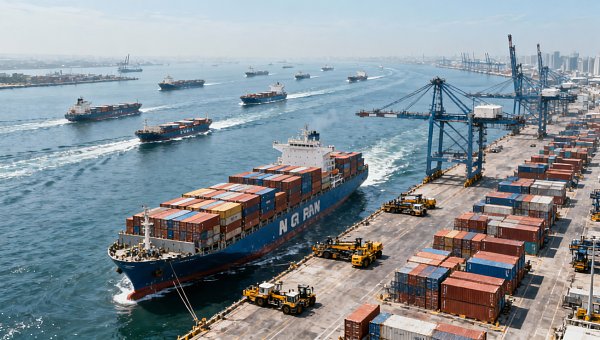
The same information indicates that disruption along the Red Sea–Suez route has already pushed Asia-Europe ocean freight rates up by more than 180%.
It also states that many vessels have been forced to reroute via the Cape of Good Hope, extending average delivery cycles from China to ports in the Middle East, Southern Europe, and Latin America by 12 to 18 days.
Where the pressure is likely to appear first in trade execution
Export planning is becoming more exposed to transit-time uncertainty
From an industry perspective, exporters are likely to feel the impact first where delivery commitments depend on stable sailing schedules. The main pressure point is not only freight cost, but whether shipment timing, customer acceptance windows, and order execution documents remain aligned when transit times stretch beyond prior assumptions.
What deserves closer attention is whether internal shipping schedules, delivery clauses, and customer-facing lead-time commitments still match actual route conditions. For businesses serving distant ports affected by rerouting, even routine export execution may require stricter review of dispatch timing and supporting trade paperwork.
Procurement and manufacturing may face planning distortions
Analysis shows that raw-material buyers and manufacturers may be affected when imported inputs or outbound finished goods rely on maritime routes now facing longer cycles. The operational effect may appear in procurement pacing, production sequencing, and inventory turnover rather than in a single compliance event.
Companies in these links should pay closer attention to whether purchase orders, supply schedules, and delivery assumptions remain workable under longer shipping windows. If procurement documents or technical delivery requirements were built around shorter transit expectations, execution risk may rise even without any formal regulatory change.
Logistics providers and distributors may need tighter document control
For freight forwarders, logistics coordinators, and distribution businesses, the immediate challenge is execution consistency across route changes, handover timing, and downstream delivery promises. Observably, when routing changes become more frequent, the risk grows around shipment tracking, document updates, and communication accuracy across multiple parties.
In practical terms, these market participants should watch for changes in booking conditions, transit estimates, cargo handover timing, and any customer or tender documents that set fixed delivery expectations. The issue is less about a new certification rule and more about whether existing trade and service obligations can still be met under altered transport conditions.
Practical points companies should review now
Recheck contract and tender wording against longer transit cycles
Analysis shows that one immediate task is to review whether sales contracts, procurement terms, tender files, and service commitments still reflect realistic transport timing. Where promised delivery windows were drafted under normal Red Sea–Suez assumptions, delayed execution risk may increase.
Track changes in compliance-facing shipment documents
What deserves closer attention is the consistency of shipping documents, dispatch records, delivery schedules, and any technical or commercial files submitted to customers. If route changes affect shipment sequencing or arrival expectations, document accuracy becomes part of risk control.
Pay attention to market-specific delivery commitments
For businesses shipping to the Middle East, Southern Europe, and Latin America, the provided information suggests that route disruption may translate into longer average delivery times. Companies should therefore monitor whether customer service commitments, after-sales timelines, and quality traceability steps remain achievable under revised logistics conditions.
Continue watching for official wording and execution signals
The available information does not provide detailed implementation measures, so it would be premature to treat this as a fully settled rule outcome. It is more appropriate to monitor whether official statements, trade-related notices, procurement requirements, or customer specifications begin to reflect stricter timing, routing, or documentation expectations.
Why this matters beyond freight cost
Observably, this development should not be read only as a transport disruption. From an industry perspective, it also acts as an execution signal for how vulnerable Cross-border Freight can become when a critical maritime corridor is constrained. The more relevant question for many businesses is whether existing trade arrangements, procurement cycles, and delivery commitments remain fit for current route realities.
Analysis shows that this is better understood, for now, as a risk warning with operational consequences rather than as a completed regulatory change with fixed enforcement rules. That is precisely why continued attention to customer requirements, tender language, and supply-chain execution feedback remains important.
How the market should read this signal for now
At this stage, the OECD warning points to a meaningful escalation in transport and delivery risk linked to maritime chokepoints, especially for Cross-border Freight flows exposed to the Red Sea–Suez corridor and rerouting pressures. A cautious reading is more appropriate than a definitive one: the situation already reflects real strain in freight rates and transit times, but its wider rule impact still needs to be assessed through subsequent trade practice, procurement adjustments, and market response.
Source basis and follow-up points
This article is generated based on the user-provided news title, event timing, and event summary. The specific official source link was not provided in the input and still requires further verification.
For this type of development, relevant source categories typically include official announcements, regulator releases, customs or trade authority information, industry association updates, standards-related documents, and reporting by authoritative media.
Further observation is still needed on later policy detail, execution language, certification-related interpretations where applicable, tender document adjustments, industry feedback, and how companies are implementing logistics and delivery changes in practice.
Get weekly intelligence in your inbox.
No noise. No sponsored content. Pure intelligence.
 Sep 21, 2026What to Look for in a Grid Integration Company for Utility-Scale Solar ProjectsWhat to Look for in a Grid Integration Company for Utility-Scale Solar Projects
 Sep 20, 2026Microgrid Controller Pricing: What Drives Cost in Commercial Energy Projects?Microgrid Controller Pricing: What Drives Cost in Commercial Energy Projects?
 Sep 19, 2026How to Choose a GaN Charger for Laptops Without Compromising Power or PortabilityHow to Choose a GaN Charger for Laptops Without Compromising Power or Portability
 Sep 18, 2026Floating Solar Farm Costs: CAPEX, OPEX, and the Site Factors That Shape ROIFloating Solar Farm Costs: CAPEX, OPEX, and the Site Factors That Shape ROI
 Sep 17, 2026Drone Delivery Solutions for Last-Mile Routes: Site, Payload, and Range PlanningDrone Delivery Solutions for Last-Mile Routes: Site, Payload, and Range Planning
 Sep 16, 2026When Low-Volume Electronics Manufacturing Makes More Sense Than Mass ProductionWhen Low-Volume Electronics Manufacturing Makes More Sense Than Mass Production
 Sep 15, 2026Wholesale WiFi Smart Switches: What Buyers Should Verify Before OrderingWholesale WiFi Smart Switches: What Buyers Should Verify Before Ordering
 Sep 14, 2026How to Select IoT Sensors for Reliable Monitoring in Harsh Industrial EnvironmentsHow to Select IoT Sensors for Reliable Monitoring in Harsh Industrial Environments
 Sep 13, 2026How Procurement Teams Can Improve Supplier Reliability With Supply Chain VisibilityHow Procurement Teams Can Improve Supplier Reliability With Supply Chain Visibility
 Sep 12, 2026Smart Manufacturing Trends 2026: What Leaders Should Prioritize for ROISmart Manufacturing Trends 2026: What Leaders Should Prioritize for ROI
 Sep 11, 2026B2B Market Analysis: How Buyers Evaluate Suppliers, Pricing, and Delivery RiskB2B Market Analysis: How Buyers Evaluate Suppliers, Pricing, and Delivery Risk
 Sep 10, 2026Residential Solar Kits in Canada: How to Size a System for Your Home and ClimateResidential Solar Kits in Canada: How to Size a System for Your Home and Climate
 Sep 09, 2026How to Specify a Syringe Assembly Line for High-Volume Sterile ProductionHow to Specify a Syringe Assembly Line for High-Volume Sterile Production
 Sep 08, 2026How to Evaluate Warehouse Robotics System Suppliers for Reliable Multi-Site DeploymentHow to Evaluate Warehouse Robotics System Suppliers for Reliable Multi-Site Deployment
 Sep 07, 2026Renewable Geothermal Energy Explained: How It Works for Heating and PowerRenewable Geothermal Energy Explained: How It Works for Heating and Power
 Sep 07, 2026How to Choose an Industrial Packaging Robot Manufacturer for Your Production LineHow to Choose an Industrial Packaging Robot Manufacturer for Your Production Line
 Sep 05, 2026How to Evaluate a Turnkey Hydro Turbine Generator Supplier for Remote Power ProjectsHow to Evaluate a Turnkey Hydro Turbine Generator Supplier for Remote Power Projects
 Sep 04, 2026Automated Ultrasonic Welding for Thermoplastic Assemblies: Process Controls That MatterAutomated Ultrasonic Welding for Thermoplastic Assemblies: Process Controls That Matter
 Sep 03, 2026Energy Forecasting for Grid Planning: Sizing Solar and Storage CapacityEnergy Forecasting for Grid Planning: Sizing Solar and Storage Capacity
 Sep 02, 2026Which Metrics Should an Energy Analytics Dashboard Track for Factory Energy Management?Which Metrics Should an Energy Analytics Dashboard Track for Factory Energy Management?
 Sep 01, 2026How Warehouse Voice Picking Improves Accuracy and Throughput in Order FulfillmentHow Warehouse Voice Picking Improves Accuracy and Throughput in Order Fulfillment
 Aug 31, 2026How to Automate Dropshipping Order Processing Without Overselling StockHow to Automate Dropshipping Order Processing Without Overselling Stock
 Aug 30, 2026How to Evaluate a Smart Lighting Supplier for Multi-Site Commercial ProjectsHow to Evaluate a Smart Lighting Supplier for Multi-Site Commercial Projects
 Aug 29, 2026Recent Advances in Smart Manufacturing and Materials Reshaping Factory InvestmentRecent Advances in Smart Manufacturing and Materials Reshaping Factory Investment
 Aug 29, 2026Selecting Lightweight Aluminum Extrusions for Strength-Critical Industrial DesignsSelecting Lightweight Aluminum Extrusions for Strength-Critical Industrial Designs
 Aug 29, 2026Vertical Powder Anodizing Explained: Process Controls for Uniform Coating QualityVertical Powder Anodizing Explained: Process Controls for Uniform Coating Quality
 Aug 29, 2026PV Module Product Due Diligence: What Buyers Should Verify Before ContractingPV Module Product Due Diligence: What Buyers Should Verify Before Contracting