Shanghai FTZ Starts Offshore RMB FX Pilot for Freight
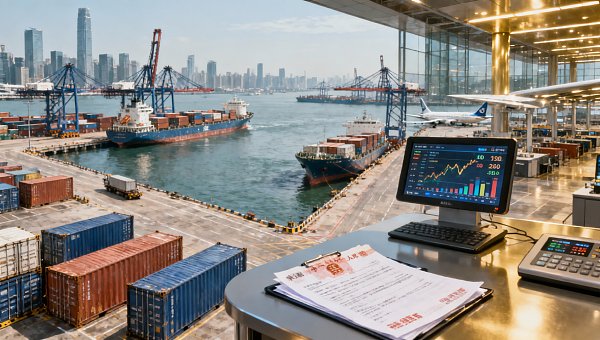
On June 17, 2026, the People’s Bank of China announced a pilot in the Shanghai Free Trade Zone authorizing ICBC and five other banks to conduct offshore renminbi foreign exchange transactions. For cross-border freight activity, this is a closely watched development because it relates directly to how logistics services such as ocean booking, air cargo agency work, and customs fulfillment can be priced and settled in renminbi, while also improving the ability to manage exchange-rate exposure for overseas forwarders, distributors, and importers buying logistics services in China.
A policy move centered on offshore RMB transactions
The confirmed development is limited but clear. The central bank stated on June 17, 2026 that six banks, including ICBC, were authorized to launch an offshore renminbi foreign exchange trading pilot in the Shanghai Free Trade Zone. Based on the information provided, the pilot is expected to improve the efficiency of renminbi-denominated settlement in cross-border logistics services and strengthen exchange-rate hedging capacity in related payment scenarios.
The same confirmed information also indicates a practical cost angle: overseas freight forwarders, distributors, and importers purchasing logistics services in China may face lower costs linked to exchange-rate fluctuations when using these settlement arrangements.
Where the immediate business impact may be felt
Freight service procurement becomes easier to structure
Analysis shows that companies purchasing shipping space, air freight agency services, or customs-related execution may be affected first because these are the service links explicitly tied to the announcement. The likely impact is not on transport demand itself, but on settlement efficiency, invoice currency arrangement, and the handling of exchange-rate exposure during payment.
Overseas intermediaries may see lower currency volatility pressure
From an industry perspective, overseas forwarders and distributors are among the most relevant market participants because they often need to buy logistics services in China while managing multi-currency cash flows. The development may matter most in the stages of quotation, payment timing, and internal cost control. What deserves closer attention is whether renminbi-denominated settlement becomes easier to execute in routine operations rather than only available in principle.
Import-side buyers gain a new settlement consideration
Importers sourcing logistics services in China may also be affected because exchange-rate swings can alter procurement costs even when the underlying service scope does not change. Observably, the practical issue for this group is whether the pilot improves visibility over final landed logistics costs when renminbi pricing is used.
What companies should monitor now
Watch the difference between policy signal and operating rules
Analysis shows that the announcement sets a direction, but businesses should distinguish between the policy signal and the detailed operating conditions that may shape actual use. The key issue is not only that a pilot exists, but how settlement and hedging arrangements are executed in real business workflows.
Review service contracts and pricing terms
Companies involved in ocean booking, air cargo agency, and customs fulfillment should pay attention to how pricing currency, payment terms, and exchange-rate responsibility are expressed in contracts and quotations. This matters because improved renminbi settlement efficiency may affect how suppliers and buyers allocate currency risk in commercial documents.
Prepare communication with overseas counterparties
For firms serving overseas forwarders, distributors, or importers, it is worth reviewing how renminbi pricing and settlement options are explained to customers. What deserves closer attention is whether counterparties understand the operational value of lower exchange-rate fluctuation costs, especially in recurring service purchases.
Track documentation and execution consistency
Observably, the value of any settlement improvement depends on whether invoicing, payment handling, and fulfillment documentation can align smoothly in practice. Companies should therefore monitor whether internal finance, operations, and customer service teams can support the same settlement logic across the full delivery process.
Why this is more than a narrow banking update
From an industry perspective, this development is not only about banking authorization. It points to a closer connection between renminbi settlement tools and the daily mechanics of cross-border freight services. Analysis shows that the main significance at this stage lies in payment efficiency and risk management rather than in any confirmed change to freight volumes or market structure.
It is more appropriate to understand this as an industry signal with operational relevance, not yet as a fully proven market outcome. The reason continued attention is needed is that the practical effect will depend on how widely and smoothly the pilot can support real logistics service transactions.
How the market may best read this development
At present, a balanced reading is more useful than an exaggerated one. The announcement clearly matters for renminbi-denominated settlement and exchange-rate risk control in cross-border freight-related services, especially for overseas buyers of logistics services in China. At the same time, it should be read as a targeted policy and business signal whose broader effects still need to be observed through actual implementation.
In that sense, the development is best understood as a meaningful near-term operational change with longer-term implications worth tracking, rather than as a complete or final reshaping of cross-border logistics settlement.
Basis of this article and follow-up verification
This article is generated based on the user-provided news title, event date, and event summary. The analysis relies only on the confirmed input that the People’s Bank of China announced the pilot on June 17, 2026, authorizing six banks including ICBC to conduct offshore renminbi foreign exchange transactions in the Shanghai Free Trade Zone, with expected relevance to renminbi settlement efficiency and exchange-rate hedging in cross-border logistics services.
For this type of industry update, commonly relevant source categories may include official announcements, company disclosures, industry association updates, authoritative media reporting, and standard-setting documents. A specific official source link was not provided in the input, so continued verification remains necessary. Follow-up attention should focus on any further official wording, implementation details, and signs of actual use in freight settlement scenarios.
Get weekly intelligence in your inbox.
No noise. No sponsored content. Pure intelligence.
 Sep 20, 2026Microgrid Controller Pricing: What Drives Cost in Commercial Energy Projects?Microgrid Controller Pricing: What Drives Cost in Commercial Energy Projects?
 Sep 19, 2026How to Choose a GaN Charger for Laptops Without Compromising Power or PortabilityHow to Choose a GaN Charger for Laptops Without Compromising Power or Portability
 Sep 18, 2026Floating Solar Farm Costs: CAPEX, OPEX, and the Site Factors That Shape ROIFloating Solar Farm Costs: CAPEX, OPEX, and the Site Factors That Shape ROI
 Sep 17, 2026Drone Delivery Solutions for Last-Mile Routes: Site, Payload, and Range PlanningDrone Delivery Solutions for Last-Mile Routes: Site, Payload, and Range Planning
 Sep 16, 2026When Low-Volume Electronics Manufacturing Makes More Sense Than Mass ProductionWhen Low-Volume Electronics Manufacturing Makes More Sense Than Mass Production
 Sep 15, 2026Wholesale WiFi Smart Switches: What Buyers Should Verify Before OrderingWholesale WiFi Smart Switches: What Buyers Should Verify Before Ordering
 Sep 14, 2026How to Select IoT Sensors for Reliable Monitoring in Harsh Industrial EnvironmentsHow to Select IoT Sensors for Reliable Monitoring in Harsh Industrial Environments
 Sep 13, 2026How Procurement Teams Can Improve Supplier Reliability With Supply Chain VisibilityHow Procurement Teams Can Improve Supplier Reliability With Supply Chain Visibility
 Sep 12, 2026Smart Manufacturing Trends 2026: What Leaders Should Prioritize for ROISmart Manufacturing Trends 2026: What Leaders Should Prioritize for ROI
 Sep 11, 2026B2B Market Analysis: How Buyers Evaluate Suppliers, Pricing, and Delivery RiskB2B Market Analysis: How Buyers Evaluate Suppliers, Pricing, and Delivery Risk
 Sep 10, 2026Residential Solar Kits in Canada: How to Size a System for Your Home and ClimateResidential Solar Kits in Canada: How to Size a System for Your Home and Climate
 Sep 09, 2026How to Specify a Syringe Assembly Line for High-Volume Sterile ProductionHow to Specify a Syringe Assembly Line for High-Volume Sterile Production
 Sep 08, 2026How to Evaluate Warehouse Robotics System Suppliers for Reliable Multi-Site DeploymentHow to Evaluate Warehouse Robotics System Suppliers for Reliable Multi-Site Deployment
 Sep 07, 2026Renewable Geothermal Energy Explained: How It Works for Heating and PowerRenewable Geothermal Energy Explained: How It Works for Heating and Power
 Sep 07, 2026How to Choose an Industrial Packaging Robot Manufacturer for Your Production LineHow to Choose an Industrial Packaging Robot Manufacturer for Your Production Line
 Sep 05, 2026How to Evaluate a Turnkey Hydro Turbine Generator Supplier for Remote Power ProjectsHow to Evaluate a Turnkey Hydro Turbine Generator Supplier for Remote Power Projects
 Sep 04, 2026Automated Ultrasonic Welding for Thermoplastic Assemblies: Process Controls That MatterAutomated Ultrasonic Welding for Thermoplastic Assemblies: Process Controls That Matter
 Sep 03, 2026Energy Forecasting for Grid Planning: Sizing Solar and Storage CapacityEnergy Forecasting for Grid Planning: Sizing Solar and Storage Capacity
 Sep 02, 2026Which Metrics Should an Energy Analytics Dashboard Track for Factory Energy Management?Which Metrics Should an Energy Analytics Dashboard Track for Factory Energy Management?
 Sep 01, 2026How Warehouse Voice Picking Improves Accuracy and Throughput in Order FulfillmentHow Warehouse Voice Picking Improves Accuracy and Throughput in Order Fulfillment
 Aug 31, 2026How to Automate Dropshipping Order Processing Without Overselling StockHow to Automate Dropshipping Order Processing Without Overselling Stock
 Aug 30, 2026How to Evaluate a Smart Lighting Supplier for Multi-Site Commercial ProjectsHow to Evaluate a Smart Lighting Supplier for Multi-Site Commercial Projects
 Aug 29, 2026Recent Advances in Smart Manufacturing and Materials Reshaping Factory InvestmentRecent Advances in Smart Manufacturing and Materials Reshaping Factory Investment
 Aug 29, 2026Selecting Lightweight Aluminum Extrusions for Strength-Critical Industrial DesignsSelecting Lightweight Aluminum Extrusions for Strength-Critical Industrial Designs
 Aug 29, 2026Vertical Powder Anodizing Explained: Process Controls for Uniform Coating QualityVertical Powder Anodizing Explained: Process Controls for Uniform Coating Quality
 Aug 29, 2026PV Module Product Due Diligence: What Buyers Should Verify Before ContractingPV Module Product Due Diligence: What Buyers Should Verify Before Contracting
 Aug 29, 2026Solar Design for Challenging Terrain: Managing Slope, Soil, and Shading RisksSolar Design for Challenging Terrain: Managing Slope, Soil, and Shading Risks