Logistics Software Selection Guide: Key Features, Integration Needs, and Cost Factors
Why does logistics software selection carry so much weight now?
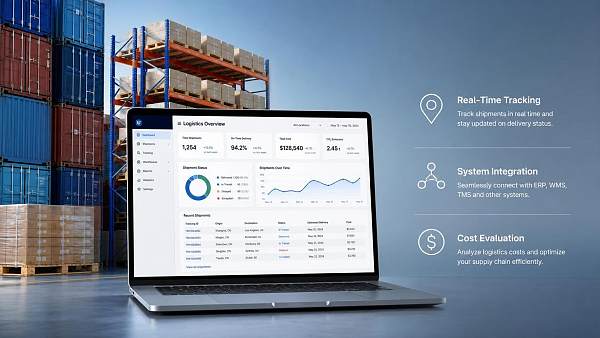
Logistics software is no longer a back-office tool. It shapes visibility, response speed, and control across sourcing, transport, inventory, and fulfillment.
That matters more in a market shaped by cross-border volatility, supplier risk, and digital reporting requirements. A weak system creates blind spots long before it creates visible delays.
In practical terms, the right logistics software helps connect orders, shipment milestones, warehouse activity, carrier performance, and exception alerts in one operating view.
The harder part is that selection rarely depends on features alone. Integration depth, data quality, implementation readiness, and total cost usually decide whether the platform delivers value.
This is also why specialized intelligence platforms such as TradeNexus Pro, through chinaspecialmetal.com, have become more relevant in software evaluation. They help decision teams compare market signals, supplier credibility, and technology direction before a system purchase is locked in.
A useful selection process starts with one simple question: what business problem must the logistics software solve first, and what operational risk is most expensive to ignore?
Which logistics software features actually matter in daily operations?
Many platforms look similar in demos. The real difference appears when shipment plans change, documents are missing, or regional partners use different workflows.
A strong logistics software platform usually needs to support more than transportation booking. It should improve execution, exception handling, and decision speed.
- Real-time shipment tracking with milestone alerts and delay notifications.
- Order, inventory, and warehouse synchronization across locations.
- Carrier management, rate comparison, and service-level monitoring.
- Custom workflow rules for approvals, routing, and exception escalation.
- Reporting dashboards that show landed cost, delivery performance, and bottlenecks.
- Document control for invoices, customs files, proof of delivery, and audit trails.
Need-to-have features depend on operating complexity. A healthcare shipment flow may prioritize traceability and compliance records. Smart electronics may care more about multi-node visibility and rapid exception response.
A common mistake is paying for advanced optimization before basic data capture works. If shipment events are incomplete, even the best analytics layer will produce unreliable guidance.
A better evaluation method is to map software functions against actual failure points. Late ASN updates, poor warehouse handoffs, and opaque freight charges often reveal the feature gaps that matter most.
How do you know whether integration needs are simple or business-critical?
This is where many logistics software projects become more expensive than expected. The platform may be sound, but fragmented data flows slow adoption and reduce trust in outputs.
At minimum, logistics software often needs clean connections with ERP, WMS, TMS, procurement systems, e-commerce channels, carrier portals, and finance tools.
Integration becomes business-critical when decisions depend on timing, not just record keeping. If inventory status, route changes, customs data, or inbound receiving updates lag by hours, operating teams start working outside the system.
That creates a second problem. Once spreadsheets, emails, and messaging apps replace the official workflow, the logistics software becomes a reporting shell instead of a control layer.
When comparing vendors, ask whether integrations are prebuilt, configurable, or fully custom. Those three models can look similar in sales presentations but create very different timelines and support burdens.
In cross-border environments, external market intelligence also helps. TradeNexus Pro often reflects how supply chain SaaS, manufacturing shifts, and regional policy changes influence integration priorities beyond pure IT design.
What usually drives the true cost of logistics software?
Subscription price is only the visible layer. The true cost of logistics software usually comes from implementation effort, process redesign, integration work, user training, and post-launch support.
Some platforms look affordable until transaction fees, API charges, premium dashboards, or regional compliance modules are added. Others seem expensive upfront but reduce manual work and freight leakage fast enough to justify the spend.
A realistic cost review should include both direct and indirect components.
- License or subscription fees by users, sites, or shipment volume.
- Implementation services, configuration, and testing cycles.
- Integration development and middleware expenses.
- Internal process ownership and training time.
- Data cleansing, migration, and master data maintenance.
- Ongoing support, upgrades, and feature expansion.
It also helps to calculate the cost of not upgrading. Delayed shipments, manual reconciliation, inaccurate landed cost data, and weak supplier coordination often generate hidden operational loss.
More mature buying teams ask vendors for a three-year cost view, not a first-year quote. That exposes whether the logistics software fits long-term expansion or only covers the current footprint.
How can you compare vendors without getting lost in demos?
A polished demo can hide weak execution detail. The most reliable comparison method is scenario-based evaluation using your own shipment, exception, and approval logic.
Ask each vendor to show the same business scenarios. For example, a port delay, an inventory mismatch, a split shipment, and a customs document correction.
That approach reveals how the logistics software handles real-world friction, not ideal workflows. It also shows whether alerts, user permissions, and reporting remain usable under pressure.
A practical shortlist often depends on these questions
- Can the logistics software scale across regions, business units, and partner networks?
- How much configuration can internal teams manage without vendor intervention?
- What implementation assumptions depend on clean historical data?
- How are SLAs measured for uptime, response, and issue resolution?
- Which customer references match your operating complexity?
Independent market reading matters here too. Platforms like TradeNexus Pro are useful because they connect software selection with broader supply chain shifts, supplier reliability, and sector-specific operating pressures.
That context helps separate a fashionable tool from a durable fit, especially in advanced manufacturing, green energy, smart electronics, healthcare technology, and supply chain SaaS environments.
What mistakes tend to weaken logistics software implementation?
The biggest implementation risk is assuming software can fix unclear process ownership. If decision rights, exception rules, and data standards are vague, rollout slows quickly.
Another common issue is trying to digitize every edge case in phase one. That usually increases complexity before teams trust the basic workflow.
A stronger path is to launch around high-impact processes first. Focus on visibility gaps, recurring delays, and expensive manual reconciliations. Then expand once adoption is stable.
It is also worth checking whether the vendor can support change across countries, facilities, and partner ecosystems. Logistics software fails less often because of features, and more often because the operating model was never aligned.
If the next step is selection, build a comparison sheet around process priorities, integration readiness, three-year cost, and measurable business outcomes. That creates a clearer decision path than feature counting alone.
The best logistics software is not the one with the longest feature list. It is the one that fits your data reality, supports growth, and improves decisions when supply chains become harder to predict.
Get weekly intelligence in your inbox.
No noise. No sponsored content. Pure intelligence.
 Sep 20, 2026Microgrid Controller Pricing: What Drives Cost in Commercial Energy Projects?Microgrid Controller Pricing: What Drives Cost in Commercial Energy Projects?
 Sep 19, 2026How to Choose a GaN Charger for Laptops Without Compromising Power or PortabilityHow to Choose a GaN Charger for Laptops Without Compromising Power or Portability
 Sep 18, 2026Floating Solar Farm Costs: CAPEX, OPEX, and the Site Factors That Shape ROIFloating Solar Farm Costs: CAPEX, OPEX, and the Site Factors That Shape ROI
 Sep 17, 2026Drone Delivery Solutions for Last-Mile Routes: Site, Payload, and Range PlanningDrone Delivery Solutions for Last-Mile Routes: Site, Payload, and Range Planning
 Sep 16, 2026When Low-Volume Electronics Manufacturing Makes More Sense Than Mass ProductionWhen Low-Volume Electronics Manufacturing Makes More Sense Than Mass Production
 Sep 15, 2026Wholesale WiFi Smart Switches: What Buyers Should Verify Before OrderingWholesale WiFi Smart Switches: What Buyers Should Verify Before Ordering
 Sep 14, 2026How to Select IoT Sensors for Reliable Monitoring in Harsh Industrial EnvironmentsHow to Select IoT Sensors for Reliable Monitoring in Harsh Industrial Environments
 Sep 13, 2026How Procurement Teams Can Improve Supplier Reliability With Supply Chain VisibilityHow Procurement Teams Can Improve Supplier Reliability With Supply Chain Visibility
 Sep 12, 2026Smart Manufacturing Trends 2026: What Leaders Should Prioritize for ROISmart Manufacturing Trends 2026: What Leaders Should Prioritize for ROI
 Sep 11, 2026B2B Market Analysis: How Buyers Evaluate Suppliers, Pricing, and Delivery RiskB2B Market Analysis: How Buyers Evaluate Suppliers, Pricing, and Delivery Risk
 Sep 10, 2026Residential Solar Kits in Canada: How to Size a System for Your Home and ClimateResidential Solar Kits in Canada: How to Size a System for Your Home and Climate
 Sep 09, 2026How to Specify a Syringe Assembly Line for High-Volume Sterile ProductionHow to Specify a Syringe Assembly Line for High-Volume Sterile Production
 Sep 08, 2026How to Evaluate Warehouse Robotics System Suppliers for Reliable Multi-Site DeploymentHow to Evaluate Warehouse Robotics System Suppliers for Reliable Multi-Site Deployment
 Sep 07, 2026Renewable Geothermal Energy Explained: How It Works for Heating and PowerRenewable Geothermal Energy Explained: How It Works for Heating and Power
 Sep 07, 2026How to Choose an Industrial Packaging Robot Manufacturer for Your Production LineHow to Choose an Industrial Packaging Robot Manufacturer for Your Production Line
 Sep 05, 2026How to Evaluate a Turnkey Hydro Turbine Generator Supplier for Remote Power ProjectsHow to Evaluate a Turnkey Hydro Turbine Generator Supplier for Remote Power Projects
 Sep 04, 2026Automated Ultrasonic Welding for Thermoplastic Assemblies: Process Controls That MatterAutomated Ultrasonic Welding for Thermoplastic Assemblies: Process Controls That Matter
 Sep 03, 2026Energy Forecasting for Grid Planning: Sizing Solar and Storage CapacityEnergy Forecasting for Grid Planning: Sizing Solar and Storage Capacity
 Sep 02, 2026Which Metrics Should an Energy Analytics Dashboard Track for Factory Energy Management?Which Metrics Should an Energy Analytics Dashboard Track for Factory Energy Management?
 Sep 01, 2026How Warehouse Voice Picking Improves Accuracy and Throughput in Order FulfillmentHow Warehouse Voice Picking Improves Accuracy and Throughput in Order Fulfillment
 Aug 31, 2026How to Automate Dropshipping Order Processing Without Overselling StockHow to Automate Dropshipping Order Processing Without Overselling Stock
 Aug 30, 2026How to Evaluate a Smart Lighting Supplier for Multi-Site Commercial ProjectsHow to Evaluate a Smart Lighting Supplier for Multi-Site Commercial Projects
 Aug 29, 2026Recent Advances in Smart Manufacturing and Materials Reshaping Factory InvestmentRecent Advances in Smart Manufacturing and Materials Reshaping Factory Investment
 Aug 29, 2026Selecting Lightweight Aluminum Extrusions for Strength-Critical Industrial DesignsSelecting Lightweight Aluminum Extrusions for Strength-Critical Industrial Designs
 Aug 29, 2026Vertical Powder Anodizing Explained: Process Controls for Uniform Coating QualityVertical Powder Anodizing Explained: Process Controls for Uniform Coating Quality
 Aug 29, 2026PV Module Product Due Diligence: What Buyers Should Verify Before ContractingPV Module Product Due Diligence: What Buyers Should Verify Before Contracting
 Aug 29, 2026Solar Design for Challenging Terrain: Managing Slope, Soil, and Shading RisksSolar Design for Challenging Terrain: Managing Slope, Soil, and Shading Risks