Yiwu Cross-Border Expo Opens With Trade SaaS Focus
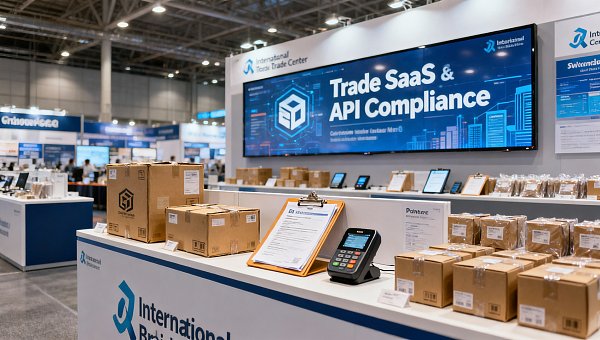
On June 23, 2026, the cross-border export section of the 16th Yiwu E-commerce Expo opened at Yiwu International Expo Center, drawing industry attention not only because of the event itself but because a dedicated Trade SaaS zone appeared for the first time. For exporters, overseas distributors, customs and compliance service providers, and cross-border payment and logistics partners, the notable point is the joint release of API-based digital compliance filing solutions covering 37 countries and designed to connect sourcing, customs clearance, and product listing into a more automated workflow.
A New Theme Area Puts Trade Compliance Tools in Focus
According to the provided event information, the exhibition runs from June 23 to June 25, 2026, at Yiwu International Expo Center as part of the 16th Yiwu E-commerce Expo's cross-border export program.
The event introduced a dedicated Trade SaaS theme area for the first time. DHL, PingPong, WorldFirst, and leading local customs SaaS companies jointly released API solutions that support digital compliance declarations across 37 countries.
The confirmed examples named in the release include the EU's EPR requirements, the U.S. FDA 21 CFR Part 11, and Saudi Arabia's SABER framework. The stated purpose of these interfaces is to help overseas distributors automate the full process from procurement to customs clearance and then to product listing.
Where the Practical Impact May Be Felt First
Export sellers and overseas distributors face workflow changes
From an industry perspective, the most immediate impact may be on cross-border sellers and overseas distribution operators that manage multiple destination markets. If compliance declarations can be connected through APIs, the operational pressure point shifts from manual processing toward system coordination, document readiness, and exception handling across procurement, customs, and listing stages.
Customs, payment, and logistics service providers may need tighter coordination
Analysis shows that service providers linked to trade execution could be affected where data handoff matters most. The joint appearance of logistics, payment, and customs SaaS participants suggests that compliance is being treated less as a standalone filing task and more as part of a transaction chain that requires synchronized data and process timing.
Suppliers and manufacturers may feel the impact through documentation demands
What deserves closer attention is the upstream side of the chain. Even when the API layer is presented as an automation tool, product documents, declarations, and supporting information still need to originate from suppliers or manufacturers. This means upstream partners may face closer scrutiny over document completeness and submission consistency for destination-market requirements.
What Companies Should Watch After the Launch
Separate the announced interface scope from actual deployment
Analysis shows that companies should distinguish between an announced API solution and real operating coverage in day-to-day trade. The event information confirms the release of interfaces supporting 37-country digital compliance filing, but businesses still need to watch how those interfaces are described in subsequent official materials and how they map to specific workflows.
Focus on high-risk compliance handoff points
For companies already managing procurement, clearance, and overseas listing across several markets, the key issue is not only whether a filing function exists, but where data breaks may occur. The more relevant question is which documents, declarations, and approval steps must stay aligned across internal teams and external service providers.
Review supplier files and product records early
Observably, automation only reduces friction when source data is usable. Exporters, distributors, and service partners should pay closer attention to whether supplier qualifications, product records, and supporting materials can be prepared in a format suitable for repeated digital submission rather than one-off manual handling.
Monitor market-specific compliance priorities
The named references to EU EPR, U.S. FDA 21 CFR Part 11, and Saudi SABER suggest that market-specific compliance remains central. For companies serving these destinations, the practical issue is to track whether commercial timelines, customs preparation, and listing readiness can be aligned with the compliance process instead of treated as separate stages.
Why This Matters Beyond the Exhibition Floor
Observably, this development is more important as a process signal than as a final market outcome. The first-time establishment of a Trade SaaS zone, together with a joint API release around multi-country digital compliance filing, indicates that cross-border trade services are being presented in a more integrated form.
At the same time, it is more appropriate to understand this as an industry direction worth monitoring rather than a completed shift. The provided information confirms the launch and the stated capabilities, but it does not by itself establish the pace of adoption, the depth of implementation, or the operational results across different exporter groups.
How to Read This Development Now
At this stage, the Yiwu event can be read as a concrete sign that customs, compliance, payments, and transaction execution are being discussed within the same digital operating framework. For the industry, that is a meaningful signal because it places compliance closer to the center of trade operations rather than at the edge of the process.
Still, a neutral reading is more appropriate than an exaggerated one. This update is best understood as a near-term operational signal with longer-term implications, especially for businesses that need to coordinate market entry, documentation, and overseas listing efficiency across multiple countries.
Basis of This Article
This article is generated based on the user-provided news title, event date, and event summary. The confirmed factual basis includes the June 23, 2026 opening of the related Yiwu exhibition, the first-time Trade SaaS theme area, and the jointly released API solutions covering digital compliance declarations in 37 countries.
For this type of development, commonly relevant source categories may include official event announcements, company statements, industry association releases, authoritative media reports, and standard or regulatory documents. A specific official source link was not provided in the input, so further verification is still needed. Continued attention should focus on subsequent official wording, implementation scope, and how the announced interfaces are applied in actual cross-border operating scenarios.
Get weekly intelligence in your inbox.
No noise. No sponsored content. Pure intelligence.
 Sep 21, 2026What to Look for in a Grid Integration Company for Utility-Scale Solar ProjectsWhat to Look for in a Grid Integration Company for Utility-Scale Solar Projects
 Sep 20, 2026Microgrid Controller Pricing: What Drives Cost in Commercial Energy Projects?Microgrid Controller Pricing: What Drives Cost in Commercial Energy Projects?
 Sep 19, 2026How to Choose a GaN Charger for Laptops Without Compromising Power or PortabilityHow to Choose a GaN Charger for Laptops Without Compromising Power or Portability
 Sep 18, 2026Floating Solar Farm Costs: CAPEX, OPEX, and the Site Factors That Shape ROIFloating Solar Farm Costs: CAPEX, OPEX, and the Site Factors That Shape ROI
 Sep 17, 2026Drone Delivery Solutions for Last-Mile Routes: Site, Payload, and Range PlanningDrone Delivery Solutions for Last-Mile Routes: Site, Payload, and Range Planning
 Sep 16, 2026When Low-Volume Electronics Manufacturing Makes More Sense Than Mass ProductionWhen Low-Volume Electronics Manufacturing Makes More Sense Than Mass Production
 Sep 15, 2026Wholesale WiFi Smart Switches: What Buyers Should Verify Before OrderingWholesale WiFi Smart Switches: What Buyers Should Verify Before Ordering
 Sep 14, 2026How to Select IoT Sensors for Reliable Monitoring in Harsh Industrial EnvironmentsHow to Select IoT Sensors for Reliable Monitoring in Harsh Industrial Environments
 Sep 13, 2026How Procurement Teams Can Improve Supplier Reliability With Supply Chain VisibilityHow Procurement Teams Can Improve Supplier Reliability With Supply Chain Visibility
 Sep 12, 2026Smart Manufacturing Trends 2026: What Leaders Should Prioritize for ROISmart Manufacturing Trends 2026: What Leaders Should Prioritize for ROI
 Sep 11, 2026B2B Market Analysis: How Buyers Evaluate Suppliers, Pricing, and Delivery RiskB2B Market Analysis: How Buyers Evaluate Suppliers, Pricing, and Delivery Risk
 Sep 10, 2026Residential Solar Kits in Canada: How to Size a System for Your Home and ClimateResidential Solar Kits in Canada: How to Size a System for Your Home and Climate
 Sep 09, 2026How to Specify a Syringe Assembly Line for High-Volume Sterile ProductionHow to Specify a Syringe Assembly Line for High-Volume Sterile Production
 Sep 08, 2026How to Evaluate Warehouse Robotics System Suppliers for Reliable Multi-Site DeploymentHow to Evaluate Warehouse Robotics System Suppliers for Reliable Multi-Site Deployment
 Sep 07, 2026Renewable Geothermal Energy Explained: How It Works for Heating and PowerRenewable Geothermal Energy Explained: How It Works for Heating and Power
 Sep 07, 2026How to Choose an Industrial Packaging Robot Manufacturer for Your Production LineHow to Choose an Industrial Packaging Robot Manufacturer for Your Production Line
 Sep 05, 2026How to Evaluate a Turnkey Hydro Turbine Generator Supplier for Remote Power ProjectsHow to Evaluate a Turnkey Hydro Turbine Generator Supplier for Remote Power Projects
 Sep 04, 2026Automated Ultrasonic Welding for Thermoplastic Assemblies: Process Controls That MatterAutomated Ultrasonic Welding for Thermoplastic Assemblies: Process Controls That Matter
 Sep 03, 2026Energy Forecasting for Grid Planning: Sizing Solar and Storage CapacityEnergy Forecasting for Grid Planning: Sizing Solar and Storage Capacity
 Sep 02, 2026Which Metrics Should an Energy Analytics Dashboard Track for Factory Energy Management?Which Metrics Should an Energy Analytics Dashboard Track for Factory Energy Management?
 Sep 01, 2026How Warehouse Voice Picking Improves Accuracy and Throughput in Order FulfillmentHow Warehouse Voice Picking Improves Accuracy and Throughput in Order Fulfillment
 Aug 31, 2026How to Automate Dropshipping Order Processing Without Overselling StockHow to Automate Dropshipping Order Processing Without Overselling Stock
 Aug 30, 2026How to Evaluate a Smart Lighting Supplier for Multi-Site Commercial ProjectsHow to Evaluate a Smart Lighting Supplier for Multi-Site Commercial Projects
 Aug 29, 2026Recent Advances in Smart Manufacturing and Materials Reshaping Factory InvestmentRecent Advances in Smart Manufacturing and Materials Reshaping Factory Investment
 Aug 29, 2026Selecting Lightweight Aluminum Extrusions for Strength-Critical Industrial DesignsSelecting Lightweight Aluminum Extrusions for Strength-Critical Industrial Designs
 Aug 29, 2026Vertical Powder Anodizing Explained: Process Controls for Uniform Coating QualityVertical Powder Anodizing Explained: Process Controls for Uniform Coating Quality
 Aug 29, 2026PV Module Product Due Diligence: What Buyers Should Verify Before ContractingPV Module Product Due Diligence: What Buyers Should Verify Before Contracting