Robot vacuum cleaners with mapping: what changes in daily use
Robot vacuum cleaners with mapping do more than clean floors automatically—they change how people plan, manage, and trust daily home cleaning. Compared with basic models, mapped navigation brings smarter routes, room-by-room control, and fewer missed spots. For consumers choosing among modern robot vacuum cleaners, understanding these everyday differences can make the decision far easier and more practical.
A visible shift: home cleaning is moving from “automatic” to “predictable”
The biggest change in the robot vacuum cleaners market is not simply stronger suction or a slimmer body. The more important shift is that users increasingly expect cleaning to be predictable. In earlier generations, many buyers accepted random movement as part of the experience. A robot could wander, bump into chair legs, repeat the same corridor, and still feel useful because it reduced manual effort. That standard is changing.
Today, mapped navigation has reset expectations. Consumers now compare robot vacuum cleaners not only by price and battery life, but also by how clearly the machine understands the home, how reliably it returns to specific rooms, and how easily the app turns daily cleaning into a routine rather than a guess. In practical terms, mapping changes the product from a floor gadget into a household system.
This matters because daily life has become more scheduled. Hybrid work, pet ownership, allergy concerns, and busier family routines all increase the value of a cleaner that can be trusted to handle exact tasks at exact times. The trend is not just toward smarter devices, but toward lower mental load for the user.
Why mapping has become a stronger buying signal
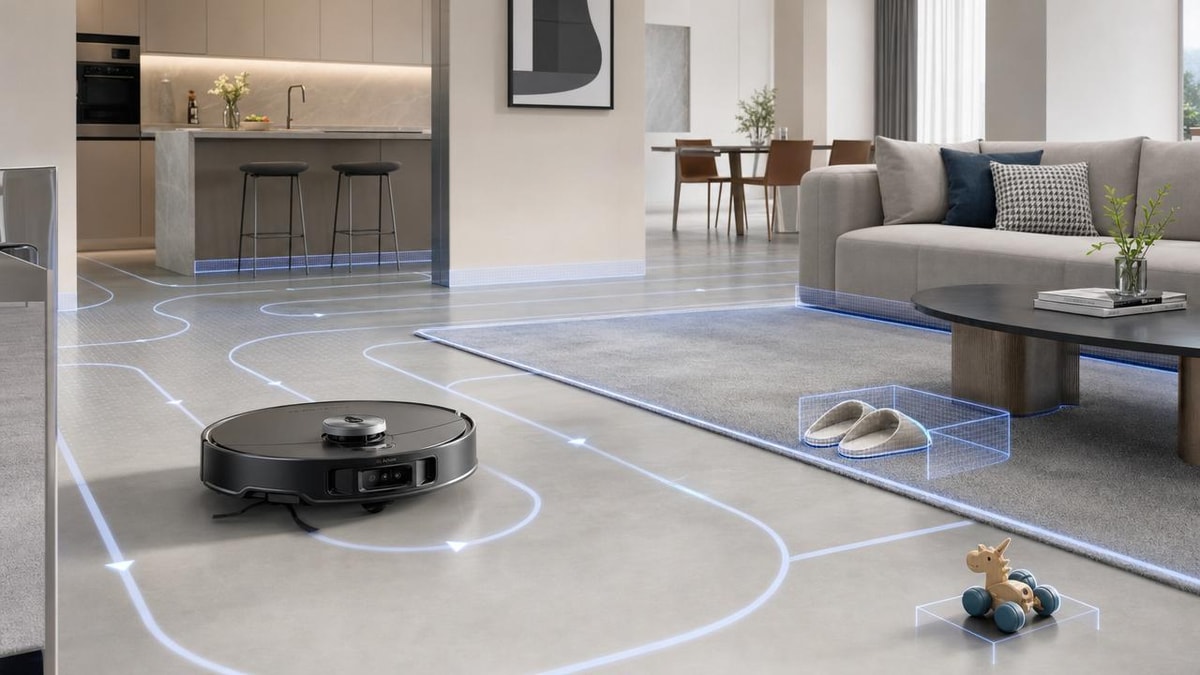
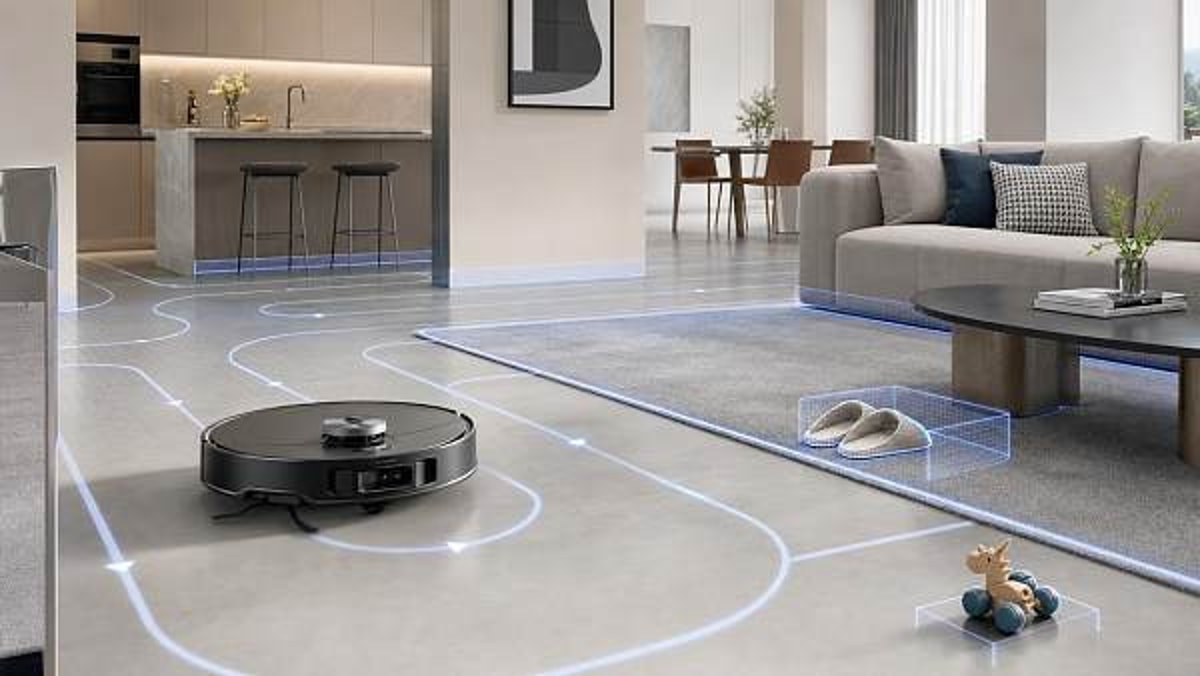
Several market signals explain why mapping is becoming a deciding factor when consumers evaluate robot vacuum cleaners. First, homes themselves are more varied. Open-plan layouts, apartment zoning, rugs mixed with hard floors, pet corners, and children’s play areas all create different cleaning needs within one space. A mapped robot can treat these areas differently instead of applying one generic path.
Second, app-based home management is now mainstream. Consumers already use apps to adjust thermostats, lights, security cameras, and appliances. Within that environment, a robot vacuum that cannot save maps, label rooms, or create cleaning zones feels outdated. The device is judged as part of a connected routine, not as a stand-alone machine.
Third, consumers have become more sensitive to efficiency. They want robot vacuum cleaners to finish cleaning faster, avoid repeated coverage, and use battery power intelligently. Mapping supports all three goals. Even buyers who are not interested in technical details often notice the outcome: less wandering, fewer missed edges, and fewer rescues from under furniture.
What actually changes in daily use
For many buyers, the phrase “with mapping” sounds technical until they live with it. The daily-use difference appears in small but frequent moments. A mapped robot can clean the kitchen after dinner without entering the bedroom. It can avoid a pet feeding area. It can skip a rug during mopping mode. It can be sent to the hallway after guests leave instead of starting a full-house cycle. These actions make robot vacuum cleaners feel more responsive to real life.
Another change is confidence. Basic robots often require supervision because users are unsure where the robot has gone or whether it finished properly. Mapping creates visual proof. The user sees the floor plan, checks completed rooms, and edits cleaning zones if needed. That feedback loop changes behavior: people are more likely to schedule frequent cleanings when they trust the outcome.
Mapped robot vacuum cleaners also support selective cleaning, which is increasingly important in homes where dirt is unevenly distributed. Entryways collect dust, kitchens collect crumbs, and living rooms attract pet hair. Instead of over-cleaning low-traffic spaces, users can focus on high-need areas. This can reduce noise, save battery cycles, and make the robot feel less intrusive.
The strongest impact is on households with complex routines
Not every user experiences the same level of benefit. Mapping becomes especially valuable when cleaning needs change by time, room, or household member. Families with children may need targeted post-meal cleaning. Pet owners often want frequent cleaning around sofas, beds, and feeding stations. Apartment residents may need quiet operation during work calls, making precise scheduling more valuable than full-home runs.
People with allergies may also find mapped robot vacuum cleaners more useful because consistency matters as much as raw power. A robot that reliably covers bedrooms and dust-prone edges on schedule can support cleaner daily conditions better than a stronger but less organized machine. Older adults or users with limited mobility may value mapping for another reason: reduced intervention. The robot is easier to direct digitally and less likely to need physical repositioning.
Technology upgrades are changing consumer standards, not just product specs
One important trend is that technologies once considered premium are moving toward the mainstream. Mapping used to be a feature people justified only for larger homes or higher budgets. Now it increasingly shapes expectations even in the mid-range segment. This does not mean every household needs the most advanced sensors available, but it does mean buyers should think beyond suction headlines.
As robot vacuum cleaners improve in navigation, the value equation shifts. Consumers start judging products by long-term convenience: how often maps fail, whether furniture changes confuse the system, how easy the app is for multiple family members, and whether the robot adapts to life rather than forcing life to adapt to the robot. In other words, daily usability is becoming a core performance metric.
This trend may continue as more buyers become first-time smart home users. They often prefer products that are intuitive from day one. A robot that clearly maps the home, labels rooms correctly, and allows simple task control lowers the learning curve. That can influence reviews, recommendations, and repeat purchases more than raw hardware claims.
What consumers should watch before choosing robot vacuum cleaners
Because mapping is now a major decision point, consumers should look at how the feature performs in practical situations. The first question is whether the robot saves and maintains a stable map. A flashy first run matters less than whether the map remains useful after chairs move, seasonal rugs appear, or the robot is carried between floors.
The second question is control quality. Strong robot vacuum cleaners with mapping should let users name rooms, draw zones, merge or divide areas, and set no-go boundaries without frustration. If app controls are confusing, the mapping benefit can be reduced. The third question is adaptation. Homes are not static. Buyers should consider how well the robot handles cables, dining chair legs, pet bowls, and temporary clutter.
A fourth point is whether the machine supports the household’s real cleaning rhythm. Some users need a complete morning clean. Others need short, focused runs after meals or before bedtime. The best robot vacuum cleaners are not simply the most powerful on paper; they are the ones that align with how the household actually creates mess.
A practical framework for judging future value
For buyers trying to separate marketing from lasting value, it helps to evaluate mapped robot vacuum cleaners through a simple future-focused lens. Ask whether the robot will still feel useful after the novelty wears off. A product with strong mapping should improve routines over months, not just impress during setup week.
Why this trend is worth watching now
The direction of the market suggests that mapping is no longer a niche upgrade. It is becoming part of the baseline conversation around robot vacuum cleaners because consumer expectations are rising in a more sophisticated way. Buyers are not only asking, “Will this clean my floor?” They are asking, “Will this fit into my home without constant attention?” That is a more demanding question, and mapping is central to the answer.
For end consumers, the practical takeaway is clear: treat mapped navigation as a daily-life feature, not a technical extra. The real value appears in better room control, more dependable routines, and less effort spent correcting the robot. If you are comparing robot vacuum cleaners, focus on how each model supports your layout, traffic patterns, and cleaning habits. The best choice is the one that turns cleaning from a repeated task into a managed background process.
If you want to judge whether this trend matters for your own home, confirm a few questions first: Do you need room-by-room control? Does mess build up in predictable zones? Will multiple people use the app? Do you want the robot to clean on your schedule instead of its own limitations? Those answers will show whether mapping is simply attractive—or genuinely transformative—in everyday use.
Get weekly intelligence in your inbox.
No noise. No sponsored content. Pure intelligence.
 May 05, 2026Inventory management systems that fix stock errors at the sourceInventory management systems that fix stock errors at the source
 May 05, 2026Medical disposables sourcing gets risky when prices drop too fastMedical disposables sourcing gets risky when prices drop too fast
 May 05, 2026Supply Chain Management gaps that create hidden inventory costsSupply Chain Management gaps that create hidden inventory costs
 May 05, 2026Why ERP software rollouts fail even with strong vendor supportWhy ERP software rollouts fail even with strong vendor support
 May 05, 2026Patient monitors: which features actually improve bedside responsePatient monitors: which features actually improve bedside response
 May 05, 2026Medical PPE shortages are easing, but quality gaps remainMedical PPE shortages are easing, but quality gaps remain
 May 05, 2026Portable oxygen concentrators: what matters beyond battery lifePortable oxygen concentrators: what matters beyond battery life
 May 05, 2026Medical diagnostic equipment buying mistakes that cost more laterMedical diagnostic equipment buying mistakes that cost more later
 May 05, 2026Cold chain logistics failures often start before transitCold chain logistics failures often start before transit
 May 05, 2026Hydrogen energy projects face one cost issue few plan forHydrogen energy projects face one cost issue few plan for
 May 05, 2026Digital Footprint risks that grow when suppliers scale fastDigital Footprint risks that grow when suppliers scale fast
 May 05, 2026Cross border ecommerce fulfillment problems that hurt repeat salesCross border ecommerce fulfillment problems that hurt repeat sales
 May 05, 2026N95 respirators: why fit matters more than many expectN95 respirators: why fit matters more than many expect
 May 05, 2026Ultrasound machines: when image quality and workflow clashUltrasound machines: when image quality and workflow clash
 May 05, 2026LED displays for retail spaces: brightness is not the only issueLED displays for retail spaces: brightness is not the only issue
 May 05, 2026What to check before placing wheelchairs wholesale ordersWhat to check before placing wheelchairs wholesale orders
 May 05, 2026Freight forwarding services that help avoid customs delaysFreight forwarding services that help avoid customs delays
 May 05, 2026Aesthetic lasers: the difference between power and precisionAesthetic lasers: the difference between power and precision
 May 05, 2026How rehabilitation equipment choices affect recovery routinesHow rehabilitation equipment choices affect recovery routines
 May 05, 2026Robot vacuum cleaners with mapping: what changes in daily useRobot vacuum cleaners with mapping: what changes in daily use
 May 05, 2026Where logistics drones make sense and where they still do notWhere logistics drones make sense and where they still do not
 May 05, 2026B2B SaaS solutions that reduce manual trade workflowsB2B SaaS solutions that reduce manual trade workflows
 May 05, 2026What makes 3PL logistics performance hard to measure fairlyWhat makes 3PL logistics performance hard to measure fairly
 May 05, 2026Shipping rates are shifting again: what costs are easy to missShipping rates are shifting again: what costs are easy to miss
 May 05, 2026Trade Leaders in 2026: what will separate winners from the restTrade Leaders in 2026: what will separate winners from the rest
 May 05, 2026Why smart warehousing projects stall after the pilot stageWhy smart warehousing projects stall after the pilot stage
 May 05, 2026AGV robots or forklifts: which fits busy warehouses better?AGV robots or forklifts: which fits busy warehouses better?