Cross border ecommerce fulfillment problems that hurt repeat sales
Cross border ecommerce fulfillment can make or break repeat sales when delivery delays, customs friction, inventory gaps, and poor return experiences erode buyer trust. For enterprise decision-makers, understanding these hidden operational failures is essential to protecting customer loyalty, reducing churn, and building a scalable global commerce strategy that supports long-term growth.
Why cross-border fulfillment is now a board-level retention issue
A clear shift is taking place in global commerce. Buyers no longer compare overseas sellers only on product price or catalog depth. They increasingly judge the entire post-purchase experience: shipping predictability, landed cost transparency, customs speed, delivery reliability, and the ease of solving exceptions. This change matters because repeat sales are built after checkout, not before it.
For many companies, cross border ecommerce fulfillment has moved from a logistics function to a revenue protection function. Enterprise teams that once treated fulfillment as an operational back office now see it affecting customer lifetime value, channel reputation, marketplace ranking, and margin quality. When cross-border delivery repeatedly underperforms, customers do not simply complain; they reorder less, switch suppliers faster, and become more sensitive to competitors offering more reliable service.
This is especially relevant for B2B and hybrid B2B2C sellers operating across multiple markets. Procurement teams, distributors, and business buyers may tolerate complexity in sourcing, but they rarely tolerate uncertainty in delivery. As a result, weak fulfillment execution is becoming one of the most underestimated causes of repeat-sales erosion in international commerce.
The operating environment has changed faster than many fulfillment models
Several market signals explain why legacy fulfillment models are under strain. First, customer expectations have become more local even when orders are global. Buyers want delivery windows, tracking standards, and return policies that feel domestic. Second, customs and compliance requirements have become more dynamic, with stricter scrutiny around product data, origin records, taxes, and documentation accuracy. Third, inventory volatility has increased, making stock placement and replenishment planning more difficult across regions.
At the same time, shipping networks are less forgiving. Carrier capacity shifts, geopolitical disruptions, and port congestion can rapidly turn a stable delivery promise into a broken one. Many businesses still rely on fulfillment designs built for slower demand cycles and simpler country coverage. That mismatch is where repeat sales begin to weaken.
The most damaging cross border ecommerce fulfillment problems are often hidden
Not every fulfillment failure looks dramatic. In fact, some of the most harmful issues are subtle because they appear isolated in internal reports while customers experience them as a pattern. A one-day delay may not seem serious to operations teams, but repeated inconsistency teaches buyers that promised delivery dates are not dependable. A customs hold may be explainable internally, yet the customer remembers only that the shipment did not arrive when expected.
The hidden problems usually fall into five categories:
1. Delivery promises detached from actual network performance
Many sellers advertise optimistic transit times based on best-case routes rather than real operating averages. This creates a gap between what marketing promises and what fulfillment can consistently achieve. Repeat buyers notice that gap quickly.
2. Customs and tax opacity
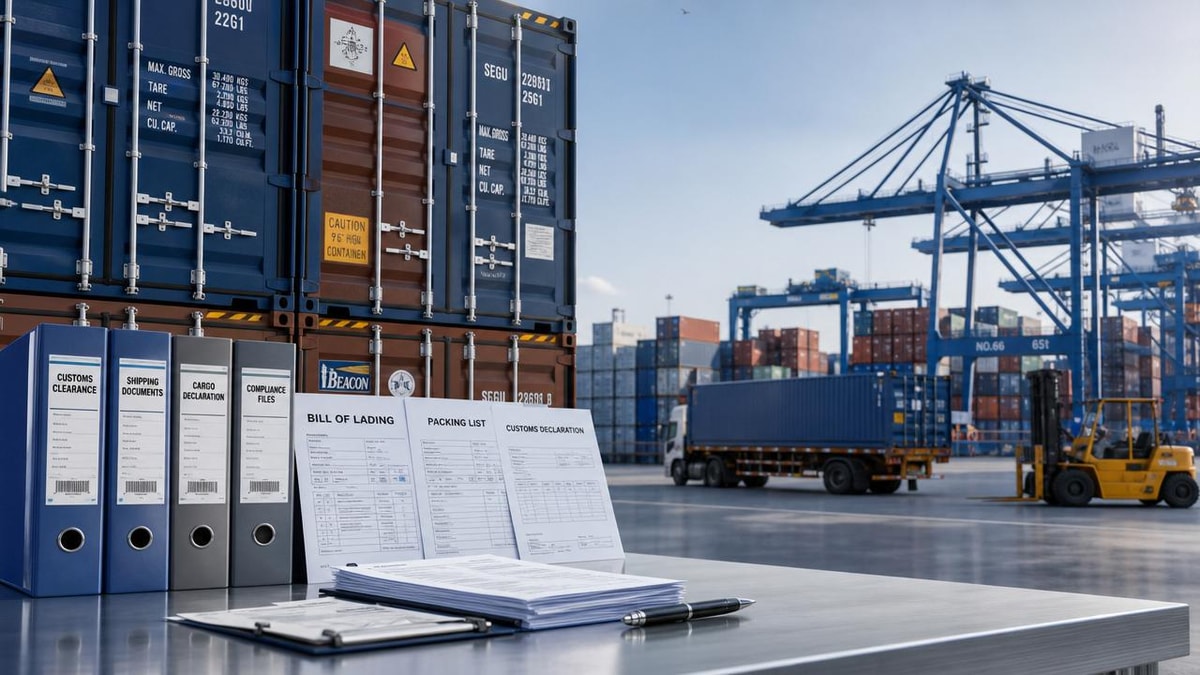
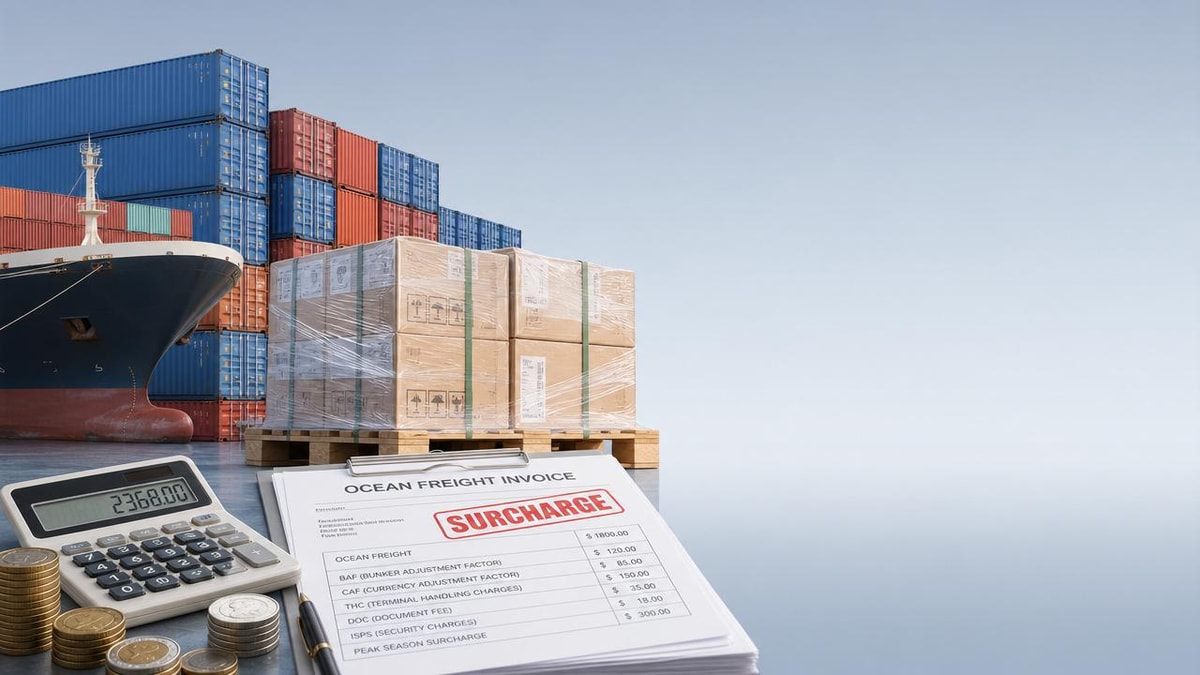
If duties, brokerage fees, or import procedures are unclear at checkout, buyers feel misled when additional costs or delays emerge later. In cross border ecommerce fulfillment, cost transparency is now a trust factor, not just a finance issue.
3. Inventory allocated for cost efficiency instead of demand responsiveness
Centralized stock may reduce carrying costs, but it can also lengthen lead times and magnify stockout risk in growing markets. Companies that ignore regional demand signals often lose repeat orders to better-positioned competitors.
4. Weak exception management
Customers can forgive disruption more easily than silence. When tracking events stall, support responses are delayed, or ownership of issues is unclear, buyer confidence falls sharply.
5. Reverse logistics treated as an afterthought
Returns, replacements, and warranty exchanges are decisive moments. If international returns are expensive, slow, or confusing, first-time buyers often decide not to purchase again.

Why these failures hurt repeat sales more than first-time conversion
The first order is usually driven by product need, pricing, availability, or market reach. The second order depends far more on trust. That is why cross border ecommerce fulfillment problems disproportionately affect retention. A customer may accept some uncertainty when testing a new supplier, but they expect learning and consistency on later purchases.
There is also a psychological factor. Delivery delays or surprise import costs create a stronger negative memory than a smooth shipment creates a positive one. In practical terms, this means a single fulfillment failure can outweigh multiple successful touchpoints. For enterprise buyers with procurement schedules, installation timelines, or downstream client commitments, the cost of uncertainty is even higher.
This trend is visible across sectors covered by TradeNexus Pro, from advanced manufacturing components to healthcare technology devices and smart electronics. In each case, fulfillment reliability influences not just satisfaction but business continuity. Repeat sales decline when customers begin to see international ordering as operationally risky.
Who feels the impact most across the business
The effect of poor cross-border fulfillment does not stay inside logistics. It spreads across commercial, financial, and strategic functions. Decision-makers should evaluate the issue as a cross-functional risk rather than a warehouse KPI problem.
The next wave of competitive advantage is operational transparency
One of the strongest signals in global commerce is that transparency is becoming a growth lever. Customers want to know not only where an order is, but what is likely to happen next. Businesses that can provide realistic lead times, landed cost clarity, proactive exception alerts, and defined return pathways are likely to retain more buyers than those still relying on generic status updates.
This does not mean every company needs the same network model. Some will benefit from regional fulfillment nodes, some from bonded inventory, some from marketplace-specific logistics integration, and others from stronger customs data management. The real advantage lies in aligning fulfillment design with customer expectations by market, product type, and order urgency.
For enterprise decision-makers, the important trend is clear: cross border ecommerce fulfillment is no longer judged only by cost-per-shipment. It is judged by whether it reduces uncertainty throughout the order lifecycle.
What enterprise teams should assess now
Companies looking to protect repeat sales should shift from basic fulfillment monitoring to decision-oriented assessment. The right question is not simply whether shipments are moving, but whether the current system supports loyalty at scale.
Audit promise accuracy by market
Compare displayed delivery commitments with actual performance by country, product category, and season. If promise accuracy is weak, growth efforts may be creating future churn.
Identify customs failure patterns
Look beyond headline delay rates. Review recurring causes such as incomplete product descriptions, inconsistent valuation data, origin mismatches, or unsupported importer documentation.
Measure stock placement against reorder behavior
If high-potential markets repeatedly face long lead times, inventory strategy may be suppressing repeat sales more than it saves in storage costs.
Treat returns as a loyalty process
Evaluate how long replacements, credits, and reverse shipments take across borders. A poor return experience can quietly end a customer relationship.
Strengthen exception ownership
Build clear rules for who acts when parcels stall, documentation fails, or last-mile events break expected timelines. Accountability shortens recovery time and protects trust.
A practical decision framework for the next 12 months
The businesses most likely to improve retention will not chase perfection everywhere. Instead, they will prioritize the markets, products, and customer segments where fulfillment failure has the highest loyalty impact. This staged approach is often more effective than broad network redesign.
Signals worth watching as global commerce evolves
Looking ahead, several signals deserve ongoing attention. One is the growing value of regional fulfillment flexibility, especially for companies selling into markets with volatile customs lead times. Another is the increasing importance of data quality, since product classification, declared value, and origin detail directly affect border performance. A third is the shift toward customer-facing transparency tools that convert logistics data into clearer delivery communication.
Decision-makers should also watch how major marketplaces, carriers, and regulators influence service expectations. As standard delivery experiences become more visible and comparable, tolerance for fulfillment ambiguity will continue to decline. In that environment, weak cross border ecommerce fulfillment will not remain an isolated inefficiency; it will become a visible commercial disadvantage.
Conclusion: retention growth starts after the order is placed
The central trend is not simply that international shipping is difficult. It is that the market is becoming less forgiving of fulfillment uncertainty. Delivery delays, customs friction, inventory misalignment, and poor returns now influence repeat sales more directly than many companies realize. For enterprise teams, the strategic response is to treat cross border ecommerce fulfillment as a loyalty engine, not just an execution layer.
If your business wants to understand how these shifts may affect growth, focus on a few practical questions: where are promises breaking most often, which markets show the largest trust gap after delivery, what customs issues recur, and how quickly can your organization recover when exceptions happen? The answers will reveal whether your current fulfillment model supports repeat sales or quietly undermines them.
For global decision-makers navigating complex sectors, this is exactly the kind of operational insight that matters. In a market shaped by data, speed, and trust, the companies that win repeat business will be those that turn fulfillment from a hidden pain point into a visible source of confidence.
Get weekly intelligence in your inbox.
No noise. No sponsored content. Pure intelligence.
 May 05, 2026Inventory management systems that fix stock errors at the sourceInventory management systems that fix stock errors at the source
 May 05, 2026Medical disposables sourcing gets risky when prices drop too fastMedical disposables sourcing gets risky when prices drop too fast
 May 05, 2026Supply Chain Management gaps that create hidden inventory costsSupply Chain Management gaps that create hidden inventory costs
 May 05, 2026Why ERP software rollouts fail even with strong vendor supportWhy ERP software rollouts fail even with strong vendor support
 May 05, 2026Patient monitors: which features actually improve bedside responsePatient monitors: which features actually improve bedside response
 May 05, 2026Medical PPE shortages are easing, but quality gaps remainMedical PPE shortages are easing, but quality gaps remain
 May 05, 2026Portable oxygen concentrators: what matters beyond battery lifePortable oxygen concentrators: what matters beyond battery life
 May 05, 2026Medical diagnostic equipment buying mistakes that cost more laterMedical diagnostic equipment buying mistakes that cost more later
 May 05, 2026Cold chain logistics failures often start before transitCold chain logistics failures often start before transit
 May 05, 2026Hydrogen energy projects face one cost issue few plan forHydrogen energy projects face one cost issue few plan for
 May 05, 2026Digital Footprint risks that grow when suppliers scale fastDigital Footprint risks that grow when suppliers scale fast
 May 05, 2026Cross border ecommerce fulfillment problems that hurt repeat salesCross border ecommerce fulfillment problems that hurt repeat sales
 May 05, 2026N95 respirators: why fit matters more than many expectN95 respirators: why fit matters more than many expect
 May 05, 2026Ultrasound machines: when image quality and workflow clashUltrasound machines: when image quality and workflow clash
 May 05, 2026LED displays for retail spaces: brightness is not the only issueLED displays for retail spaces: brightness is not the only issue
 May 05, 2026What to check before placing wheelchairs wholesale ordersWhat to check before placing wheelchairs wholesale orders
 May 05, 2026Freight forwarding services that help avoid customs delaysFreight forwarding services that help avoid customs delays
 May 05, 2026Aesthetic lasers: the difference between power and precisionAesthetic lasers: the difference between power and precision
 May 05, 2026How rehabilitation equipment choices affect recovery routinesHow rehabilitation equipment choices affect recovery routines
 May 05, 2026Robot vacuum cleaners with mapping: what changes in daily useRobot vacuum cleaners with mapping: what changes in daily use
 May 05, 2026Where logistics drones make sense and where they still do notWhere logistics drones make sense and where they still do not
 May 05, 2026B2B SaaS solutions that reduce manual trade workflowsB2B SaaS solutions that reduce manual trade workflows
 May 05, 2026What makes 3PL logistics performance hard to measure fairlyWhat makes 3PL logistics performance hard to measure fairly
 May 05, 2026Shipping rates are shifting again: what costs are easy to missShipping rates are shifting again: what costs are easy to miss
 May 05, 2026Trade Leaders in 2026: what will separate winners from the restTrade Leaders in 2026: what will separate winners from the rest
 May 05, 2026Why smart warehousing projects stall after the pilot stageWhy smart warehousing projects stall after the pilot stage
 May 05, 2026AGV robots or forklifts: which fits busy warehouses better?AGV robots or forklifts: which fits busy warehouses better?