Aesthetic lasers: the difference between power and precision
In aesthetic lasers, the distinction between power and precision determines not only treatment speed but also safety, consistency, and clinical outcomes. For technical evaluators, understanding how wavelength, pulse duration, energy delivery, and targeting accuracy interact is essential when comparing platforms. This article examines the real performance factors behind aesthetic lasers, helping decision-makers assess technology beyond marketing claims.
What aesthetic lasers mean in technical evaluation
Aesthetic lasers are energy-based medical devices used for noninvasive or minimally invasive skin treatments such as hair reduction, vascular lesion management, pigmentation correction, skin resurfacing, scar revision, and tattoo removal. In commercial discussions, many systems are described by headline numbers such as peak power, spot size, or treatment speed. For technical evaluators, however, the true question is not which platform appears most powerful on paper, but which one delivers controlled, repeatable energy to the intended chromophore with the lowest acceptable risk.
That distinction matters because aesthetic lasers operate in a complex biological environment. Melanin, hemoglobin, and water absorb light differently across wavelengths. Tissue response also depends on pulse structure, fluence, thermal relaxation time, cooling strategy, and beam homogeneity. A platform with higher output may complete a pass faster, yet still underperform if it generates uneven energy distribution, inconsistent pulse timing, or excessive collateral heating. Precision, therefore, is not a marketing slogan. It is an engineering and clinical requirement.
Why the industry focuses on power versus precision
The global market for aesthetic lasers has become more demanding as clinics seek better patient throughput, broader skin-type coverage, and lower operator variability. This is especially relevant in a B2B environment where procurement teams, biomedical engineers, and clinical leaders must justify equipment decisions with lifecycle performance rather than promotional claims. On platforms such as TradeNexus Pro, this kind of technical scrutiny aligns with a larger trend across advanced healthcare technology: buyers increasingly evaluate reliability, system architecture, serviceability, and evidence quality as seriously as treatment versatility.
The industry’s attention to aesthetic lasers also reflects competitive pressure. Clinics need devices that can support multiple indications while maintaining treatment consistency across staff, skin tones, and treatment areas. As a result, evaluators often ask whether a laser’s “power” contributes to outcomes or merely expands theoretical capacity. Aesthetic lasers that combine adequate energy reserves with precise optical control tend to offer stronger long-term value because they reduce retreat rates, protect reputation, and support standardized protocols.
The core technical difference between power and precision
Power generally refers to the rate at which energy is delivered, while precision refers to how accurately that energy is delivered in space, time, and tissue depth. In aesthetic lasers, these two dimensions should work together, but they do not always scale together. A system can offer strong peak output yet still lack pulse stability, targeting accuracy, or controlled thermal confinement.
From an engineering standpoint, precision includes several measurable attributes. Beam profile affects whether fluence is evenly distributed across the treatment spot. Pulse duration determines whether thermal energy remains confined to the target structure. Wavelength selection defines chromophore specificity and penetration depth. Repetition rate and energy recovery influence whether performance remains stable during long sessions. Cooling systems affect epidermal protection and patient tolerance. Together, these factors determine whether aesthetic lasers deliver usable clinical precision rather than nominal specifications.
Key performance factors technical evaluators should examine
When reviewing aesthetic lasers, technical teams should move from headline claims to performance logic. The following table summarizes the most relevant dimensions and why they matter in real-world evaluation.
This approach helps evaluators compare aesthetic lasers according to applied performance, not only theoretical specification sheets. It also supports more defensible procurement decisions in healthcare technology organizations where clinical efficacy and operational resilience must be aligned.
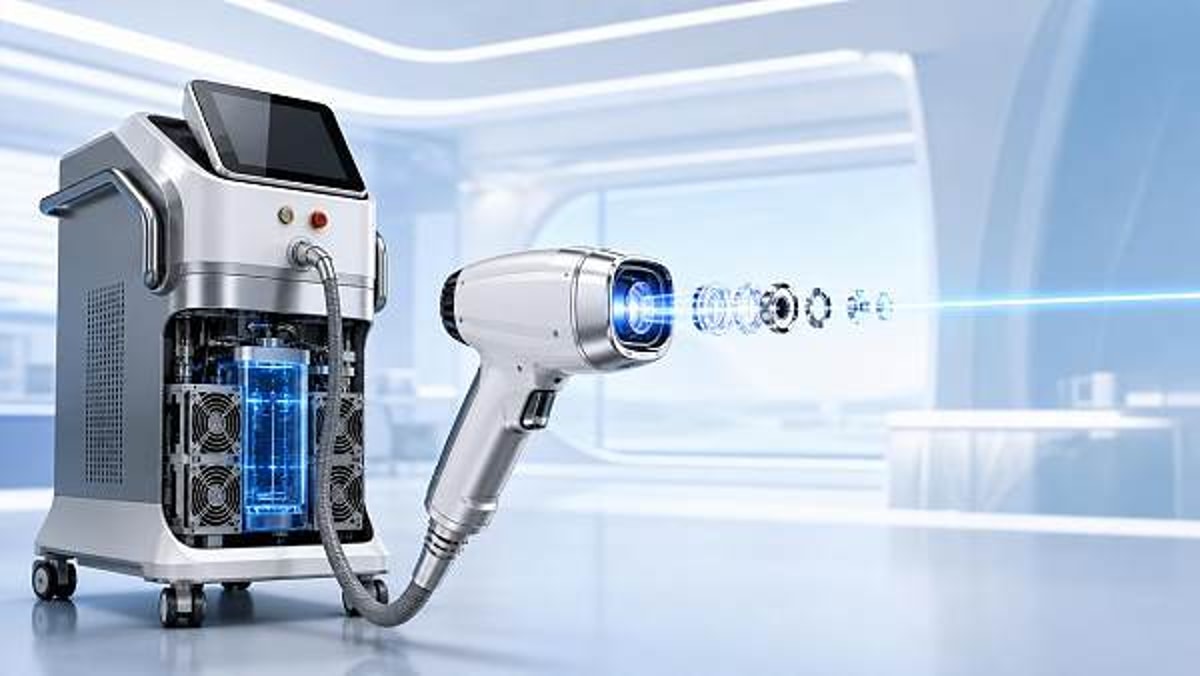
How precision influences clinical and business value
Precision creates value across several layers. Clinically, it improves selectivity, which supports better outcomes with fewer adverse effects. Operationally, it lowers the chance of inconsistent treatment between operators. Commercially, it can reduce consumable waste, retreatment burden, complaint management, and reputational risk. In premium aesthetic environments, these benefits often outweigh the appeal of raw speed alone.
For example, in hair removal, sufficient power is required to treat larger areas efficiently, but precision in pulse width, cooling, and beam uniformity determines whether follicles are heated effectively without harming surrounding epidermis. In vascular treatment, wavelength specificity and pulse timing are central to vessel coagulation without unnecessary purpura or pigmentary complications. In resurfacing, fractional pattern control and depth consistency strongly affect healing profiles and patient satisfaction. In each case, aesthetic lasers succeed when power is delivered with predictable precision.
Common application categories and what matters most
Not all indications place the same weight on power and precision. A structured view helps technical evaluators connect device architecture to intended use.
This classification shows why a single “most powerful” metric does not define the best aesthetic lasers. A system suitable for high-throughput hair removal may not be ideal for delicate pigment work, and a highly precise platform for fractional resurfacing may not offer the throughput needed for every clinic model. Evaluation must start from indication priorities.
What technical evaluators should ask suppliers
A disciplined review process benefits from supplier questions that reveal engineering quality. Ask whether published fluence values are maintained at clinically meaningful spot sizes. Request beam profile data, output stability testing, and calibration intervals. Verify whether pulse durations are true delivered values or software approximations. Examine handpiece durability, optical path contamination controls, and cooling performance under repeated use. For multi-indication aesthetic lasers, confirm whether parameter transitions are native to the system design or rely on compromises that weaken performance in specific modes.
Technical evaluators should also review service infrastructure. In advanced healthcare technology environments, uptime and field support influence total value as much as treatment capability. If replacement parts, preventive maintenance, and software diagnostics are weak, even well-designed aesthetic lasers can become operational liabilities. Data-backed vendor transparency is therefore a meaningful sign of long-term trustworthiness.
Practical considerations beyond the laser source
Many performance differences emerge outside the laser source itself. User interface logic affects setting accuracy and training time. Treatment presets can improve workflow, but evaluators should confirm whether presets are clinically validated and adjustable. Ergonomics matter because handpiece weight, cable flexibility, and footswitch responsiveness influence operator fatigue and consistency. Safety interlocks, skin contact verification, and onboard diagnostics can further improve dependable use.
It is equally important to assess evidence quality. The strongest aesthetic lasers are typically supported by peer-reviewed studies, clearly defined treatment endpoints, and transparent adverse-event reporting. Marketing images alone are insufficient. For organizations that prioritize E-E-A-T standards, the most useful evidence combines technical characterization with reproducible clinical outcomes across relevant populations.
How to build a balanced evaluation framework
A practical framework for aesthetic lasers should combine four dimensions: technical fit, clinical fit, operational fit, and strategic fit. Technical fit asks whether the device architecture matches target indications. Clinical fit asks whether outcomes are repeatable across patient groups and operators. Operational fit covers serviceability, uptime, training burden, and workflow efficiency. Strategic fit considers whether the platform supports the organization’s positioning, referral patterns, and expansion plans.
This balanced method is especially relevant for enterprise buyers and networked clinics that cannot rely on anecdotal preference alone. It also reflects how informed B2B decision-making is evolving across medical technology: durable value comes from systems that integrate performance, evidence, and maintainability rather than from isolated specification advantages.
Conclusion and next-step guidance
The most effective way to understand aesthetic lasers is to treat power as capacity and precision as control. Capacity influences speed and treatment range, but control determines whether energy reaches the right target, in the right amount, at the right time. For technical evaluators, that is the real difference between an impressive brochure and a dependable clinical platform.
As the market for aesthetic lasers continues to mature, organizations should prioritize systems with transparent engineering data, clinically relevant specifications, stable output, and evidence-based performance. For decision-makers seeking deeper market intelligence, supplier benchmarking, and technology trend analysis across healthcare technology and adjacent sectors, TradeNexus Pro provides a high-authority environment to support rigorous, future-ready evaluation.
Get weekly intelligence in your inbox.
No noise. No sponsored content. Pure intelligence.
 May 05, 2026Inventory management systems that fix stock errors at the sourceInventory management systems that fix stock errors at the source
 May 05, 2026Medical disposables sourcing gets risky when prices drop too fastMedical disposables sourcing gets risky when prices drop too fast
 May 05, 2026Supply Chain Management gaps that create hidden inventory costsSupply Chain Management gaps that create hidden inventory costs
 May 05, 2026Why ERP software rollouts fail even with strong vendor supportWhy ERP software rollouts fail even with strong vendor support
 May 05, 2026Patient monitors: which features actually improve bedside responsePatient monitors: which features actually improve bedside response
 May 05, 2026Medical PPE shortages are easing, but quality gaps remainMedical PPE shortages are easing, but quality gaps remain
 May 05, 2026Portable oxygen concentrators: what matters beyond battery lifePortable oxygen concentrators: what matters beyond battery life
 May 05, 2026Medical diagnostic equipment buying mistakes that cost more laterMedical diagnostic equipment buying mistakes that cost more later
 May 05, 2026Cold chain logistics failures often start before transitCold chain logistics failures often start before transit
 May 05, 2026Hydrogen energy projects face one cost issue few plan forHydrogen energy projects face one cost issue few plan for
 May 05, 2026Digital Footprint risks that grow when suppliers scale fastDigital Footprint risks that grow when suppliers scale fast
 May 05, 2026Cross border ecommerce fulfillment problems that hurt repeat salesCross border ecommerce fulfillment problems that hurt repeat sales
 May 05, 2026N95 respirators: why fit matters more than many expectN95 respirators: why fit matters more than many expect
 May 05, 2026Ultrasound machines: when image quality and workflow clashUltrasound machines: when image quality and workflow clash
 May 05, 2026LED displays for retail spaces: brightness is not the only issueLED displays for retail spaces: brightness is not the only issue
 May 05, 2026What to check before placing wheelchairs wholesale ordersWhat to check before placing wheelchairs wholesale orders
 May 05, 2026Freight forwarding services that help avoid customs delaysFreight forwarding services that help avoid customs delays
 May 05, 2026Aesthetic lasers: the difference between power and precisionAesthetic lasers: the difference between power and precision
 May 05, 2026How rehabilitation equipment choices affect recovery routinesHow rehabilitation equipment choices affect recovery routines
 May 05, 2026Robot vacuum cleaners with mapping: what changes in daily useRobot vacuum cleaners with mapping: what changes in daily use
 May 05, 2026Where logistics drones make sense and where they still do notWhere logistics drones make sense and where they still do not
 May 05, 2026B2B SaaS solutions that reduce manual trade workflowsB2B SaaS solutions that reduce manual trade workflows
 May 05, 2026What makes 3PL logistics performance hard to measure fairlyWhat makes 3PL logistics performance hard to measure fairly
 May 05, 2026Shipping rates are shifting again: what costs are easy to missShipping rates are shifting again: what costs are easy to miss
 May 05, 2026Trade Leaders in 2026: what will separate winners from the restTrade Leaders in 2026: what will separate winners from the rest
 May 05, 2026Why smart warehousing projects stall after the pilot stageWhy smart warehousing projects stall after the pilot stage
 May 05, 2026AGV robots or forklifts: which fits busy warehouses better?AGV robots or forklifts: which fits busy warehouses better?