Freight forwarding services that help avoid customs delays
For distributors, agents, and channel partners moving goods across borders, reliable freight forwarding services can mean the difference between smooth delivery and costly customs delays. By combining accurate documentation, compliance expertise, and real-time shipment coordination, the right forwarding partner helps reduce risk, protect margins, and keep supply chains responsive in fast-changing global markets.
A checklist-based approach is the fastest way to evaluate freight forwarding services because customs performance is rarely determined by one factor alone. Delays usually come from a chain of small failures: incomplete product data, wrong tariff codes, missing certificates, poor Incoterms alignment, weak pre-alert communication, or slow exception handling. For distributors and agents working across multiple suppliers and destination markets, a practical checklist makes it easier to compare providers, spot hidden risks, and prepare the right information before cargo is booked.
Start Here: The First Questions to Ask Before Choosing Freight Forwarding Services
Before reviewing rates or transit times, confirm whether the provider can support your actual customs profile. Many forwarding failures happen because a forwarder is strong in transportation but weak in documentation discipline or destination-specific compliance. If your business handles regulated goods, split shipments, sample orders, or multi-country redistribution, you need freight forwarding services that go beyond standard booking.
- Which export and import lanes does the forwarder manage most often, and do they have recent experience in your destination markets?
- Can they handle the HS code review process, document pre-checks, and customs status updates before cargo arrives?
- Do they work with licensed customs brokers directly, or rely on changing third parties with limited accountability?
- How do they manage goods that require certificates, conformity declarations, testing reports, or origin documentation?
- What is their process when customs requests clarification, inspection, or additional paperwork after shipment departure?
These opening questions help distributors avoid a common mistake: choosing freight forwarding services based only on freight cost. A lower rate can quickly become expensive when customs holds inventory, customers miss launch windows, or storage and demurrage charges start to accumulate.
Core Checklist: What Reliable Freight Forwarding Services Must Control
The following checklist covers the most important judgment points when your goal is to avoid customs delays. Use it during vendor screening, quarterly review, or lane-by-lane performance comparison.
1) Documentation Accuracy Before Departure
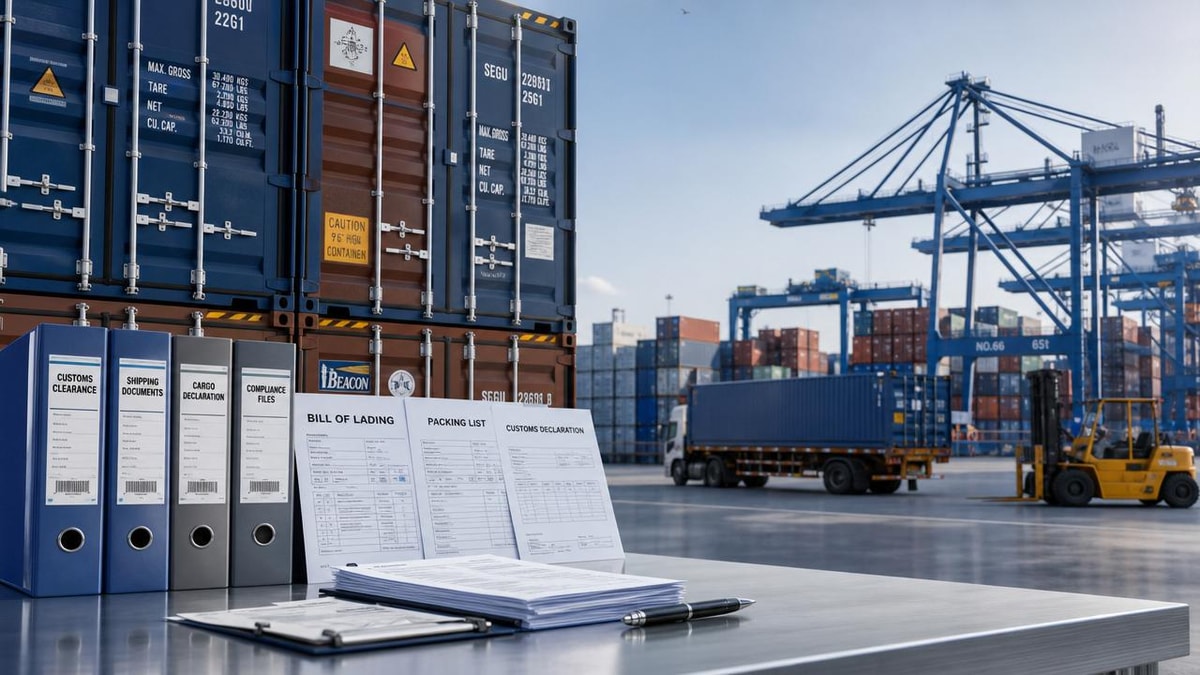
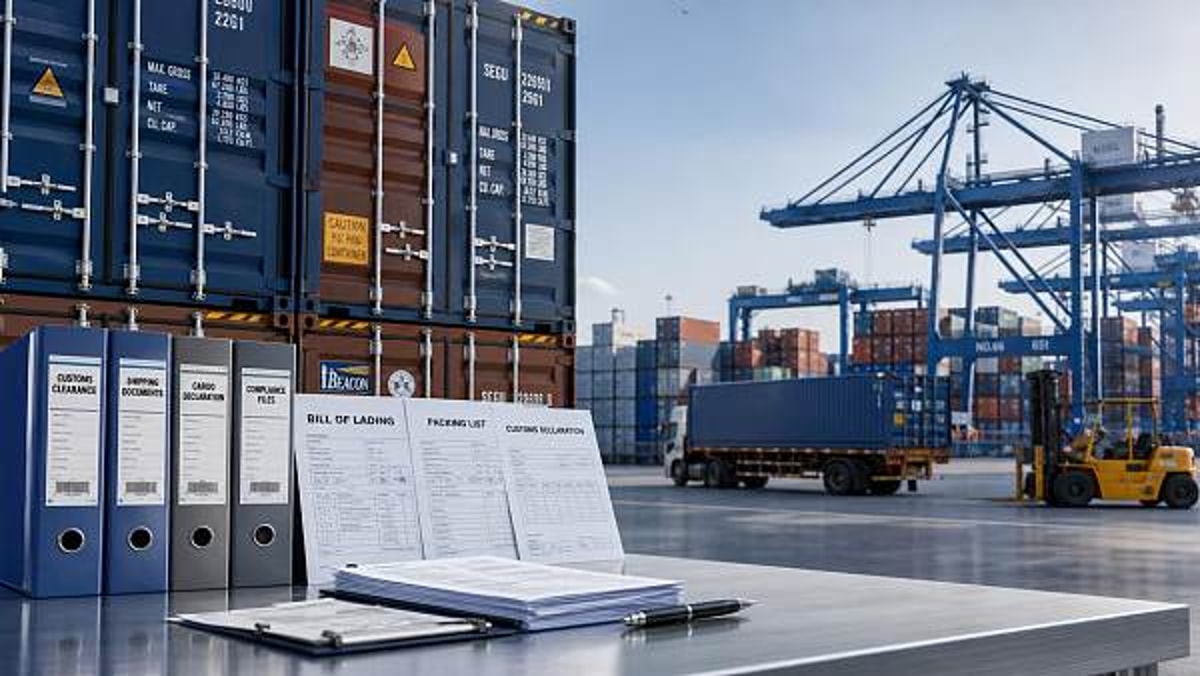
The strongest freight forwarding services check document consistency before goods move. Commercial invoice, packing list, bill of lading or air waybill, certificate of origin, and product declarations must match exactly on quantities, values, product descriptions, and shipper-consignee details. Customs systems frequently flag even minor inconsistencies. If your forwarder only reacts after the shipment is already in transit, you are taking unnecessary risk.
2) HS Code and Product Classification Review
Misclassification is one of the most expensive customs errors. A capable provider does not simply copy codes from past paperwork without review. Instead, they verify classification against product specifications, material composition, intended use, and destination-country interpretation. This matters even more in smart electronics, healthcare technology, green energy components, and advanced manufacturing parts where technical distinctions affect duty rates and admissibility.
3) Country-Specific Compliance Readiness
Customs clearance is not uniform across markets. Some countries focus heavily on valuation controls, others on origin proof, labeling, safety standards, or importer registration. Quality freight forwarding services should explain destination-specific issues in advance, including whether your consignee needs tax numbers, local licenses, or special pre-filing steps. A generic promise of “global coverage” is not enough.
4) Broker Coordination and Escalation Speed
Even with good preparation, customs may still ask for clarification. What separates average and premium freight forwarding services is response speed. Ask who receives customs queries, who owns the escalation path, and how quickly revised documents can be submitted. In high-value distribution models, every extra day may affect inventory commitments, reseller confidence, and working capital.
5) Visibility, Milestone Alerts, and Exception Management
Shipment tracking alone is not enough. You need milestone visibility tied to customs-critical events: booking confirmation, export filing, departure, pre-arrival document submission, arrival notice, inspection notice, release status, and final delivery. The best freight forwarding services provide early warnings instead of passive tracking links. For channel partners managing customer commitments, proactive exception alerts are often more valuable than nominal transit speed.
6) Incoterms and Cost Responsibility Alignment
Customs delays often begin with commercial misunderstandings. If supplier, buyer, and forwarder interpret Incoterms differently, document ownership and import responsibility become unclear. Confirm who handles export clearance, who files import entries, who pays duties and taxes, and who must provide supporting certificates. Reliable freight forwarding services should identify these gaps before shipment booking, not after cargo arrives at the border.
Quick Comparison Table for Evaluating Providers
Use this framework when comparing freight forwarding services across multiple bids or incumbent providers.
Different Scenarios Require Different Freight Forwarding Service Priorities
Not every distributor should judge providers the same way. The right priority depends on cargo type, delivery model, and customer expectations.
For distributors handling mixed SKU shipments
You need freight forwarding services that can reconcile line-item detail accurately. Mixed loads increase the risk of classification errors, missing serial references, and quantity mismatches. Ask whether the provider can validate document structure at SKU level rather than only at shipment level.
For agents moving regulated or technical products
Focus on certification workflows. In sectors such as healthcare technology, batteries, electronics, and industrial systems, customs may require test reports, safety declarations, or importer authorization records. The most useful freight forwarding services maintain a document matrix by product type and destination country.
For channel partners managing urgent replenishment
Prioritize exception handling and alternate routing options. If your business depends on fast restocking, customs predictability matters more than the cheapest base rate. Ask how the forwarder manages split clearance, partial release, bonded handling, or emergency re-documentation.
Commonly Ignored Issues That Trigger Customs Delays
Many businesses assume customs delays are caused only by external regulation, but internal preparation gaps are often the real problem. Watch for these overlooked issues:
- Product descriptions that are too vague, such as “parts” or “equipment,” without functional detail.
- Declared values that do not align with sales contracts, transfer pricing logic, or discount structures.
- Certificates submitted in the wrong format, outdated versions, or with mismatched consignee names.
- No advance confirmation of importer-of-record responsibility.
- Assuming previous clearance success guarantees future clearance under new policy or tariff conditions.
- Late shipment data transfer from supplier to forwarder, leaving no time for pre-clearance review.
The practical lesson is simple: the value of freight forwarding services depends heavily on how early they are involved. If the forwarder only receives final documents after the cargo is packed and booked, their ability to prevent delays is limited.
Execution Guide: What to Prepare Internally Before You Engage a Forwarder
To get better results from freight forwarding services, distributors and agents should prepare a structured data set in advance. This shortens onboarding time and improves customs performance from the first shipment.
- Build a master product file including descriptions, materials, use case, HS codes, country of origin, and regulatory documents.
- Map your top shipping lanes by volume, urgency, seasonality, and destination compliance risk.
- Define Incoterms and commercial responsibility by supplier, customer, and route.
- Create an internal approval owner for customs questions so replies are not delayed across departments.
- Set service KPIs such as document accuracy, customs release time, exception response time, and landed-cost visibility.
This preparation turns freight forwarding services into a strategic support function rather than a transactional shipping vendor. It also makes provider comparison more objective, especially when you are managing multiple markets or supplier bases.
A Practical Standard for Ongoing Review
After selection, continue reviewing performance every quarter. Track how often customs holds occur, what root causes are repeated, how quickly brokers respond, and whether preventive checks are improving. The best freight forwarding services should help you identify patterns such as recurring classification disputes, origin-document errors, or delays tied to specific ports and carriers. Continuous review is especially important for businesses operating in fast-evolving sectors covered by TradeNexus Pro, where regulation, sourcing, and product specifications can change quickly.
Next-Step Questions to Discuss with a Potential Partner
If you are ready to evaluate providers, start the conversation with concrete operational questions rather than generic capability claims. Ask what shipment data they need before booking, how they review customs risk by lane, what documentation they verify pre-departure, which markets generate the most exceptions, and how they communicate during inspections or holds. You should also confirm expected implementation time, pricing model, broker network coverage, reporting depth, and whether the freight forwarding services can integrate with your supplier workflow or ERP data.
For distributors, agents, and channel partners, the strongest decision is not simply choosing a company that can move cargo. It is choosing freight forwarding services that can systematically reduce customs friction, improve predictability, and protect customer commitments. When you review providers through a clear checklist of documentation control, compliance readiness, visibility, and escalation ability, you give your business a much better chance of avoiding costly border delays and keeping international trade moving with confidence.
Get weekly intelligence in your inbox.
No noise. No sponsored content. Pure intelligence.
 May 05, 2026Inventory management systems that fix stock errors at the sourceInventory management systems that fix stock errors at the source
 May 05, 2026Medical disposables sourcing gets risky when prices drop too fastMedical disposables sourcing gets risky when prices drop too fast
 May 05, 2026Supply Chain Management gaps that create hidden inventory costsSupply Chain Management gaps that create hidden inventory costs
 May 05, 2026Why ERP software rollouts fail even with strong vendor supportWhy ERP software rollouts fail even with strong vendor support
 May 05, 2026Patient monitors: which features actually improve bedside responsePatient monitors: which features actually improve bedside response
 May 05, 2026Medical PPE shortages are easing, but quality gaps remainMedical PPE shortages are easing, but quality gaps remain
 May 05, 2026Portable oxygen concentrators: what matters beyond battery lifePortable oxygen concentrators: what matters beyond battery life
 May 05, 2026Medical diagnostic equipment buying mistakes that cost more laterMedical diagnostic equipment buying mistakes that cost more later
 May 05, 2026Cold chain logistics failures often start before transitCold chain logistics failures often start before transit
 May 05, 2026Hydrogen energy projects face one cost issue few plan forHydrogen energy projects face one cost issue few plan for
 May 05, 2026Digital Footprint risks that grow when suppliers scale fastDigital Footprint risks that grow when suppliers scale fast
 May 05, 2026Cross border ecommerce fulfillment problems that hurt repeat salesCross border ecommerce fulfillment problems that hurt repeat sales
 May 05, 2026N95 respirators: why fit matters more than many expectN95 respirators: why fit matters more than many expect
 May 05, 2026Ultrasound machines: when image quality and workflow clashUltrasound machines: when image quality and workflow clash
 May 05, 2026LED displays for retail spaces: brightness is not the only issueLED displays for retail spaces: brightness is not the only issue
 May 05, 2026What to check before placing wheelchairs wholesale ordersWhat to check before placing wheelchairs wholesale orders
 May 05, 2026Freight forwarding services that help avoid customs delaysFreight forwarding services that help avoid customs delays
 May 05, 2026Aesthetic lasers: the difference between power and precisionAesthetic lasers: the difference between power and precision
 May 05, 2026How rehabilitation equipment choices affect recovery routinesHow rehabilitation equipment choices affect recovery routines
 May 05, 2026Robot vacuum cleaners with mapping: what changes in daily useRobot vacuum cleaners with mapping: what changes in daily use
 May 05, 2026Where logistics drones make sense and where they still do notWhere logistics drones make sense and where they still do not
 May 05, 2026B2B SaaS solutions that reduce manual trade workflowsB2B SaaS solutions that reduce manual trade workflows
 May 05, 2026What makes 3PL logistics performance hard to measure fairlyWhat makes 3PL logistics performance hard to measure fairly
 May 05, 2026Shipping rates are shifting again: what costs are easy to missShipping rates are shifting again: what costs are easy to miss
 May 05, 2026Trade Leaders in 2026: what will separate winners from the restTrade Leaders in 2026: what will separate winners from the rest
 May 05, 2026Why smart warehousing projects stall after the pilot stageWhy smart warehousing projects stall after the pilot stage
 May 05, 2026AGV robots or forklifts: which fits busy warehouses better?AGV robots or forklifts: which fits busy warehouses better?