Medical diagnostic equipment buying mistakes that cost more later
Buying medical diagnostic equipment on price alone can trigger hidden costs, compliance setbacks, and workflow problems that surface long after delivery. For procurement teams, avoiding the wrong vendor, mismatched specifications, or weak after-sales support is critical to protecting budgets and clinical performance. This guide highlights the most common buying mistakes and shows how to make smarter, lower-risk purchasing decisions from the start.
For procurement teams, the biggest mistake is rarely “buying the wrong machine” in a simple sense. It is buying equipment that looks cost-effective at tender stage but creates higher total cost of ownership, slower deployment, service interruptions, training gaps, or compliance exposure after installation.
In other words, the real risk in medical diagnostic equipment purchasing is not the invoice price. It is the downstream cost of poor fit, weak support, unreliable uptime, and unclear lifecycle planning. If you are sourcing for a hospital, clinic group, laboratory, or distributor network, the smartest buying decisions come from evaluating operational fit and supplier capability as seriously as technical specifications.
Why low-price decisions often become high-cost decisions

When buyers compare medical diagnostic equipment, price is naturally the first visible metric. Yet in healthcare procurement, the cheapest quote can become the most expensive outcome if the device requires frequent recalibration, consumes costly proprietary consumables, fails integration checks, or sits idle while waiting for spare parts and field service.
This matters especially in diagnostics, where performance is tied directly to patient workflow, test accuracy, clinician confidence, and regulatory accountability. A low upfront purchase price may hide recurring costs in maintenance contracts, software licensing, accessories, validation procedures, operator training, and mandatory upgrades.
For procurement professionals, the better question is not “Which option costs less today?” but “Which option delivers dependable clinical and operational value over five to seven years?” That shift in thinking helps prevent the most common sourcing errors.
Mistake 1: Defining requirements too broadly or too late
Many purchasing problems begin before supplier selection. Teams issue RFQs with generic descriptions such as “digital ultrasound system,” “clinical chemistry analyzer,” or “portable imaging unit” without aligning on actual use cases, throughput targets, connectivity needs, space limitations, and user skill levels.
When requirements are vague, suppliers fill the gaps with assumptions. That often leads to offers that are technically compliant on paper but poorly suited to the real environment. An analyzer may meet testing requirements but lack the throughput needed for peak hours. A portable device may fit the budget but fail battery-life expectations in mobile care settings.
Procurement teams should build requirements around workflow, not just equipment category. Clarify who will use the system, how many tests or scans are expected per day, what turnaround times are required, what level of image or data quality is necessary, and what interoperability standards must be met.
A practical requirement checklist should include patient volume, test menu, turnaround time, available floor space, power conditions, LIS or HIS integration, data security needs, environmental conditions, staff training level, service response expectations, and anticipated growth over the next three to five years.
Mistake 2: Evaluating only capital expenditure instead of total cost of ownership
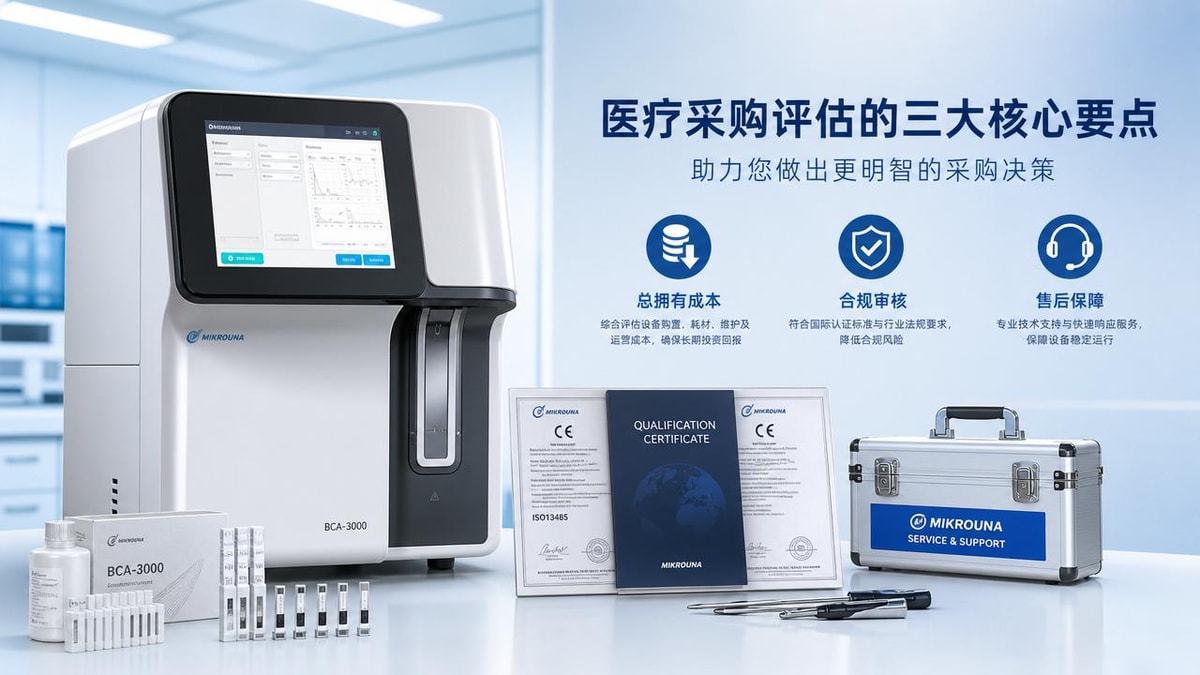
One of the most expensive buying mistakes is focusing solely on capex while underestimating opex. In medical diagnostic equipment procurement, total cost of ownership often determines whether the purchase remains financially sustainable.
Total cost of ownership includes installation, commissioning, calibration, consumables, reagents, quality control materials, software subscriptions, cybersecurity patches, preventive maintenance, corrective repairs, spare parts, warranty coverage, training, validation, and end-of-life replacement planning.
For example, a low-cost diagnostic platform may require proprietary consumables with limited regional supply. Another may offer an attractive initial price but charge heavily for annual software renewals or mandatory service visits. Over several years, these hidden costs can exceed the original purchase gap between vendors.
Ask suppliers for a three-year and five-year cost model. Break out expected annual maintenance, average consumables usage, accessory replacement cycles, service call fees, upgrade costs, and recommended spare parts inventory. Then compare vendors using realistic demand assumptions rather than best-case estimates.
For enterprise buyers, TCO analysis also supports stronger internal approvals. Finance, operations, and clinical stakeholders are more likely to support procurement decisions when the long-term economic logic is documented clearly.
Mistake 3: Ignoring workflow fit and user adoption
A technically advanced product is not automatically the right product. Many medical diagnostic equipment purchases underperform because the system disrupts workflow, adds unnecessary manual steps, or creates a poor user experience for technicians and clinicians.
Common examples include interfaces that are difficult to learn, sample handling processes that slow down throughput, reporting formats that require manual re-entry, or devices that need more daily maintenance than the staff can reasonably perform. Even excellent equipment can become a bottleneck if it does not fit the operational reality.
Procurement should involve end users early. Ask lab managers, radiology leads, biomedical engineers, and IT teams to review not only specifications but also workflow impact. Request demos based on real use scenarios rather than sales presentations alone.
The best evaluation questions are practical: How many steps are needed to complete a standard test? How quickly can a new operator become competent? What happens during a fault condition? How often must the system be cleaned, calibrated, or shut down? Can reports be generated in the preferred format without manual workarounds?
Good workflow fit reduces training costs, minimizes operator error, improves adoption, and supports faster return on investment. Poor workflow fit creates friction that does not appear in the purchase order but becomes very visible during daily use.
Mistake 4: Overlooking compliance, certification, and documentation quality
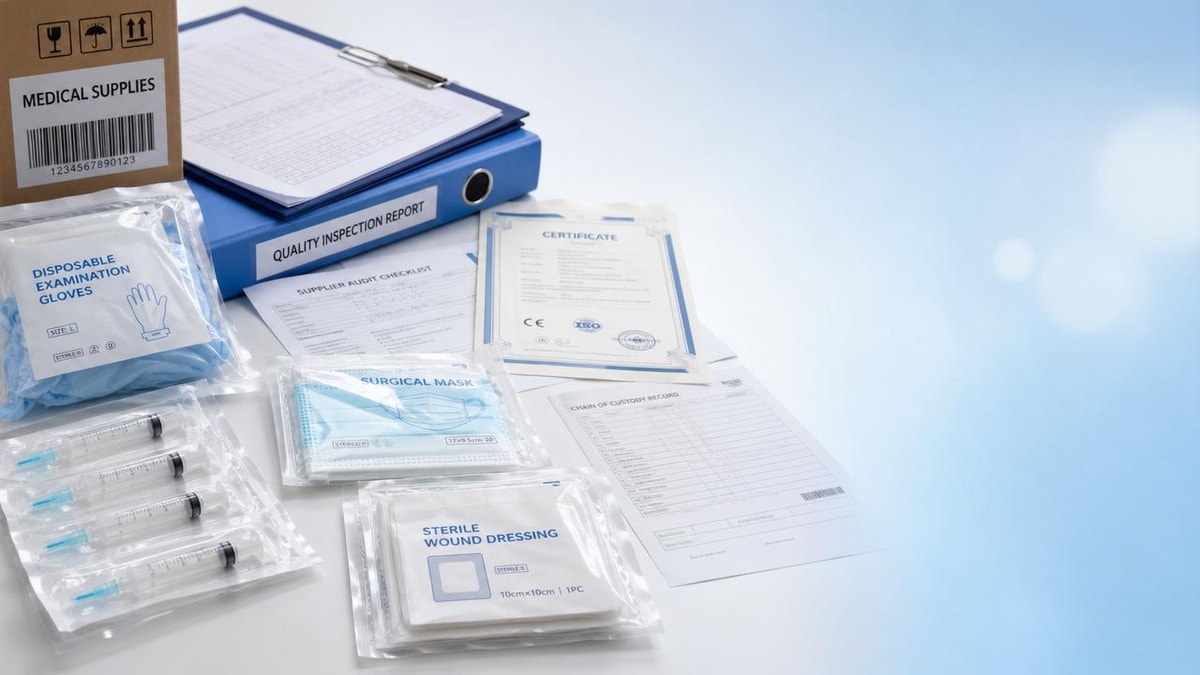
In healthcare technology procurement, compliance is not a formality. It is a purchasing criterion. Buyers sometimes assume that basic certification claims are enough, only to discover missing documents, unclear market authorization status, incomplete technical files, or local registration issues that delay deployment.
The exact requirements vary by market, but procurement teams should verify applicable regulatory approvals, quality management certifications, electrical safety documentation, data protection compliance, labeling standards, user manuals, service documentation, and post-market support obligations.
It is also important to confirm whether the offered configuration matches the certified configuration. Sometimes optional modules, software versions, accessories, or third-party integrations affect compliance status. A mismatch can create legal and operational headaches later.
Do not limit due diligence to the product itself. Evaluate the supplier’s documentation discipline. Vendors that respond slowly, provide inconsistent certificates, or struggle to answer technical compliance questions often create bigger risks after purchase as well.
Mistake 5: Choosing a vendor without testing service capability
After-sales support is one of the clearest predictors of long-term equipment value. Yet many buyers still treat service as a secondary issue. In reality, weak service support can erase any upfront savings within months.
Medical diagnostic equipment depends on uptime. If a device fails and the vendor cannot provide fast troubleshooting, local engineers, remote diagnostics, spare parts availability, or temporary replacement options, the impact can spread quickly through patient scheduling, lab output, and revenue capture.
Before awarding a contract, ask service-specific questions. Where are the field engineers based? What is the standard response time? What is the average repair time? Which spare parts are stocked locally? Is remote diagnostics available? What training is provided to in-house biomedical teams? What uptime commitment can be written into the SLA?
References matter here. Speak with current users in comparable settings, ideally in the same region. Ask not whether they “like the equipment,” but how the supplier performs when there is a problem. Procurement quality often depends less on the sales process than on the support process after installation.
Mistake 6: Failing to assess integration and digital compatibility
Modern diagnostics increasingly depend on data connectivity. A device that cannot integrate effectively with existing systems may add labor, increase error risk, and limit the value of digital workflows. This is especially important for hospitals and networks managing multiple sites.
Procurement teams should confirm compatibility with LIS, RIS, HIS, PACS, EMR, middleware platforms, and cybersecurity protocols where relevant. Data export formats, API availability, interoperability standards, user access controls, audit trails, and software update governance should all be part of the evaluation.
A common mistake is assuming IT integration can be solved after delivery. In practice, delayed integration can postpone go-live, require costly customization, or force staff into manual data transfer. That reduces the efficiency gains the equipment was expected to deliver.
Include IT and information security stakeholders early in the buying process. A clinically strong system that creates digital friction is still a poor procurement outcome.
Mistake 7: Buying for current demand only and ignoring scalability
Another frequent error is purchasing to meet today’s minimum need without considering future volume, service expansion, or technology evolution. That can lead to premature replacement, capacity constraints, or expensive add-on purchases within a short period.
This does not mean always buying the most advanced system. It means understanding growth scenarios and choosing a platform with sensible scalability. Can throughput be expanded? Can new test menus or modules be added later? Is the software architecture upgradeable? Will the vendor continue supporting the platform for the expected lifecycle?
For procurement leaders, scalability is a risk management issue. It protects against both underbuying and overbuying. The goal is to match investment to realistic strategic plans, not simply current budget limits or aspirational wish lists.
Mistake 8: Running a weak supplier due diligence process
Even strong equipment can become a poor investment if the supplier lacks financial stability, manufacturing consistency, or regional support infrastructure. In B2B procurement, supplier evaluation should be as rigorous as product evaluation.
Review the manufacturer’s track record, installed base, production capacity, distributor model, training capability, warranty execution process, and supply chain resilience for parts and consumables. If the vendor relies heavily on a local intermediary, clarify responsibilities between manufacturer and distributor.
Buyers should also assess business continuity risks. Can the supplier maintain support during geopolitical disruptions, logistics delays, or component shortages? Have they demonstrated stable fulfillment performance in your region? In medical diagnostic equipment sourcing, resilience is not a theoretical concern. It directly affects uptime and budget predictability.
How procurement teams can make better medical diagnostic equipment decisions
The best way to avoid costly buying mistakes is to use a structured cross-functional process. Procurement should coordinate clinical stakeholders, biomedical engineering, IT, compliance, finance, and operations from the start rather than treating evaluation as a late-stage approval exercise.
A practical decision framework includes six steps: define use-case requirements, build a weighted scorecard, compare total cost of ownership, validate compliance documents, test service capability, and check references from similar users. This creates a more balanced decision than price comparisons alone.
Scorecards should reward measurable value, not marketing claims. Useful criteria include clinical performance, throughput, usability, integration readiness, service model, documentation quality, TCO, training support, supplier stability, and implementation timeline.
Procurement teams should also negotiate beyond unit price. Better long-term outcomes often come from stronger warranty terms, bundled training, clearer spare parts commitments, software update coverage, acceptance testing standards, and service-level guarantees.
Questions buyers should ask before issuing a final purchase order
Before final approval, ask a small set of high-impact questions. What problem will this equipment solve in the actual workflow? What are the top three costs after purchase? What happens if the system goes down for 48 hours? Who is responsible for integration? How fast can staff be trained? What is the realistic service response in our region?
Also ask whether the selected solution still makes sense under stress conditions. If patient volume increases, if staffing changes, if consumable lead times worsen, or if software integration is delayed, does the purchase remain viable? Strong procurement decisions hold up not only in ideal conditions but in imperfect ones.
These questions help shift the discussion from product features to operational outcomes. That is where the real value of medical diagnostic equipment procurement is determined.
Conclusion
The most expensive buying mistakes in medical diagnostic equipment procurement usually happen when teams prioritize low upfront price over long-term performance, support, compliance, and workflow fit. What looks economical during sourcing can become costly through downtime, retraining, integration delays, or unexpected service expenses.
For procurement professionals, smarter purchasing starts with clearer requirements, deeper supplier due diligence, realistic total cost analysis, and strong cross-functional evaluation. The goal is not simply to buy equipment. It is to secure dependable clinical capability with manageable risk and sustainable cost over the full lifecycle.
When buyers evaluate medical diagnostic equipment through that lens, they reduce surprises, strengthen stakeholder confidence, and make decisions that protect both budgets and operational outcomes long after delivery.
Get weekly intelligence in your inbox.
No noise. No sponsored content. Pure intelligence.
 May 05, 2026Inventory management systems that fix stock errors at the sourceInventory management systems that fix stock errors at the source
 May 05, 2026Medical disposables sourcing gets risky when prices drop too fastMedical disposables sourcing gets risky when prices drop too fast
 May 05, 2026Supply Chain Management gaps that create hidden inventory costsSupply Chain Management gaps that create hidden inventory costs
 May 05, 2026Why ERP software rollouts fail even with strong vendor supportWhy ERP software rollouts fail even with strong vendor support
 May 05, 2026Patient monitors: which features actually improve bedside responsePatient monitors: which features actually improve bedside response
 May 05, 2026Medical PPE shortages are easing, but quality gaps remainMedical PPE shortages are easing, but quality gaps remain
 May 05, 2026Portable oxygen concentrators: what matters beyond battery lifePortable oxygen concentrators: what matters beyond battery life
 May 05, 2026Medical diagnostic equipment buying mistakes that cost more laterMedical diagnostic equipment buying mistakes that cost more later
 May 05, 2026Cold chain logistics failures often start before transitCold chain logistics failures often start before transit
 May 05, 2026Hydrogen energy projects face one cost issue few plan forHydrogen energy projects face one cost issue few plan for
 May 05, 2026Digital Footprint risks that grow when suppliers scale fastDigital Footprint risks that grow when suppliers scale fast
 May 05, 2026Cross border ecommerce fulfillment problems that hurt repeat salesCross border ecommerce fulfillment problems that hurt repeat sales
 May 05, 2026N95 respirators: why fit matters more than many expectN95 respirators: why fit matters more than many expect
 May 05, 2026Ultrasound machines: when image quality and workflow clashUltrasound machines: when image quality and workflow clash
 May 05, 2026LED displays for retail spaces: brightness is not the only issueLED displays for retail spaces: brightness is not the only issue
 May 05, 2026What to check before placing wheelchairs wholesale ordersWhat to check before placing wheelchairs wholesale orders
 May 05, 2026Freight forwarding services that help avoid customs delaysFreight forwarding services that help avoid customs delays
 May 05, 2026Aesthetic lasers: the difference between power and precisionAesthetic lasers: the difference between power and precision
 May 05, 2026How rehabilitation equipment choices affect recovery routinesHow rehabilitation equipment choices affect recovery routines
 May 05, 2026Robot vacuum cleaners with mapping: what changes in daily useRobot vacuum cleaners with mapping: what changes in daily use
 May 05, 2026Where logistics drones make sense and where they still do notWhere logistics drones make sense and where they still do not
 May 05, 2026B2B SaaS solutions that reduce manual trade workflowsB2B SaaS solutions that reduce manual trade workflows
 May 05, 2026What makes 3PL logistics performance hard to measure fairlyWhat makes 3PL logistics performance hard to measure fairly
 May 05, 2026Shipping rates are shifting again: what costs are easy to missShipping rates are shifting again: what costs are easy to miss
 May 05, 2026Trade Leaders in 2026: what will separate winners from the restTrade Leaders in 2026: what will separate winners from the rest
 May 05, 2026Why smart warehousing projects stall after the pilot stageWhy smart warehousing projects stall after the pilot stage
 May 05, 2026AGV robots or forklifts: which fits busy warehouses better?AGV robots or forklifts: which fits busy warehouses better?