Vietnam Mandates V-Trust for Smart Appliances Export (July 2026)
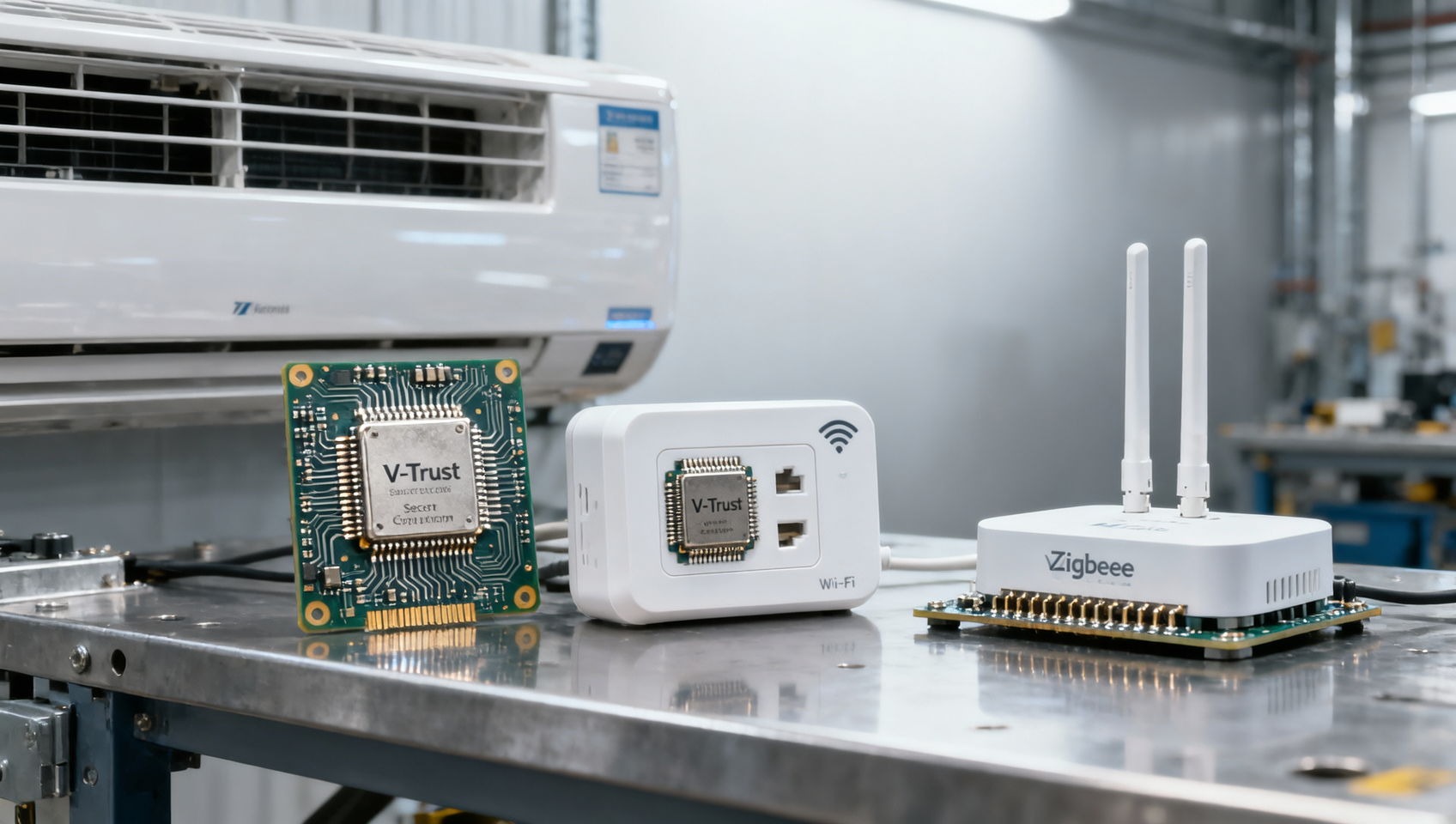
Vietnam’s Ministry of Industry and Trade issued Circular 12/2026/TT-BCT on April 27, 2026, requiring all imported smart home and IoT-enabled appliances to be pre-installed with the V-Trust digital identity module and connected to Vietnam’s national IoT trust platform starting July 2026. This regulation directly impacts manufacturers, exporters, and ODM partners supplying smart appliances to the Vietnamese market — particularly those in China, where early SDK access has already been granted for MCU-level integration.
Event Overview
On April 27, 2026, Vietnam’s Ministry of Industry and Trade published Circular 12/2026/TT-BCT. The circular mandates that all imported smart home devices and IoT appliances must integrate the V-Trust security chip and connect to the national IoT trust platform prior to market entry. Enforcement begins on July 1, 2026. Chinese ODM manufacturers have received initial authorization to use the V-Trust SDK, supporting lightweight integration at the microcontroller unit (MCU) level.
Which Subsectors Are Affected
ODM/OEM manufacturing firms (especially China-based): These suppliers produce smart appliances under foreign brand labels and are now required to embed V-Trust modules during production. Impact includes revised BOMs, firmware updates, and potential revalidation of device certifications.
Export trading companies handling smart home products: Entities managing customs clearance and market entry for smart appliances into Vietnam must verify pre-installation compliance before shipment. Non-compliant units risk rejection at port or post-import audit.
IoT platform and firmware development service providers: Firms offering embedded software, OTA update infrastructure, or device management platforms may face increased demand for V-Trust integration support — but only if certified by Vietnam’s trust authority.
Distributor and retail channel operators in Vietnam: Local importers and retailers will need to confirm upstream compliance documentation (e.g., V-Trust attestation reports) for inventory planning and shelf readiness. Delayed certification could affect new product launches.
What Relevant Companies or Practitioners Should Focus On Now
Monitor official implementation guidance from Vietnam’s National Agency for Standards and Quality (STAMEQ) and the Ministry of Industry and Trade
Circular 12/2026/TT-BCT is the foundational text, but technical specifications, certification procedures, and testing lab accreditation details remain pending. These will determine feasibility timelines and cost implications.
Assess impact by product category and architecture
Devices with constrained memory, low-power MCUs, or legacy connectivity stacks (e.g., Zigbee-only or non-TLS-capable Wi-Fi modules) may require hardware revisions — not just firmware updates. Prioritize evaluation for best-selling SKUs bound for Vietnam.
Distinguish between policy signal and operational readiness
The circular sets a hard deadline, but actual testing capacity, authorized labs, and interoperability validation results are not yet public. Early SDK access for Chinese ODMs does not equate to full ecosystem readiness across all device classes.
Initiate internal cross-functional alignment on procurement, firmware, and compliance workflows
Procurement teams should identify qualified V-Trust chip suppliers; firmware engineers need SDK access and integration timelines; QA/compliance leads must map test requirements against current certification paths (e.g., QCVN, CR, or ISO/IEC 27001-aligned assessments).
Editorial Perspective / Industry Observation
Observably, this regulation marks Vietnam’s first formal step toward sovereign IoT identity governance — aligning with broader ASEAN digital trust initiatives, though implemented unilaterally. Analysis shows it functions less as an immediate barrier and more as a structural signal: Vietnam is prioritizing device-level traceability and remote attestation over generic cybersecurity labeling. From an industry perspective, it reflects growing divergence in regional IoT regulatory approaches — contrasting with EU’s ETSI EN 303 645 or U.S. NIST IR 8259 frameworks. Current enforcement scope remains narrow (smart home/IoT appliances only), but expansion to industrial or healthcare IoT cannot be ruled out based on stated policy intent.
Conclusion
This regulation introduces a mandatory, hardware-rooted digital identity requirement for smart appliance exports to Vietnam — effective mid-2026. It is neither a broad-market ban nor a voluntary standard, but a targeted compliance gate tied to national infrastructure. For stakeholders, it is better understood as an inflection point in Vietnam’s IoT market access strategy: one demanding proactive supply chain adaptation, not reactive crisis management.
Information Sources
Main source: Vietnam Ministry of Industry and Trade – Circular 12/2026/TT-BCT (issued April 27, 2026).
Additional context: Publicly confirmed V-Trust SDK authorization status for select Chinese ODMs (as reported in official circular annexes and subsequent MoIT press briefings).
Note: Technical implementation guidelines, accredited testing laboratories, and official V-Trust chip vendor list remain pending publication and are subject to ongoing monitoring.
Get weekly intelligence in your inbox.
No noise. No sponsored content. Pure intelligence.
 Apr 28, 2026Suez Canal Fee Hike & China-Europe Rail Premium: Q2 2026 ImpactSuez Canal Fee Hike & China-Europe Rail Premium: Q2 2026 Impact
 Apr 28, 2026TÜV Rheinland Launches Fast-Track Certification for Chinese Warehouse RobotsTÜV Rheinland Launches Fast-Track Certification for Chinese Warehouse Robots
 Apr 28, 2026EU Enforces Battery Passport Rule for Chinese ESS Exports from 2027EU Enforces Battery Passport Rule for Chinese ESS Exports from 2027
 Apr 28, 2026ADB Raises Vietnam GDP Forecast to 7.2%: SMT & Precision Fixture Demand RisesADB Raises Vietnam GDP Forecast to 7.2%: SMT & Precision Fixture Demand Rises
 Apr 28, 2026US ITC Launches Section 337 Investigation into Chinese Wi-Fi 7 RF FEMsUS ITC Launches Section 337 Investigation into Chinese Wi-Fi 7 RF FEMs
 Apr 28, 2026Côte d'Ivoire Opens $500M Power Tender: Chinese BESS Get Fast-Track AccessCôte d'Ivoire Opens $500M Power Tender: Chinese BESS Get Fast-Track Access
 Apr 28, 2026BP’s Algeria East Basin Permit Spurs Valve Demand, Lead Times Extend to 18 WeeksBP’s Algeria East Basin Permit Spurs Valve Demand, Lead Times Extend to 18 Weeks
") Apr 28, 2026Vietnam Mandates V-Trust for Smart Appliances Export (July 2026)Vietnam Mandates V-Trust for Smart Appliances Export (July 2026)
Apr 28, 2026Vietnam Mandates V-Trust for Smart Appliances Export (July 2026)Vietnam Mandates V-Trust for Smart Appliances Export (July 2026) Apr 28, 2026Morocco Enforces PV Mounting Structure Certification from Q3 2026Morocco Enforces PV Mounting Structure Certification from Q3 2026
 Apr 28, 2026UAE Establishes AI Hub Status, Opens CE-ADAS+ Pathway for Chinese Smart Industrial EquipmentUAE Establishes AI Hub Status, Opens CE-ADAS+ Pathway for Chinese Smart Industrial Equipment
 Apr 27, 2026Algeria’s Oil & Steel FDI Push Opens Valve, Corrosion-Resistant Material OrdersAlgeria’s Oil & Steel FDI Push Opens Valve, Corrosion-Resistant Material Orders
 Apr 27, 2026Azerbaijan’s New PV Mounting Standard Opens Path for Chinese SuppliersAzerbaijan’s New PV Mounting Standard Opens Path for Chinese Suppliers
 Apr 27, 2026Fitch Cuts East Africa Growth Forecasts, Raises Cross-Border Trade RisksFitch Cuts East Africa Growth Forecasts, Raises Cross-Border Trade Risks
 Apr 27, 2026ADB Raises Vietnam GDP Forecast to 7.2% on Electronics Export GrowthADB Raises Vietnam GDP Forecast to 7.2% on Electronics Export Growth
 Apr 27, 2026Maine Halts Large Data Centers: AI Server Export ImpactMaine Halts Large Data Centers: AI Server Export Impact
 Apr 27, 2026OFID $500M for Côte d'Ivoire: Boost to Factory Automation & Warehouse RoboticsOFID $500M for Côte d'Ivoire: Boost to Factory Automation & Warehouse Robotics
 Apr 27, 2026Morocco Ranks 4th in EU Energy Aid to AfricaMorocco Ranks 4th in EU Energy Aid to Africa
 Apr 27, 2026UAE Emerges as Global AI Hub, Opening Fast-Track for Chinese Smart DevicesUAE Emerges as Global AI Hub, Opening Fast-Track for Chinese Smart Devices
") Apr 26, 2026China Releases Green Design Guidelines for Industrial Products (2026)China Releases Green Design Guidelines for Industrial Products (2026)
Apr 26, 2026China Releases Green Design Guidelines for Industrial Products (2026)China Releases Green Design Guidelines for Industrial Products (2026) Apr 26, 2026ANATEL Mandates Portuguese Offline Voice Assistant for Smart Home Devices in BrazilANATEL Mandates Portuguese Offline Voice Assistant for Smart Home Devices in Brazil
 Apr 26, 2026Vietnam Enforces Bilingual Safety Labels for Electronic Components from Apr 22, 2026Vietnam Enforces Bilingual Safety Labels for Electronic Components from Apr 22, 2026
 Apr 26, 2026Japan Updates JIS for Rehab Devices: IEC 62366-1:2024 RequiredJapan Updates JIS for Rehab Devices: IEC 62366-1:2024 Required
 Apr 26, 2026THE Alliance Cuts Ningbo–Rotterdam Transit to 18 Days, Spot Rates Up 35%THE Alliance Cuts Ningbo–Rotterdam Transit to 18 Days, Spot Rates Up 35%
 Apr 26, 2026India BIS Mandates PLC & HMI Certification under IS 13252:2025 by Oct 2026India BIS Mandates PLC & HMI Certification under IS 13252:2025 by Oct 2026
") Apr 26, 2026SASO Enforces New EV Charger Rules in Saudi Arabia (2026)SASO Enforces New EV Charger Rules in Saudi Arabia (2026)
Apr 26, 2026SASO Enforces New EV Charger Rules in Saudi Arabia (2026)SASO Enforces New EV Charger Rules in Saudi Arabia (2026) Apr 26, 2026TÜV Rheinland Updates IoT EMC Guidelines: AI Edge Modules Now Mandatory for Immunity TestingTÜV Rheinland Updates IoT EMC Guidelines: AI Edge Modules Now Mandatory for Immunity Testing
 Apr 26, 2026USTR Launches First Annual Review of China Solar PV AD/CVD OrdersUSTR Launches First Annual Review of China Solar PV AD/CVD Orders