Morocco Enforces PV Mounting Structure Certification from Q3 2026
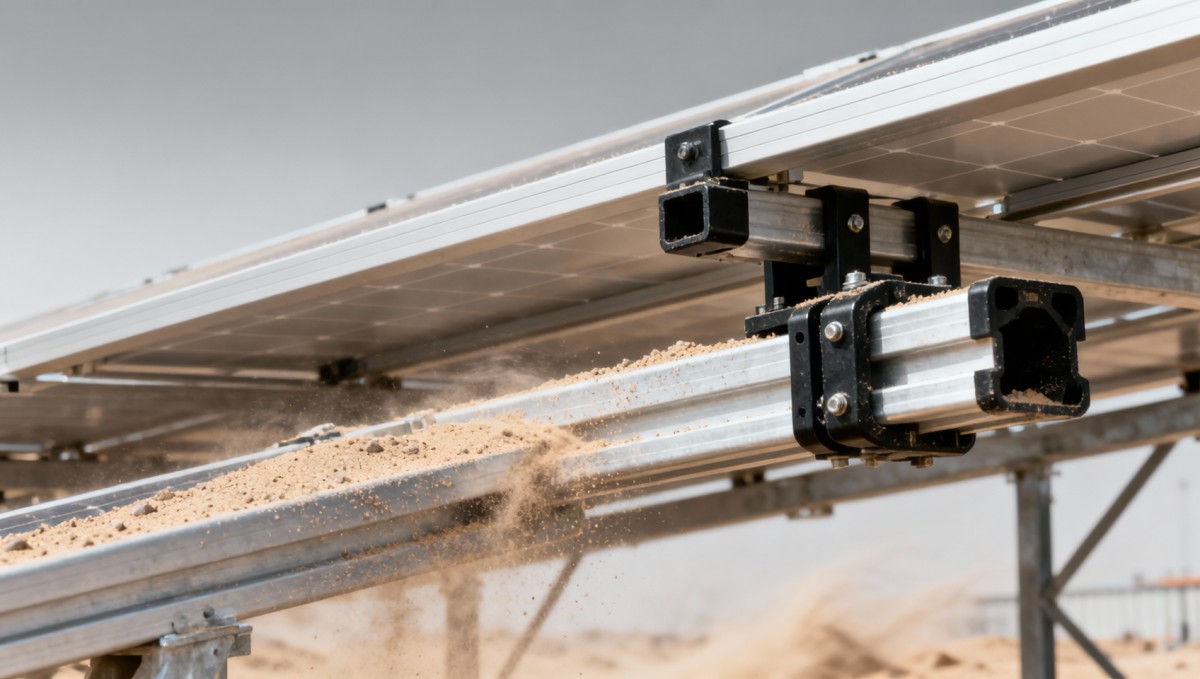
Morocco’s Ministry of Energy announced on April 27, 2026, a new mandatory certification requirement for imported photovoltaic mounting structures—effective October 1, 2026. All such products entering the Moroccan market must comply with the localized sand-and-wind accelerated aging test specified in Annex D of IEC 61427-2:2025. This development directly affects PV component exporters, structural manufacturers, and supply chain service providers serving North Africa.
Event Overview
On April 27, 2026, Morocco’s Ministry of Energy issued an official notice stating that, starting October 1, 2026, all imported photovoltaic mounting systems must pass the newly introduced local test: the ‘Saharan sand-and-wind accelerated aging test’ defined in Annex D of IEC 61427-2:2025. The standard was validated with participation from leading Chinese PV mounting system manufacturers. Laboratories accredited by China’s National Accreditation Service for Conformity Assessment (CNAS) have been authorized to offer pre-testing services.
Impact on Specific Industry Segments
Direct Exporters (PV Mounting System Manufacturers & Distributors)
These entities face direct compliance obligations. Non-compliant shipments will be denied customs clearance after October 1, 2026. Impact manifests in extended lead times (due to testing cycles), increased certification costs, and potential redesign requirements for sand-resistant surface treatments or structural reinforcements.
Raw Material Suppliers (e.g., galvanized steel, aluminum alloy, anti-corrosion coating providers)
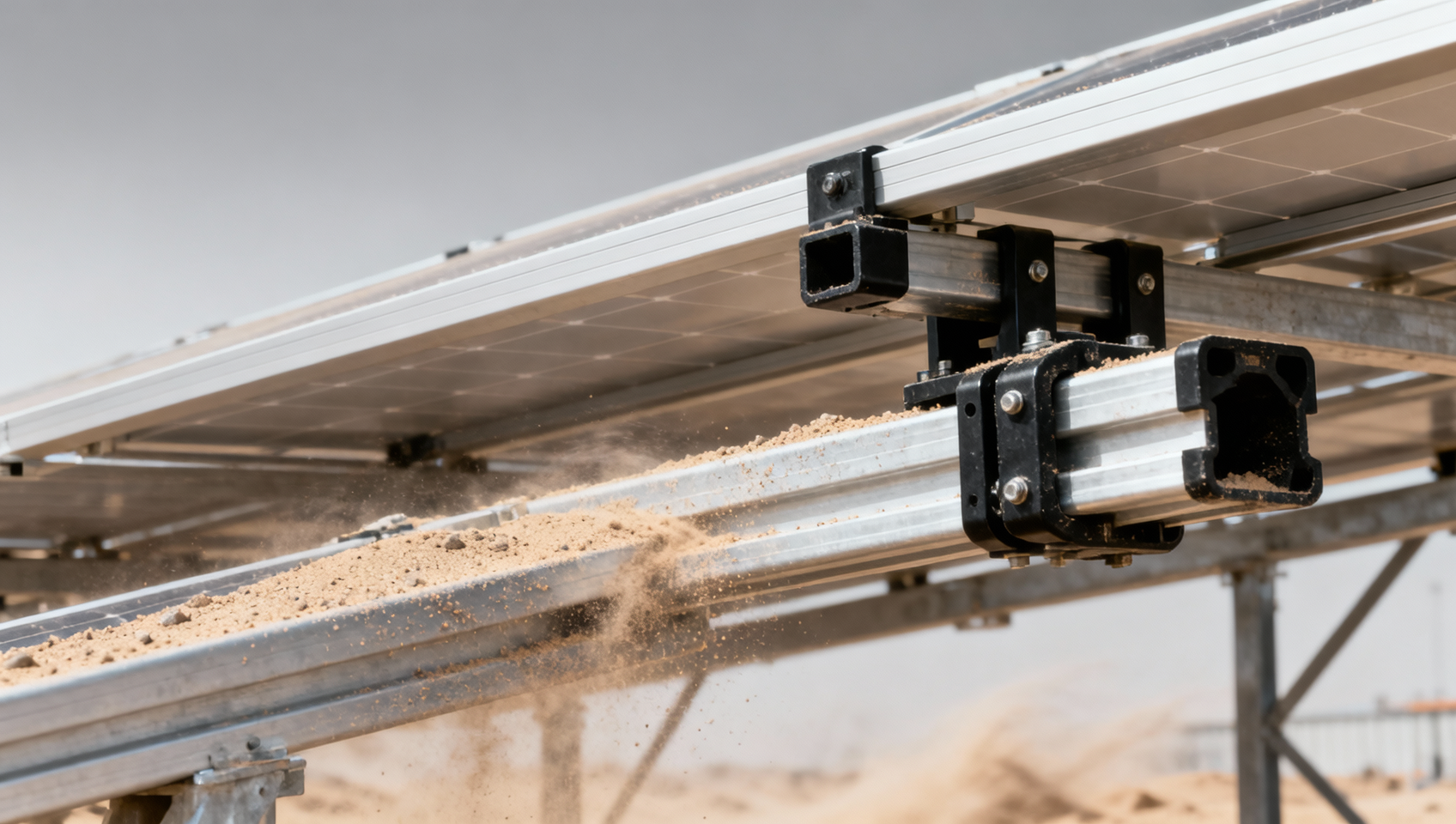
Material performance under abrasive, high-wind desert conditions becomes a critical specification parameter. Suppliers may need to provide enhanced durability data—especially on coating adhesion loss, abrasion resistance, and long-term tensile retention—to support downstream certification efforts.
Contract Manufacturers & Tier-2 Assemblers
Manufacturers producing sub-assemblies (e.g., torque tubes, clamps, foundation anchors) for branded mounting systems must ensure their components meet the same aging criteria—even if not labeled as final export products. Traceability and material batch documentation become essential for audit readiness.
Distribution & Logistics Service Providers
Forwarders and customs brokers handling PV mounting imports into Morocco must verify pre-shipment test reports before documentation submission. Delays may occur if certificates lack required scope (e.g., omission of Annex D verification) or if lab accreditation status is unconfirmed.
Supply Chain Compliance & Testing Service Providers
With CNAS-accredited labs now offering pre-testing, demand is rising for localized technical support—including test protocol interpretation, sample preparation guidance, and gap analysis against Annex D requirements. Providers must confirm whether their current IEC 61427-2 testing scope explicitly covers Annex D.
What Relevant Enterprises or Practitioners Should Focus On
Monitor official implementation guidance from Moroccan authorities
The April 27 notice confirms the requirement but does not yet publish detailed enforcement procedures (e.g., acceptable test report formats, validity periods, or designated conformity assessment bodies). Stakeholders should track updates from Morocco’s Office National de l’Électricité et de l’Eau Potable (ONEE) and the Direction du Commerce Extérieur.
Identify high-risk product categories and entry points
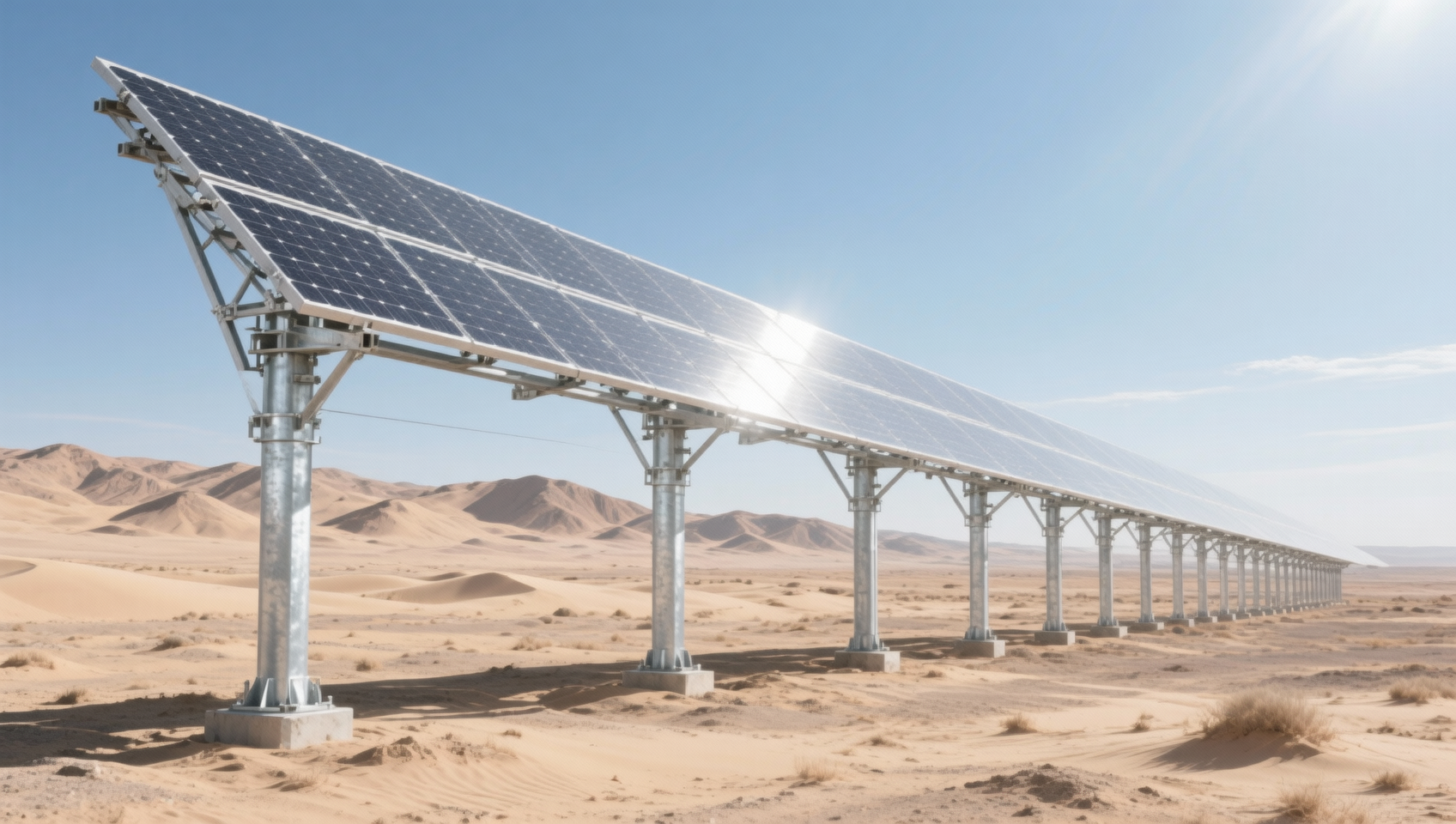
Fixed-tilt ground-mount systems—particularly those using thin-walled aluminum or non-sand-rated hot-dip galvanizing—are most likely to fail Annex D. Imports routed through Casablanca or Nador ports may undergo more frequent physical inspection; early engagement with local customs agents is advisable.
Distinguish between policy signal and operational readiness
Although the effective date is October 2026, test capacity at CNAS labs is already constrained. Analysis shows lead times for Annex D pre-testing currently average 6–8 weeks. Waiting until mid-2026 to initiate validation may result in bottlenecks.
Prepare documentation and supplier alignment now
Begin compiling material certifications, corrosion test histories, and wind-load simulation reports. Engage raw material suppliers to co-validate Annex D-relevant parameters. Where applicable, update technical datasheets to include ‘Saharan environment suitability’ statements supported by test evidence.
Editorial Perspective / Industry Observation
Observably, this regulation marks Morocco’s shift from generic PV component acceptance toward environment-specific technical sovereignty—aligning with its broader National Renewable Energy Strategy targeting 52% renewable share by 2030. It is not yet a fully implemented barrier, but rather a calibrated signal: one that prioritizes long-term field reliability over short-term cost efficiency. From an industry perspective, it reflects growing regional divergence in PV infrastructure standards—especially across arid-zone markets. Current emphasis should be on procedural readiness, not just compliance certification.
Conclusion
This mandate signals a structural tightening of technical access conditions for PV mounting systems in Morocco—not merely an administrative update. Its significance lies less in immediate disruption and more in its precedent-setting role: it formalizes environmental resilience as a non-negotiable baseline for solar infrastructure in high-abrasion regions. For stakeholders, it is best understood as a phased technical gate, not a sudden deadline—requiring coordinated upstream validation, not reactive last-minute testing.
Information Sources
Main source: Official notice issued by Morocco’s Ministry of Energy, dated April 27, 2026.
Note: Details on Moroccan national accreditation procedures, designated conformity assessment bodies, and post-October 2026 enforcement protocols remain pending and require ongoing monitoring.
Get weekly intelligence in your inbox.
No noise. No sponsored content. Pure intelligence.
 Apr 28, 2026Suez Canal Fee Hike & China-Europe Rail Premium: Q2 2026 ImpactSuez Canal Fee Hike & China-Europe Rail Premium: Q2 2026 Impact
 Apr 28, 2026TÜV Rheinland Launches Fast-Track Certification for Chinese Warehouse RobotsTÜV Rheinland Launches Fast-Track Certification for Chinese Warehouse Robots
 Apr 28, 2026EU Enforces Battery Passport Rule for Chinese ESS Exports from 2027EU Enforces Battery Passport Rule for Chinese ESS Exports from 2027
 Apr 28, 2026ADB Raises Vietnam GDP Forecast to 7.2%: SMT & Precision Fixture Demand RisesADB Raises Vietnam GDP Forecast to 7.2%: SMT & Precision Fixture Demand Rises
 Apr 28, 2026US ITC Launches Section 337 Investigation into Chinese Wi-Fi 7 RF FEMsUS ITC Launches Section 337 Investigation into Chinese Wi-Fi 7 RF FEMs
 Apr 28, 2026Côte d'Ivoire Opens $500M Power Tender: Chinese BESS Get Fast-Track AccessCôte d'Ivoire Opens $500M Power Tender: Chinese BESS Get Fast-Track Access
 Apr 28, 2026BP’s Algeria East Basin Permit Spurs Valve Demand, Lead Times Extend to 18 WeeksBP’s Algeria East Basin Permit Spurs Valve Demand, Lead Times Extend to 18 Weeks
") Apr 28, 2026Vietnam Mandates V-Trust for Smart Appliances Export (July 2026)Vietnam Mandates V-Trust for Smart Appliances Export (July 2026)
Apr 28, 2026Vietnam Mandates V-Trust for Smart Appliances Export (July 2026)Vietnam Mandates V-Trust for Smart Appliances Export (July 2026) Apr 28, 2026Morocco Enforces PV Mounting Structure Certification from Q3 2026Morocco Enforces PV Mounting Structure Certification from Q3 2026
 Apr 28, 2026UAE Establishes AI Hub Status, Opens CE-ADAS+ Pathway for Chinese Smart Industrial EquipmentUAE Establishes AI Hub Status, Opens CE-ADAS+ Pathway for Chinese Smart Industrial Equipment
 Apr 27, 2026Algeria’s Oil & Steel FDI Push Opens Valve, Corrosion-Resistant Material OrdersAlgeria’s Oil & Steel FDI Push Opens Valve, Corrosion-Resistant Material Orders
 Apr 27, 2026Azerbaijan’s New PV Mounting Standard Opens Path for Chinese SuppliersAzerbaijan’s New PV Mounting Standard Opens Path for Chinese Suppliers
 Apr 27, 2026Fitch Cuts East Africa Growth Forecasts, Raises Cross-Border Trade RisksFitch Cuts East Africa Growth Forecasts, Raises Cross-Border Trade Risks
 Apr 27, 2026ADB Raises Vietnam GDP Forecast to 7.2% on Electronics Export GrowthADB Raises Vietnam GDP Forecast to 7.2% on Electronics Export Growth
 Apr 27, 2026Maine Halts Large Data Centers: AI Server Export ImpactMaine Halts Large Data Centers: AI Server Export Impact
 Apr 27, 2026OFID $500M for Côte d'Ivoire: Boost to Factory Automation & Warehouse RoboticsOFID $500M for Côte d'Ivoire: Boost to Factory Automation & Warehouse Robotics
 Apr 27, 2026Morocco Ranks 4th in EU Energy Aid to AfricaMorocco Ranks 4th in EU Energy Aid to Africa
 Apr 27, 2026UAE Emerges as Global AI Hub, Opening Fast-Track for Chinese Smart DevicesUAE Emerges as Global AI Hub, Opening Fast-Track for Chinese Smart Devices
") Apr 26, 2026China Releases Green Design Guidelines for Industrial Products (2026)China Releases Green Design Guidelines for Industrial Products (2026)
Apr 26, 2026China Releases Green Design Guidelines for Industrial Products (2026)China Releases Green Design Guidelines for Industrial Products (2026) Apr 26, 2026ANATEL Mandates Portuguese Offline Voice Assistant for Smart Home Devices in BrazilANATEL Mandates Portuguese Offline Voice Assistant for Smart Home Devices in Brazil
 Apr 26, 2026Vietnam Enforces Bilingual Safety Labels for Electronic Components from Apr 22, 2026Vietnam Enforces Bilingual Safety Labels for Electronic Components from Apr 22, 2026
 Apr 26, 2026Japan Updates JIS for Rehab Devices: IEC 62366-1:2024 RequiredJapan Updates JIS for Rehab Devices: IEC 62366-1:2024 Required
 Apr 26, 2026THE Alliance Cuts Ningbo–Rotterdam Transit to 18 Days, Spot Rates Up 35%THE Alliance Cuts Ningbo–Rotterdam Transit to 18 Days, Spot Rates Up 35%
 Apr 26, 2026India BIS Mandates PLC & HMI Certification under IS 13252:2025 by Oct 2026India BIS Mandates PLC & HMI Certification under IS 13252:2025 by Oct 2026
") Apr 26, 2026SASO Enforces New EV Charger Rules in Saudi Arabia (2026)SASO Enforces New EV Charger Rules in Saudi Arabia (2026)
Apr 26, 2026SASO Enforces New EV Charger Rules in Saudi Arabia (2026)SASO Enforces New EV Charger Rules in Saudi Arabia (2026) Apr 26, 2026TÜV Rheinland Updates IoT EMC Guidelines: AI Edge Modules Now Mandatory for Immunity TestingTÜV Rheinland Updates IoT EMC Guidelines: AI Edge Modules Now Mandatory for Immunity Testing
 Apr 26, 2026USTR Launches First Annual Review of China Solar PV AD/CVD OrdersUSTR Launches First Annual Review of China Solar PV AD/CVD Orders