TÜV Rheinland Launches Fast-Track Certification for Chinese Warehouse Robots
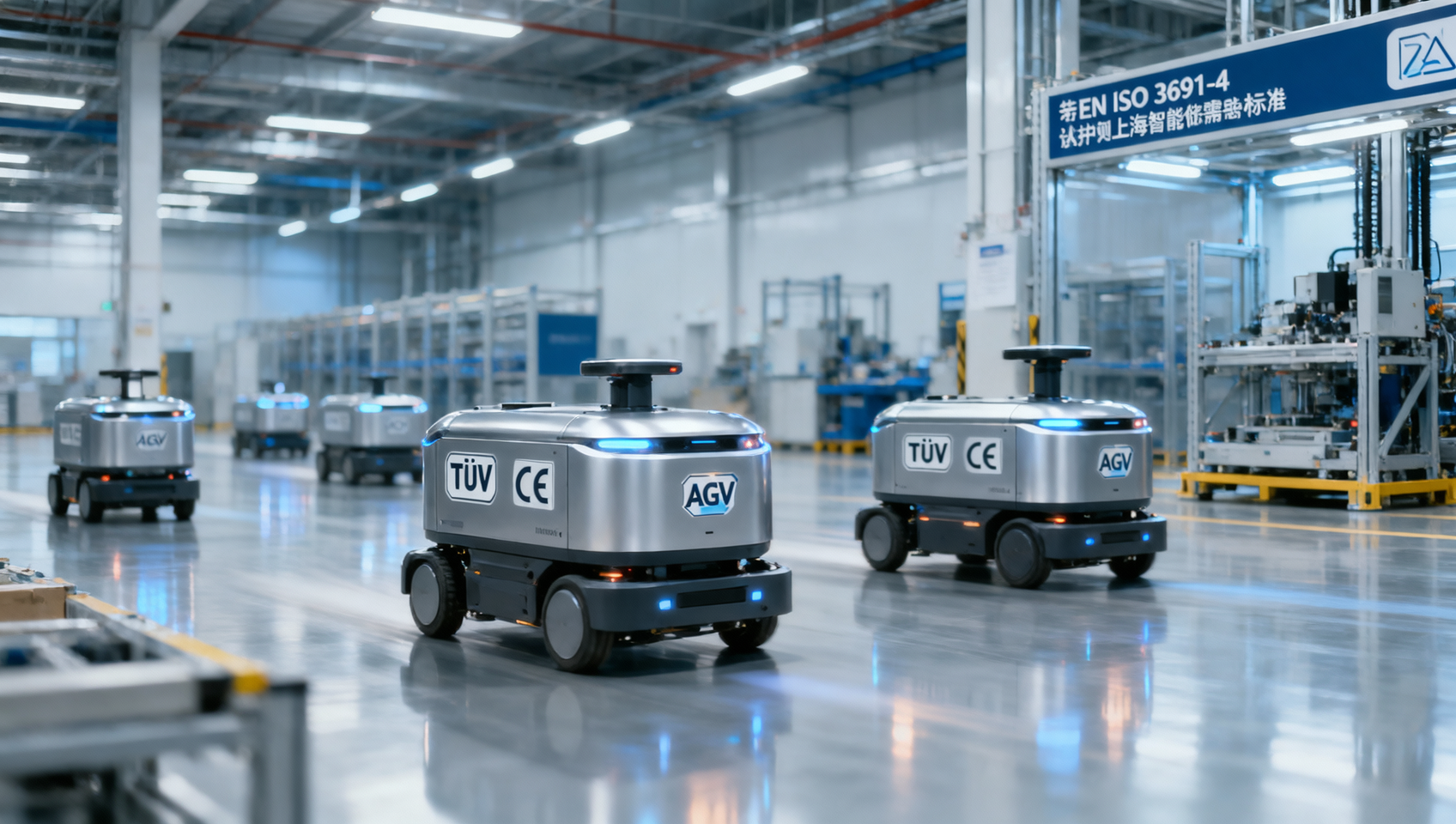
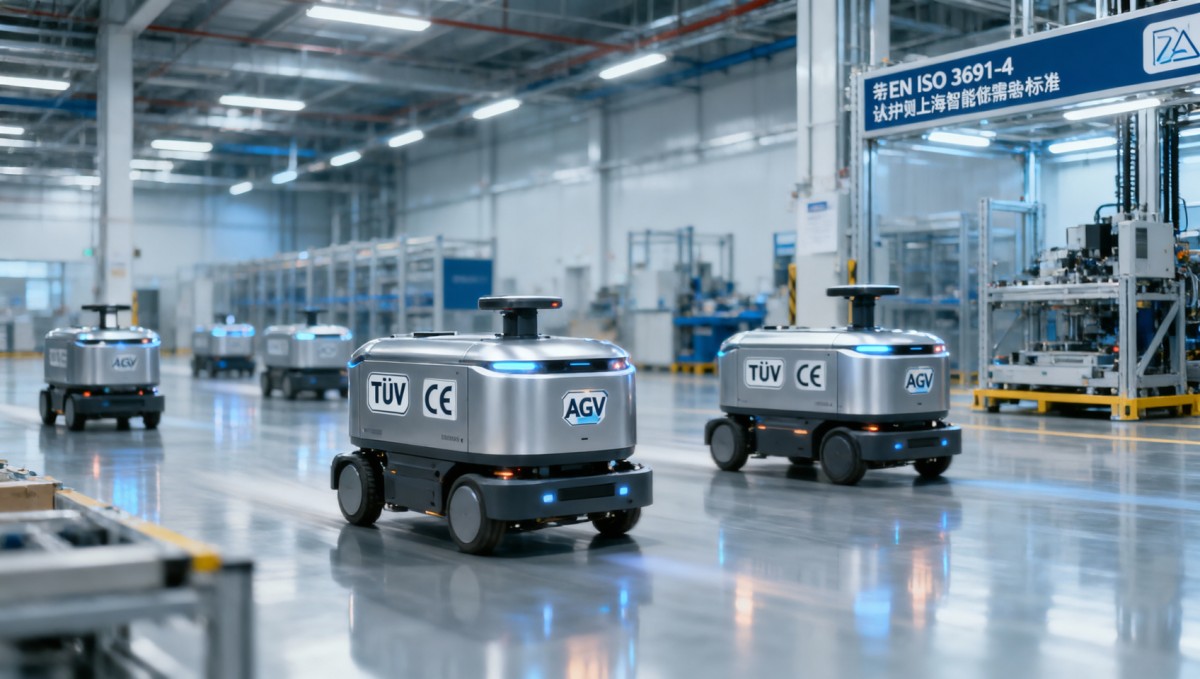
On April 27, 2026, TÜV Rheinland launched a dedicated local certification center in Shanghai for warehouse robotics — the first of its kind in China — offering accelerated CE and TÜV Mark certification under EN ISO 3691-4:2025+A1:2026. This development is especially relevant for manufacturers of autonomous mobile robots (AMRs) and automated guided vehicles (AGVs), as well as integrators and EU-bound logistics automation suppliers, given its direct impact on time-to-market and compliance efficiency.
Event Overview
On April 27, 2026, TÜV Rheinland announced the opening of its first localized ‘one-stop certification center’ for warehouse robotics in Shanghai. The center supports full-scope testing against EN ISO 3691-4:2025+A1:2026. Eligible Chinese AMR/AGV manufacturers submitting complete technical documentation can receive both CE marking and TÜV Mark certification within as few as 22 working days — a 60% reduction compared to prior overseas testing timelines.
Impact on Specific Industry Segments
AMR/AGV Original Equipment Manufacturers (OEMs)
These manufacturers are directly affected because the new channel reduces certification lead time and eliminates logistical friction associated with shipping prototypes abroad. Impact manifests primarily in shorter product launch cycles, improved responsiveness to EU tender deadlines, and lower internal coordination overhead across R&D, compliance, and export teams.
Logistics Automation System Integrators
Integrators sourcing core robotic platforms from Chinese OEMs may face revised qualification requirements from end clients — particularly in EU-based warehousing or e-commerce fulfillment projects — where dual certification (CE + TÜV Mark) is increasingly treated as a de facto benchmark. This affects procurement timelines, documentation handover protocols, and vendor evaluation criteria.
EU Market Access Support Providers
Firms offering regulatory consulting, technical file preparation, or conformity assessment support for Chinese robotics exporters now have a defined local pathway for EN ISO 3691-4 validation. Their service scope may shift toward pre-submission readiness checks and documentation harmonization aligned specifically with this new Shanghai center’s acceptance criteria.
What Relevant Enterprises or Practitioners Should Focus On — and How to Respond
Confirm eligibility and documentation readiness ahead of submission
Not all AMR/AGV configurations automatically qualify for the 22-working-day timeline. Companies should verify whether their product category, safety architecture (e.g., emergency stop logic, human detection performance), and existing technical files meet the center’s intake requirements — including language (English or Chinese), test report formats, and risk assessment depth.
Align internal certification planning with EU project milestones
Because the accelerated timeline applies only after full documentation is submitted, manufacturers should front-load technical file development — particularly hazard analysis, software validation records, and electromagnetic compatibility (EMC) evidence — to avoid bottlenecks. Synchronizing this effort with known EU client bid windows or tender cycles improves strategic advantage.
Monitor updates to EN ISO 3691-4 implementation guidance
The standard includes Annex A1:2026, which introduces updated requirements for multi-robot coordination and dynamic obstacle avoidance. While the Shanghai center supports full testing, interpretation of certain clauses (e.g., ‘acceptable response latency’ in shared navigation zones) remains subject to ongoing clarification by TÜV Rheinland. Stakeholders should track official bulletins issued by the center.
Editorial Perspective / Industry Observation
Observably, this initiative signals a structural adjustment in how global conformity assessment bodies accommodate the geographic concentration of robotics innovation — particularly in China’s industrial automation cluster. It does not represent a relaxation of safety requirements, but rather a localization of verification infrastructure. Analysis shows that the 22-day timeline reflects process optimization (e.g., parallel test execution, co-located engineering and certification staff), not reduced rigor. From an industry perspective, this is best understood as an operational enabler — not a regulatory shift — and its long-term relevance hinges on consistent throughput capacity and transparent communication of test outcome expectations.
Conclusion: This move lowers procedural barriers for Chinese warehouse robot exporters targeting EU markets, but does not alter fundamental safety or performance expectations under EN ISO 3691-4. It is more accurately interpreted as an efficiency upgrade in certification delivery — one that rewards preparedness and documentation discipline, rather than substituting for technical compliance.
Source: Official announcement by TÜV Rheinland, dated April 27, 2026. No additional background data, policy context, or third-party commentary has been incorporated. Ongoing observation is recommended regarding the center’s published intake guidelines, sample turnaround consistency, and any future expansion to adjacent standards (e.g., EN 1525 legacy coverage).
Get weekly intelligence in your inbox.
No noise. No sponsored content. Pure intelligence.
 Apr 28, 2026Suez Canal Fee Hike & China-Europe Rail Premium: Q2 2026 ImpactSuez Canal Fee Hike & China-Europe Rail Premium: Q2 2026 Impact
 Apr 28, 2026TÜV Rheinland Launches Fast-Track Certification for Chinese Warehouse RobotsTÜV Rheinland Launches Fast-Track Certification for Chinese Warehouse Robots
 Apr 28, 2026EU Enforces Battery Passport Rule for Chinese ESS Exports from 2027EU Enforces Battery Passport Rule for Chinese ESS Exports from 2027
 Apr 28, 2026ADB Raises Vietnam GDP Forecast to 7.2%: SMT & Precision Fixture Demand RisesADB Raises Vietnam GDP Forecast to 7.2%: SMT & Precision Fixture Demand Rises
 Apr 28, 2026US ITC Launches Section 337 Investigation into Chinese Wi-Fi 7 RF FEMsUS ITC Launches Section 337 Investigation into Chinese Wi-Fi 7 RF FEMs
 Apr 28, 2026Côte d'Ivoire Opens $500M Power Tender: Chinese BESS Get Fast-Track AccessCôte d'Ivoire Opens $500M Power Tender: Chinese BESS Get Fast-Track Access
 Apr 28, 2026BP’s Algeria East Basin Permit Spurs Valve Demand, Lead Times Extend to 18 WeeksBP’s Algeria East Basin Permit Spurs Valve Demand, Lead Times Extend to 18 Weeks
") Apr 28, 2026Vietnam Mandates V-Trust for Smart Appliances Export (July 2026)Vietnam Mandates V-Trust for Smart Appliances Export (July 2026)
Apr 28, 2026Vietnam Mandates V-Trust for Smart Appliances Export (July 2026)Vietnam Mandates V-Trust for Smart Appliances Export (July 2026) Apr 28, 2026Morocco Enforces PV Mounting Structure Certification from Q3 2026Morocco Enforces PV Mounting Structure Certification from Q3 2026
 Apr 28, 2026UAE Establishes AI Hub Status, Opens CE-ADAS+ Pathway for Chinese Smart Industrial EquipmentUAE Establishes AI Hub Status, Opens CE-ADAS+ Pathway for Chinese Smart Industrial Equipment
 Apr 27, 2026Algeria’s Oil & Steel FDI Push Opens Valve, Corrosion-Resistant Material OrdersAlgeria’s Oil & Steel FDI Push Opens Valve, Corrosion-Resistant Material Orders
 Apr 27, 2026Azerbaijan’s New PV Mounting Standard Opens Path for Chinese SuppliersAzerbaijan’s New PV Mounting Standard Opens Path for Chinese Suppliers
 Apr 27, 2026Fitch Cuts East Africa Growth Forecasts, Raises Cross-Border Trade RisksFitch Cuts East Africa Growth Forecasts, Raises Cross-Border Trade Risks
 Apr 27, 2026ADB Raises Vietnam GDP Forecast to 7.2% on Electronics Export GrowthADB Raises Vietnam GDP Forecast to 7.2% on Electronics Export Growth
 Apr 27, 2026Maine Halts Large Data Centers: AI Server Export ImpactMaine Halts Large Data Centers: AI Server Export Impact
 Apr 27, 2026OFID $500M for Côte d'Ivoire: Boost to Factory Automation & Warehouse RoboticsOFID $500M for Côte d'Ivoire: Boost to Factory Automation & Warehouse Robotics
 Apr 27, 2026Morocco Ranks 4th in EU Energy Aid to AfricaMorocco Ranks 4th in EU Energy Aid to Africa
 Apr 27, 2026UAE Emerges as Global AI Hub, Opening Fast-Track for Chinese Smart DevicesUAE Emerges as Global AI Hub, Opening Fast-Track for Chinese Smart Devices
") Apr 26, 2026China Releases Green Design Guidelines for Industrial Products (2026)China Releases Green Design Guidelines for Industrial Products (2026)
Apr 26, 2026China Releases Green Design Guidelines for Industrial Products (2026)China Releases Green Design Guidelines for Industrial Products (2026) Apr 26, 2026ANATEL Mandates Portuguese Offline Voice Assistant for Smart Home Devices in BrazilANATEL Mandates Portuguese Offline Voice Assistant for Smart Home Devices in Brazil
 Apr 26, 2026Vietnam Enforces Bilingual Safety Labels for Electronic Components from Apr 22, 2026Vietnam Enforces Bilingual Safety Labels for Electronic Components from Apr 22, 2026
 Apr 26, 2026Japan Updates JIS for Rehab Devices: IEC 62366-1:2024 RequiredJapan Updates JIS for Rehab Devices: IEC 62366-1:2024 Required
 Apr 26, 2026THE Alliance Cuts Ningbo–Rotterdam Transit to 18 Days, Spot Rates Up 35%THE Alliance Cuts Ningbo–Rotterdam Transit to 18 Days, Spot Rates Up 35%
 Apr 26, 2026India BIS Mandates PLC & HMI Certification under IS 13252:2025 by Oct 2026India BIS Mandates PLC & HMI Certification under IS 13252:2025 by Oct 2026
") Apr 26, 2026SASO Enforces New EV Charger Rules in Saudi Arabia (2026)SASO Enforces New EV Charger Rules in Saudi Arabia (2026)
Apr 26, 2026SASO Enforces New EV Charger Rules in Saudi Arabia (2026)SASO Enforces New EV Charger Rules in Saudi Arabia (2026) Apr 26, 2026TÜV Rheinland Updates IoT EMC Guidelines: AI Edge Modules Now Mandatory for Immunity TestingTÜV Rheinland Updates IoT EMC Guidelines: AI Edge Modules Now Mandatory for Immunity Testing
 Apr 26, 2026USTR Launches First Annual Review of China Solar PV AD/CVD OrdersUSTR Launches First Annual Review of China Solar PV AD/CVD Orders