Suez Canal Fee Hike & China-Europe Rail Premium: Q2 2026 Impact
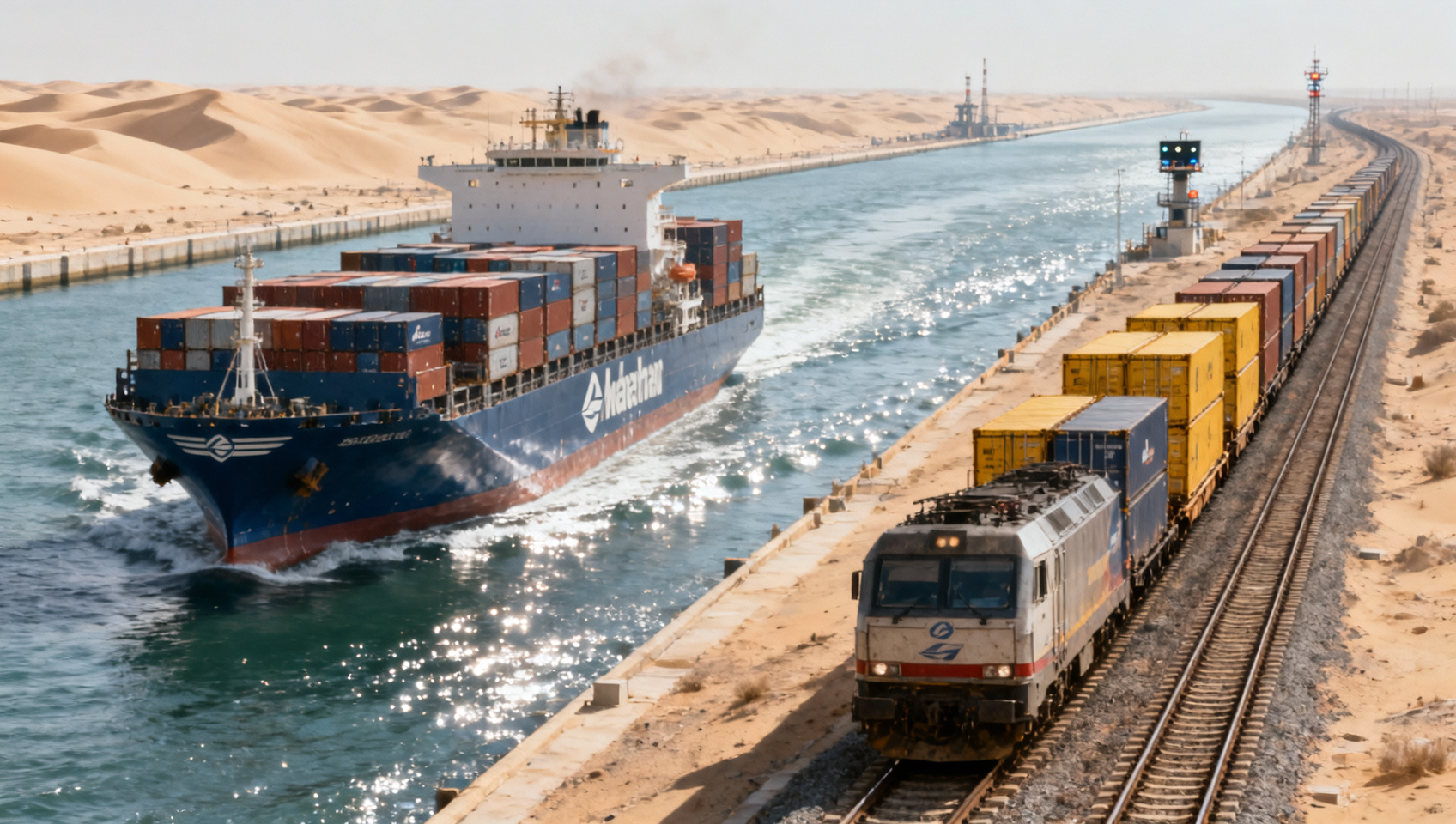
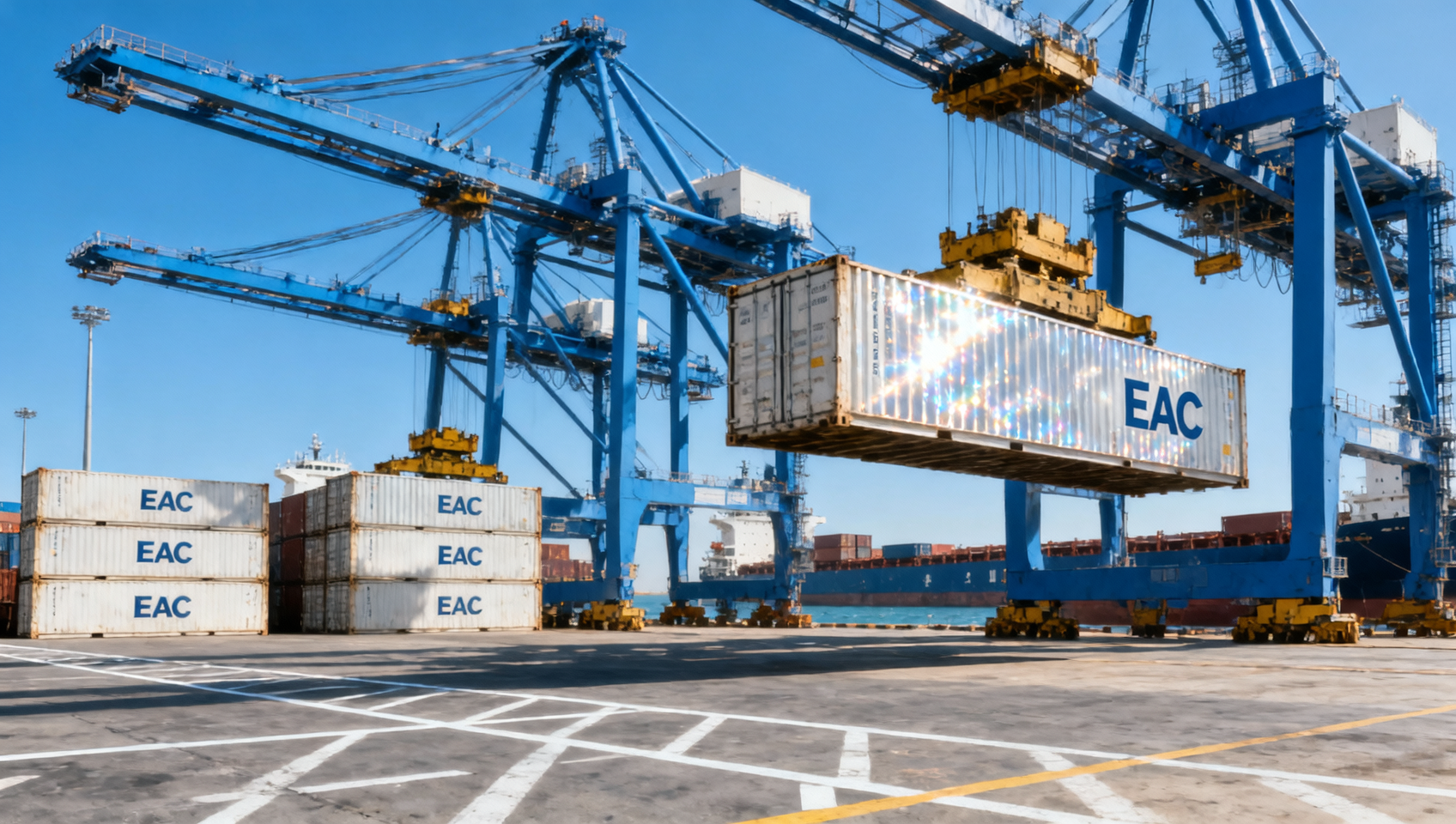
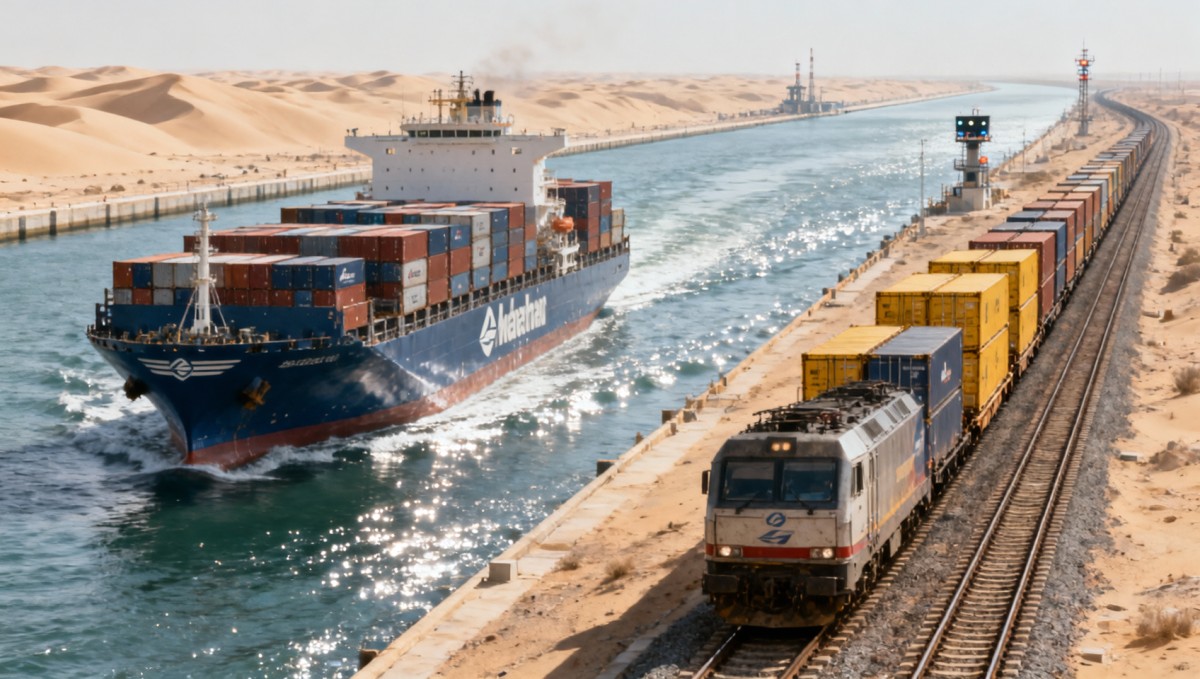
On April 27, 2026, the Suez Canal Authority announced a 12% increase in transit fees for Q2 2026, citing ongoing Red Sea shipping risks; concurrently, 40HQ container slot premiums on key China-Europe rail routes (e.g., Chongqing–Duisburg) reached 35%, with booking lead times extended to 7–10 days—impacting cross-border freight of bulk industrial goods and equipment.
Event Overview
On April 27, 2026, the Suez Canal Authority confirmed a 12% quarterly increase in vessel transit fees effective for Q2 2026. The announcement attributes the adjustment to persistent navigational risks in the Red Sea region. Separately, market data from major rail freight operators indicates that 40HQ slot pricing on core China-Europe rail corridors—including the Chongqing–Duisburg line—has risen by 35% above baseline rates, with average booking windows now stretching 7–10 days. These developments directly affect cross-border freight operations for large-volume industrial products and machinery.
Industries Affected by Segment
Direct Trading Enterprises
These firms—especially those exporting industrial machinery or importing raw materials via Suez or rail—face immediate cost pressure. The dual fee hike and rail premium compress margin buffers, particularly for price-sensitive contracts with fixed CIF terms. Freight cost volatility may also trigger renegotiation requests from overseas buyers.
Raw Material Procurement Entities
Enterprises sourcing commodities (e.g., metals, chemicals) from Middle Eastern or European suppliers are exposed to both higher canal fees (if routing via Suez) and elevated rail surcharges (if shifting to overland alternatives). Longer rail booking cycles further constrain just-in-time procurement planning, increasing inventory holding requirements.
Manufacturing Companies with Global Supply Chains
For OEMs assembling equipment requiring time-bound component deliveries—such as power generation systems or rail infrastructure parts—the 7–10 day rail booking lead time introduces scheduling uncertainty. Delays in securing slots may cascade into production line idle time or missed delivery windows under contractual SLAs.
Distribution & Logistics Service Providers
Third-party logistics (3PL) and freight forwarding firms must recalibrate rate cards and service level commitments. The 35% rail premium is not uniformly applied across all origin-destination pairs or equipment types, requiring granular quoting and proactive client communication—not just on cost, but on lead time reliability.
What Relevant Enterprises Should Monitor & Act On
Track Official Announcements for Duration and Scope
Monitor updates from the Suez Canal Authority and national rail operators (e.g., China State Railway Group, DB Cargo) regarding whether the Q2 fee adjustments are one-off or indicative of a sustained tariff review cycle—and whether exemptions or tiered pricing apply to specific cargo categories.
Assess Exposure by Route, Commodity, and Contract Term
Map current shipments against three pathways: Suez-dependent maritime legs, alternative Cape Horn routes (with longer transit time), and rail alternatives. Prioritize review for high-value, time-critical, or contractually fixed-price shipments—especially those involving industrial equipment or project cargo.
Distinguish Between Policy Signal and Operational Reality
A 12% canal fee increase reflects risk pricing—not necessarily a structural shift in global trade lanes. Similarly, a 35% rail premium signals short-term capacity tightness, not long-term infrastructure expansion. Avoid locking in extended-term rail commitments until spot-market stability improves.
Adjust Procurement and Booking Timelines Proactively
Where rail remains operationally viable, extend internal procurement lead times by at least 5 business days and formalize buffer stock agreements with key suppliers. For maritime alternatives, confirm revised ETAs with carriers and update customer-facing delivery schedules accordingly.
Editorial Observation / Industry Perspective
Observably, this development functions more as a near-term operational stress indicator than a structural trade route inflection point. The simultaneous rise in both maritime and rail costs suggests constrained flexibility—not a clear ‘pivot’ to overland transport. Analysis shows that while rail capacity utilization is spiking, it remains far below pre-crisis maritime volume equivalence; thus, the premium reflects scarcity, not strategic substitution. From an industry standpoint, the April 27 announcements signal continued volatility in contingency routing—not normalization. Current conditions warrant monitoring, not wholesale reengineering of logistics architecture.
Conclusion
This update underscores how localized maritime risk translates into measurable cost and timeline impacts across multiple transport modalities—and cascades into procurement, production, and client delivery planning. It does not yet indicate a permanent rerouting of trade flows, but rather confirms that Red Sea instability continues to compress operational margins and planning horizons. Practically, it is best understood as a signal to activate short-to-mid-term contingency protocols—not to initiate long-term infrastructure or partnership shifts.
Source Attribution
Main source: Suez Canal Authority official announcement (April 27, 2026); corroborated by publicly reported 40HQ slot pricing and booking timelines from verified rail freight operators serving the Chongqing–Duisburg corridor. Ongoing observation is required for Q3 fee decisions and rail capacity allocation policies beyond May 2026.
Get weekly intelligence in your inbox.
No noise. No sponsored content. Pure intelligence.
 Apr 28, 2026Suez Canal Fee Hike & China-Europe Rail Premium: Q2 2026 ImpactSuez Canal Fee Hike & China-Europe Rail Premium: Q2 2026 Impact
 Apr 28, 2026TÜV Rheinland Launches Fast-Track Certification for Chinese Warehouse RobotsTÜV Rheinland Launches Fast-Track Certification for Chinese Warehouse Robots
 Apr 28, 2026EU Enforces Battery Passport Rule for Chinese ESS Exports from 2027EU Enforces Battery Passport Rule for Chinese ESS Exports from 2027
 Apr 28, 2026ADB Raises Vietnam GDP Forecast to 7.2%: SMT & Precision Fixture Demand RisesADB Raises Vietnam GDP Forecast to 7.2%: SMT & Precision Fixture Demand Rises
 Apr 28, 2026US ITC Launches Section 337 Investigation into Chinese Wi-Fi 7 RF FEMsUS ITC Launches Section 337 Investigation into Chinese Wi-Fi 7 RF FEMs
 Apr 28, 2026Côte d'Ivoire Opens $500M Power Tender: Chinese BESS Get Fast-Track AccessCôte d'Ivoire Opens $500M Power Tender: Chinese BESS Get Fast-Track Access
 Apr 28, 2026BP’s Algeria East Basin Permit Spurs Valve Demand, Lead Times Extend to 18 WeeksBP’s Algeria East Basin Permit Spurs Valve Demand, Lead Times Extend to 18 Weeks
") Apr 28, 2026Vietnam Mandates V-Trust for Smart Appliances Export (July 2026)Vietnam Mandates V-Trust for Smart Appliances Export (July 2026)
Apr 28, 2026Vietnam Mandates V-Trust for Smart Appliances Export (July 2026)Vietnam Mandates V-Trust for Smart Appliances Export (July 2026) Apr 28, 2026Morocco Enforces PV Mounting Structure Certification from Q3 2026Morocco Enforces PV Mounting Structure Certification from Q3 2026
 Apr 28, 2026UAE Establishes AI Hub Status, Opens CE-ADAS+ Pathway for Chinese Smart Industrial EquipmentUAE Establishes AI Hub Status, Opens CE-ADAS+ Pathway for Chinese Smart Industrial Equipment
 Apr 27, 2026Algeria’s Oil & Steel FDI Push Opens Valve, Corrosion-Resistant Material OrdersAlgeria’s Oil & Steel FDI Push Opens Valve, Corrosion-Resistant Material Orders
 Apr 27, 2026Azerbaijan’s New PV Mounting Standard Opens Path for Chinese SuppliersAzerbaijan’s New PV Mounting Standard Opens Path for Chinese Suppliers
 Apr 27, 2026Fitch Cuts East Africa Growth Forecasts, Raises Cross-Border Trade RisksFitch Cuts East Africa Growth Forecasts, Raises Cross-Border Trade Risks
 Apr 27, 2026ADB Raises Vietnam GDP Forecast to 7.2% on Electronics Export GrowthADB Raises Vietnam GDP Forecast to 7.2% on Electronics Export Growth
 Apr 27, 2026Maine Halts Large Data Centers: AI Server Export ImpactMaine Halts Large Data Centers: AI Server Export Impact
 Apr 27, 2026OFID $500M for Côte d'Ivoire: Boost to Factory Automation & Warehouse RoboticsOFID $500M for Côte d'Ivoire: Boost to Factory Automation & Warehouse Robotics
 Apr 27, 2026Morocco Ranks 4th in EU Energy Aid to AfricaMorocco Ranks 4th in EU Energy Aid to Africa
 Apr 27, 2026UAE Emerges as Global AI Hub, Opening Fast-Track for Chinese Smart DevicesUAE Emerges as Global AI Hub, Opening Fast-Track for Chinese Smart Devices
") Apr 26, 2026China Releases Green Design Guidelines for Industrial Products (2026)China Releases Green Design Guidelines for Industrial Products (2026)
Apr 26, 2026China Releases Green Design Guidelines for Industrial Products (2026)China Releases Green Design Guidelines for Industrial Products (2026) Apr 26, 2026ANATEL Mandates Portuguese Offline Voice Assistant for Smart Home Devices in BrazilANATEL Mandates Portuguese Offline Voice Assistant for Smart Home Devices in Brazil
 Apr 26, 2026Vietnam Enforces Bilingual Safety Labels for Electronic Components from Apr 22, 2026Vietnam Enforces Bilingual Safety Labels for Electronic Components from Apr 22, 2026
 Apr 26, 2026Japan Updates JIS for Rehab Devices: IEC 62366-1:2024 RequiredJapan Updates JIS for Rehab Devices: IEC 62366-1:2024 Required
 Apr 26, 2026THE Alliance Cuts Ningbo–Rotterdam Transit to 18 Days, Spot Rates Up 35%THE Alliance Cuts Ningbo–Rotterdam Transit to 18 Days, Spot Rates Up 35%
 Apr 26, 2026India BIS Mandates PLC & HMI Certification under IS 13252:2025 by Oct 2026India BIS Mandates PLC & HMI Certification under IS 13252:2025 by Oct 2026
") Apr 26, 2026SASO Enforces New EV Charger Rules in Saudi Arabia (2026)SASO Enforces New EV Charger Rules in Saudi Arabia (2026)
Apr 26, 2026SASO Enforces New EV Charger Rules in Saudi Arabia (2026)SASO Enforces New EV Charger Rules in Saudi Arabia (2026) Apr 26, 2026TÜV Rheinland Updates IoT EMC Guidelines: AI Edge Modules Now Mandatory for Immunity TestingTÜV Rheinland Updates IoT EMC Guidelines: AI Edge Modules Now Mandatory for Immunity Testing
 Apr 26, 2026USTR Launches First Annual Review of China Solar PV AD/CVD OrdersUSTR Launches First Annual Review of China Solar PV AD/CVD Orders