When to Switch SMT Assembly Partners
Choosing the right SMT assembly partner can directly affect product quality, lead times, and long-term scalability. For buyers and engineering teams sourcing smt assembly services for custom pcb boards and flexible printed circuits used in portable ultrasound scanners, smart glucometers, digital blood pressure monitors, wearable ecg monitors, telemedicine carts, remote patient monitoring, and even mri machine components, knowing when to switch suppliers is a critical business decision.
In medical electronics and adjacent smart device markets, a weak contract manufacturer can create far more than inconvenience. It can trigger delayed launches, unstable field performance, recurring quality escapes, and rising total landed cost. For procurement teams, quality managers, project leaders, and executives, the question is not only whether a supplier can build boards today, but whether that partner can support tighter tolerances, traceability requirements, and volume changes over the next 12 to 36 months.
This article explains the practical signs that indicate it may be time to change SMT assembly partners, how to evaluate alternatives without disrupting production, and which decision criteria matter most when your products include custom PCB assemblies, flexible printed circuits, mixed-technology boards, and compliance-sensitive healthcare electronics.
Operational Signs Your SMT Assembly Partner Is No Longer the Right Fit
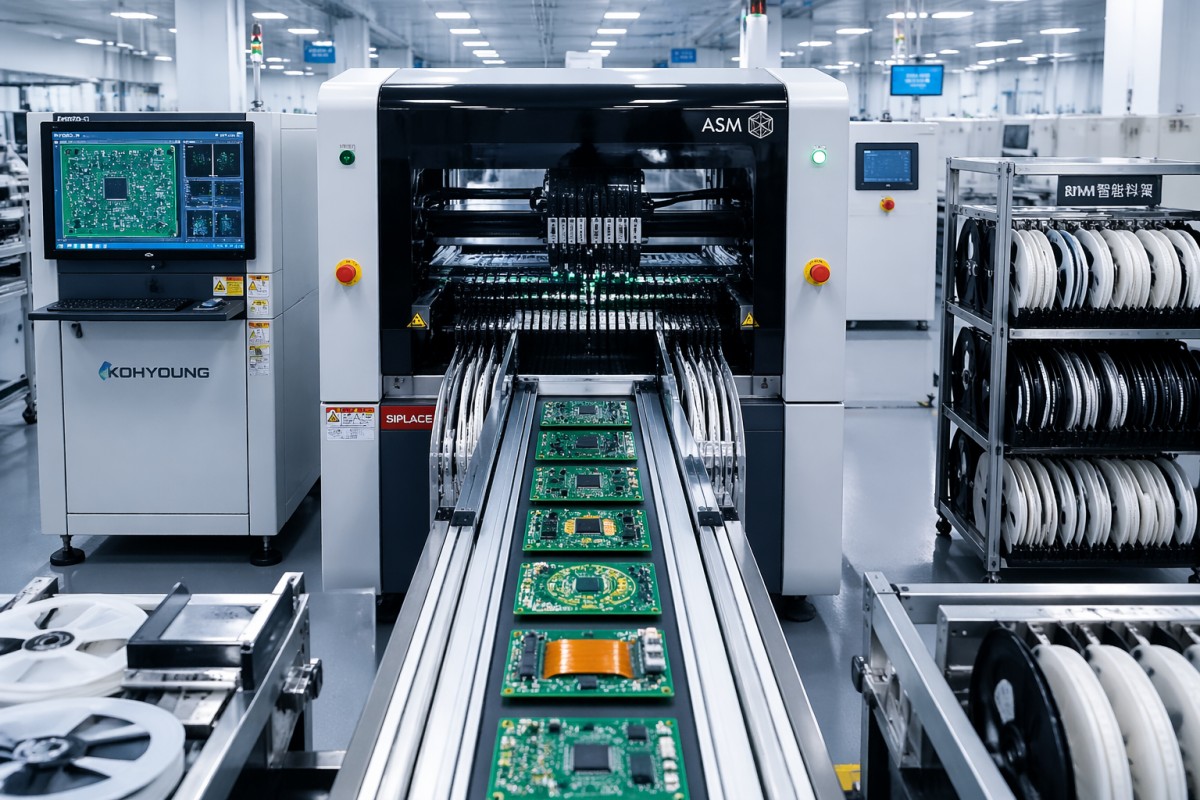
The earliest warning signs usually appear in operations before they appear in contracts. If your SMT assembly partner regularly misses agreed lead times by 5 to 10 business days, changes delivery windows after PO confirmation, or depends on repeated manual workarounds to complete standard builds, the issue is often systemic rather than temporary. In healthcare-related devices, even a 1-week delay can push back validation, shipment release, and downstream installation schedules.
Quality drift is another strong signal. A partner that once delivered stable first-pass yields may begin showing higher defect rates during SPI, AOI, ICT, or functional testing. Typical red flags include solder bridging on fine-pitch components, tombstoning on passive parts, warpage issues on thin boards, and inconsistent handling of flexible printed circuits. When defect containment becomes routine instead of exceptional, the cost of staying often exceeds the cost of switching.
Communication problems also matter. If engineering questions take 48 to 72 hours to answer, DFM feedback arrives only after tooling or stencil release, or process deviations are disclosed after production rather than before it, your internal team is carrying too much execution risk. Strong SMT assembly services are not just about placement speed; they depend on disciplined pre-production review, transparent escalation, and documented corrective actions.
Capacity mismatch is common when medical device OEMs scale from pilot lots of 100 to 500 units into recurring volumes of 5,000 to 20,000 boards per quarter. Some suppliers are excellent at NPI but weak at repeat manufacturing. Others handle commodity consumer electronics well but struggle when boards require traceability, lot control, serialized records, or mixed assembly for rigid-flex designs.
Common warning patterns to track
- On-time delivery falls below your internal threshold for 2 or more consecutive quarters.
- Engineering change orders require repeated rework because document control is inconsistent.
- Corrective and preventive action reports close slowly, often beyond 10 business days.
- Supplier response times exceed 24 hours for urgent production or quality incidents.
- Prototype success does not translate into stable mass production output.
The table below summarizes practical thresholds many buyers use when deciding whether a current supplier needs corrective oversight or replacement consideration.
A single issue may not justify a supplier change. However, if 3 or 4 of these indicators appear together over a 90-day period, the business case for evaluating new SMT assembly services becomes much stronger.
Why Medical and Smart Electronics Applications Raise the Switching Threshold
Not every board assembly project carries the same level of supplier risk. In portable and connected healthcare electronics, PCB assemblies often support signal accuracy, patient data flow, battery efficiency, and device reliability in compact form factors. That changes the selection criteria for an SMT assembly partner. What works for low-complexity consumer accessories may not work for blood pressure monitors, wearable ECG devices, or imaging-related modules.
Boards in these applications frequently combine fine-pitch ICs, BGAs, sensors, wireless modules, and power management sections on dense layouts. Flexible printed circuits add another layer of difficulty because bending stress, handling methods, and reflow profile control can affect long-term reliability. If a supplier lacks discipline in fixture design, ESD control, moisture-sensitive component handling, or board support methods, failure rates may appear only after field deployment.
Traceability expectations are also higher. Many buyers need lot-level records for paste, components, reflow profile settings, inspection logs, and serialized product history. If your current partner cannot maintain complete digital records for 12 to 24 months, root-cause analysis becomes slower and more expensive. That is a major problem for enterprise buyers managing recalls, returns, or regulated customer audits.
Another factor is product lifecycle volatility. Medical and smart electronic products often move through 3 phases: prototype, pilot, and scale production. A supplier must support design revisions, alternate component approval, and controlled ramp-up without introducing undocumented substitutions. If shortages force frequent material changes, the partner should have a robust PCN workflow, not an informal email trail.
Application-specific risk areas
Portable diagnostic devices
These products often require compact layouts, stable analog performance, and tight power control. Assembly errors can affect signal integrity, battery life, or calibration repeatability.
Wearable and remote monitoring devices
Here, flexible circuits, lightweight housings, and low-profile components are common. Handling mistakes during SMT or final assembly can reduce durability over repeated movement cycles.
Telemedicine carts and imaging subassemblies
These systems may involve higher board counts, cable integration, and mixed box-build support. A supplier that only offers basic board stuffing may not meet broader system integration needs.
When product risk is high, switching late is often more disruptive than switching early. That is why procurement and engineering teams should review supplier fit before quality or delivery issues become customer-facing failures.
How to Evaluate a New SMT Assembly Partner Before You Move Production
A supplier transition should not begin with price alone. The better approach is a weighted evaluation covering process capability, documentation quality, communication discipline, and supply chain resilience. For most B2B buyers, a 5-part review model works well: technical fit, quality system maturity, sourcing capability, responsiveness, and total cost. This helps finance and operations teams compare suppliers on more than unit assembly quotes.
Start with process fit. Ask whether the contract manufacturer can support your board thickness range, component sizes, package types, double-sided reflow, conformal coating needs, and post-assembly test requirements. For flexible printed circuits and rigid-flex designs, confirm support fixtures, transport methods, and reflow constraints. If your current product includes 01005 passives, 0.4 mm pitch BGAs, or mixed SMT and through-hole assembly, the supplier must prove capability through sample builds or process documentation.
Then review quality control depth. Look for incoming material inspection, solder paste management, SPI, AOI, X-ray access when needed, first article approval, and traceable nonconformance control. A supplier does not need every premium system for every product, but they should clearly explain what inspection gates are standard, which are optional, and how data is stored.
Commercial evaluation should include MOQ flexibility, bonded inventory options, lead time commitments, and change management procedures. A low unit price can quickly lose its advantage if the supplier requires oversized safety stock, expensive expedite fees, or large MOQs that strain working capital. Many buyers underestimate these hidden costs during supplier selection.
A practical supplier comparison framework
The following table can be used during RFQ or technical review meetings to compare current and prospective SMT assembly services in a structured way.
The strongest candidate is usually not the cheapest quote on day 1. It is the supplier that can demonstrate repeatability, data visibility, and a realistic ability to support your next 2 product generations.
Recommended qualification steps
- Run a document review covering Gerbers, BOM, AVL, assembly drawings, and test expectations.
- Request DFM feedback within 3 to 5 working days to measure technical responsiveness.
- Build a pilot lot, often 20 to 100 units depending on product complexity.
- Review yield, defect classification, turnaround time, and packaging quality.
- Approve a controlled ramp only after corrective actions are closed.
How to Switch Suppliers Without Disrupting Delivery, Quality, or Cash Flow
Changing an SMT assembly partner should be handled as a controlled transfer project, not a purchasing event. The safest transitions usually occur in 4 stages: assessment, overlap, qualification, and phased ramp. This approach protects ongoing customer deliveries while allowing your team to verify process stability at the new supplier. For high-mix or medically oriented electronics, an overlap period of 4 to 8 weeks is often justified.
During the assessment stage, identify what must move first. Not every product should transfer at once. Start with boards that have stable revisions, lower validation burden, and predictable component supply. Keep complex or heavily regulated assemblies at the current supplier until the new partner has proven documentation control, inspection discipline, and packaging consistency.
In the overlap stage, maintain at least 1 qualified source of continuity. This may mean keeping 4 to 6 weeks of finished-goods buffer or dual-sourcing selected subassemblies temporarily. Finance teams often resist this because inventory rises in the short term, but the alternative can be far more expensive if a rushed transfer creates line stoppages or customer backorders.
Supplier transition also requires strict document governance. Use a controlled package containing revision history, approved alternates, test procedures, acceptance criteria, labeling format, and packaging instructions. In practice, many transfer failures come not from SMT capability but from missing files, outdated drawings, or undocumented tribal knowledge held by one engineer or planner.
Recommended transfer checklist
- Freeze the production revision before transfer and document any pending ECO separately.
- Map all critical materials, including long-lead items with 8 to 20 week procurement windows.
- Define golden samples, visual acceptance references, and test limits before the pilot run.
- Set measurable go-live criteria such as yield, defect ppm trend, and on-time shipment performance.
- Assign owners across sourcing, engineering, quality, and project management to avoid approval gaps.
A phased transfer is usually safer than a full cutover. For example, move 20% of volume in month 1, 50% in month 2, and only reach 100% after quality and delivery data remain stable. This staged model gives procurement directors and project leaders enough evidence to support internal approval and supplier rationalization decisions.
Cost, Risk, and Procurement Factors That Should Drive the Final Decision
The decision to switch SMT assembly services should be based on total business impact rather than quoted assembly price. Unit cost is visible, but hidden costs often include field returns, engineering containment time, excess inventory, missed launch windows, and emergency freight. A supplier that saves 3% on quoted assembly cost can still increase annual program cost if defects, delays, or planning friction rise across the supply chain.
Procurement teams should also evaluate commercial resilience. Review payment terms, liability language, stock ownership rules, and flexibility in component procurement. If your products face demand swings of plus or minus 30% by quarter, the supplier should be able to support forecast changes without punitive expedite structures or uncontrolled substitutions. This matters for distributors, agents, and OEM channels that operate with variable order patterns.
Quality and compliance stakeholders should confirm that the new partner can support your incoming audit expectations. That does not mean every project needs the same documentation depth, but the supplier should be able to show process discipline in training, nonconformance management, ESD practices, and record retention. For products entering hospitals, clinics, or remote care systems, packaging integrity and shipment control are also procurement issues, not just warehouse issues.
Executives and financial approvers typically want a clear business case. The most persuasive format is a side-by-side matrix combining risk, cost, and scalability. That framework helps cross-functional teams avoid emotion-driven supplier changes and instead make decisions supported by measurable operating criteria.
Final decision matrix for switching
Use this simple matrix to align procurement, engineering, quality, and finance before approving a supplier transition.
If the high-risk column describes your current situation more accurately than the low-risk column, it is usually time to move from supplier monitoring to active replacement planning.
FAQ
How long does it usually take to switch an SMT assembly partner?
For a straightforward board with stable documentation, qualification may take 3 to 6 weeks. For products with flexible circuits, custom testing, or regulated documentation needs, a safer range is 6 to 12 weeks including pilot builds and approval gates.
Should buyers switch because of price alone?
Usually no. Price matters, but switching should be tied to total cost, quality stability, service responsiveness, and future capacity. A quote difference of 2% to 5% is often less important than delivery reliability and defect prevention.
What documents are most critical during supplier transfer?
At minimum, transfer the latest BOM, Gerbers, pick-and-place files, assembly drawings, approved alternates, testing instructions, visual references, labeling requirements, and packaging specifications. Missing any 1 of these can delay qualification or create rework risk.
When should engineering be involved in the switch decision?
From the start. Engineering should participate in DFM review, pilot analysis, defect classification, and process approval. Supplier changes decided only by purchasing often create avoidable technical problems after transfer.
Switching SMT assembly partners is not simply a reaction to poor service. It is a strategic move that can protect product quality, shorten recovery from supply chain disruption, and create a stronger foundation for growth in healthcare technology and smart electronics. The right time to change is usually when delivery instability, quality drift, weak engineering support, and scaling limits begin to appear together rather than in isolation.
For buyers, quality teams, project managers, and enterprise decision-makers, the best outcome comes from a structured transition plan, measurable qualification criteria, and a supplier shortlist built around technical fit and operational transparency. If your current manufacturing partner is no longer keeping pace with your product complexity or business goals, now is the right time to assess alternatives with greater precision.
To explore more supply chain intelligence, sourcing benchmarks, and sector-specific manufacturing insights, connect with TradeNexus Pro and get a more informed path to your next supplier decision. Contact us to discuss your application, request a tailored evaluation framework, or learn more solutions for resilient SMT assembly sourcing.
- Smart Electronics
- Healthcare Technology
- Enterprise Decision
- custom pcb boards
- flexible printed circuits
- smt assembly services
- telemedicine carts
- remote patient monitoring
- wearable ecg monitors
- digital blood pressure monitors
- smart glucometers
- portable ultrasound scanners
- mri machine components
- Procurement Directors
- Manufacturing Insights
- Supply Chain Intelligence
Get weekly intelligence in your inbox.
No noise. No sponsored content. Pure intelligence.
 Apr 28, 2026Suez Canal Fee Hike & China-Europe Rail Premium: Q2 2026 ImpactSuez Canal Fee Hike & China-Europe Rail Premium: Q2 2026 Impact
 Apr 28, 2026TÜV Rheinland Launches Fast-Track Certification for Chinese Warehouse RobotsTÜV Rheinland Launches Fast-Track Certification for Chinese Warehouse Robots
 Apr 28, 2026EU Enforces Battery Passport Rule for Chinese ESS Exports from 2027EU Enforces Battery Passport Rule for Chinese ESS Exports from 2027
 Apr 28, 2026ADB Raises Vietnam GDP Forecast to 7.2%: SMT & Precision Fixture Demand RisesADB Raises Vietnam GDP Forecast to 7.2%: SMT & Precision Fixture Demand Rises
 Apr 28, 2026US ITC Launches Section 337 Investigation into Chinese Wi-Fi 7 RF FEMsUS ITC Launches Section 337 Investigation into Chinese Wi-Fi 7 RF FEMs
 Apr 28, 2026Côte d'Ivoire Opens $500M Power Tender: Chinese BESS Get Fast-Track AccessCôte d'Ivoire Opens $500M Power Tender: Chinese BESS Get Fast-Track Access
 Apr 28, 2026BP’s Algeria East Basin Permit Spurs Valve Demand, Lead Times Extend to 18 WeeksBP’s Algeria East Basin Permit Spurs Valve Demand, Lead Times Extend to 18 Weeks
") Apr 28, 2026Vietnam Mandates V-Trust for Smart Appliances Export (July 2026)Vietnam Mandates V-Trust for Smart Appliances Export (July 2026)
Apr 28, 2026Vietnam Mandates V-Trust for Smart Appliances Export (July 2026)Vietnam Mandates V-Trust for Smart Appliances Export (July 2026) Apr 28, 2026Morocco Enforces PV Mounting Structure Certification from Q3 2026Morocco Enforces PV Mounting Structure Certification from Q3 2026
 Apr 28, 2026UAE Establishes AI Hub Status, Opens CE-ADAS+ Pathway for Chinese Smart Industrial EquipmentUAE Establishes AI Hub Status, Opens CE-ADAS+ Pathway for Chinese Smart Industrial Equipment
 Apr 27, 2026Algeria’s Oil & Steel FDI Push Opens Valve, Corrosion-Resistant Material OrdersAlgeria’s Oil & Steel FDI Push Opens Valve, Corrosion-Resistant Material Orders
 Apr 27, 2026Azerbaijan’s New PV Mounting Standard Opens Path for Chinese SuppliersAzerbaijan’s New PV Mounting Standard Opens Path for Chinese Suppliers
 Apr 27, 2026Fitch Cuts East Africa Growth Forecasts, Raises Cross-Border Trade RisksFitch Cuts East Africa Growth Forecasts, Raises Cross-Border Trade Risks
 Apr 27, 2026ADB Raises Vietnam GDP Forecast to 7.2% on Electronics Export GrowthADB Raises Vietnam GDP Forecast to 7.2% on Electronics Export Growth
 Apr 27, 2026Maine Halts Large Data Centers: AI Server Export ImpactMaine Halts Large Data Centers: AI Server Export Impact
 Apr 27, 2026OFID $500M for Côte d'Ivoire: Boost to Factory Automation & Warehouse RoboticsOFID $500M for Côte d'Ivoire: Boost to Factory Automation & Warehouse Robotics
 Apr 27, 2026Morocco Ranks 4th in EU Energy Aid to AfricaMorocco Ranks 4th in EU Energy Aid to Africa
 Apr 27, 2026UAE Emerges as Global AI Hub, Opening Fast-Track for Chinese Smart DevicesUAE Emerges as Global AI Hub, Opening Fast-Track for Chinese Smart Devices
") Apr 26, 2026China Releases Green Design Guidelines for Industrial Products (2026)China Releases Green Design Guidelines for Industrial Products (2026)
Apr 26, 2026China Releases Green Design Guidelines for Industrial Products (2026)China Releases Green Design Guidelines for Industrial Products (2026) Apr 26, 2026ANATEL Mandates Portuguese Offline Voice Assistant for Smart Home Devices in BrazilANATEL Mandates Portuguese Offline Voice Assistant for Smart Home Devices in Brazil
 Apr 26, 2026Vietnam Enforces Bilingual Safety Labels for Electronic Components from Apr 22, 2026Vietnam Enforces Bilingual Safety Labels for Electronic Components from Apr 22, 2026
 Apr 26, 2026Japan Updates JIS for Rehab Devices: IEC 62366-1:2024 RequiredJapan Updates JIS for Rehab Devices: IEC 62366-1:2024 Required
 Apr 26, 2026THE Alliance Cuts Ningbo–Rotterdam Transit to 18 Days, Spot Rates Up 35%THE Alliance Cuts Ningbo–Rotterdam Transit to 18 Days, Spot Rates Up 35%
 Apr 26, 2026India BIS Mandates PLC & HMI Certification under IS 13252:2025 by Oct 2026India BIS Mandates PLC & HMI Certification under IS 13252:2025 by Oct 2026
") Apr 26, 2026SASO Enforces New EV Charger Rules in Saudi Arabia (2026)SASO Enforces New EV Charger Rules in Saudi Arabia (2026)
Apr 26, 2026SASO Enforces New EV Charger Rules in Saudi Arabia (2026)SASO Enforces New EV Charger Rules in Saudi Arabia (2026) Apr 26, 2026TÜV Rheinland Updates IoT EMC Guidelines: AI Edge Modules Now Mandatory for Immunity TestingTÜV Rheinland Updates IoT EMC Guidelines: AI Edge Modules Now Mandatory for Immunity Testing
 Apr 26, 2026USTR Launches First Annual Review of China Solar PV AD/CVD OrdersUSTR Launches First Annual Review of China Solar PV AD/CVD Orders