Why Some Wireless Charging Pads Charge So Slowly
Not all wireless charging pads deliver the speed users expect, and in most cases the pad is only part of the story. Slow wireless charging usually comes down to a mix of factors: limited power input, weak charging coil design, poor phone-to-pad alignment, thermal throttling, non-matching fast-charge protocols, and conservative safety controls. For buyers, technical evaluators, and sourcing teams reviewing wireless charging pads alongside fast charging power banks, dash cameras 4k, and rearview mirror cameras, the key question is not simply “Does it charge wirelessly?” but “How consistently, safely, and efficiently does it charge across real use cases?”
For enterprise buyers and product evaluators, this distinction matters. A charging pad that claims 15W on a spec sheet may still perform like a much slower product in everyday use if it lacks proper certification, stable thermal management, or device compatibility. Understanding why some wireless charging pads charge slowly helps procurement teams compare suppliers more accurately, reduce return risks, and select products that match user expectations.
Why do some wireless charging pads feel slow even when the rated wattage looks high?
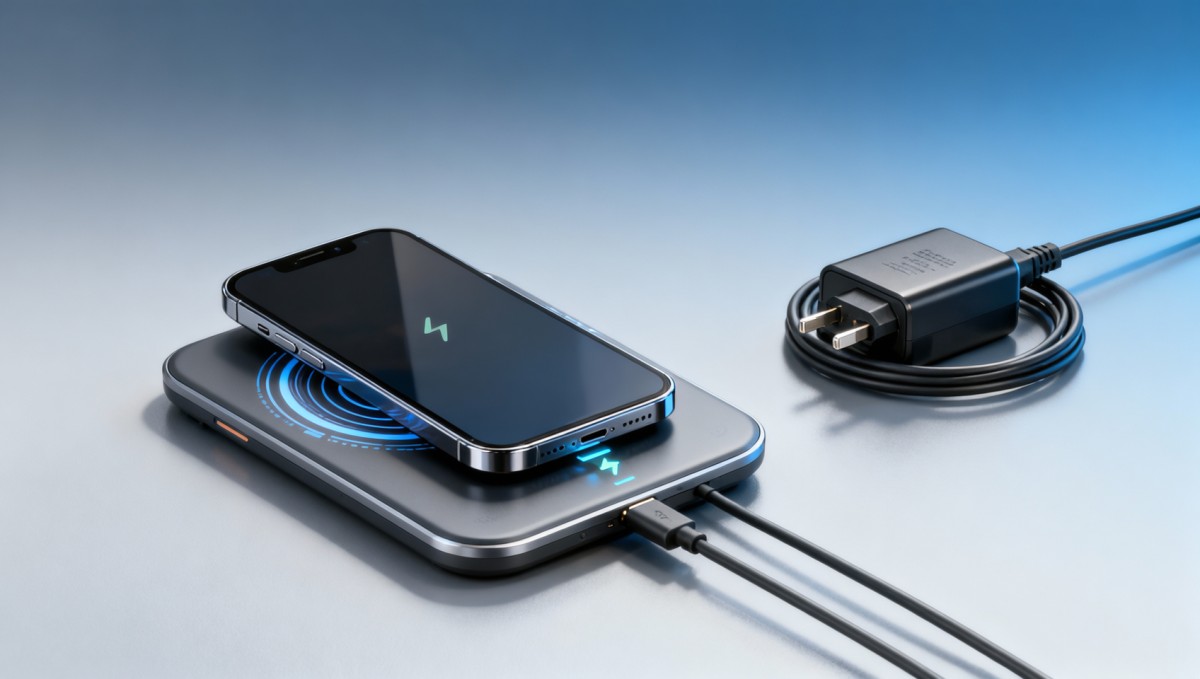
The biggest misconception in the wireless charging market is that advertised wattage equals actual charging speed. It does not. A pad labeled 10W or 15W may only deliver that output under ideal conditions: supported phone model, correct power adapter, perfect coil alignment, controlled temperature, and compatible charging protocol.
In practice, charging speed often drops because of five common constraints:
- Insufficient power input: the pad may require a QC or PD wall adapter, but the user connects a standard USB port or low-power adapter.
- Protocol mismatch: the charger and the device may support different fast wireless charging standards.
- Coil misalignment: if the phone does not sit precisely over the charging coil, energy transfer efficiency falls.
- Heat buildup: wireless charging creates heat, and many products automatically reduce speed to protect the battery and electronics.
- Low-quality internal components: weaker coils, poor shielding, or unstable power regulation can all reduce real-world performance.
For technical and commercial assessment, this means a high printed wattage should never be treated as a standalone buying criterion.
What technical factors most directly affect wireless charging speed?
When evaluating a wireless charging pad, several performance variables matter more than marketing language.
1. Input power and adapter quality
Many slow charging complaints are caused by the wrong upstream power source. A wireless pad may be designed for 15W output but need an 18W, 20W, or higher-capacity adapter to reach that level. If paired with a basic 5V/1A adapter, performance can drop sharply.
For sourcing teams, this means the charging pad should be evaluated as part of a complete charging system, not as an isolated accessory.
2. Coil design and energy transfer efficiency
The charging coil is central to wireless power transmission. Better coil construction improves coupling efficiency, reduces energy loss, and supports more stable charging. Low-end products may use lower-grade materials or suboptimal coil layouts, leading to slower and less consistent charging.
3. Device compatibility
Not every smartphone accepts the same wireless charging profile. Some devices support only standard Qi charging, while others unlock higher speeds only with brand-specific implementations. A pad may technically be compatible, but still charge at a lower rate than expected.
4. Thermal management
Heat is one of the main reasons wireless charging slows down during real use. As temperature rises, many pads and smartphones automatically reduce charging power. Products with better heat dissipation, temperature monitoring, and smart power control usually maintain stronger sustained charging performance.
5. Foreign object detection and safety logic
Reliable products include protections for metal object detection, over-voltage, over-current, and overheating. These are essential for safety, but overly conservative or unstable control systems can interrupt or limit charging speed.
How much does phone placement and usage behavior affect performance?
Placement matters more in wireless charging than many users expect. Even a well-designed pad can charge slowly if the phone is not centered properly. This is especially common with multi-coil pads, thick protective cases, magnetic accessories, or uneven device placement.
Common user-side reasons for slow charging include:
- Using a thick or metal-containing phone case
- Misaligning the phone on a single-coil pad
- Running power-intensive apps while charging
- Charging in a hot environment, such as inside a vehicle
- Using the pad with a low-output USB port instead of a proper adapter
For distributors and after-sales teams, these issues matter because they often generate complaints that are not caused by product defects. Clear usage guidance, packaging instructions, and compatibility notes can significantly reduce unnecessary returns.
What should buyers and procurement teams check before selecting a wireless charging pad supplier?
For B2B buyers, the right decision depends on more than charging speed claims. The better question is whether a supplier can deliver reliable, verified performance at scale.
Key evaluation points include:
- Certification status: check for Qi certification, CE, FCC, RoHS, and other relevant compliance documents.
- Test conditions behind rated output: ask how the supplier measures 10W or 15W performance and under what adapter and device conditions.
- Thermal and safety performance: review overheating protection, foreign object detection, and stability under continuous charging.
- Compatibility coverage: confirm supported device models and whether fast charging depends on specific protocols.
- Material and component quality: evaluate coil quality, PCB design, shielding, housing materials, and connector durability.
- OEM/ODM capability: for private-label or project-based procurement, assess customization, packaging, branding, and engineering support.
- Failure rate and warranty policy: request return data, defect rates, and after-sales process details.
This is particularly important for companies sourcing smart electronics portfolios where wireless charging pads are bundled or sold beside fast charging power banks, dash cameras 4k, and rearview mirror cameras. In these categories, user trust depends heavily on real-world reliability, not just specification headlines.
How can technical evaluators distinguish a genuinely fast wireless charger from a weak one?
A practical evaluation process should include both lab-style testing and realistic usage simulation.
Useful assessment steps include:
- Test the pad with the recommended adapter, not a generic low-power charger.
- Measure charging speed across different battery levels, since speed often drops near higher charge percentages.
- Verify charging stability with and without a phone case.
- Monitor temperature during 15 to 30 minutes of continuous charging.
- Compare performance across multiple phone models.
- Check whether the pad maintains power or repeatedly disconnects and reconnects.
- Assess idle power draw and energy efficiency if sustainability or energy cost matters.
A strong product is not only one that reaches peak speed briefly. It is one that delivers stable charging, controlled heat, broad compatibility, and low complaint risk in actual use.
When is slower wireless charging acceptable, and when is it a red flag?
Not every slow charge rate is a product failure. In some scenarios, moderate wireless charging is acceptable or even preferable, especially for overnight charging, office desks, hotel rooms, waiting areas, and low-intensity consumer use.
However, slow performance becomes a red flag when:
- The product consistently underperforms versus its stated specification
- Charging speed varies sharply between units
- The charger overheats quickly and throttles excessively
- Compatibility is much narrower than advertised
- User complaints point to frequent interruption or poor alignment tolerance
For enterprise decision-makers and financial approvers, these warning signs directly affect return rates, customer satisfaction, brand reputation, and support costs.
What does this mean for sourcing decisions in smart electronics?
Wireless charging pads are often treated as simple accessories, but buying decisions should reflect their real impact on product experience. End users judge them by convenience, consistency, and charging confidence. If a device charges too slowly, users often assume the product is defective or low quality, even when the issue is actually linked to compatibility or setup.
That is why sourcing teams should prioritize verified performance data, compatibility transparency, and supplier credibility over aggressive wattage claims. In smart electronics procurement, a dependable mid-range charger with stable output and lower complaint risk is often more valuable than a nominally faster product with inconsistent real-world results.
In short, some wireless charging pads charge slowly because of limitations in input power, design quality, alignment, compatibility, and heat control. For buyers, evaluators, and decision-makers, the practical takeaway is clear: assess complete charging performance, not just labeled wattage. The best wireless charging pad is not the one with the most ambitious claim, but the one that delivers safe, repeatable, and user-trusted performance across actual operating conditions.
Get weekly intelligence in your inbox.
No noise. No sponsored content. Pure intelligence.
 Apr 28, 2026Suez Canal Fee Hike & China-Europe Rail Premium: Q2 2026 ImpactSuez Canal Fee Hike & China-Europe Rail Premium: Q2 2026 Impact
 Apr 28, 2026TÜV Rheinland Launches Fast-Track Certification for Chinese Warehouse RobotsTÜV Rheinland Launches Fast-Track Certification for Chinese Warehouse Robots
 Apr 28, 2026EU Enforces Battery Passport Rule for Chinese ESS Exports from 2027EU Enforces Battery Passport Rule for Chinese ESS Exports from 2027
 Apr 28, 2026ADB Raises Vietnam GDP Forecast to 7.2%: SMT & Precision Fixture Demand RisesADB Raises Vietnam GDP Forecast to 7.2%: SMT & Precision Fixture Demand Rises
 Apr 28, 2026US ITC Launches Section 337 Investigation into Chinese Wi-Fi 7 RF FEMsUS ITC Launches Section 337 Investigation into Chinese Wi-Fi 7 RF FEMs
 Apr 28, 2026Côte d'Ivoire Opens $500M Power Tender: Chinese BESS Get Fast-Track AccessCôte d'Ivoire Opens $500M Power Tender: Chinese BESS Get Fast-Track Access
 Apr 28, 2026BP’s Algeria East Basin Permit Spurs Valve Demand, Lead Times Extend to 18 WeeksBP’s Algeria East Basin Permit Spurs Valve Demand, Lead Times Extend to 18 Weeks
") Apr 28, 2026Vietnam Mandates V-Trust for Smart Appliances Export (July 2026)Vietnam Mandates V-Trust for Smart Appliances Export (July 2026)
Apr 28, 2026Vietnam Mandates V-Trust for Smart Appliances Export (July 2026)Vietnam Mandates V-Trust for Smart Appliances Export (July 2026) Apr 28, 2026Morocco Enforces PV Mounting Structure Certification from Q3 2026Morocco Enforces PV Mounting Structure Certification from Q3 2026
 Apr 28, 2026UAE Establishes AI Hub Status, Opens CE-ADAS+ Pathway for Chinese Smart Industrial EquipmentUAE Establishes AI Hub Status, Opens CE-ADAS+ Pathway for Chinese Smart Industrial Equipment
 Apr 27, 2026Algeria’s Oil & Steel FDI Push Opens Valve, Corrosion-Resistant Material OrdersAlgeria’s Oil & Steel FDI Push Opens Valve, Corrosion-Resistant Material Orders
 Apr 27, 2026Azerbaijan’s New PV Mounting Standard Opens Path for Chinese SuppliersAzerbaijan’s New PV Mounting Standard Opens Path for Chinese Suppliers
 Apr 27, 2026Fitch Cuts East Africa Growth Forecasts, Raises Cross-Border Trade RisksFitch Cuts East Africa Growth Forecasts, Raises Cross-Border Trade Risks
 Apr 27, 2026ADB Raises Vietnam GDP Forecast to 7.2% on Electronics Export GrowthADB Raises Vietnam GDP Forecast to 7.2% on Electronics Export Growth
 Apr 27, 2026Maine Halts Large Data Centers: AI Server Export ImpactMaine Halts Large Data Centers: AI Server Export Impact
 Apr 27, 2026OFID $500M for Côte d'Ivoire: Boost to Factory Automation & Warehouse RoboticsOFID $500M for Côte d'Ivoire: Boost to Factory Automation & Warehouse Robotics
 Apr 27, 2026Morocco Ranks 4th in EU Energy Aid to AfricaMorocco Ranks 4th in EU Energy Aid to Africa
 Apr 27, 2026UAE Emerges as Global AI Hub, Opening Fast-Track for Chinese Smart DevicesUAE Emerges as Global AI Hub, Opening Fast-Track for Chinese Smart Devices
") Apr 26, 2026China Releases Green Design Guidelines for Industrial Products (2026)China Releases Green Design Guidelines for Industrial Products (2026)
Apr 26, 2026China Releases Green Design Guidelines for Industrial Products (2026)China Releases Green Design Guidelines for Industrial Products (2026) Apr 26, 2026ANATEL Mandates Portuguese Offline Voice Assistant for Smart Home Devices in BrazilANATEL Mandates Portuguese Offline Voice Assistant for Smart Home Devices in Brazil
 Apr 26, 2026Vietnam Enforces Bilingual Safety Labels for Electronic Components from Apr 22, 2026Vietnam Enforces Bilingual Safety Labels for Electronic Components from Apr 22, 2026
 Apr 26, 2026Japan Updates JIS for Rehab Devices: IEC 62366-1:2024 RequiredJapan Updates JIS for Rehab Devices: IEC 62366-1:2024 Required
 Apr 26, 2026THE Alliance Cuts Ningbo–Rotterdam Transit to 18 Days, Spot Rates Up 35%THE Alliance Cuts Ningbo–Rotterdam Transit to 18 Days, Spot Rates Up 35%
 Apr 26, 2026India BIS Mandates PLC & HMI Certification under IS 13252:2025 by Oct 2026India BIS Mandates PLC & HMI Certification under IS 13252:2025 by Oct 2026
") Apr 26, 2026SASO Enforces New EV Charger Rules in Saudi Arabia (2026)SASO Enforces New EV Charger Rules in Saudi Arabia (2026)
Apr 26, 2026SASO Enforces New EV Charger Rules in Saudi Arabia (2026)SASO Enforces New EV Charger Rules in Saudi Arabia (2026) Apr 26, 2026TÜV Rheinland Updates IoT EMC Guidelines: AI Edge Modules Now Mandatory for Immunity TestingTÜV Rheinland Updates IoT EMC Guidelines: AI Edge Modules Now Mandatory for Immunity Testing
 Apr 26, 2026USTR Launches First Annual Review of China Solar PV AD/CVD OrdersUSTR Launches First Annual Review of China Solar PV AD/CVD Orders