TÜV Rheinland Adds Edge AI Inference Power Surge Test for IoT Devices
On May 4, 2026, TÜV Rheinland issued an urgent notice mandating a new safety test—‘Edge AI Inference Power Transient Surge’ (TR-2026-EDGEPWR-03)—for IoT devices. This development directly affects manufacturers and suppliers of smart home appliances, industrial sensors, wearable health monitors, and automotive telematics systems—especially those relying on on-device AI inference for voice wake-up or local image recognition. The test addresses emerging hardware-level risks tied to real-time power fluctuations during AI execution, making it a material compliance milestone for global market access.
Event Overview
On May 4, 2026, TÜV Rheinland issued an urgent notice to its global certification clients announcing the immediate implementation of a mandatory safety test for IoT devices: ‘Edge AI Inference Power Transient Surge’, codified as standard TR-2026-EDGEPWR-03. The test specifically monitors abnormal power draw spikes during edge AI inference operations—including voice wake-up and local image recognition—and assesses resulting risks such as hardware lockup or firmware malfunction. Chinese contract manufacturers must complete retesting before mass production; certificates for non-compliant products will be revoked.
Industries Affected by Segment
IoT Contract Manufacturers (China-based)
These firms are directly impacted because the notice explicitly requires retesting prior to mass production and threatens certificate revocation for non-compliant units. Impact manifests in delayed time-to-market, added lab validation costs, and potential redesign cycles if legacy power delivery designs cannot withstand transient surges during AI workloads.
OEMs and Brand Owners Sourcing from China
OEMs relying on China-based manufacturing face supply chain continuity risk. Since certification is tied to device-level test results—not just design—their existing product certifications may become invalid without revalidation. This affects inventory planning, launch timelines, and compliance documentation for EU CE marking and other regional conformity schemes referencing TÜV Rheinland approvals.
Semiconductor and Power Management IC Suppliers
Vendors supplying PMICs, low-dropout regulators (LDOs), or battery fuel gauges used in edge-AI-enabled IoT devices may see revised design-in requirements. Customers are likely to request transient response data sheets, surge immunity test reports, and application notes covering AI inference load profiles—shifting technical evaluation criteria beyond steady-state specifications.
Third-party Testing and Certification Service Providers
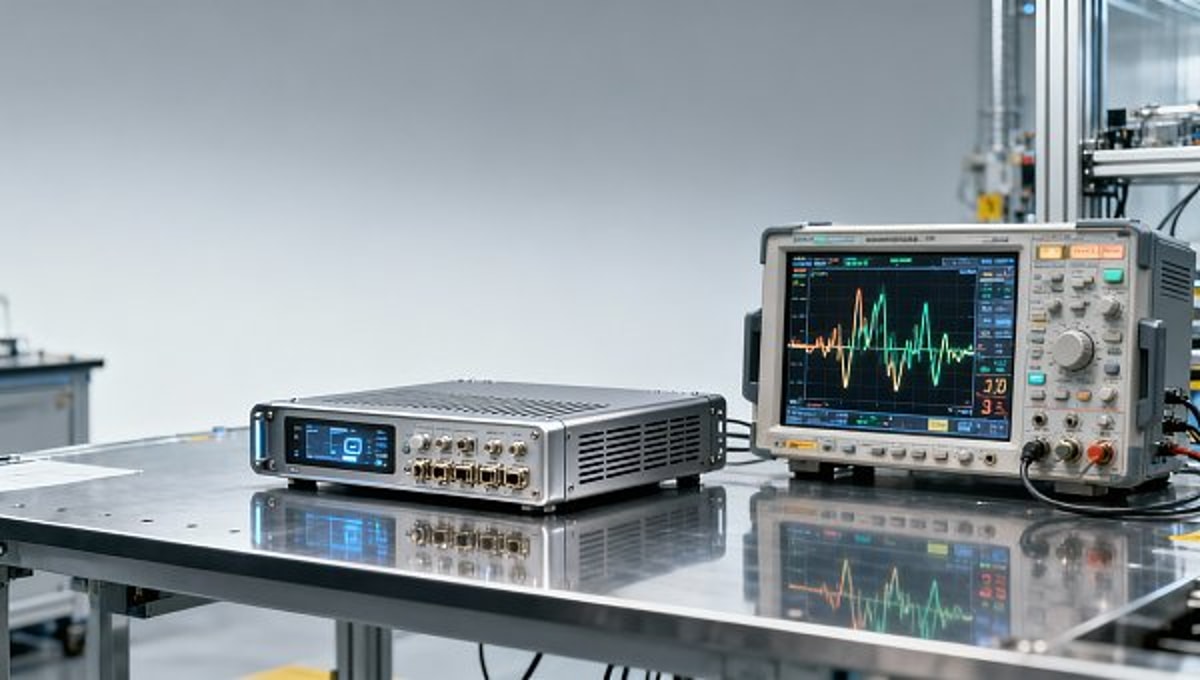
Labs accredited for IoT safety testing must now integrate TR-2026-EDGEPWR-03 into their scope. Capacity constraints may arise as demand for transient power profiling—requiring specialized oscilloscope setups and AI workload scripting—increases. Clients may prioritize labs with documented capability in synchronized power + firmware behavior analysis.
What Enterprises and Practitioners Should Focus On Now
Monitor official updates from TÜV Rheinland on test implementation details
The notice confirms the test’s effective date and scope but does not yet publish full test methodology, pass/fail thresholds, or acceptable measurement instrumentation. Analysis shows that pending documentation will define practical feasibility—especially for resource-constrained devices using intermittent AI bursts rather than sustained inference.
Prioritize devices with always-on AI sensing functions for immediate review
Observably, voice wake-up and local visual detection subsystems are named as primary use cases. Companies should audit current BOMs and firmware architectures for these features—particularly where AI inference triggers rapid switching of analog front-ends or RF modules—since those transitions correlate strongly with measured power transients.
Distinguish between certification signal and operational impact
This requirement is currently a certification mandate—not a regulatory law—but its adoption by TÜV Rheinland signals de facto industry alignment. From industry perspective, major retailers and platform partners (e.g., Matter-certified ecosystems) may soon reference TR-2026-EDGEPWR-03 in procurement specs, even absent formal regulation.
Prepare internal cross-functional alignment ahead of lab engagement
Current more appropriate preparation includes aligning firmware teams (to log inference timestamps), hardware engineers (to identify critical power rails), and QA leads (to define representative AI workload sequences). Without coordinated input, test execution may yield inconclusive or non-reproducible results—delaying certification unnecessarily.
Editorial Perspective / Industry Observation
This notice is best understood not as a one-off compliance update, but as an observable inflection point in IoT safety frameworks: safety evaluation is shifting from static electrical parameters toward dynamic system behavior under intelligent workload conditions. Analysis suggests TR-2026-EDGEPWR-03 reflects growing recognition that AI acceleration introduces novel failure modes—distinct from traditional thermal or ESD stress—that require dedicated metrology. It is less a finalized standard and more an early-stage protocol signaling broader convergence between functional safety and AI system reliability. The industry should treat it as both a near-term certification checkpoint and a leading indicator of future test expectations across IEC/ISO standards bodies.
Conclusion: This development underscores how embedded AI capabilities are reshaping foundational safety requirements—not incrementally, but structurally. Rather than representing isolated tightening of IoT rules, it signals a recalibration of what constitutes ‘safe operation’ when intelligence moves to the edge. Current understanding should emphasize procedural readiness over theoretical concern: verification capacity, test-ready firmware, and cross-team instrumentation alignment matter more than speculative speculation about future revisions.
Source: Official urgent notice issued by TÜV Rheinland on May 4, 2026. No further public documentation of TR-2026-EDGEPWR-03 has been released as of publication. Ongoing observation is warranted for methodology publication, accreditation guidance, and potential harmonization with IEC 62368-1 or ISO/IEC 27001-related AI assurance frameworks.
Get weekly intelligence in your inbox.
No noise. No sponsored content. Pure intelligence.
 May 05, 2026Inventory management systems that fix stock errors at the sourceInventory management systems that fix stock errors at the source
 May 05, 2026Medical disposables sourcing gets risky when prices drop too fastMedical disposables sourcing gets risky when prices drop too fast
 May 05, 2026Supply Chain Management gaps that create hidden inventory costsSupply Chain Management gaps that create hidden inventory costs
 May 05, 2026Why ERP software rollouts fail even with strong vendor supportWhy ERP software rollouts fail even with strong vendor support
 May 05, 2026Patient monitors: which features actually improve bedside responsePatient monitors: which features actually improve bedside response
 May 05, 2026Medical PPE shortages are easing, but quality gaps remainMedical PPE shortages are easing, but quality gaps remain
 May 05, 2026Portable oxygen concentrators: what matters beyond battery lifePortable oxygen concentrators: what matters beyond battery life
 May 05, 2026Medical diagnostic equipment buying mistakes that cost more laterMedical diagnostic equipment buying mistakes that cost more later
 May 05, 2026Cold chain logistics failures often start before transitCold chain logistics failures often start before transit
 May 05, 2026Hydrogen energy projects face one cost issue few plan forHydrogen energy projects face one cost issue few plan for
 May 05, 2026Digital Footprint risks that grow when suppliers scale fastDigital Footprint risks that grow when suppliers scale fast
 May 05, 2026Cross border ecommerce fulfillment problems that hurt repeat salesCross border ecommerce fulfillment problems that hurt repeat sales
 May 05, 2026N95 respirators: why fit matters more than many expectN95 respirators: why fit matters more than many expect
 May 05, 2026Ultrasound machines: when image quality and workflow clashUltrasound machines: when image quality and workflow clash
 May 05, 2026LED displays for retail spaces: brightness is not the only issueLED displays for retail spaces: brightness is not the only issue
 May 05, 2026What to check before placing wheelchairs wholesale ordersWhat to check before placing wheelchairs wholesale orders
 May 05, 2026Freight forwarding services that help avoid customs delaysFreight forwarding services that help avoid customs delays
 May 05, 2026Aesthetic lasers: the difference between power and precisionAesthetic lasers: the difference between power and precision
 May 05, 2026How rehabilitation equipment choices affect recovery routinesHow rehabilitation equipment choices affect recovery routines
 May 05, 2026Robot vacuum cleaners with mapping: what changes in daily useRobot vacuum cleaners with mapping: what changes in daily use
 May 05, 2026Where logistics drones make sense and where they still do notWhere logistics drones make sense and where they still do not
 May 05, 2026B2B SaaS solutions that reduce manual trade workflowsB2B SaaS solutions that reduce manual trade workflows
 May 05, 2026What makes 3PL logistics performance hard to measure fairlyWhat makes 3PL logistics performance hard to measure fairly
 May 05, 2026Shipping rates are shifting again: what costs are easy to missShipping rates are shifting again: what costs are easy to miss
 May 05, 2026Trade Leaders in 2026: what will separate winners from the restTrade Leaders in 2026: what will separate winners from the rest
 May 05, 2026Why smart warehousing projects stall after the pilot stageWhy smart warehousing projects stall after the pilot stage
 May 05, 2026AGV robots or forklifts: which fits busy warehouses better?AGV robots or forklifts: which fits busy warehouses better?