Vietnam’s VNTA-2026 Certification Cost Shift for Smart Home Imports
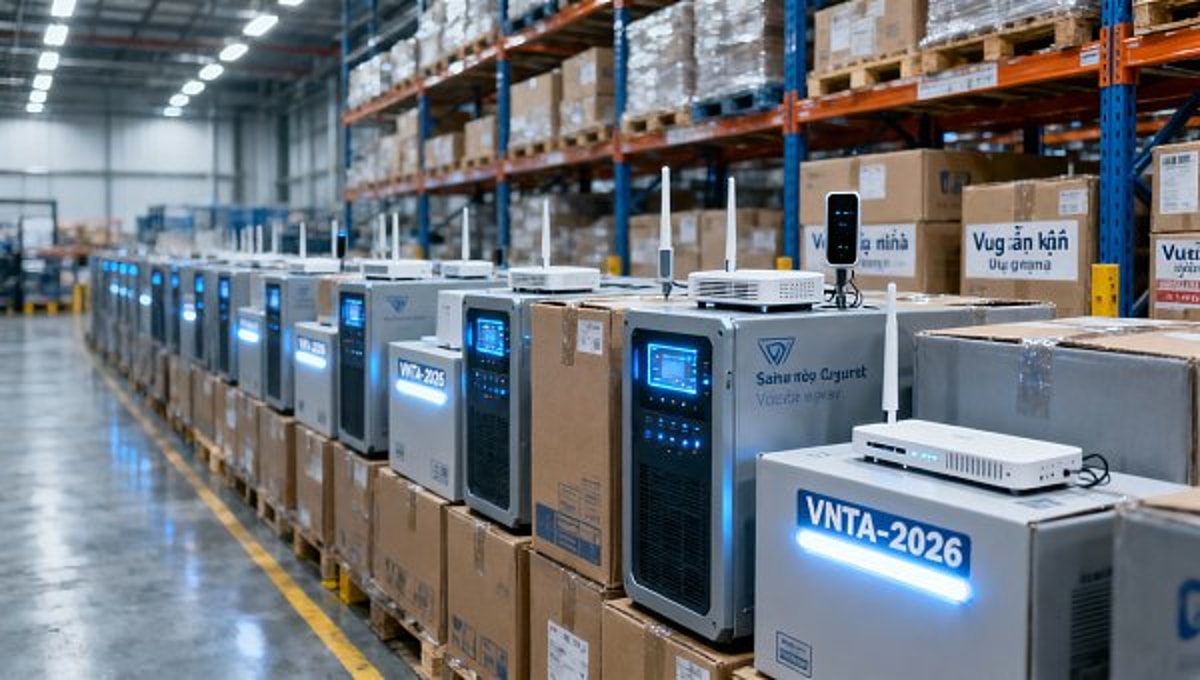
On May 3, 2026, Vietnam’s Ministry of Industry and Trade issued Decision No. 28/QĐ-BCT, mandating that importers of Smart Home devices — including smart lighting, security hubs, and voice gateways — bear the full cost of VNTA-2026 cybersecurity certification effective May 15, 2026. This development directly impacts exporters, OEM partners, and supply chain stakeholders engaged in Vietnam-bound smart home trade.
Event Overview
On May 3, 2026, the Ministry of Industry and Trade of Vietnam published Decision No. 28/QĐ-BCT, stipulating that, starting May 15, 2026, all importers of Smart Home products destined for the Vietnamese market must fully cover the costs associated with VNTA-2026 cybersecurity certification. These costs include local laboratory testing fees, annual certificate renewal fees, and data anonymization audit fees. The decision explicitly prohibits importers from passing these costs on to Chinese suppliers.
Which Subsectors Are Affected
Direct Trading Enterprises (Importers into Vietnam)
Importers are directly liable for the full certification cost under the new rule. This increases landed cost per unit and compresses margin expectations, especially for low-to-mid-tier smart home SKUs where certification expenses may represent a non-trivial share of total landed cost.
OEM/ODM Manufacturing Enterprises (Chinese Suppliers)
Although not financially liable, Chinese OEMs face intensified technical compliance scrutiny from their Vietnamese import partners. Importers are now incentivized to assess supplier readiness for VNTA-2026 — including firmware architecture, logging practices, and data handling protocols — earlier in procurement cycles.
Supply Chain & Compliance Service Providers
Third-party labs, certification consultants, and localization support firms accredited for VNTA-2026 will see increased demand for pre-submission reviews, documentation preparation, and audit coordination. However, service pricing and turnaround timelines may come under pressure as importers seek cost containment.
What Relevant Enterprises or Practitioners Should Focus On and How to Respond
Monitor official implementation guidance and fee schedules
The decision confirms cost responsibility but does not publish detailed fee structures or lab accreditation lists. Enterprises should track updates from the Vietnam Standards and Quality Institute (STAMEQ) and the National Cybersecurity Monitoring Center (NCMC), both designated VNTA-2026 implementing bodies.
Assess exposure by product category and certification pathway
Not all Smart Home devices may fall equally under VNTA-2026’s scope. Importers and OEMs should verify whether specific models — particularly those without internet connectivity, local-only operation, or minimal data collection — qualify for exemption or simplified assessment, based on the official technical annexes (when released).
Distinguish between policy signal and operational reality
While the rule takes effect May 15, 2026, customs enforcement and certification verification at ports may follow a phased rollout. Enterprises should treat initial months as a de facto transition period — maintaining documentation rigor while verifying actual clearance outcomes case-by-case.
Prepare procurement and communication protocols in advance
Importers should revise purchase agreements to reflect VNTA-2026 cost allocation and compliance obligations. OEMs should proactively share relevant technical documentation (e.g., architecture diagrams, privacy policies, firmware update logs) to accelerate importer-led certification submissions.
Editorial Perspective / Industry Observation
Observably, this decision signals Vietnam’s tightening alignment with ASEAN-wide cybersecurity governance frameworks — particularly the ASEAN Framework on Cybersecurity and the upcoming ASEAN Digital Product Certification Scheme. Analysis shows it is less a standalone regulatory shift and more a procedural enforcement step: the VNTA-2026 standard itself was finalized in late 2025, but cost accountability was previously ambiguous. From an industry perspective, this move formalizes financial and technical accountability upstream, shifting negotiation leverage toward importers who now hold both budgetary control and compliance gatekeeping authority. It is currently best understood as a structural recalibration — not yet a market barrier, but one requiring proactive alignment across the supply chain.
Conclusion
This announcement marks a material change in cost ownership and compliance responsibility for Smart Home device imports into Vietnam. It does not introduce new technical requirements but enforces existing ones with clear financial attribution. For stakeholders, it underscores that cybersecurity certification is no longer a back-end logistics item — it is now a front-line commercial and contractual consideration. Current interpretation should center on operational preparedness, not speculation about market access restriction.
Information Sources
Main source: Ministry of Industry and Trade of Vietnam, Decision No. 28/QĐ-BCT, issued May 3, 2026.
Note: Fee schedules, accredited laboratories, and exemption criteria remain pending official publication and are subject to ongoing monitoring.
Get weekly intelligence in your inbox.
No noise. No sponsored content. Pure intelligence.
 May 05, 2026Inventory management systems that fix stock errors at the sourceInventory management systems that fix stock errors at the source
 May 05, 2026Medical disposables sourcing gets risky when prices drop too fastMedical disposables sourcing gets risky when prices drop too fast
 May 05, 2026Supply Chain Management gaps that create hidden inventory costsSupply Chain Management gaps that create hidden inventory costs
 May 05, 2026Why ERP software rollouts fail even with strong vendor supportWhy ERP software rollouts fail even with strong vendor support
 May 05, 2026Patient monitors: which features actually improve bedside responsePatient monitors: which features actually improve bedside response
 May 05, 2026Medical PPE shortages are easing, but quality gaps remainMedical PPE shortages are easing, but quality gaps remain
 May 05, 2026Portable oxygen concentrators: what matters beyond battery lifePortable oxygen concentrators: what matters beyond battery life
 May 05, 2026Medical diagnostic equipment buying mistakes that cost more laterMedical diagnostic equipment buying mistakes that cost more later
 May 05, 2026Cold chain logistics failures often start before transitCold chain logistics failures often start before transit
 May 05, 2026Hydrogen energy projects face one cost issue few plan forHydrogen energy projects face one cost issue few plan for
 May 05, 2026Digital Footprint risks that grow when suppliers scale fastDigital Footprint risks that grow when suppliers scale fast
 May 05, 2026Cross border ecommerce fulfillment problems that hurt repeat salesCross border ecommerce fulfillment problems that hurt repeat sales
 May 05, 2026N95 respirators: why fit matters more than many expectN95 respirators: why fit matters more than many expect
 May 05, 2026Ultrasound machines: when image quality and workflow clashUltrasound machines: when image quality and workflow clash
 May 05, 2026LED displays for retail spaces: brightness is not the only issueLED displays for retail spaces: brightness is not the only issue
 May 05, 2026What to check before placing wheelchairs wholesale ordersWhat to check before placing wheelchairs wholesale orders
 May 05, 2026Freight forwarding services that help avoid customs delaysFreight forwarding services that help avoid customs delays
 May 05, 2026Aesthetic lasers: the difference between power and precisionAesthetic lasers: the difference between power and precision
 May 05, 2026How rehabilitation equipment choices affect recovery routinesHow rehabilitation equipment choices affect recovery routines
 May 05, 2026Robot vacuum cleaners with mapping: what changes in daily useRobot vacuum cleaners with mapping: what changes in daily use
 May 05, 2026Where logistics drones make sense and where they still do notWhere logistics drones make sense and where they still do not
 May 05, 2026B2B SaaS solutions that reduce manual trade workflowsB2B SaaS solutions that reduce manual trade workflows
 May 05, 2026What makes 3PL logistics performance hard to measure fairlyWhat makes 3PL logistics performance hard to measure fairly
 May 05, 2026Shipping rates are shifting again: what costs are easy to missShipping rates are shifting again: what costs are easy to miss
 May 05, 2026Trade Leaders in 2026: what will separate winners from the restTrade Leaders in 2026: what will separate winners from the rest
 May 05, 2026Why smart warehousing projects stall after the pilot stageWhy smart warehousing projects stall after the pilot stage
 May 05, 2026AGV robots or forklifts: which fits busy warehouses better?AGV robots or forklifts: which fits busy warehouses better?