Jump Starters vs Power Banks Which One Should You Stock
For buyers comparing jump starters with fast charging power banks, the right inventory choice depends on use case, safety, margin, and customer demand. In today’s mobile electronics landscape—alongside products like dash cameras 4k, rearview mirror cameras, and wireless charging pads—understanding where each device fits can help distributors, procurement teams, and decision-makers stock smarter and sell with greater confidence.
Which One Should You Stock First? Start with the Customer Job, Not the Battery Size
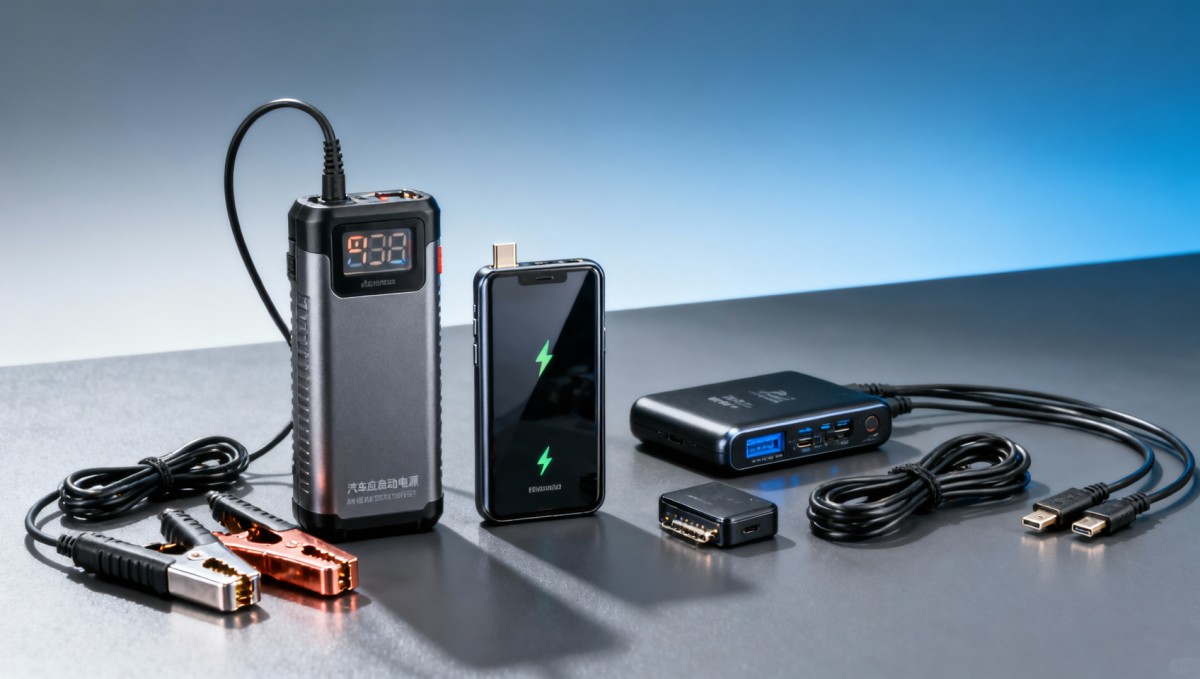
If the goal is to choose between jump starters vs power banks for resale, distribution, or procurement, the short answer is this: stock power banks first for broader consumer turnover, and stock jump starters for higher-value automotive, emergency, and professional-use segments.
That is the real commercial distinction. A fast charging power bank solves a daily mobile power problem for a very wide audience. A jump starter solves a less frequent but more urgent problem: getting a vehicle running when the battery fails. One is an everyday convenience product. The other is a high-importance emergency tool.
For most distributors and sourcing teams, the better choice depends on five practical questions:
- Who is your end customer: consumer electronics users, drivers, workshops, fleets, or outdoor users?
- Do you need fast inventory turnover or better per-unit margin?
- Can your channel support products with stricter safety and compliance expectations?
- Are you selling online, through retail, through automotive dealers, or through B2B contract supply?
- Do you want a broad-volume SKU or a more specialized premium offering?
If your buyers are mainstream electronics users, travelers, students, office workers, or gift-product retailers, power banks are usually the easier category to scale. If your buyers include vehicle owners, roadside assistance providers, outdoor professionals, workshops, or fleet managers, jump starters often create stronger differentiation and higher perceived value.
What Buyers Actually Care About When Comparing Jump Starters and Power Banks
Search intent around this topic is rarely technical curiosity alone. Most readers want to make a stocking decision with fewer mistakes. That means they care less about abstract battery definitions and more about:
- Market demand: Which product sells faster and to whom?
- Return risk: Which category creates more misuse, defects, or compatibility complaints?
- Safety: Which product carries greater transport, storage, and product liability exposure?
- Margin: Which one gives enough profitability after freight, compliance, packaging, and support costs?
- Channel fit: Which product suits e-commerce, retail shelves, automotive dealers, or B2B buyers?
- Feature credibility: Which claims matter most—peak current, charging speed, cycle life, battery chemistry, or certifications?
This is why a useful comparison should focus on operational value, not just specifications. In procurement and distribution, a technically impressive product is not always the best inventory item if it brings higher support costs or weak repeat demand.
Jump Starters: Best for Automotive Urgency, Premium Positioning, and Niche Demand
A jump starter is designed to deliver enough current to start a vehicle with a depleted battery. That makes it a more specialized product than a standard power bank, even when some models include USB charging outputs.
Where jump starters make sense:
- Automotive aftermarket channels
- Car accessory retailers
- Roadside assistance and fleet support
- Outdoor and overlanding markets
- Emergency preparedness product lines
- B2B procurement for service vehicles and field teams
Why many buyers choose to stock jump starters:
- Higher average selling price than standard power banks
- Stronger urgency-driven purchase motivation
- Good bundling potential with inflators, flashlights, cables, and vehicle safety kits
- Higher perceived usefulness in emergencies
- Better fit for automotive specialists that want category differentiation
What to watch out for:
- Peak current claims can be misleading if not supported by real starting performance
- Greater safety sensitivity due to high-current discharge
- More customer education is needed around engine size, battery condition, and temperature performance
- Higher quality variation across suppliers
- Compliance, testing, and warranty exposure deserve close review
For distributors, jump starters are often not a mass-volume SKU like power banks, but they can be a strategically strong category when sold into the right channel with clear product positioning.
Power Banks: Better for Everyday Demand, Faster Turnover, and Broader Retail Reach
A fast charging power bank has a much wider user base. It supports smartphones, tablets, earbuds, portable gaming devices, and other USB-powered electronics. That broad compatibility gives it stronger volume potential across e-commerce, retail, gifting, travel, and consumer electronics channels.
Why power banks are easier to stock at scale:
- Broader everyday demand
- Simpler customer understanding
- Faster sales rotation in general consumer channels
- More SKU segmentation by capacity, charging speed, design, and price point
- Easier cross-selling with phones and mobile accessories
Typical buyer segments include:
- Consumer electronics retailers
- Corporate gifting and promotional sourcing teams
- Travel accessory sellers
- Campus and office supply channels
- Online marketplaces focused on daily-use electronics
Challenges to consider:
- The category is crowded and price competition is strong
- Specification inflation is common, especially around capacity and charging speed
- Low-end products can create return issues and damage brand trust
- Differentiation can be difficult without design, certification, or fast-charging credibility
If your business wants a reliable, high-demand mobile accessory product with wide audience appeal, power banks are usually the safer first inventory choice. But they require disciplined supplier selection because commoditized products can quickly compress margin.
Safety, Compliance, and Quality Control: This Is Where Many Stocking Decisions Are Won or Lost
For both categories, battery safety is not a side issue. It directly affects shipping, storage, insurance, returns, and brand reputation. But jump starters usually require even stricter scrutiny because they are expected to deliver high-current output under stressful operating conditions.
For jump starters, buyers should review:
- Protection against reverse polarity, short circuit, overcharge, over-discharge, and overheating
- Clamp quality and cable durability
- Real tested peak and starting current data
- Performance in cold weather
- Cell quality, battery management system design, and enclosure robustness
- Applicable certifications and transport documentation
For power banks, buyers should review:
- Actual rated capacity versus advertised capacity
- Fast charging protocol support such as PD or QC
- Port durability and output stability
- Thermal performance during fast charging
- Cycle life consistency
- Certification, labeling, and packaging accuracy
For quality managers and safety reviewers, the right question is not “Which product is safer?” but rather “Which supplier can prove safer and more consistent execution?” A well-engineered jump starter from a mature manufacturer may be a better business decision than a low-cost power bank with inflated claims and weak QC discipline.
Margin, Turnover, and Return Risk: Which Product Performs Better Commercially?
From a commercial perspective, the difference often looks like this:
- Power banks: lower average price, broader demand, faster turnover, more competition
- Jump starters: higher average price, narrower demand, higher urgency value, stronger premium positioning
That means power banks are often better for volume-based strategies, while jump starters are better for value-based or specialization strategies.
Power banks may outperform when:
- You need repeatable sell-through in mainstream channels
- You can win with brand, packaging, design, or fast-charging credibility
- Your logistics and support model favors lighter, simpler consumer electronics
Jump starters may outperform when:
- You sell to automotive or emergency-use buyers
- You want fewer but higher-value units
- You can support education-led selling and feature explanation
- You want stronger cross-selling into vehicle accessories
Return risk also differs. Power banks can generate complaints around actual capacity, charging speed, cable mismatch, or compatibility. Jump starters can trigger more serious complaints if customer expectations around engine compatibility or battery condition are not managed clearly. In other words, power bank returns are often more frequent but simpler; jump starter returns may be fewer but more operationally sensitive.
How Distributors and Procurement Teams Should Decide
If you are making a stocking decision across categories, use a simple filter based on channel, customer profile, and operational capacity.
Choose power banks first if:
- Your audience is broad consumer electronics buyers
- You sell in high-volume online or retail environments
- You need an easier-to-explain product with wider everyday use
- You want to pair inventory with phones, chargers, or travel accessories
Choose jump starters first if:
- Your audience includes drivers, automotive retailers, fleets, or field-service teams
- You want premium positioning rather than commodity volume
- You can verify supplier testing and safety controls
- You need a product with stronger problem-solving urgency
Choose both if:
- You serve both automotive and consumer electronics channels
- You want a tiered battery-powered accessories portfolio
- You can segment marketing clearly by use case
For many distributors, the best strategy is not choosing one category forever. It is choosing the right lead category first, then expanding based on data. A retailer already selling dash cameras 4k, rearview mirror cameras, phone mounts, and wireless charging pads may find power banks a natural adjacent category. An automotive equipment seller may see better results with jump starters, inflators, and emergency kits.
What to Ask Suppliers Before You Place an Order
Whether you stock jump starters or power banks, supplier qualification matters more than brochure claims. Before committing, ask for:
- Third-party test reports
- Battery cell sourcing details
- Protection circuit documentation
- Certification files for target markets
- Warranty policy and failure rate data
- Packaging test results
- Mass-production QC process details
- Labeling accuracy standards
For jump starters specifically, also ask for evidence of successful starts by engine type and displacement. For power banks, ask for real usable output capacity and charging protocol validation.
This step is especially important for enterprise buyers, financial approvers, and project stakeholders. A slightly cheaper product can become more expensive once claims disputes, returns, replacement shipments, and brand damage are included.
Final Verdict: Stock Based on Use Case, Not Category Hype
In the jump starters vs power banks decision, there is no one-size-fits-all winner. Power banks are usually the better choice for broad demand, faster turnover, and everyday consumer channels. Jump starters are often the better choice for premium automotive demand, emergency positioning, and higher-value niche sales.
If your priority is scale and mainstream demand, start with power banks. If your priority is specialized utility, stronger urgency value, and automotive channel relevance, start with jump starters. If your business spans both worlds, build a focused assortment around clear customer jobs rather than chasing battery-device trends blindly.
The smartest stock decision comes from matching product function, safety confidence, channel fit, and margin structure. When those four align, both categories can be commercially strong—but only in the right inventory strategy.
Get weekly intelligence in your inbox.
No noise. No sponsored content. Pure intelligence.
 Apr 28, 2026Suez Canal Fee Hike & China-Europe Rail Premium: Q2 2026 ImpactSuez Canal Fee Hike & China-Europe Rail Premium: Q2 2026 Impact
 Apr 28, 2026TÜV Rheinland Launches Fast-Track Certification for Chinese Warehouse RobotsTÜV Rheinland Launches Fast-Track Certification for Chinese Warehouse Robots
 Apr 28, 2026EU Enforces Battery Passport Rule for Chinese ESS Exports from 2027EU Enforces Battery Passport Rule for Chinese ESS Exports from 2027
 Apr 28, 2026ADB Raises Vietnam GDP Forecast to 7.2%: SMT & Precision Fixture Demand RisesADB Raises Vietnam GDP Forecast to 7.2%: SMT & Precision Fixture Demand Rises
 Apr 28, 2026US ITC Launches Section 337 Investigation into Chinese Wi-Fi 7 RF FEMsUS ITC Launches Section 337 Investigation into Chinese Wi-Fi 7 RF FEMs
 Apr 28, 2026Côte d'Ivoire Opens $500M Power Tender: Chinese BESS Get Fast-Track AccessCôte d'Ivoire Opens $500M Power Tender: Chinese BESS Get Fast-Track Access
 Apr 28, 2026BP’s Algeria East Basin Permit Spurs Valve Demand, Lead Times Extend to 18 WeeksBP’s Algeria East Basin Permit Spurs Valve Demand, Lead Times Extend to 18 Weeks
") Apr 28, 2026Vietnam Mandates V-Trust for Smart Appliances Export (July 2026)Vietnam Mandates V-Trust for Smart Appliances Export (July 2026)
Apr 28, 2026Vietnam Mandates V-Trust for Smart Appliances Export (July 2026)Vietnam Mandates V-Trust for Smart Appliances Export (July 2026) Apr 28, 2026Morocco Enforces PV Mounting Structure Certification from Q3 2026Morocco Enforces PV Mounting Structure Certification from Q3 2026
 Apr 28, 2026UAE Establishes AI Hub Status, Opens CE-ADAS+ Pathway for Chinese Smart Industrial EquipmentUAE Establishes AI Hub Status, Opens CE-ADAS+ Pathway for Chinese Smart Industrial Equipment
 Apr 27, 2026Algeria’s Oil & Steel FDI Push Opens Valve, Corrosion-Resistant Material OrdersAlgeria’s Oil & Steel FDI Push Opens Valve, Corrosion-Resistant Material Orders
 Apr 27, 2026Azerbaijan’s New PV Mounting Standard Opens Path for Chinese SuppliersAzerbaijan’s New PV Mounting Standard Opens Path for Chinese Suppliers
 Apr 27, 2026Fitch Cuts East Africa Growth Forecasts, Raises Cross-Border Trade RisksFitch Cuts East Africa Growth Forecasts, Raises Cross-Border Trade Risks
 Apr 27, 2026ADB Raises Vietnam GDP Forecast to 7.2% on Electronics Export GrowthADB Raises Vietnam GDP Forecast to 7.2% on Electronics Export Growth
 Apr 27, 2026Maine Halts Large Data Centers: AI Server Export ImpactMaine Halts Large Data Centers: AI Server Export Impact
 Apr 27, 2026OFID $500M for Côte d'Ivoire: Boost to Factory Automation & Warehouse RoboticsOFID $500M for Côte d'Ivoire: Boost to Factory Automation & Warehouse Robotics
 Apr 27, 2026Morocco Ranks 4th in EU Energy Aid to AfricaMorocco Ranks 4th in EU Energy Aid to Africa
 Apr 27, 2026UAE Emerges as Global AI Hub, Opening Fast-Track for Chinese Smart DevicesUAE Emerges as Global AI Hub, Opening Fast-Track for Chinese Smart Devices
") Apr 26, 2026China Releases Green Design Guidelines for Industrial Products (2026)China Releases Green Design Guidelines for Industrial Products (2026)
Apr 26, 2026China Releases Green Design Guidelines for Industrial Products (2026)China Releases Green Design Guidelines for Industrial Products (2026) Apr 26, 2026ANATEL Mandates Portuguese Offline Voice Assistant for Smart Home Devices in BrazilANATEL Mandates Portuguese Offline Voice Assistant for Smart Home Devices in Brazil
 Apr 26, 2026Vietnam Enforces Bilingual Safety Labels for Electronic Components from Apr 22, 2026Vietnam Enforces Bilingual Safety Labels for Electronic Components from Apr 22, 2026
 Apr 26, 2026Japan Updates JIS for Rehab Devices: IEC 62366-1:2024 RequiredJapan Updates JIS for Rehab Devices: IEC 62366-1:2024 Required
 Apr 26, 2026THE Alliance Cuts Ningbo–Rotterdam Transit to 18 Days, Spot Rates Up 35%THE Alliance Cuts Ningbo–Rotterdam Transit to 18 Days, Spot Rates Up 35%
 Apr 26, 2026India BIS Mandates PLC & HMI Certification under IS 13252:2025 by Oct 2026India BIS Mandates PLC & HMI Certification under IS 13252:2025 by Oct 2026
") Apr 26, 2026SASO Enforces New EV Charger Rules in Saudi Arabia (2026)SASO Enforces New EV Charger Rules in Saudi Arabia (2026)
Apr 26, 2026SASO Enforces New EV Charger Rules in Saudi Arabia (2026)SASO Enforces New EV Charger Rules in Saudi Arabia (2026) Apr 26, 2026TÜV Rheinland Updates IoT EMC Guidelines: AI Edge Modules Now Mandatory for Immunity TestingTÜV Rheinland Updates IoT EMC Guidelines: AI Edge Modules Now Mandatory for Immunity Testing
 Apr 26, 2026USTR Launches First Annual Review of China Solar PV AD/CVD OrdersUSTR Launches First Annual Review of China Solar PV AD/CVD Orders