How to compare hospital furniture for ICU and ward use
Choosing the right hospital furniture for ICU and ward use directly affects patient safety, staff efficiency, and long-term procurement value. For buyers comparing options across clinical settings, understanding differences in durability, infection control, ergonomics, and mobility is essential. This guide outlines how to evaluate hospital furniture with a practical, procurement-focused approach to support smarter purchasing decisions.
Why a checklist approach works better for hospital furniture procurement
For procurement teams, comparing hospital furniture only by price or appearance creates avoidable risk. ICU environments demand high-performance equipment that supports critical care workflows, while general wards need flexible, durable, easy-to-maintain solutions that can handle daily patient turnover. A checklist-based review helps buyers compare like for like, identify hidden lifecycle costs, and reduce the chance of selecting hospital furniture that performs well in a brochure but poorly in real clinical use.
This method is especially useful when multiple stakeholders are involved. Infection control staff may focus on cleanability, nurses may prioritize maneuverability, biomedical teams may check accessory compatibility, and finance leaders may look at replacement cycles. A structured comparison process aligns these priorities and improves sourcing decisions across healthcare facilities, distributors, and international supply networks.
Start with these priority questions before comparing options
Before reviewing specifications, buyers should confirm the intended use case. Hospital furniture for ICU and ward applications may look similar at first glance, but the performance requirements are not the same. Use the following checks early in the process:
- Will the furniture support high-acuity monitoring, rapid intervention, or emergency access?
- How frequently will the item be moved, adjusted, or disinfected?
- Does the facility need standardized models across units, or different configurations by department?
- What are the load capacity, patient population, and staff handling requirements?
- Are there local regulatory, fire safety, or infection prevention standards that the supplier must meet?
- What is the expected service life, spare parts availability, and after-sales support model?
These early questions narrow the shortlist and prevent wasted evaluation time. They also help international buyers work more efficiently with manufacturers, trading partners, and sourcing platforms such as TradeNexus Pro, where decision quality depends on clear specifications and verifiable supplier capabilities.
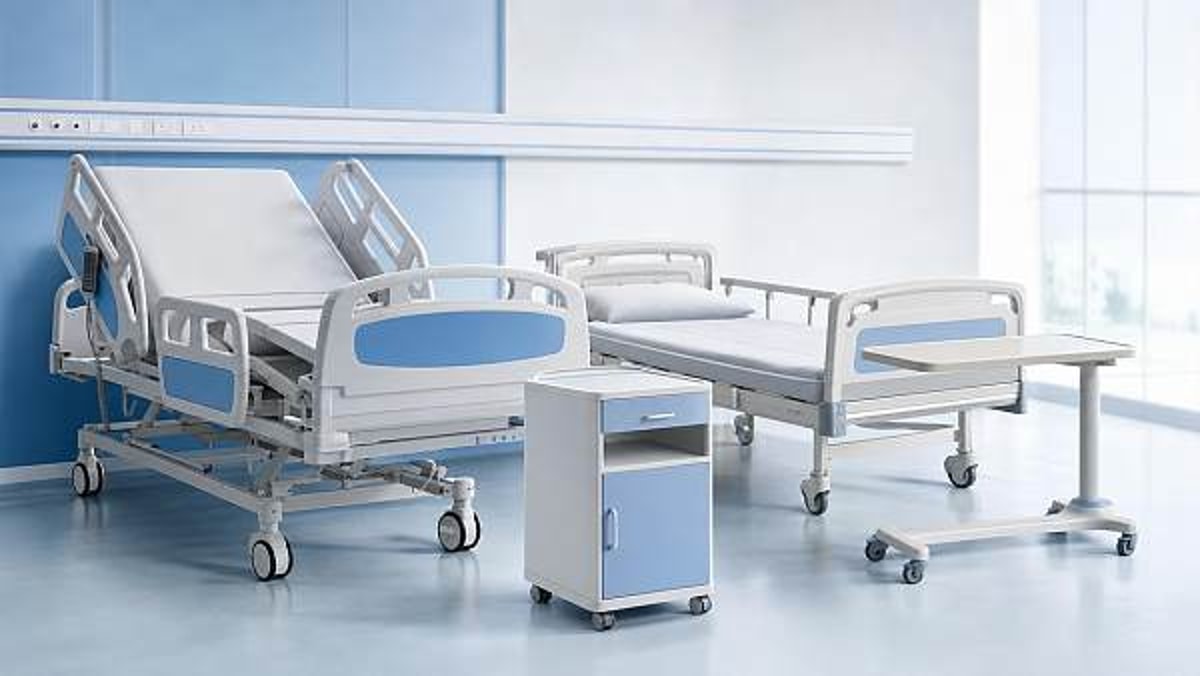
Core checklist: how to compare hospital furniture for ICU and ward use
1. Assess structural strength and long-term durability
Durability is one of the first indicators of procurement value. ICU furniture often faces continuous use, heavier accessory integration, and more frequent adjustments. Ward furniture must withstand daily movement, patient turnover, and repeated cleaning. Buyers should review frame materials, weld quality, corrosion resistance, impact resistance, and manufacturer testing data. Ask whether the supplier can provide load test reports, cycle test data for moving parts, and evidence of performance in similar healthcare environments.
2. Check infection control design in detail
Infection prevention is not just about surface materials. Good hospital furniture should have smooth transitions, sealed joints where possible, minimal dirt traps, and finishes compatible with hospital-grade disinfectants. In ICU settings, where vulnerable patients and invasive procedures are common, cleanability standards are even more critical. In wards, the focus may shift toward maintaining hygiene efficiently across larger patient volumes. Buyers should ask for chemical resistance documentation and cleaning protocols to confirm that surfaces will not degrade prematurely.
3. Compare ergonomics for both patients and caregivers
Hospital furniture should reduce strain, not create it. ICU beds, overbed tables, bedside cabinets, recliners, and transport chairs all affect caregiver posture and workflow. For patients, ergonomics influences comfort, repositioning, access, and recovery experience. For staff, poor ergonomics contributes to fatigue and injury risk. Procurement teams should review height adjustment range, side access, control placement, handrail design, and ease of repositioning. If possible, involve nursing staff in hands-on trials before final selection.
4. Review mobility and braking performance
Mobility requirements vary sharply between ICU and ward use. In ICU areas, furniture may need precise positioning around monitors, ventilators, infusion systems, and emergency teams. In wards, maneuverability matters for cleaning, bed turnover, and patient transfers. Casters, wheel diameter, directional lock systems, central braking, and push-handle placement should all be checked. A common sourcing mistake is overlooking how floor type, corridor width, and elevator access influence real-world movement.
5. Confirm compatibility with equipment and accessories
ICU hospital furniture frequently needs rails, IV poles, monitor shelves, oxygen cylinder holders, storage modules, or imaging access features. Ward furniture may require fewer add-ons, but still benefits from practical accessories that support staff efficiency. Buyers should compare modularity, accessory mounting standards, and whether attachments are proprietary or interoperable. Greater compatibility can reduce future replacement costs and improve department-level standardization.
6. Evaluate maintenance needs and parts support
A lower upfront price does not guarantee a lower total cost of ownership. Procurement teams should ask how often components need inspection, whether spare parts are stocked regionally, and how quickly service can be provided. This is especially important for hospital furniture with motors, hydraulic systems, braking assemblies, or specialized mechanisms. Reliable after-sales support is often a stronger differentiator than nominal warranty length alone.
ICU versus ward: what should buyers prioritize differently?
Although some specification categories overlap, the weighting should be different. ICU procurement should prioritize clinical access, equipment integration, infection control, and precision movement. Ward procurement should give more weight to durability across large volumes, ease of use, patient comfort, and maintenance efficiency.
Commonly overlooked risks when sourcing hospital furniture
Many hospital furniture tenders fail to capture operational details that become costly later. Watch for these overlooked issues:
- Surface materials that resist one disinfectant type but fail under broader cleaning protocols.
- Caster systems that perform well in showrooms but poorly on uneven hospital flooring.
- Accessory rails or fittings that lock buyers into one supplier for future upgrades.
- Furniture dimensions that interfere with room layouts, bedside equipment, or transfer clearances.
- Insufficient training for staff on adjustment features, brakes, or safe handling methods.
- Weak documentation on certification, traceability, and spare parts continuity.
These risks matter even more in cross-border procurement, where lead times, technical interpretation, and service coordination may be more complex. Buyers should request sample units, detailed specification sheets, and reference installations whenever possible.
Practical execution steps for procurement teams
To compare hospital furniture efficiently, procurement managers should use a staged process instead of jumping directly to quotation review. A practical sequence includes:
- Create separate requirement lists for ICU and ward use, even if suppliers offer similar base models.
- Rank criteria by operational importance: safety, infection control, usability, maintenance, then price.
- Require suppliers to respond against each checklist item, not just provide catalog data.
- Run stakeholder evaluations with nursing, facilities, infection control, and technical teams.
- Calculate total cost of ownership, including service, parts, cleaning impact, and replacement frequency.
- Verify production capacity and delivery reliability for larger multi-site projects.
This process creates better comparability across vendors and improves accountability in final supplier selection. For B2B buyers using intelligence-led sourcing channels, it also supports stronger negotiation because specifications and evaluation standards are defined in advance.
FAQ: fast answers buyers often need
Should ICU and ward hospital furniture come from the same supplier?
Not always. A single supplier may improve standardization and service coordination, but only if its product range meets the performance needs of both settings. Clinical fit should come before consolidation benefits.
What matters more: price or durability?
For hospital furniture, durability usually has greater long-term value. Frequent replacement, repair downtime, and poor cleanability often cost more than a higher initial purchase price.
How can buyers compare suppliers fairly?
Use a weighted scorecard. Compare safety, mobility, infection control, ergonomics, support, and lifecycle cost before commercial terms. This reduces subjective decisions and makes supplier review more defensible.
Final buying guidance for smarter hospital furniture decisions
The best hospital furniture choice is rarely the one with the lowest quote or the broadest catalog. For ICU and ward use, buyers need a clear checklist, a realistic view of clinical workflows, and a disciplined evaluation of maintenance, safety, and infection control performance. When procurement teams compare products through practical testing and structured scoring, they are more likely to secure furniture that supports staff productivity and protects long-term capital value.
If you are moving to the next stage, prepare the room type, target department, patient load assumptions, preferred materials, mobility requirements, accessory needs, compliance expectations, delivery schedule, and budget range. Those inputs will help suppliers provide more accurate proposals and allow your team to compare hospital furniture solutions with greater confidence. For global buyers seeking deeper market intelligence and credible B2B supplier visibility, TradeNexus Pro offers a stronger framework for evaluating strategic healthcare sourcing decisions.
Get weekly intelligence in your inbox.
No noise. No sponsored content. Pure intelligence.
 May 05, 2026Inventory management systems that fix stock errors at the sourceInventory management systems that fix stock errors at the source
 May 05, 2026Medical disposables sourcing gets risky when prices drop too fastMedical disposables sourcing gets risky when prices drop too fast
 May 05, 2026Supply Chain Management gaps that create hidden inventory costsSupply Chain Management gaps that create hidden inventory costs
 May 05, 2026Why ERP software rollouts fail even with strong vendor supportWhy ERP software rollouts fail even with strong vendor support
 May 05, 2026Patient monitors: which features actually improve bedside responsePatient monitors: which features actually improve bedside response
 May 05, 2026Medical PPE shortages are easing, but quality gaps remainMedical PPE shortages are easing, but quality gaps remain
 May 05, 2026Portable oxygen concentrators: what matters beyond battery lifePortable oxygen concentrators: what matters beyond battery life
 May 05, 2026Medical diagnostic equipment buying mistakes that cost more laterMedical diagnostic equipment buying mistakes that cost more later
 May 05, 2026Cold chain logistics failures often start before transitCold chain logistics failures often start before transit
 May 05, 2026Hydrogen energy projects face one cost issue few plan forHydrogen energy projects face one cost issue few plan for
 May 05, 2026Digital Footprint risks that grow when suppliers scale fastDigital Footprint risks that grow when suppliers scale fast
 May 05, 2026Cross border ecommerce fulfillment problems that hurt repeat salesCross border ecommerce fulfillment problems that hurt repeat sales
 May 05, 2026N95 respirators: why fit matters more than many expectN95 respirators: why fit matters more than many expect
 May 05, 2026Ultrasound machines: when image quality and workflow clashUltrasound machines: when image quality and workflow clash
 May 05, 2026LED displays for retail spaces: brightness is not the only issueLED displays for retail spaces: brightness is not the only issue
 May 05, 2026What to check before placing wheelchairs wholesale ordersWhat to check before placing wheelchairs wholesale orders
 May 05, 2026Freight forwarding services that help avoid customs delaysFreight forwarding services that help avoid customs delays
 May 05, 2026Aesthetic lasers: the difference between power and precisionAesthetic lasers: the difference between power and precision
 May 05, 2026How rehabilitation equipment choices affect recovery routinesHow rehabilitation equipment choices affect recovery routines
 May 05, 2026Robot vacuum cleaners with mapping: what changes in daily useRobot vacuum cleaners with mapping: what changes in daily use
 May 05, 2026Where logistics drones make sense and where they still do notWhere logistics drones make sense and where they still do not
 May 05, 2026B2B SaaS solutions that reduce manual trade workflowsB2B SaaS solutions that reduce manual trade workflows
 May 05, 2026What makes 3PL logistics performance hard to measure fairlyWhat makes 3PL logistics performance hard to measure fairly
 May 05, 2026Shipping rates are shifting again: what costs are easy to missShipping rates are shifting again: what costs are easy to miss
 May 05, 2026Trade Leaders in 2026: what will separate winners from the restTrade Leaders in 2026: what will separate winners from the rest
 May 05, 2026Why smart warehousing projects stall after the pilot stageWhy smart warehousing projects stall after the pilot stage
 May 05, 2026AGV robots or forklifts: which fits busy warehouses better?AGV robots or forklifts: which fits busy warehouses better?